Quick answer
Choose painted canvas if you want to stitch freely and let the hand-painted design guide your color placement. Choose charted needlepoint if you prefer counting stitches from a chart and want more control over every stitch. Both produce beautiful results; the right pick depends on whether you enjoy following a printed design or working from a chart.
If you're new to needlepoint or expanding your stash, the first big decision is often painted canvas vs charted needlepoint. They look similar in photos but ask for different stitching habits, and picking the wrong one can make a relaxing hobby feel like homework.
This comparison breaks down how each type works, what you actually see on the canvas, and which projects each suits best. We'll use real designs from Cavalier Needlepoint to show how the choice plays out in practice, so you can match the canvas to the way you like to stitch.
How painted canvas works
A hand painted needlepoint canvas has the design painted directly onto the mesh. You stitch over the painted areas, using the colors as your guide. There's no chart to follow, so you can pick up your needle and start anywhere. The paint is a roadmap, not a rulebook: many stitchers deviate from it for shading or texture, while others follow it exactly.
Painted canvases are often sold as canvas only, meaning you supply your own thread and needle. That gives you freedom to choose fibers and colors, but it also means you need to plan your thread before you start. The trade-off is less structure in exchange for more creative control.
- Best if you like to see the finished design before you stitch.
- You can start in any area without counting.
How charted needlepoint works
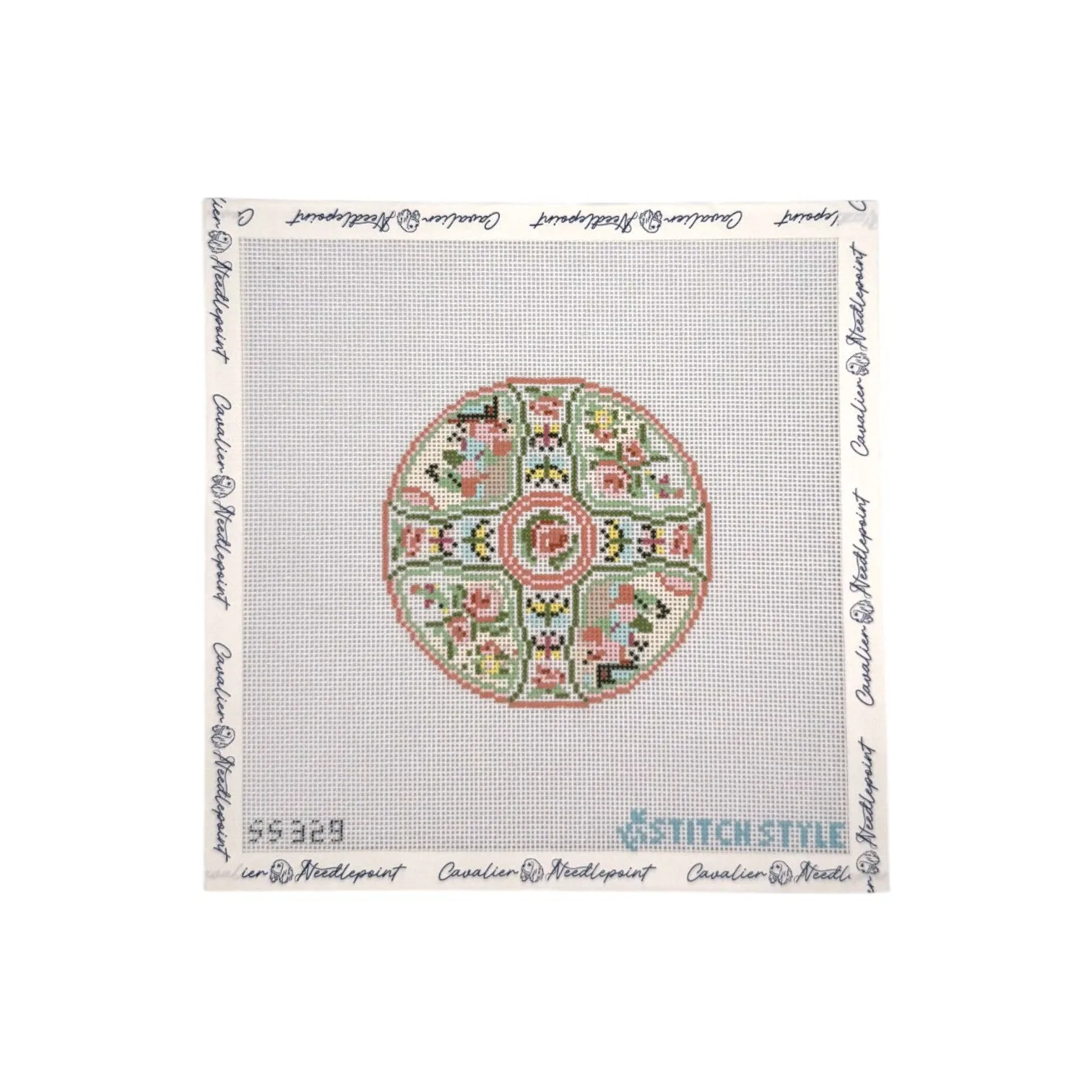
Charted needlepoint uses a printed chart or graph, and you count stitches to place each color on a blank or printed canvas. The chart tells you exactly where each stitch goes, which is helpful for intricate or symmetrical designs. It's similar to cross-stitch in that you follow a grid rather than painted areas.
The trade-off is that you spend more time counting and less time free-stitching. Mistakes are easier to spot but also easier to fix if you catch them early. Charted projects often appeal to stitchers who enjoy precision and the rhythm of following a pattern.
- Great for geometric, repeating, or highly detailed designs.
- You'll need to keep your place on the chart as you work.
What you see on the canvas
With painted canvas, the design is visible on the mesh, so you always know where you are. That makes it beginner-friendly and forgiving if you stitch a color in the wrong spot. The paint can sometimes be thick enough to affect stitch tension, but most quality canvases are painted thinly enough to stitch comfortably.
With charted needlepoint, the canvas may be blank or have a light printed grid. You rely on the chart for color placement, which means you need good lighting and a way to track your progress. Some stitchers find this meditative; others find it tedious. It's a personal preference, not a skill level issue.
- Painted canvas shows the design; charted canvas shows the grid.
- Neither is inherently harder; they just demand different attention.
Thread and fiber choices
Painted canvases often come as canvas only, so you choose your own threads. This is a chance to play with different fibers, but it also means you need to estimate how much thread you'll need. Charted projects sometimes include thread or specify colors, which can simplify shopping but limits your palette.
If you love selecting threads and experimenting with textures, painted canvas gives you more room to explore. If you prefer a guided experience where the colors are already decided, charted needlepoint may feel more straightforward. Both approaches can use the same stitches; the difference is in how the design is communicated.
- Canvas-only designs require you to buy thread separately.
- Check whether a charted project lists specific thread colors or brands.
Project size and finishing options
Painted canvases come in a wide range of sizes, from small ornaments to large statement pieces. The design is already composed, so you can often visualize the finished object before you buy. Charted designs can be scaled or repeated more easily, which is useful for borders or all-over patterns.
When choosing, think about how you plan to finish the piece. A small painted canvas like a 5 by 5 inch design can become a coaster, ornament, or framed mini. A charted pattern might be better for a larger pillow or belt where repetition matters. The finishing plan can guide your choice as much as the stitching itself.
- Small painted canvases are great for quick, giftable projects.
- Charted designs shine when you need precise repetition.
Trade-offs at a glance
- Guidance vs. freedom: Painted canvas gives you a visible design to follow, which reduces counting but can tempt you to stitch on autopilot. Charted needlepoint gives you a precise map, which increases control but requires constant counting. If you like to improvise, painted canvas is more forgiving; if you like precision, charted is more exact.
- Setup time vs. stitching time: Painted canvases often come as canvas only, so you need to select threads before you start. Charted projects may include or specify threads, reducing prep but limiting your palette. Decide whether you enjoy the planning phase or want to jump straight into stitching.
- Portability vs. complexity: Painted canvases are easy to carry and stitch anywhere because the design is on the canvas. Charted projects require a chart, which can be bulky, but they handle complex repeats better. For travel or group stitching, painted canvas is simpler; for intricate patterns, charted wins.
Real examples from our catalog
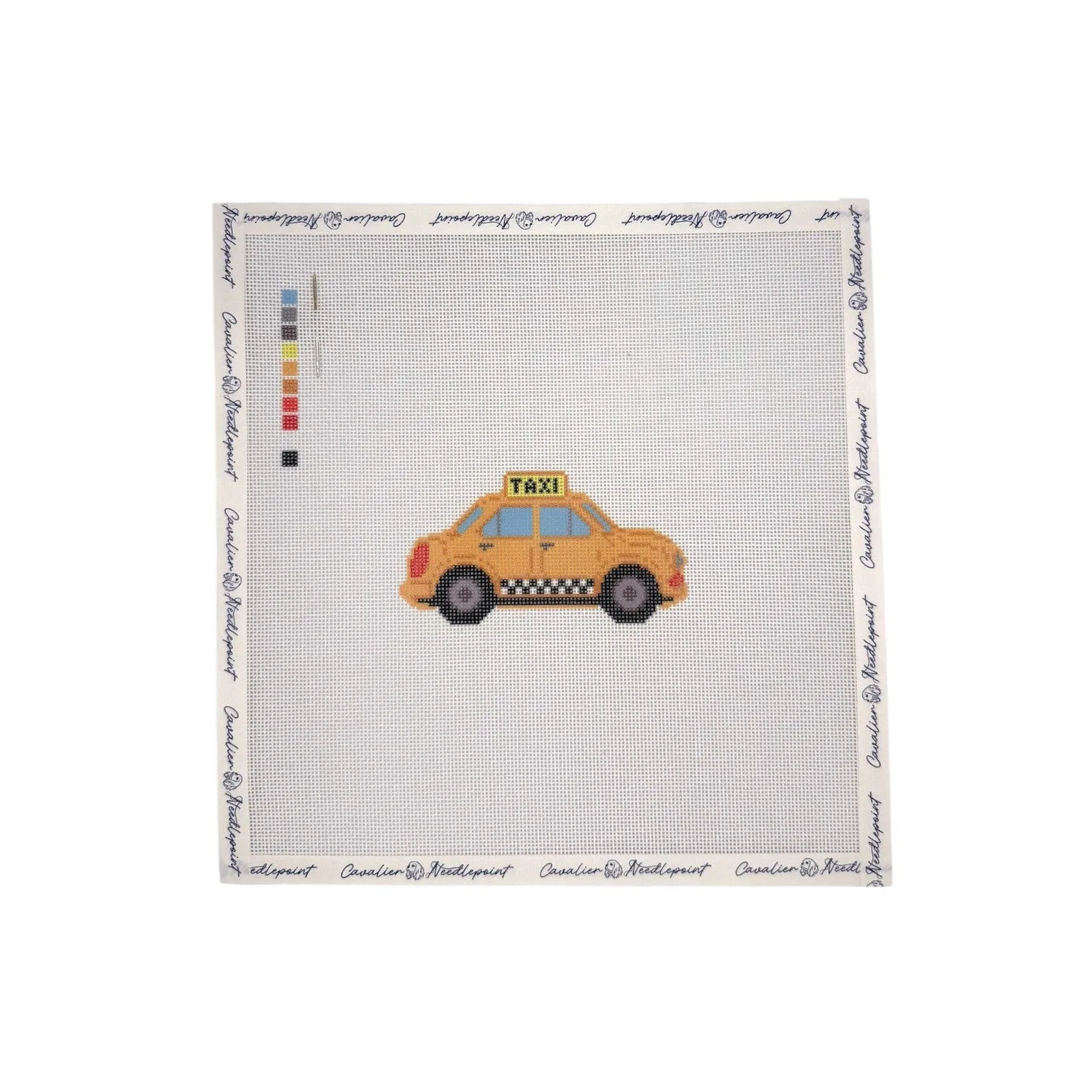
- Vintage Checker Taxi: A charming vintage checker taxi needlepoint canvas rendered in classic cab yellow with the iconic black-and-white checker pattern detail — a nostalgic beginner needlepoint that captures the unmistakable spirit of New York City. Measures 5 by 5 inches. This is a painted canvas, so the design is visible on the mesh. At 5 by 5 inches, it's a manageable size for a first painted-canvas project, and the bold color blocks make it easy to follow without a chart.
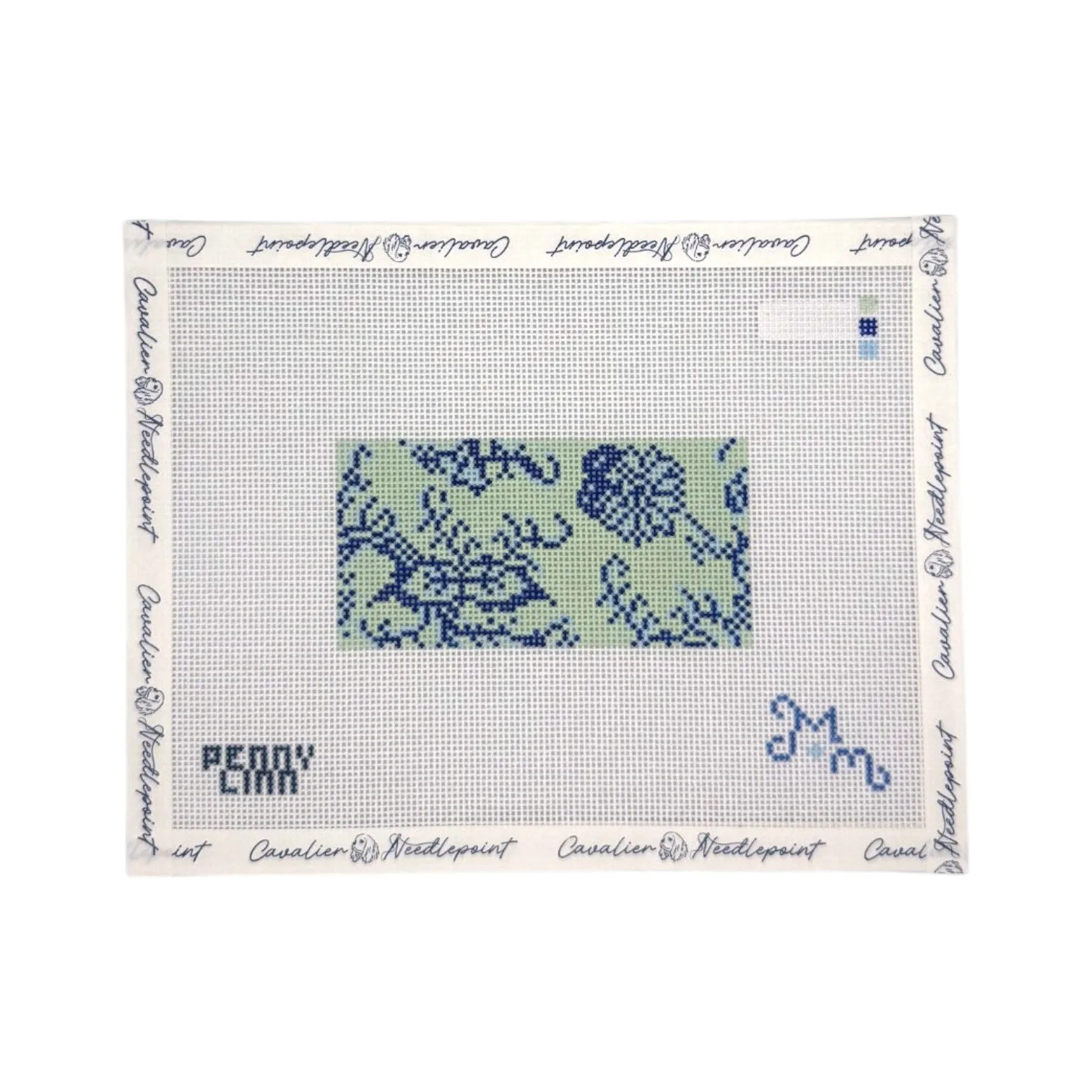
- Blue and Green Floral Rectangle: This blue and green floral design combines a classic motif with a bright, playful color palette. Its petite size makes it a fun, approachable stitch that would be beautiful finished as an ornament, insert, or small decorative piece. Designer: Marie and Maxwell. Mesh: 18 mesh. Design Size: 4" x 2". Canvas Size: 8" x 6". Canvas only. This is a hand painted canvas on 18 mesh, which means finer stitches and more detail. Since it's canvas only, you'll choose your own threads, giving you flexibility but requiring a bit of planning.
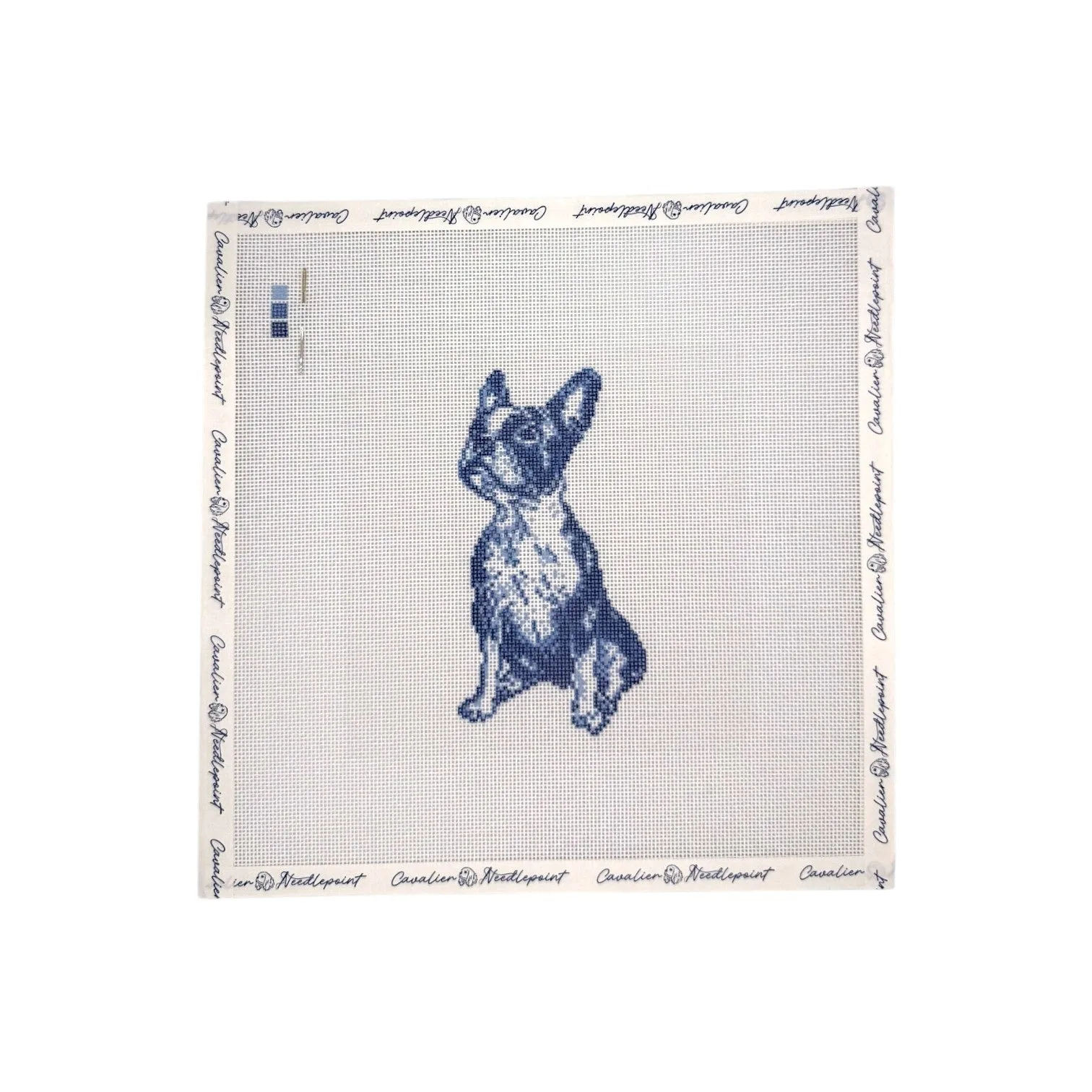
- Vintage Blue Toile Boston Terrier: Classic toile meets a beloved breed! This elegant Boston Terrier is inspired by traditional antique toile textiles, featuring crisp blue-and-white detailing and the distinctive silhouette of this charming pup. A timeless piece for Boston Terrier lovers and dog-loving stitchers alike. Designer: PierrepontDesign. Size: 6" x 6". Hand Painted. Canvas only. Another hand painted canvas, this one at 6 by 6 inches. The blue-and-white toile style relies on subtle shading, which you can follow from the paint or interpret with your thread choices. It's a good example of a painted canvas that rewards careful color selection.
Which should you choose?
Choose painted canvas if you:
- Prefer to see the design on the canvas and stitch without counting.
- Enjoy choosing your own threads and experimenting with color.
- Want a project that's easy to pick up and put down, like the Vintage Checker Taxi or Blue and Green Floral Rectangle.
Choose charted needlepoint if you:
- Dislike counting stitches or following a chart.
- Want a project with pre-selected threads and less decision-making.
- Prefer to see the finished design before you buy.
There's no wrong choice here—just a choice about how you like to stitch. Painted canvas suits stitchers who want to follow a design visually and adapt as they go, while charted needlepoint rewards those who enjoy the rhythm of counting and precise placement. Pick the one that matches your stitching personality, and you'll enjoy the process from first stitch to finished piece.