Quick Answer
Buy pre-painted terrain when you want to play sooner and skip the painting bench; buy unpainted when you enjoy painting and want to save money. Pre-painted Dwarvenite is durable enough for regular table use, and small touch-ups are normal maintenance rather than a defect.
If you are weighing pre-painted terrain against unpainted sets, the questions tend to be the same: Will it chip? Can I match the paint later? Is it worth the extra cost? This FAQ answers those directly so you can decide before you buy.
The answers below apply to painted Dwarvenite and painted resin pieces from Dwarven Forge, and they assume you are buying for actual play rather than display-only shelf pieces.
Is pre-painted terrain worth the higher price?
It depends on what your time is worth. Unpainted sets are cheaper, but you supply the primer, paint, brushes, and hours. Pre-painted sets arrive ready to place on the table, so the premium buys convenience and a consistent finish across every piece.
If you already own a large unpainted collection, mixing in painted pieces is fine as long as the paint style is similar. If you are starting fresh and want a uniform look, buying painted from the start avoids the mismatch that comes from painting some sets yourself and buying others pre-painted.
- Choose painted if your group meets regularly and you would rather play than paint.
- Choose unpainted if you enjoy painting and want to control the palette.
How durable is painted terrain during normal play?
Painted Dwarvenite is made for handling. Pieces get picked up, stacked, and dropped into storage bins, and the paint holds up under that kind of use. Sharp metal miniatures and rough table edges are the usual sources of wear, not normal placement.
Resin pieces are more detailed but also more brittle, so painted resin benefits from gentler handling and padded storage. Neither material is indestructible, but both are built for tabletop play rather than display only.
- Keep painted pieces away from loose metal minis in the same bin.
- Store heavy pieces on the bottom and lighter scatter on top.
Can I touch up or repaint pre-painted pieces?
Yes. Acrylic paint adheres to Dwarvenite, so you can match a scuffed edge or repaint a whole piece later. The trick is to test your color on the underside first, because paint looks different on a primed surface than on bare Dwarvenite.
If you want a consistent look across a mixed collection, buy a paint bundle that matches the pre-painted line rather than guessing at individual colors. That is faster than color-matching by eye and keeps new pieces consistent with what you already own.
- Test color on the underside before touching up a visible face.
- Thin your paint so detail does not fill in on textured pieces.
Do painted and unpainted pieces work together?
They connect the same way. Painted and unpainted Dwarvenite sets share the same footprint and connection system, so you can mix them in one build. The only issue is visual: a freshly painted piece next to a factory-painted piece can look slightly different in tone.
That mismatch is easy to manage. Put painted and unpainted pieces in separate rooms or zones, or paint the unpainted pieces to match. For scatter and filler pieces, the difference is rarely noticeable at arm's length on the table.
- Mix painted and unpainted freely when the pieces are not side by side.
- Keep a consistent paint style within a single room or encounter area.
What should I buy first if I am new to painted terrain?
Start with coverage and a few character pieces rather than a single large centerpiece. Floors and walls give you the most table presence per dollar, and smaller sets let you test whether pre-painted is the right fit before committing to a large bundle.
A practical first order is one coverage product, one doors or scatter set, and one small structure. That combination lets you run a complete encounter and see how the paint holds up in your own storage and handling routine.
- Buy coverage first, centerpieces later.
- Add one small set to test handling and storage before a large purchase.
How do I store and transport painted terrain?
Padded bins and dividers prevent most paint damage. Stack flat pieces, keep heavy pieces low, and avoid tossing loose metal miniatures into the same container. For transport, a hard case with foam or padded trays protects edges better than a soft bag.
If you regularly move your collection, store pieces in the same orientation they sit on the table so protruding details are not bearing weight. A little planning here prevents most of the chips people worry about when buying painted terrain.
- Use dividers so pieces do not rub against each other.
- Transport in a hard case rather than a soft bag for edge protection.
Painted Terrain Buying FAQ: Quick Answers
Will pre-painted terrain chip?
It can wear at edges with rough handling, but normal play and padded storage keep it looking good. Touch-ups with acrylic paint are straightforward. Plan for occasional touch-ups, not constant repair.
Can I mix painted and unpainted pieces?
Yes. They connect the same way and share the same scale. The only difference is tone, which is easy to manage by zone or by painting the unpainted pieces to match. Mix freely, but keep a consistent look within one encounter area.
What should I buy first?
Start with coverage such as floors and walls, then add a doors or scatter set, and save a large centerpiece like a tower for later. Coverage first, centerpieces second.
Is painted resin different from painted Dwarvenite?
Resin holds finer detail but is more brittle, so it needs gentler handling and padded storage. Dwarvenite is more forgiving for regular play. Choose based on detail versus durability.
Product Facts That Answer Common Questions
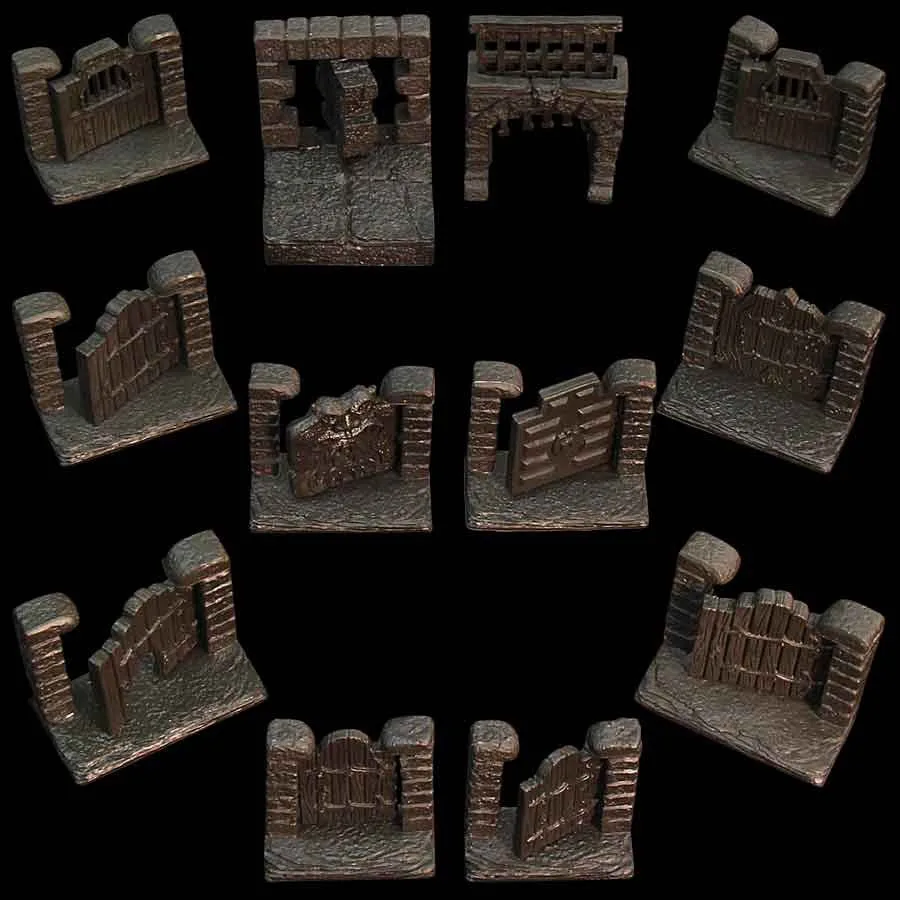
- Door Pack/Dungeons (Unpainted): This set contains 12 pieces, including swinging doors, a demon door, a broken door, a dwarven door, a metal door, cell doors, narrow doors, a portcullis, and a secret door with floor. It is a compact way to add variety and functional doors to a dungeon without buying a full room set, and it pairs well with painted walls and floors.
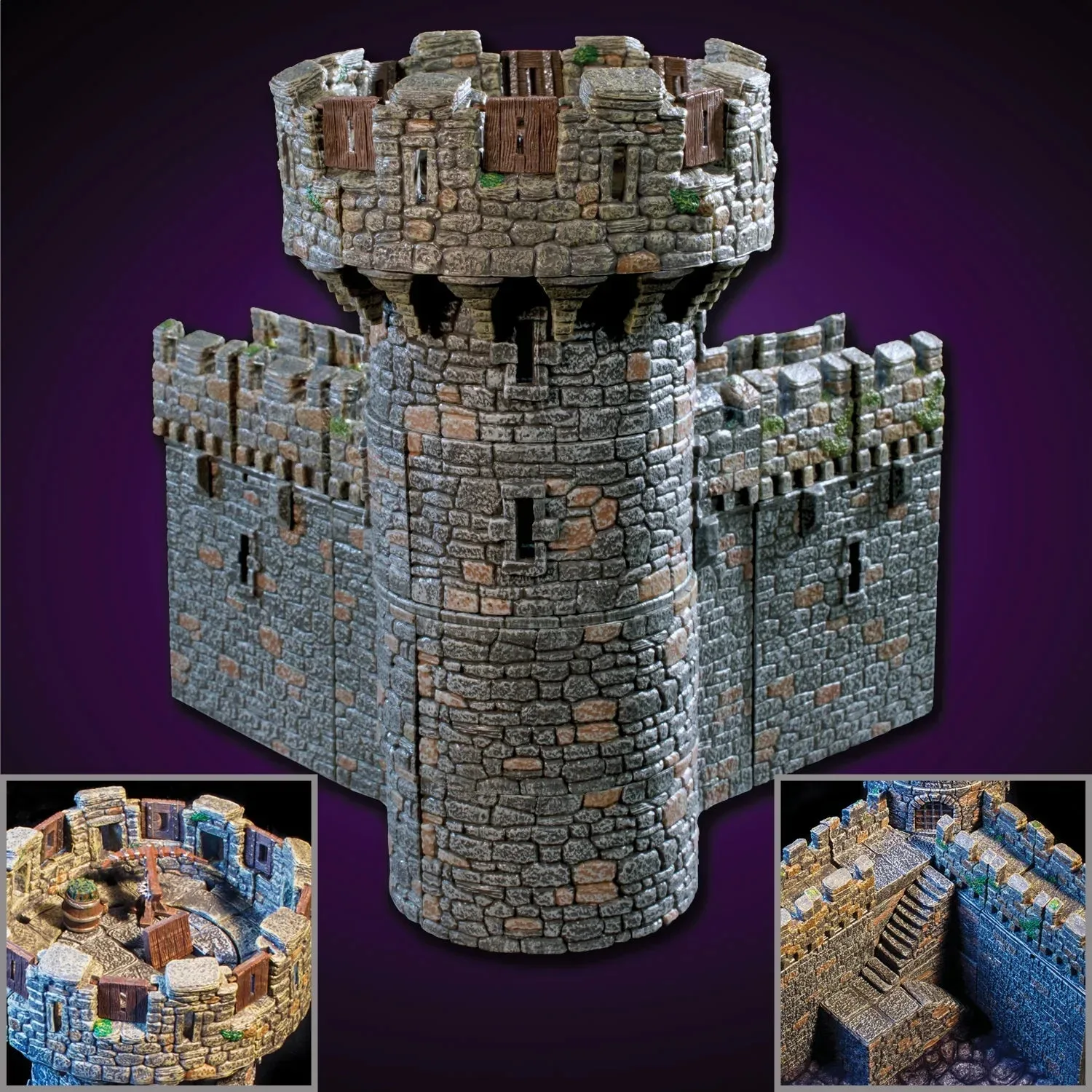
- Small Corner Tower (Unpainted): A four-inch diameter round tower standing 10 inches high, with machicolated battlements, wooden shutters, an arbalest, and a backside staircase with interior stairs and ladders. It anchors a corner segment and adds vertical play space, so it is a strong centerpiece choice once you already have basic coverage.
- Battleboard Single 12"x12": Packed Dirt: One side is printed with a graphic and the other side accommodates any 12x12 terrain trays; it has the same height as a large portion of Dwarven Forge floors. It gives you a full square foot of coverage and stays compatible with existing floors, which makes it a low-cost way to expand a table before buying more painted walls.
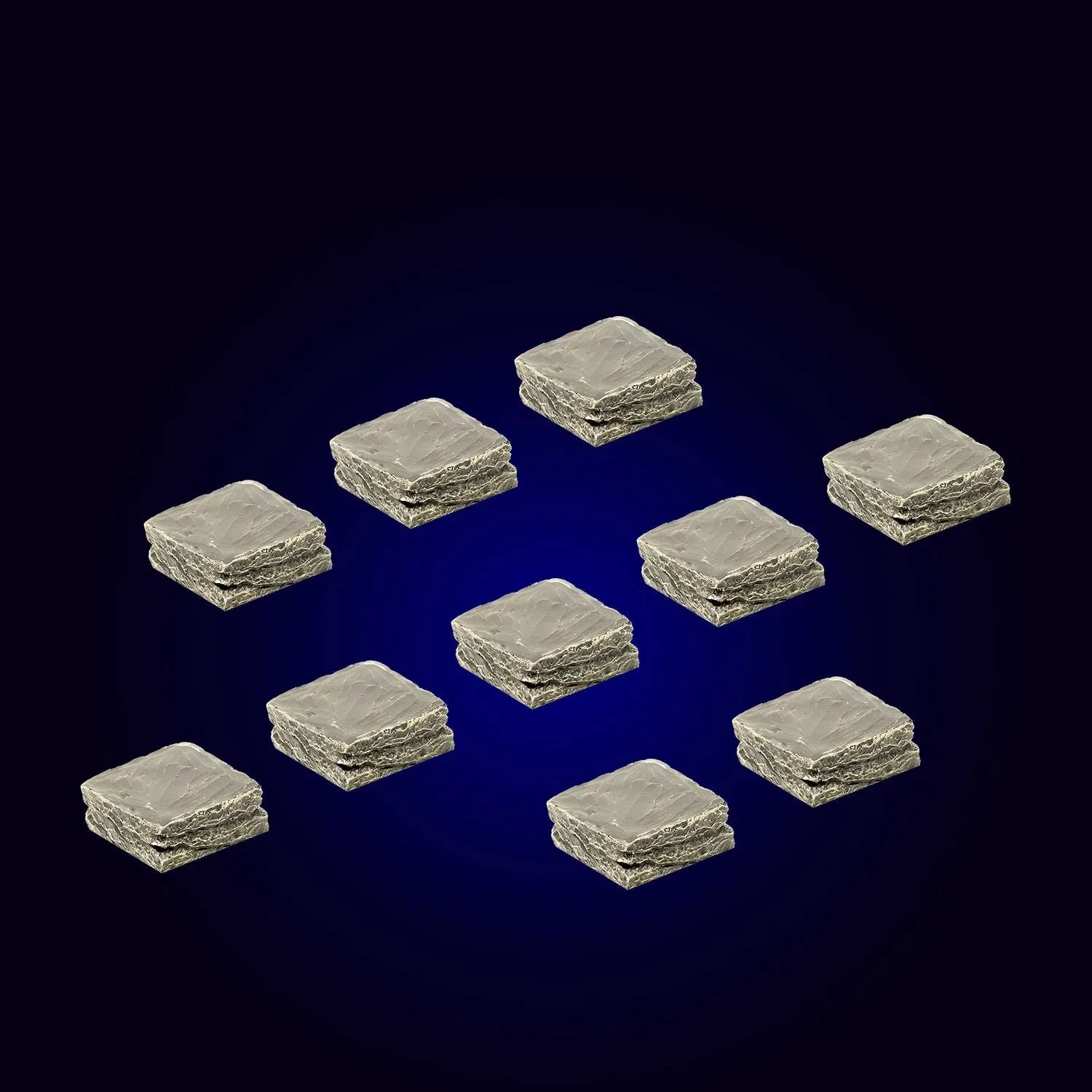
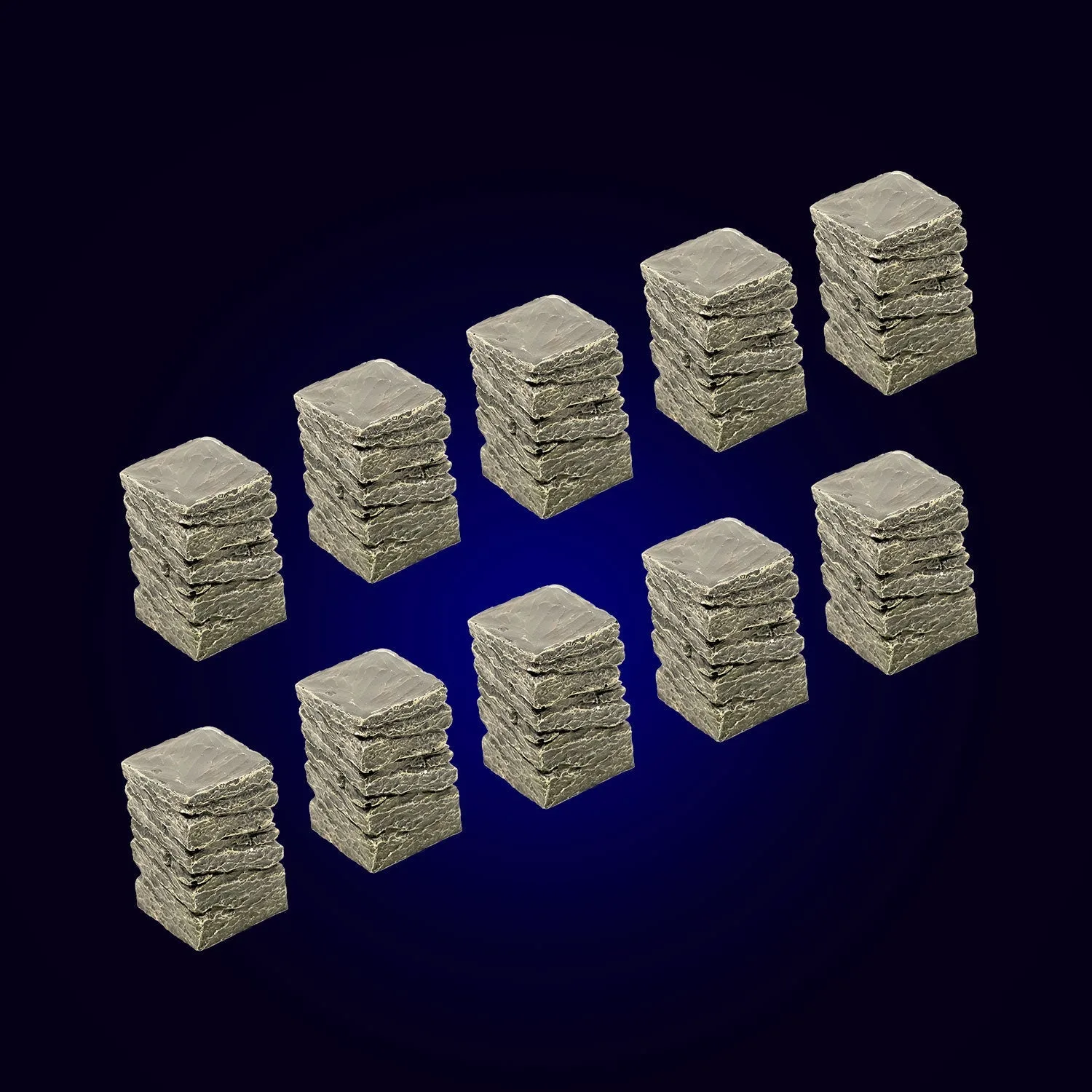
- Short Stilt Pack (Unpainted): A pack of 12mm stilts to raise pieces or entire Terrain Trays the height of one floor. It lets you create elevation changes without buying new floor pieces, which is useful when you want variety from the coverage you already own.
Buying painted terrain comes down to time versus money and how much handling your pieces will see. If you want to play sooner, pre-painted Dwarvenite is the practical choice; if you enjoy painting, unpainted sets give you more control for less cost.