Quick answer
Paint your French Resistance Partisans with a simple, effective scheme: prime, basecoat civilian clothes and weapons, wash, highlight, and base. This guide covers each step for a tabletop-ready force.
Why these miniatures are a good starting point
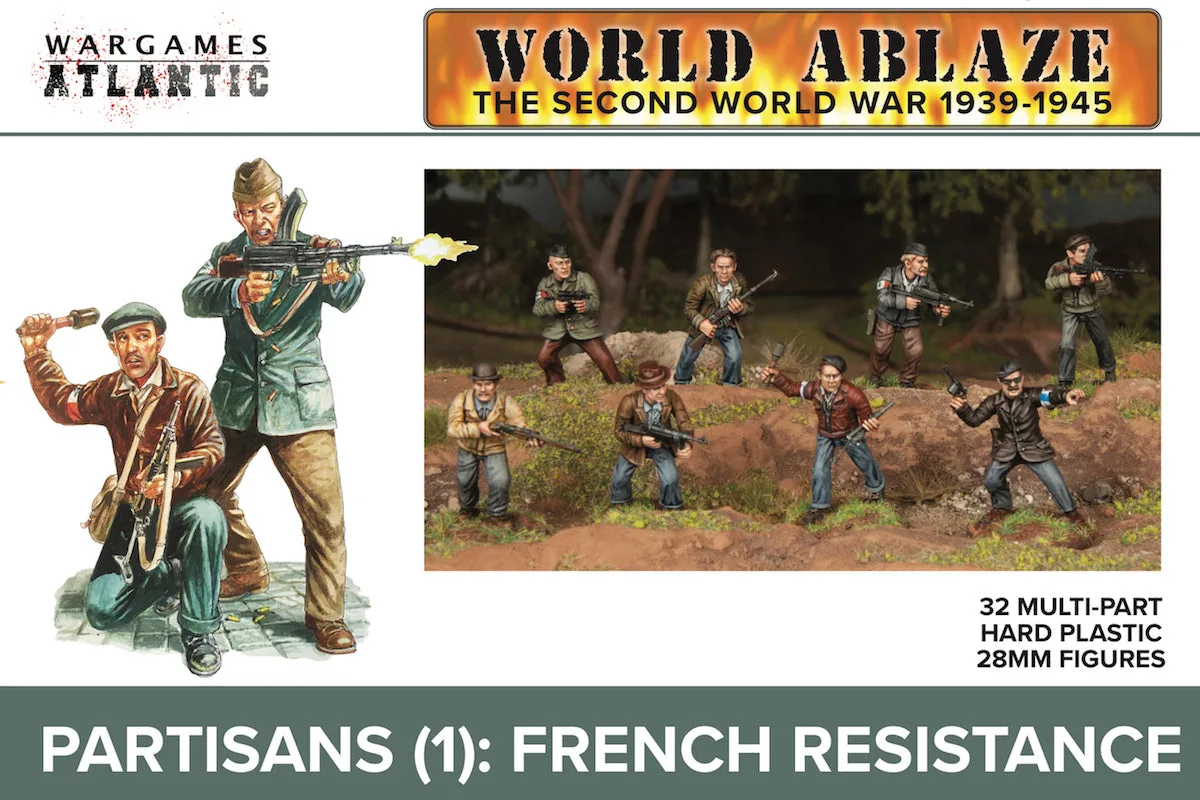
The Wargames Atlantic Partisans box gives you 32 miniatures in civilian clothes, which means you can practice painting a variety of textures—wool, cotton, leather—without needing complex armor or camouflage patterns. The sculpts include berets, scarves, and work coats that read well with simple basecoats and washes.
Because these figures represent irregular fighters, you can be more forgiving with paint placement. Slightly messy highlights or uneven washes actually add to the gritty, improvised look of the French Resistance.
Step-by-step painting process
- Clean and assemble the miniatures: Remove mold lines with a hobby knife and file. Assemble each partisan with plastic glue. Leave off any separate heads or arms that might block access to the torso if you plan to paint sub-assemblies. Check that all joints fit snugly before gluing; gaps are harder to fill after painting.
- Prime the miniatures: Use a spray primer in a neutral color like gray or black. Gray preserves contrast better on civilian clothes; black helps shadows read deeper. Shake the can for two minutes and spray from 20-30 cm in short bursts. Avoid thick coats that fill in detail—two thin passes are better than one heavy one.
- Basecoat the skin and hands: Paint all exposed skin with a flat flesh tone. A single coat is enough; you will shade it later. Use a fine brush and steady your hands against the table. Don't worry about getting flesh paint on adjacent areas—you can correct it when you basecoat the clothes.
- Basecoat the civilian clothes: Choose 3-4 muted colors (brown, gray, dark blue, olive) and alternate them across the partisans to create variety. Paint trousers, coats, and shirts in separate colors. Keep the paint thin enough that it flows but doesn't pool. Avoid using pure black for clothing—it hides detail. Use a very dark gray or brown instead.
- Paint the weapons and equipment: Basecoat rifles, pistols, and any gear (bags, belts) with a dark metallic or gunmetal color. For leather items like belts and boots, use a dark brown. Paint the wooden stocks of rifles with a medium brown. Metallic paints need a good shake before use, or they separate and look grainy.
- Apply a wash to the entire miniature: Use a brown or dark brown wash (like Agrax Earthshade) over all areas. Brush it into recesses and let it flow naturally. Wipe excess off raised areas with a clean brush if it pools too much. Work on one miniature at a time so the wash doesn't dry before you can manage pooling.
- Highlight the raised areas: After the wash dries, drybrush or edge-highlight the clothes with the original basecoat color. For a faster method, use a lighter version of each base color and drybrush the upper surfaces. Highlight the face with a light flesh tone on the nose, cheeks, and brow. Less is more—heavy drybrushing can make the miniature look dusty. Use a soft, almost dry brush.
About the kit
-
Partisans (1) French Resistance: This hard plastic box set allows you to build up to 32 partisans equipped with rifles. You get enough models for a full skirmish force in one box, and the civilian clothing makes painting quick and forgiving.
Partisans (1) French Resistance