Quick answer
Choose the Panasonic HC-X2000E if you need built-in ND filters and 5-axis stabilization for run-and-gun shooting. Pick the Canon XA70 if you prioritize a larger 1.0-inch sensor and over-sampled HD processing for maximum image quality.
Sensor size and image quality
The Canon XA70 uses a 1.0-inch type CMOS sensor, which is larger than the Panasonic HC-X2000E's sensor. This gives the Canon an advantage in low-light performance and depth-of-field control. The XA70 also features Over Sampled HD processing, which captures high-quality HD footage by oversampling from the 4K readout, resulting in sharper, more detailed 1080p video.
The Panasonic HC-X2000E records true UHD 4K at 60p, which is ideal for fast-moving subjects or when you need slow-motion flexibility in post. Its sensor is smaller, but the 4K 60p capability is a strong draw for sports or event videographers.
Stabilization and built-in tools
The Panasonic HC-X2000E includes 5-Axis Optical Image Stabilization, which helps smooth out handheld shots without sacrificing image quality. It also has built-in ND filters and an LED light, making it a self-contained run-and-gun package.
The Canon XA70 does not offer built-in ND filters or an LED light. Its stabilization is effective but not as advanced as Panasonic's 5-axis system. If you frequently shoot in changing light conditions without external gear, the HC-X2000E's built-in tools save setup time.
Physical controls and form factor
Both camcorders are compact and handheld-friendly. The Panasonic HC-X2000E features dual manual lens rings and a functional design optimized for mobility. The Canon XA70 is also compact but lacks 3G-SDI output, which may be a limitation for some professional workflows that require SDI connectivity.
If you need SDI output for live production or multi-camera setups, neither camcorder includes it, but the Canon XA70's omission is explicitly noted in its design. The Panasonic's heat-dispersing design allows longer recording sessions without overheating.
Tradeoffs at a glance
- Image quality vs. frame rate: Canon XA70's larger sensor and over-sampled HD processing give superior HD image quality. Panasonic HC-X2000E offers 4K 60p for smoother motion and slow-motion flexibility.
- Built-in tools vs. sensor size: Panasonic HC-X2000E includes ND filters, LED light, and 5-axis stabilization for convenience. Canon XA70 relies on a larger sensor for better native low-light performance but lacks these built-in tools.
- Connectivity and workflow: Neither camcorder includes 3G-SDI output. Canon XA70 is designed for applications where SDI is not required. Panasonic HC-X2000E's heat-dispersing design supports longer recording sessions. If you need SDI output, look at models that include it; both of these are compact SDI-free options.
Key product facts
-
Canon XA70 Professional 4K Compact Camcorder: Canon XA70 uses a 1.0-inch type CMOS sensor and features Over Sampled HD processing for high-quality HD video. This means sharper 1080p footage and better low-light performance compared to smaller-sensor camcorders.
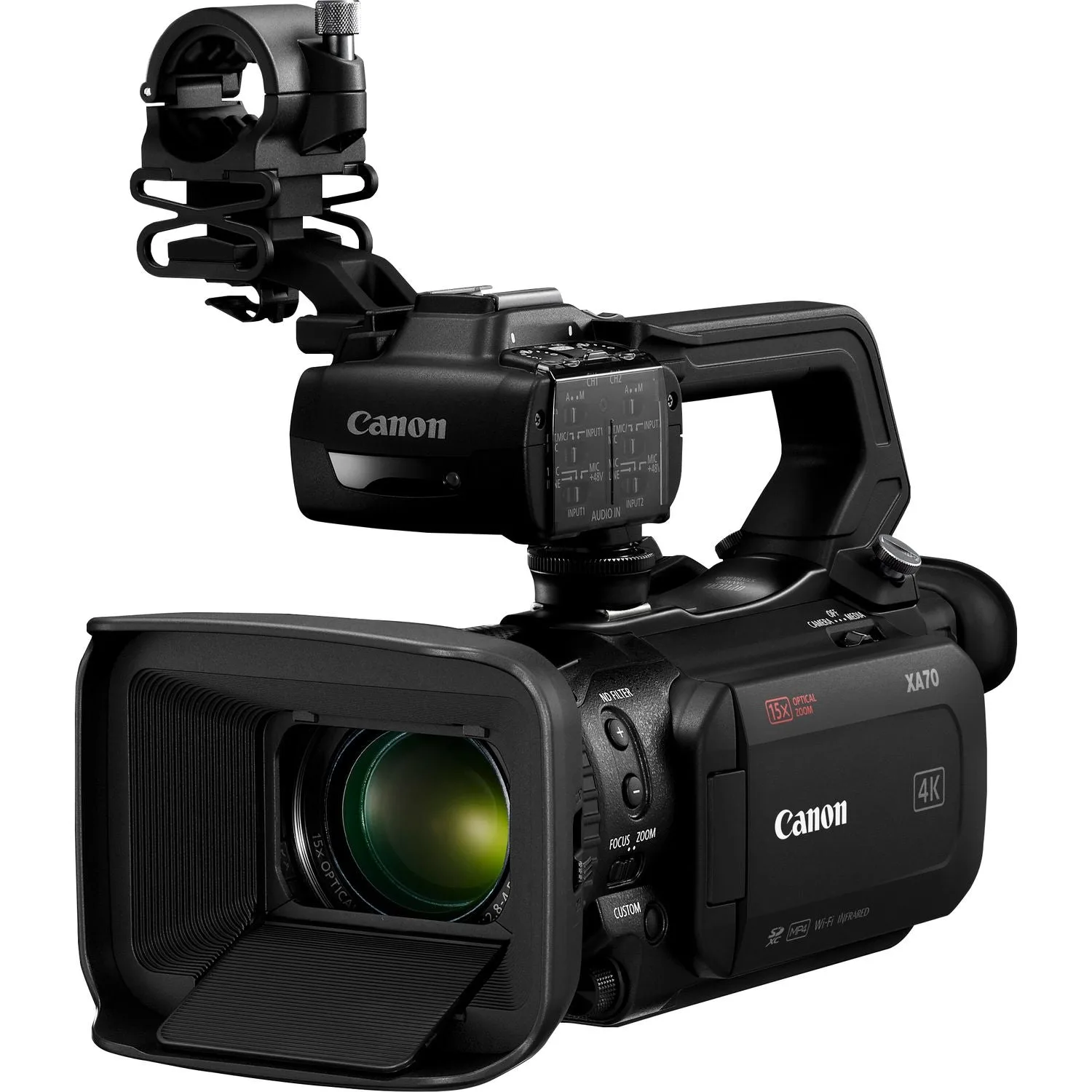
Canon XA70 Professional 4K Compact Camcorder
-
Panasonic HC-X2000E 4k 60p Camcorder: Panasonic HC-X2000E records UHD 4K at 60p and includes 5-Axis Optical Image Stabilization, built-in ND filters, and an LED light. These features make it a versatile all-in-one tool for handheld, run-and-gun shooting in varied lighting.
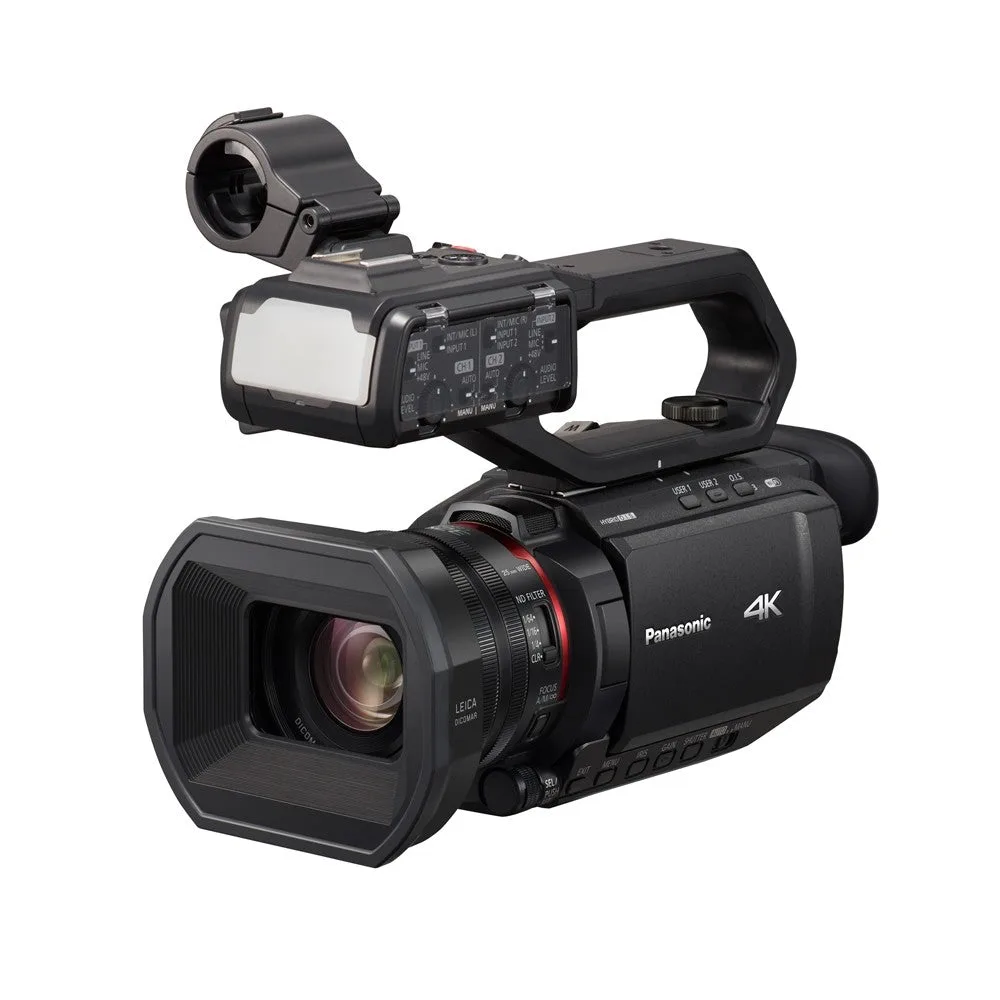
Panasonic HC-X2000E 4k 60p Camcorder
Which one fits you?
Best for
- Videographers who need built-in ND filters and 5-axis stabilization for run-and-gun shooting (Panasonic HC-X2000E)
- Documentary or event shooters who want 4K 60p and a self-contained package with LED light (Panasonic HC-X2000E)
- Filmmakers prioritizing maximum HD image quality and low-light performance from a larger sensor (Canon XA70)
- Journalists who need compact size and over-sampled HD for high-quality interviews (Canon XA70)
Not for
- Users who require 3G-SDI output for live production or multi-camera setups
- Videographers who need built-in ND filters and an LED light but choose the Canon XA70