Quick answer
Pantothenic acid (vitamin B5) is essential for converting food into energy and supporting fat metabolism. A 500 mg supplement can help fill dietary gaps.
Why pantothenic acid matters for energy
Pantothenic acid is a key building block of coenzyme A, a molecule your cells need to break down fats, carbohydrates, and proteins. Without enough B5, your body struggles to transfer fats to and from cells, which can affect overall energy levels.
Who might benefit from a supplement
While pantothenic acid is found in many foods, certain diets or lifestyles may lead to lower intake. A supplement can provide a reliable source for those with restricted eating patterns or higher metabolic demands.
Frequently asked questions
What does pantothenic acid do?
Pantothenic acid (vitamin B5) helps form coenzyme A, which is critical for converting food into cellular energy and for metabolizing fats.
How much pantothenic acid should I take?
A common supplemental dose is 500 mg per day. Always follow the label and consult a healthcare professional for personalized advice. Start with one 500 mg capsule daily unless directed otherwise.
Can I get enough from food alone?
Many foods contain B5, but factors like processing and diet restrictions can reduce intake. A supplement ensures you meet your needs consistently.
Are there any side effects?
Pantothenic acid is water-soluble, so excess is usually excreted. High doses may cause mild digestive upset in some people. Stick to recommended servings. If you experience discomfort, reduce the dose or take with food.
Product facts
-
Pantothenic Acid, 500 mg, 100 vegetarian capsules: Pantothenic acid (vitamin B5) is an important component of coenzyme A, which assists in several metabolic pathways and is necessary for the transfer of fats to and from cells. This means a 500 mg serving directly supports your body's energy production and fat utilization processes.
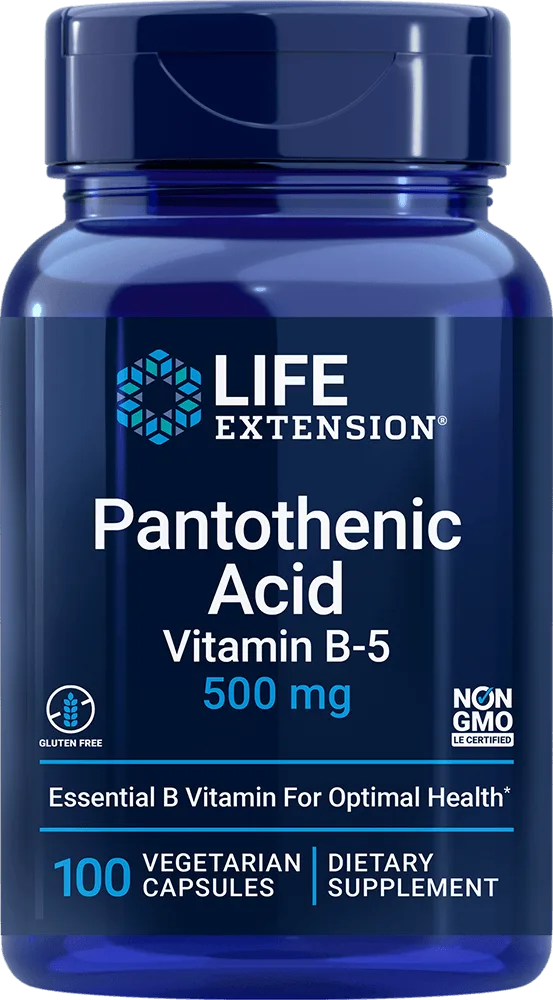
Pantothenic Acid, 500 mg, 100 vegetarian capsules