Quick answer
For most pantries, clear plastic bins last longest because they resist moisture, stains, and sagging while letting you see contents at a glance. Wire bins are the better choice when airflow matters and you want a lighter footprint. Fabric bins are the least durable for food storage because they absorb spills and lose shape over time. Choose based on what you store and where the bin lives, not just the material label.
What actually determines pantry bin lifespan
Material is only half the story. The other half is how the bin is built: wall thickness, seam construction, and whether the base stays flat under load. A thick-walled plastic bin with reinforced corners will outlast a thin plastic bin that cracks at the rim. Wire bins depend on gauge and coating; a light gauge wire bends when you slide a full bin forward. Fabric bins rely on stiff inserts or rigid panels; once those soften, the bin collapses.
Also consider the pantry environment. Humid climates and kitchens near a dishwasher or stove expose bins to moisture cycles. Open wire lets air move, which helps dry goods stay dry but does nothing to contain a spill. Solid plastic contains messes but can trap crumbs if you never wipe it out. Fabric absorbs whatever it touches. Match the material to the real conditions in your kitchen, not a showroom shelf.
Plastic vs wire bins: the honest trade-off
Plastic wins on containment and cleanability. A clear plastic bin keeps flour, rice, and snack bags from leaking through, and you can wipe it with a damp cloth. It also holds its shape when you pull it off a shelf one-handed. The trade-off is weight and bulk: a full plastic bin is heavier, and solid walls block airflow, so never seal damp produce inside one.
Wire wins on airflow and visibility from every angle. It is lighter, so it is easier to slide on high shelves, and it does not hide crumbs the way a solid bin can. The trade-off is that wire does not contain spills, and thin wire can dent or bend if you overload it. If you store onions, potatoes, or garlic, wire is often the better home because air moves around the produce. If you store baking supplies or small snack bags, plastic keeps everything corralled.
Where fabric bins fit, and where they fail
Fabric bins are popular for shelves because they are quiet, lightweight, and inexpensive. In a pantry, though, they are the weakest choice for food storage. They absorb oil and liquid, hold odors, and sag when filled with heavy dry goods. A fabric bin that looks crisp on day one often develops a soft belly within months if you store cans or jars in it.
Use fabric only for lightweight, dry, packaged items such as napkins, tea boxes, or snack pouches. If a bin will ever touch a leaky bottle or a sticky jar, choose plastic or wire instead. This is not a knock on fabric as a material; it is simply the wrong tool for a pantry that sees real cooking traffic.
How to test durability before you commit
At the store or once a bin arrives, press the side walls inward. A durable plastic bin flexes slightly and springs back; a cheap one creases or cracks. For wire, squeeze the rim and check for movement at the welds. For fabric, remove any insert and see whether the bin stands on its own. If it collapses without the insert, it will not hold up to daily pulling.
Then load it the way you actually will at home. Fill the bin with your heaviest staples and slide it across a counter. Listen for scraping, watch for bowing, and check whether the base stays flat. A bin that wobbles empty will wobble worse when full. Five minutes of testing saves a return later.
Matching material to shelf height and clearance
Material affects how a bin fits a shelf. Solid plastic bins have fixed outer dimensions, so measure your shelf depth and height before buying. Wire bins are often slightly narrower at the base, which can help on a shallow shelf, but the rim may still catch. Fabric bins compress, which sounds helpful until they bulge and block the shelf above.
If you stack bins, check that the top bin rests on a flat rim rather than a curved one. Stacking works best with rigid plastic or a purpose-built stacking design. If you use an adjustable shelf to create a second tier, leave enough clearance to lift the bin out without tipping it. Measure the tallest item you plan to store, add the bin wall height, and confirm the shelf above still closes or clears.
Decision rules: pick the right pantry bin material
- If you store flour, rice, or snack bags: Choose clear plastic. It contains leaks, wipes clean, and keeps small items visible so you do not overbuy. Plastic is the default for dry goods that can spill or scatter.
- If you store onions, potatoes, or garlic: Choose wire. Airflow around produce reduces moisture buildup, and wire is lighter to slide on a high shelf. Wire is the better home for produce that needs to breathe.
- If you store napkins, tea, or lightweight pouches: Fabric is acceptable, but only if the bin never touches a leaky bottle or a sticky jar. Keep fabric away from anything wet or oily.
- If you stack bins: Choose rigid plastic or a purpose-built stacking design. Fabric and thin wire crush under the weight of a second bin. Stack only on a flat, reinforced rim.
- If you are unsure: Buy one bin, load it with your heaviest items, and slide it across the counter before buying more. Test one before committing to a full set.
Product facts
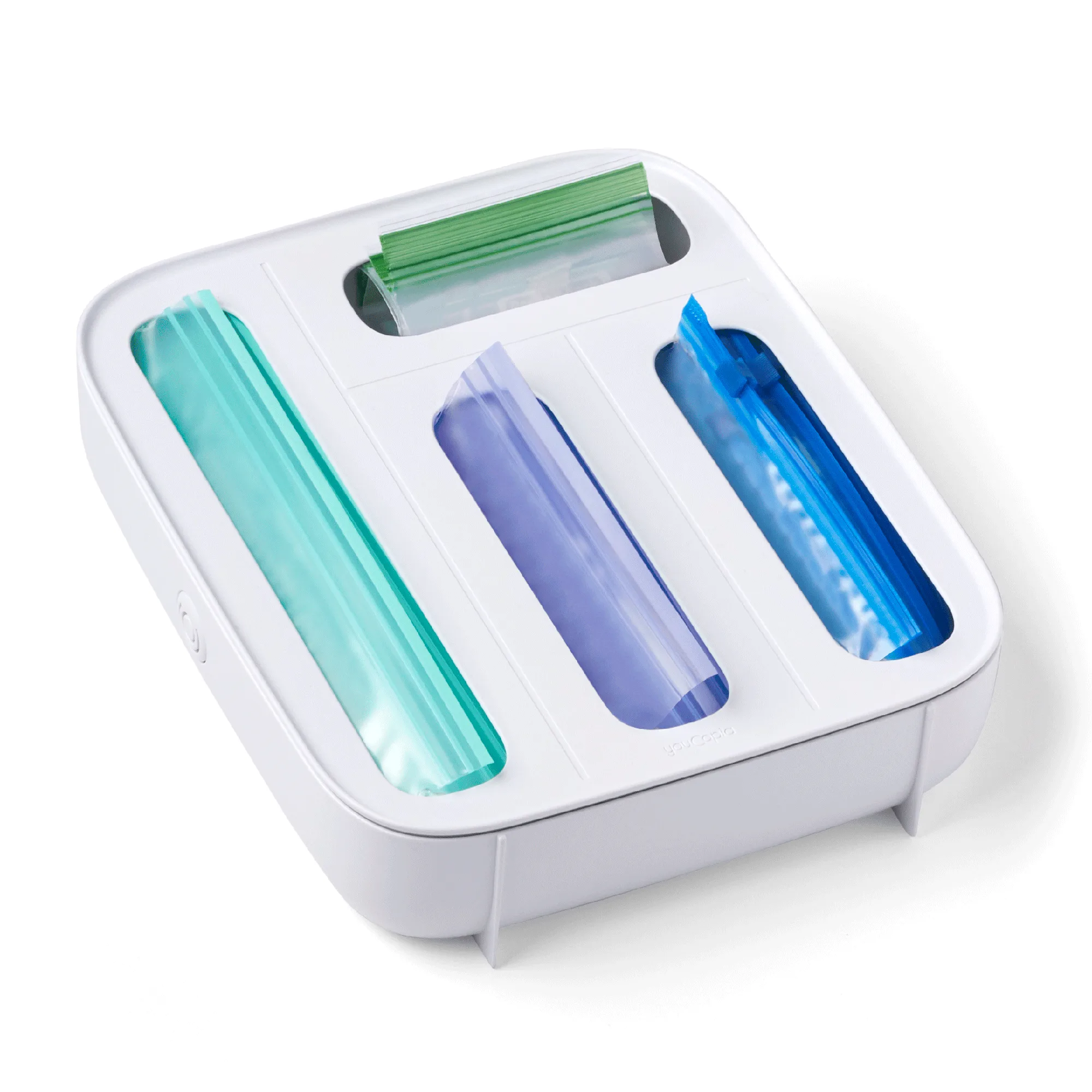
- StoraBag™ Food Bag Dispenser, 4 Slot: StoraBag Food Bag Dispenser, 4 Slot fits standard-size gallon, quart, sandwich, and snack plastic food bags in 4 compartments, with bright labels and wide slots. A dedicated dispenser keeps bag sizes separated so you grab the right one without digging, which reduces the daily wear that shortens a general-purpose bin's life.
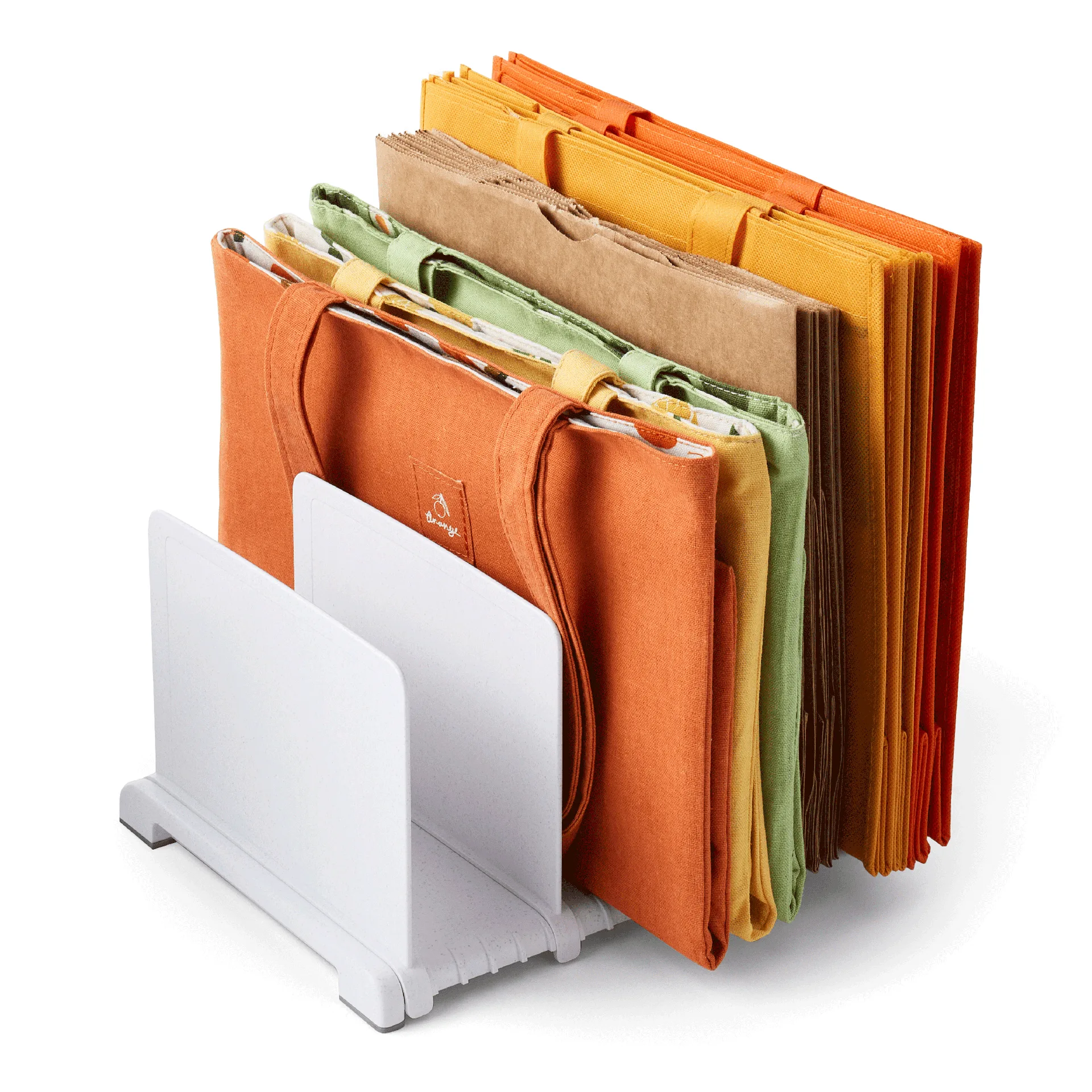
- StoraBag™ Reusable Bag Organizer: StoraBag Reusable Bag Organizer has four tall dividers that can be adjusted to keep 20+ shopping, grocery, and gift bags upright. Adjustable dividers let you match the bin to bag thickness, so the organizer stays upright and usable instead of sagging under a loose pile.
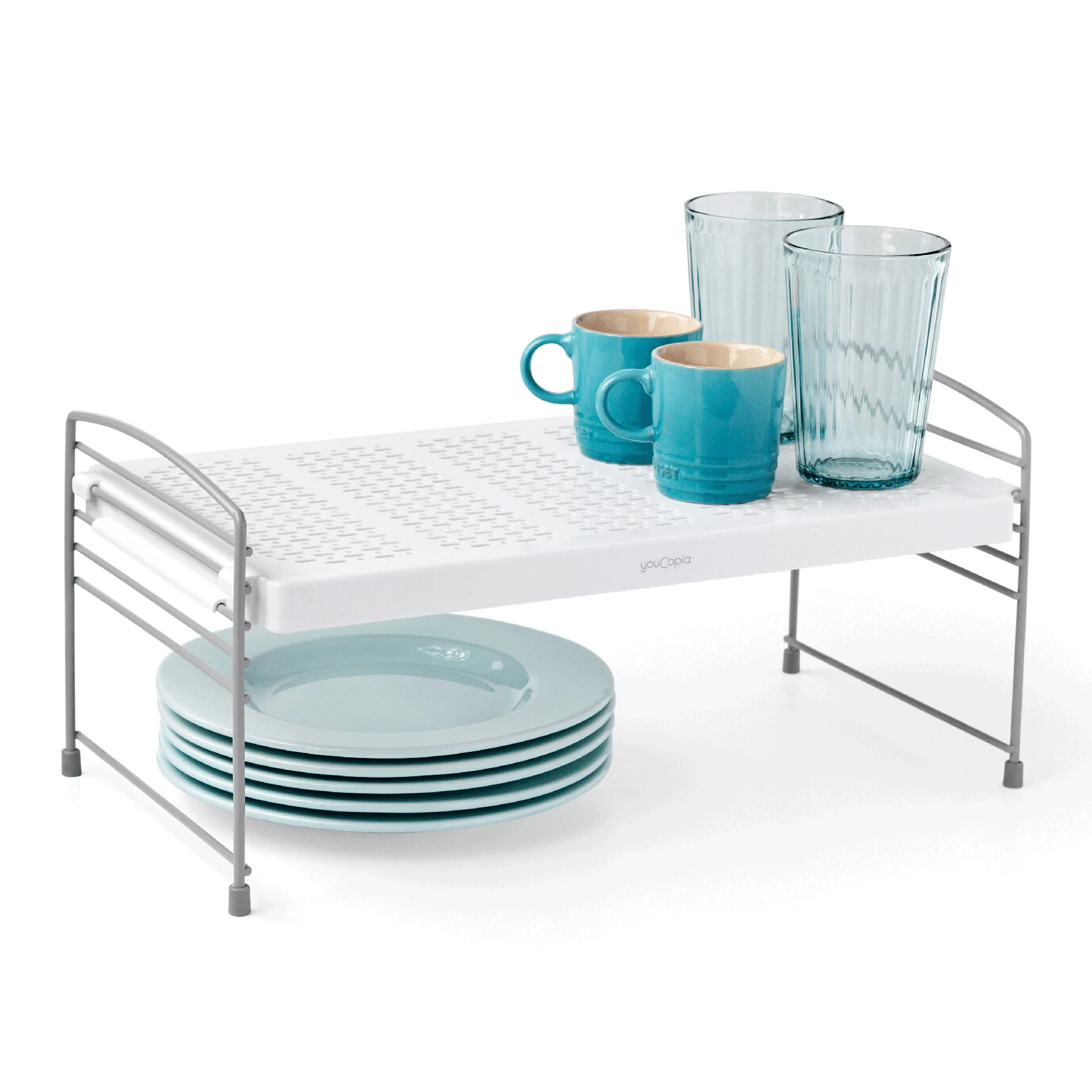
- UpSpace® Adjustable Shelf: UpSpace Adjustable Shelf offers adjustable clearance height from 3.7" to 5.7" and strong steel wires that support up to 25 lbs. A wire shelf with a stated weight limit lets you create a second tier for bins without guessing whether the shelf will hold them.
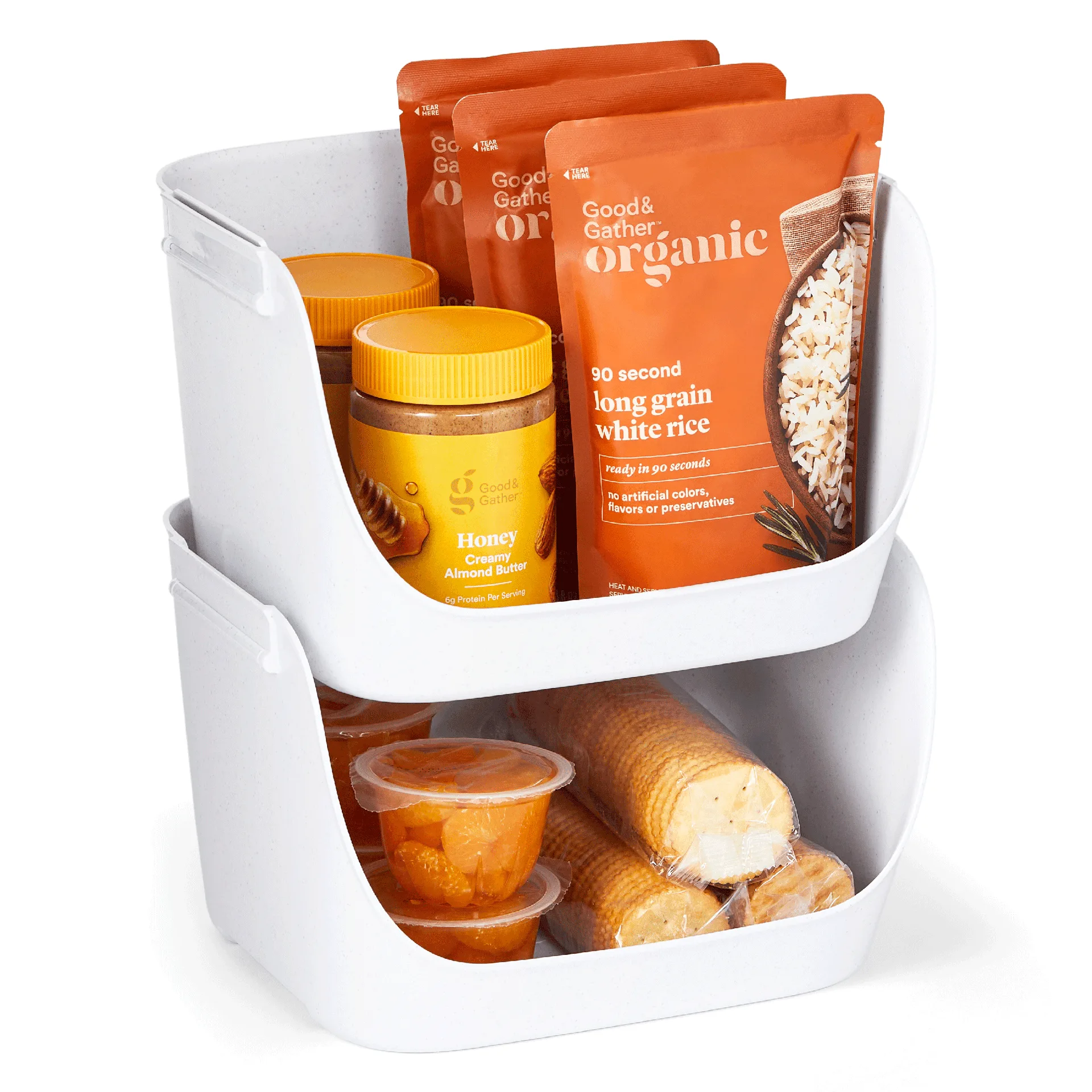
- ShelfBin™ Stacking Pantry Bins, 2-Pack: ShelfBin Stacking Pantry Bins, 2-Pack includes two bins that stack or sit side-by-side, with a wide front opening for access. Stacking rigid bins doubles usable pantry space without the sagging that fabric bins develop under the same load.
Fit guidance: will this bin work in your pantry?
Best for
- Pantries with standard-depth shelves where clear plastic bins can sit without blocking the shelf above
- Kitchens that see daily cooking and need bins that wipe clean after spills
- Anyone stacking bins who needs a rigid rim and a stated weight limit
Not for
- Very shallow shelves where a solid bin's fixed depth leaves no room to pull it out
- Damp or humid pantries where fabric will absorb moisture and hold odors
- Storing heavy cans or jars in fabric bins, which will sag and lose shape