Quick answer
For 6+ players, prioritize games with simultaneous play or team structures, because they keep everyone engaged without long waits. If you regularly host 8 or more, look for titles that support partnership or group decisions rather than strict turn order. SHOBU, boop, and HIFI are excellent for smaller group nights, but for true large-group party play, focus on games designed for higher counts and confirm the box supports your typical headcount.
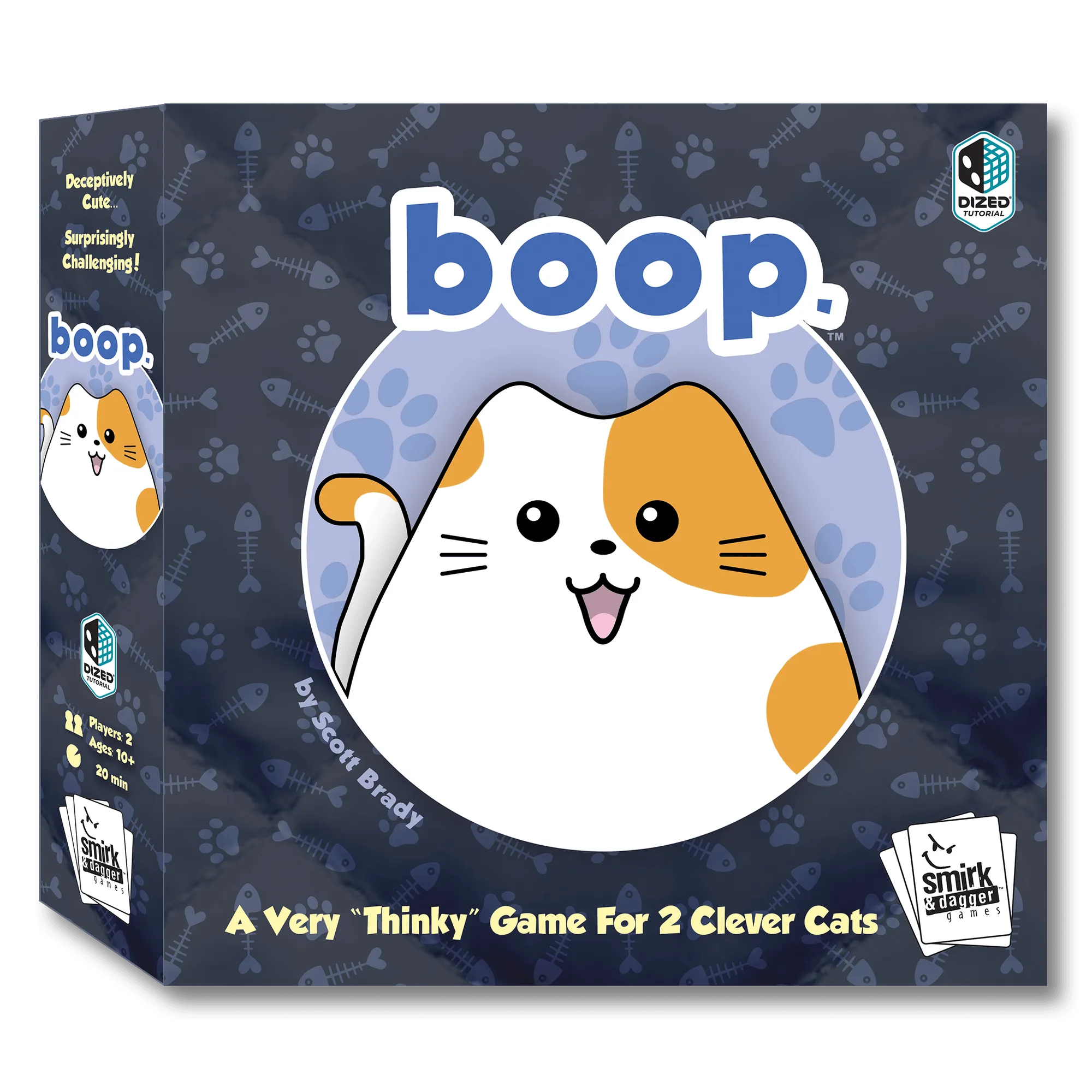
boop
Most party games claim to support large groups, but the experience falls apart once you pass six players. Turn order drags, downtime stretches, and half the table checks their phones. The fix is not more snacks; it is choosing games whose core loop keeps every player involved at the same time.
This guide gives you concrete decision rules for buying party games for large groups, including what works for 6, 8, and 10 players, and when a smaller-group strategy game is the better buy. You will also see specific titles from our catalog that fit different sizes and play styles.
Start with player count, not theme
The single most useful filter is the supported player count printed on the box. A game that says 2-4 players will not magically become fun at 8, even if the theme is perfect. For large group party games, you want a box that explicitly supports your typical headcount, or a team-based design that scales by grouping players.
Check whether the game uses simultaneous actions, hidden roles, or team turns. Simultaneous play means everyone acts at once, which eliminates waiting. Team turns mean two or more players share a decision, so no one sits idle. If the game only supports individual turn order, expect downtime to grow with every extra player.
- Write down your real average group size, not your maximum. Buy for the average.
- If your group fluctuates, choose games that play well at both 6 and 10, or buy two smaller games instead of one huge one.
Decision rules for 6, 8, and 10+ players
For 6 players, you have the widest choice. Many strategy games and party games support 6, so you can prioritize theme and complexity. Look for games with short turns and low analysis paralysis. If a game supports 6 but each turn takes several minutes, it will still feel slow.
For 8 players, focus on team-based or simultaneous-reveal games. Social deduction, drawing, and guessing games often handle 8 well because everyone participates on every turn. Avoid games with individual turns and complex planning, because the wait between turns becomes the main experience.
For 10 or more players, your options narrow to true party formats: team trivia, large-group bluffing, or games that split the room into two or more teams. At this size, the game master or moderator role becomes important. Choose titles that include moderator rules or can be easily adapted.
- 6 players: prioritize short turns and moderate strategy.
- 8 players: prioritize teams or simultaneous play.
- 10+ players: prioritize team vs team and moderator-friendly formats.
What to avoid when buying for large groups
Avoid games with long individual turns, heavy resource management, or player elimination. Elimination is especially bad in large groups because eliminated players have nothing to do while the rest continue. Also avoid games that require extensive table space; large groups already need room for drinks and snacks.
Another common mistake is buying a complex strategy game and hoping the group will learn it together. In large groups, teaching time is multiplied by the number of distracted players. If the rules explanation takes more than ten minutes, the party energy will die before the first turn.
- Skip player elimination unless eliminated players become judges or helpers.
- Skip games with more than 10 minutes of rules explanation for a party setting.
- Check table footprint: large groups need space for components and personal items.
How to test a game before your next big night
Before you commit to a large-group purchase, play a test round with 3-4 players. This lets you learn the rules and estimate turn length. If a turn takes more than 90 seconds with four players, it will feel twice as long with eight. You can also time a full round to see if the game fits your typical event length.
If you cannot test first, read the rulebook online. Many publishers offer downloadable rules. Look for simultaneous play, team rules, and clear turn structure. If the rules are not available, treat that as a buying risk, especially for a large-group game.
- Time a four-player round and multiply by two for an eight-player estimate.
- Download the rules and search for 'simultaneous', 'team', and 'moderator'.
Smaller-group gems that still work for parties
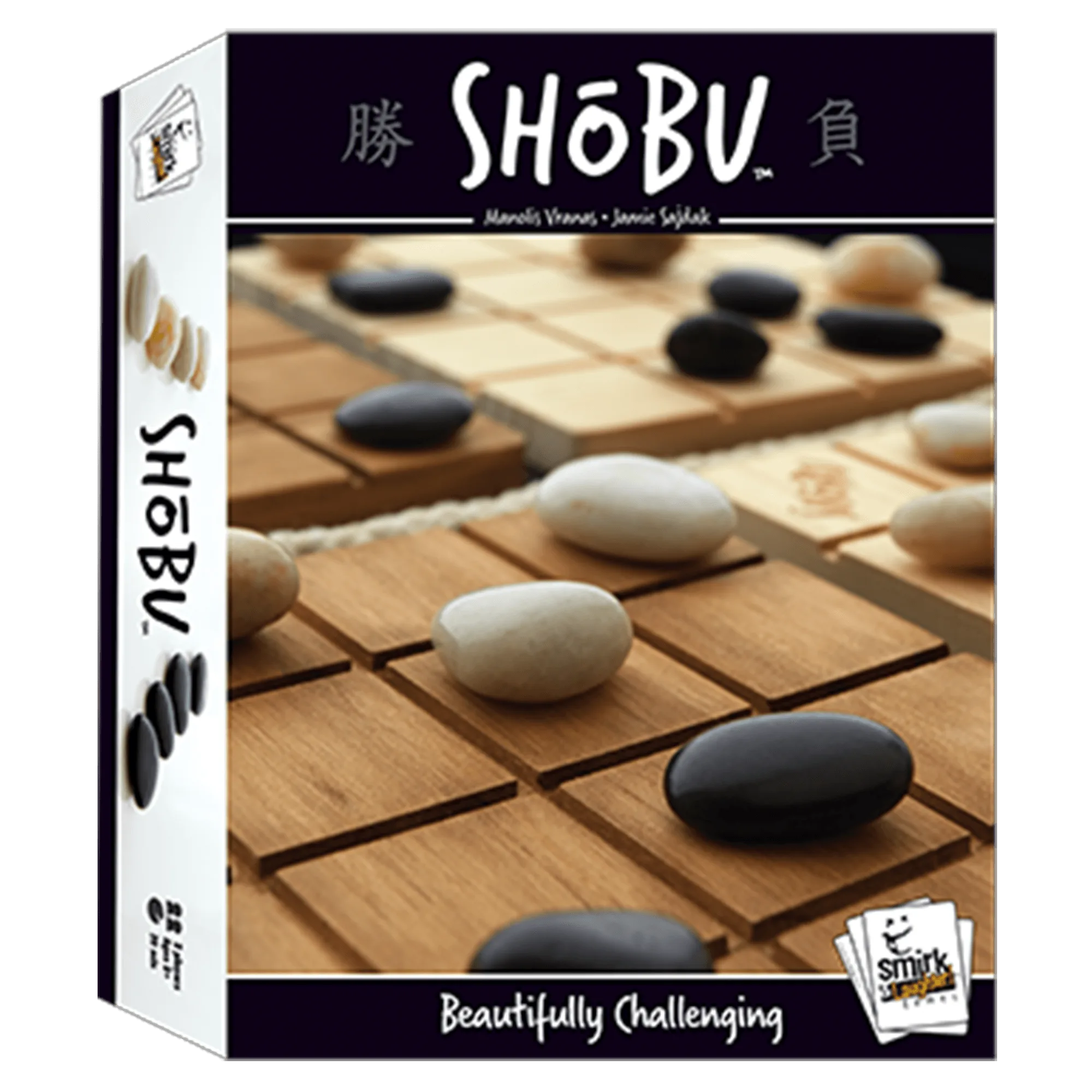
Not every game night is a huge party. Some of the best titles in our catalog shine at 2-6 players and make excellent warm-ups or side tables at a larger event. SHOBU is a two-player strategy game with elegant rules and a downloadable rulebook, so it works well as a quiet duel while others socialize. boop is a deceptively challenging abstract strategy game for two players where kittens push each other around the bed; it is easy to teach and fun to watch.
HIFI is a strategic puzzle game for smaller groups where players place audio cards on song tracks to record the B-side of a reunited band's album. It supports thoughtful, tactical play and works well for 2-4 players. These games are not designed for 8 players, but they are excellent choices for the early or late hours when the group splits into smaller clusters.
- Use smaller games as side tables at large events, not as the main event.
- Check the box for player count before assuming a game scales.
Decision rules for buying party games for large groups
- Rule 1: Match the box to your average headcount: If your typical game night is 8 people, do not buy a game that maxes out at 6. Look for a box that explicitly supports 8 or more, or a team game that scales by grouping players. Check the player count on the box before anything else.
- Rule 2: Choose simultaneous play or teams for 8+ players: Games with individual turn order create downtime that grows with every player. Simultaneous actions, hidden roles, or team turns keep everyone involved. If the game has neither, it will feel slow at 8+. Scan the rules for 'simultaneous' or 'team' before buying.
- Rule 3: Avoid player elimination and long rules explanations: Eliminated players have nothing to do, and long rules explanations kill party momentum. For large groups, pick games where everyone stays involved and the rules can be taught in under 10 minutes. If the rulebook is longer than a few pages, save it for a smaller group.
- Rule 4: Buy smaller games for side tables, not the main event: Two-player games like SHOBU and boop are excellent, but they are not large-group party games. Use them when the group splits into pairs. For the main event, choose a game that supports your full headcount. One large-group game plus one or two small games covers more of the night.
Product facts from our catalog
- SHOBU: SHOBU is a timeless, elegant two-player strategy game. This listing is for the Standard edition, item code SND 1005, in the Board Games category. Rules are available to download. If your large group splits into pairs, SHOBU gives two players a complete, self-contained strategy game with no need for a moderator. The downloadable rules make it easy to learn before game night.
- boop: It looks adorable, but is a deceptively challenging abstract strategy game. Every time you place a kitten on the bed, it goes 'boop,' pushing every other kitten next to it one space away. Line up three kittens in a row to graduate them into cats, then get three cats in a row to win. boop is a two-player game, so it is not a large-group party game. However, its simple placement rule and cute theme make it a great filler for two players while others arrive or set up the main event.
- HIFI: The Meeples Are BACK in this Strategic, Tactical Puzzle Game: In 1973, the internationally renowned band, The Meeples, stunned the world by breaking up during the recording of their highly anticipated album, HIFI. Only the 'A' side was ever released, but now The Meeples have reunited and YOU are the producers charged with recording the 'B' side. Players strategically place audio cards on the song tracks. HIFI is a strategic puzzle game for smaller groups, not a large party game. It works well for 2-4 players who enjoy tactical card placement and a music-themed puzzle, making it a good option for a side table or a separate smaller game night.
Is a large-group party game right for you?
Best for
- Hosts who regularly have 6 or more players and want everyone involved at the same time
- Groups that prefer social, team-based, or simultaneous-play games over deep strategy
- Party organizers who need a game that can be taught in under 10 minutes
Not for
- Groups of 2-4 players who prefer deep strategy and long turns
- Players who dislike social deduction, guessing, or team formats
- Hosts who want a single complex game to satisfy a mixed experience group without splitting into smaller tables
Buying party games for large groups comes down to player count, turn structure, and teaching time. Prioritize games that support your real headcount, keep everyone active through simultaneous or team play, and avoid elimination and long rules. For smaller clusters, SHOBU, boop, and HIFI are excellent side-table options. Choose the right format for your group size, and your next game night will run itself.