Quick Answer
Choose a single-reel Paterson tank when you develop one roll at a time and want to use less chemistry; pick a multi-reel tank when you process multiple rolls or need consistent results across a batch.
Why Tank Capacity Changes Your Chemistry Volume
Paterson tanks are designed around the Super System 4, so a single-reel tank holds one 35mm or 120 reel, while a multi-reel tank holds two or more. The practical difference is how much developer you need: a one-reel tank might need only 290 ml, but a two-reel tank requires about 500–600 ml to cover the film completely.
If you develop one roll at a time, a single-reel tank saves chemistry and is easier to invert. If you shoot a lot or want identical development across several rolls, a multi-reel tank lets you process them together, but you must use enough solution to cover the top reel or you risk uneven development.
Loading Technique Matters More Than Tank Size
Paterson reels use a twin ball ratchet system that makes loading simple, but only if you feed the film straight and without kinks. A bent film edge can cause the reel to jam, which is the most common beginner mistake.
The Auto Load reel is adjustable for 35mm, 126, 120, and 220, so you don't need separate reels for each format. That flexibility is great, but it also means you must set the reel width correctly before loading.
Trade-offs: Agitation and Inversion
With a multi-reel tank, the extra weight and length can make inversion agitation more tiring, and you must be careful not to over-agitate. A single-reel tank is easier to handle and gives you more control over agitation, which is great for beginners or when you're testing a new developer.
However, if you develop several rolls in a multi-reel tank, you can achieve more consistent results because all reels are processed in the same chemistry at the same time.
Step-by-Step: Loading and Developing with a Paterson Reel
- Step 1: Set the Reel Width: Slide the two halves of the Paterson reel apart until the width matches your film format (35mm or 120). Check that the ball bearings are free and click into place. A common mistake is leaving the reel set for 35mm when loading 120, which causes the film to bunch up and jam. Always double-check the width before you start.
- Step 2: Trim the Film Leader: Use scissors to cut the film leader so it has a clean, straight edge. Feed the trimmed end into the reel's entry slot until the ratchet catches. If the edge is ragged, the ratchet may slip and you'll have to start over. A clean cut makes loading much smoother.
- Step 3: Load the Reel in a Changing Bag or Darkroom: With the film and reel in complete darkness, gently push the film onto the reel using a slight back-and-forth motion. Let the ratchet guide the film, and avoid forcing it. If you feel resistance, stop and check for kinks. Forcing the film can cause scratches or overlapping layers, which ruins the negatives.
- Step 4: Place the Reel in the Tank: Put the loaded reel onto the center column of the Paterson tank. For a multi-reel tank, add the lower spacer and then the second reel, making sure both are seated properly. Forgetting the spacer can cause the top reel to float, leading to uneven development. Always use the spacer that comes with the tank.
- Step 5: Pour in the Developer and Agitate: Pour in the correct amount of developer for your tank size—more chemistry is needed for multi-reel tanks. Start agitation immediately, typically 10 seconds of inversion, then repeat as your developer's instructions specify. For multi-reel tanks, ensure the developer covers the top reel completely. Insufficient solution leaves the top portion of the film underdeveloped.
Paterson Reel at a Glance
-
Paterson Developing Tank Reel - Single: The Paterson Developing Tank Reel is designed for the Super System 4 tank and uses a twin ball ratchet system for easy loading. This ratchet system grabs the film edge and lets it glide onto the reel without touching the emulsion, which reduces the chance of fingerprints and scratches.
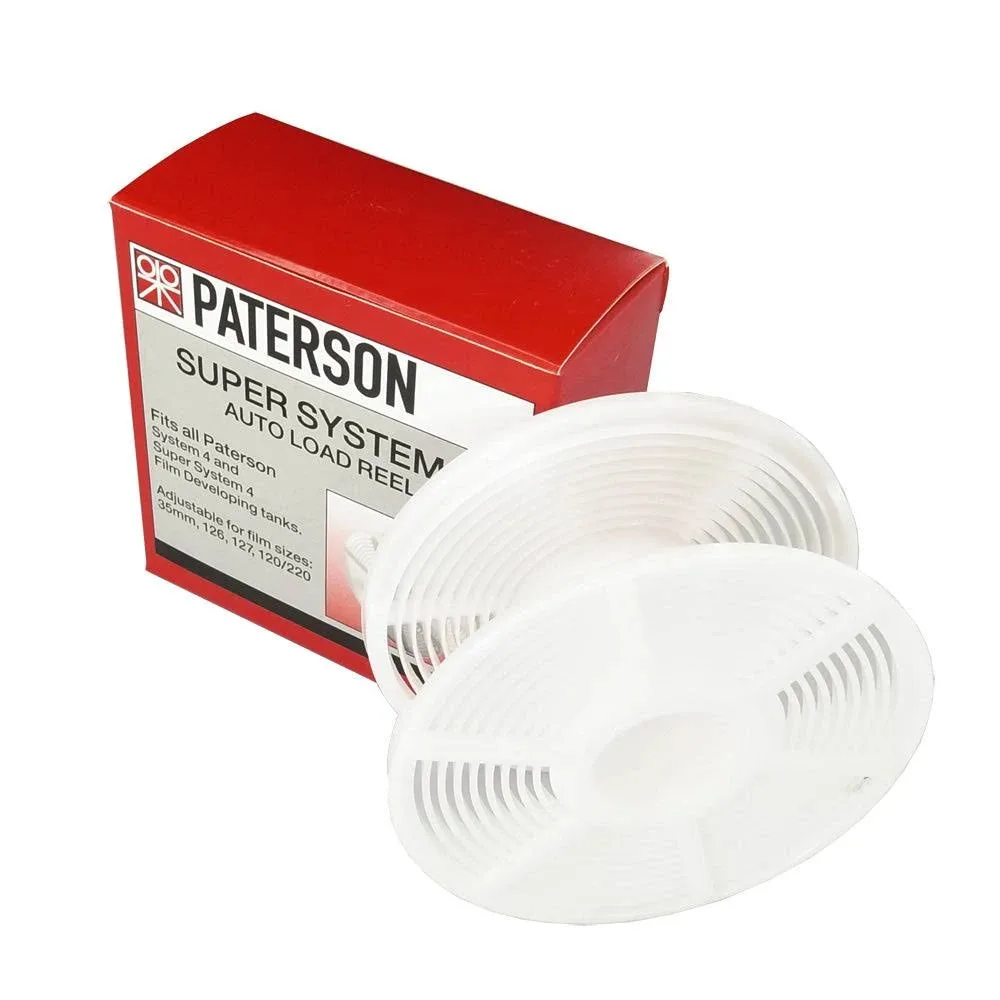
Paterson Developing Tank Reel - Single
-
Paterson Developing Tank Reel - Single: It is adjustable to take 35mm, 126, 120, or 220 film. One reel covers multiple formats, so you can switch between 35mm and 120 without buying a new reel—just remember to set the width correctly before loading.