Quick answer
Buy Foot Serjeants (1100-1320) first if you want a dependable, well-armed core for your medieval army. Choose Peasant Levy (1100-1350) when you need cheap bodies to fill out a levy contingent or represent a lord's household and town levies. The two boxes solve different problems: serjeants give you professional staying power, levy gives you numbers and period flavour.
What each box actually gives you
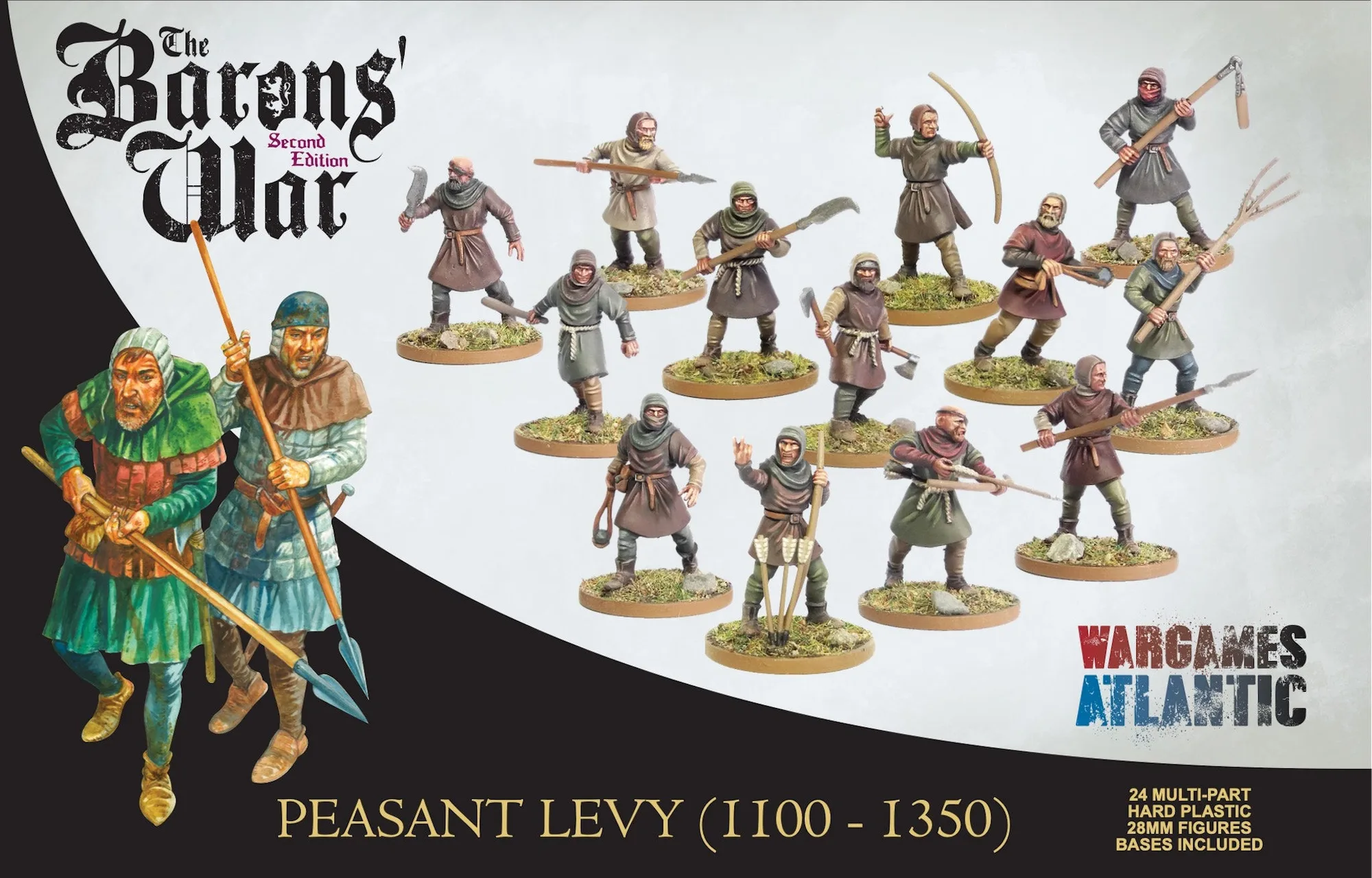
Peasant Levy (1100-1350) represents the bulk of an army that was rarely the decisive element. The men were raised as members of a lord's household, as mercenaries, or levied from a town or the countryside. Many were armed, had some training, and came from the upper peasantry, the tenant farmers who would have at one time had... [catalog text truncated].
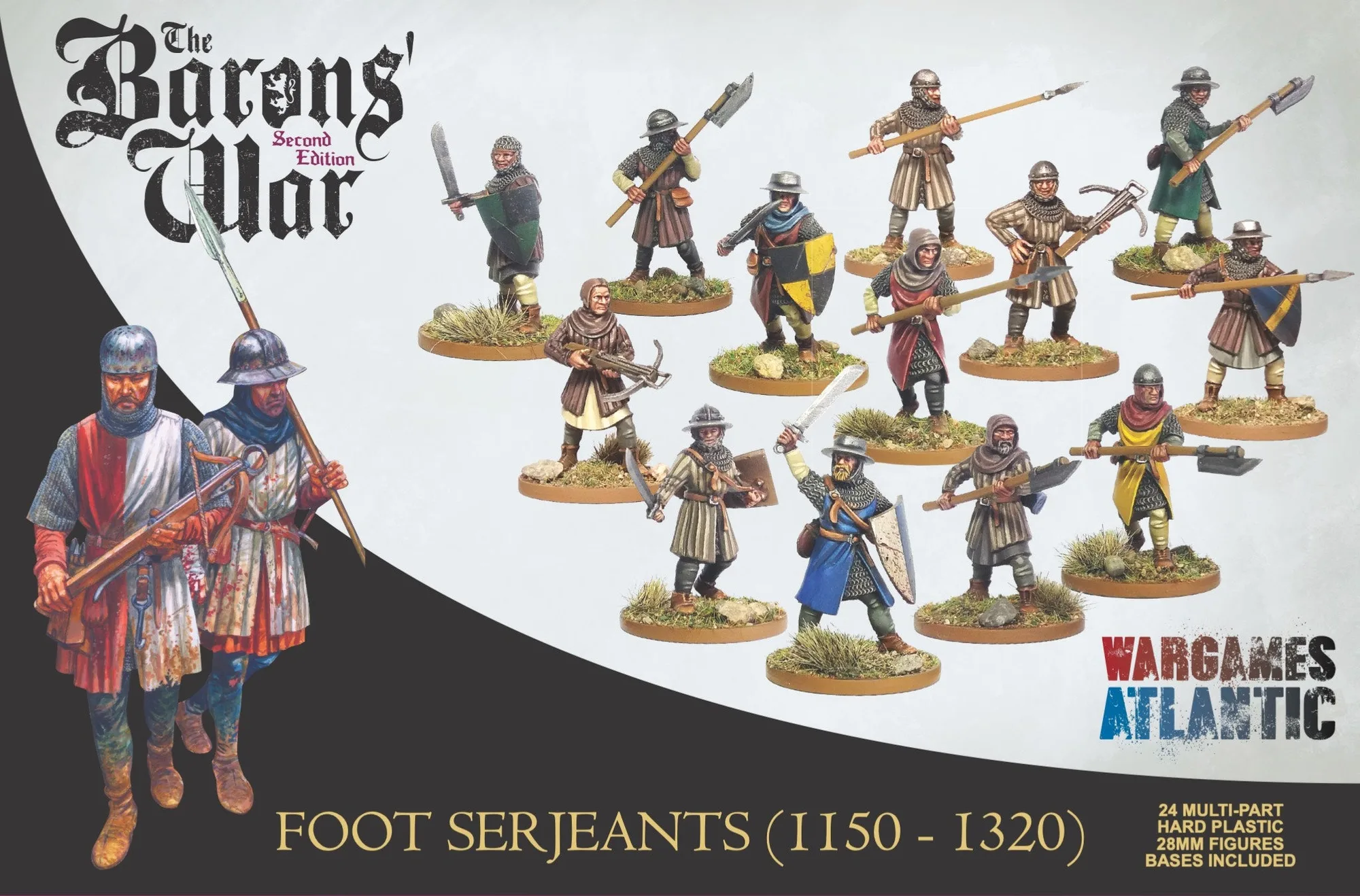
Foot Serjeants (1100-1320) were the lower-ranking warriors of a lord's army. The name comes from the Latin serviens, meaning to serve. Unlike knights, serjeants rose through the ranks. They were professional soldiers, well armed and armored, and played a significant role in the armies of the time. The hard plastic box set allows you to build up to 24 serjeants with a wide variety of options.
How to use them together in a 1100-1350 force
A common approach is to make Foot Serjeants the armoured centre that holds a line or anchors a flank, while Peasant Levy fills out the battle line as a second wave, camp guard, or screen. Because the levy were often raised from towns or the countryside, they also let you model local contingents without buying another knightly unit. If you are building a themed army, decide first whether your story is about a lord's professional household (serjeants) or a wider levy of the upper peasantry (levy).
What the boxes do not tell you
The catalog records for these two sets do not list the exact number of figures, pose counts, or weapon options for Peasant Levy, and they do not list the full contents or option types for Foot Serjeants. That absence matters when you are planning a specific unit size or a tournament-legal loadout. Check the current product page or ask the community for sprue breakdowns before you commit to a list that depends on a precise figure count.
Trade-offs: levy vs serjeants
- Numbers vs quality: Peasant Levy gives you bulk and period flavour, but the men were rarely the decisive element in a battle. Foot Serjeants gives you professional, well-armed troops, but the box builds up to 24 figures, so you may need more boxes for a large unit. Choose levy for bodies; choose serjeants for backbone.
- Historical role vs tabletop role: Levy represent household, mercenary, or local levies with some training. Serjeants represent lower-ranking professionals who rose through the ranks. On the table, levy often work as a screen or second line, while serjeants can anchor a flank or hold an objective. Match the unit's historical job to the scenario you play most.
- List building vs collection building: If you are filling out a themed 1100-1350 army, levy let you add local colour cheaply. If you are building a competitive core, serjeants give you a reliable armoured unit. Neither box replaces the other in a balanced force. Buy the unit your current list is missing, not the one with the better stat line.
Product facts at a glance
- Peasant Levy (1100-1350): Peasant Levy (1100-1350) were raised as members of a lord's household, as mercenaries, or levied from a town or the countryside. Many were armed, had some training, and came from the upper peasantry. This box is the right choice when your army needs a levy contingent that looks and fights like part-time soldiers rather than a professional core.
- Foot Serjeants (1100-1320): Foot Serjeants (1100-1320) were professional soldiers, well armed and armored, and the hard plastic box allows you to build up to 24 serjeants with a wide variety of options. If you want a smaller, tougher unit that can hold its own in melee, this is the box to start with.
Which should you buy?
Best for
- Players who need a professional, well-armed core unit for a 1100-1320 army.
- Collections that want a smaller, tougher unit that can hold a line or flank.
- Gamers who prefer armoured serjeants over part-time levy.
Not for
- Players who need a large, cheap levy contingent to fill out a battle line.
- Armies themed around town or countryside levies rather than a lord's household.
- Buyers who want a single box to represent the bulk of a medieval army.