Quick answer
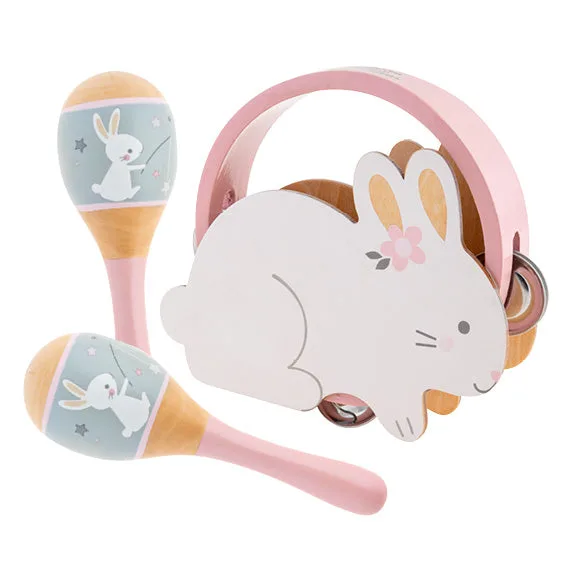
For most toddlers, a kids percussion set like the Stephen Joseph Percussion Set offers the easiest entry point because shaking and tapping come naturally before fine-motor finger work. A musical toy piano is better for older preschoolers who can press individual keys and follow simple patterns. Choose based on your child's age and current motor skills.
How percussion sets and toy pianos differ for little hands
A kids percussion set typically includes instruments like maracas and a tambourine that rely on gross motor movements—shaking, tapping, and waving. These actions are intuitive for children as young as 12 months and don't require precise finger placement. The Stephen Joseph Percussion Set, for example, is designed with handles sized for small fists, so toddlers can grip and shake without frustration.
A musical toy piano, by contrast, demands fine motor control to press individual keys and often requires understanding cause-and-effect in a more structured way (press a key, hear a note). This makes it a better fit for children around age 3 and up who can sit still longer and coordinate single-finger presses. Some toy pianos also include songbooks or lights, which add complexity that can overwhelm a younger toddler.
What to look for when choosing a first instrument
Focus on durability, safety, and how the instrument matches your child's current play style. Percussion sets made from sturdy plastic or wood with no small parts are ideal for babies who still mouth objects. Look for smooth edges and non-toxic finishes. Toy pianos should have keys that are large enough to press easily and a stable base so they don't tip over during enthusiastic play.
Also consider noise level. Percussion instruments like tambourines and maracas produce rhythmic sound that many parents find more tolerable than sustained piano notes. If you live in an apartment or have a noise-sensitive household, a percussion set might be the more harmonious choice.
Tradeoffs at a glance
- Motor skill requirement: Percussion sets use gross motor skills (shake, tap). Toy pianos need fine motor control (press individual keys). Choose percussion for younger toddlers; pianos for preschoolers.
- Noise and play style: Percussion sets produce rhythmic, intermittent noise. Toy pianos can sustain notes and may include melodies or lights. Percussion is often more parent-friendly for shared spaces.
- Longevity and progression: A percussion set stays fun as kids learn to keep a beat. A toy piano offers more structured musical learning (notes, songs) for older children. Piano grows with the child longer if they show musical interest.
Product facts at a glance
- Percussion Sets: The Stephen Joseph Percussion Set includes two maracas and a matching tambourine, sized for little hands. Available in multiple style options. Your child can shake, tap, and bang right away without needing to learn finger placement—great for building rhythm and confidence from an early age.
- Muslin Bib Sets: The Stephen Joseph Muslin Bib Sets come with 2 bibs and a coordinating spoon, made from 100% cotton muslin, machine washable, and dishwasher-safe spoon. While not a music toy, this bib set is a practical gift pairing for messy mealtimes—useful if you're building a baby registry or shower gift bundle alongside a percussion set.
Which first instrument fits your child?
Best for
- Toddlers 12–24 months who love to shake, bang, and move
- Parents wanting a low-frustration, high-success first instrument
- Gift-givers pairing a music toy with practical baby items like bib sets
Not for
- Older preschoolers (3+) ready for structured musical play
- Children who already show interest in melodies and songs