Quick answer
Period panties are better for period days because they have built-in absorbent layers that hold fluid, while regular panties are better for everyday wear because they are lighter, easier to care for, and available in a wider range of styles. Many people keep both: period panties for heavier flow days and regular panties for the rest of the month. Neither replaces medical advice, and neither is inherently superior—it depends on your flow, routine, and comfort needs.
How absorbency actually differs
Period panties contain one or more absorbent layers sewn into the gusset. That construction lets them hold menstrual fluid for a set number of hours, similar to how a pad works but without adhesive. Regular panties have no absorbent core, so fluid passes straight through to whatever you are wearing. If you are comparing period underwear vs pads, note that period panties are reusable and washable, while pads are disposable and typically changed more often. Absorbency ratings vary by brand and style, so check the specific product's stated capacity rather than assuming all period panties hold the same amount.
Care and washing: the daily reality
Regular panties go in the wash like any other delicates. Period panties need a rinse or pre-wash before laundering to prevent staining and odor, and they should air-dry to protect the absorbent layers. That extra step matters on busy days. If you are deciding whether period panties are better for your lifestyle, factor in the time and space for soaking or rinsing. Some people keep a small wet bag for used pairs and wash them all at the end of the cycle.
Fit, feel, and style range
Because period panties have extra layers, they can feel thicker or fit more snugly than a regular panty in the same size. That is not a flaw—it is the trade-off for absorbency. Regular panties come in far more cuts, fabrics, and decorative styles, from delicate lace to seamless microfiber. If you want a panty that feels like lingerie rather than protection, a regular panty will usually win on aesthetics. If you want coverage without a pad, period panties win on function.
Cost over time
Period panties cost more per pair up front than regular panties, but they are reusable, so the cost per period can drop over months of use. Regular panties are cheaper to replace and easier to find on sale. If you are building a period kit, start with two or three pairs of period panties for your heaviest days and keep your regular panties for lighter days and backup.
Trade-offs to weigh
- Absorbency vs. slimness: Period panties hold fluid but add bulk; regular panties stay slim but offer no absorbent protection. Choose period panties for flow days, regular panties for the rest of your cycle.
- Reusability vs. convenience: Period panties need rinsing and air-drying; regular panties go straight into the wash. If you dislike extra laundry steps, regular panties are simpler.
- Style range vs. function: Regular panties come in more cuts and decorative fabrics; period panties prioritize function over fashion variety. You can own both—use period panties as your period kit and regular panties for everyday.
Product facts
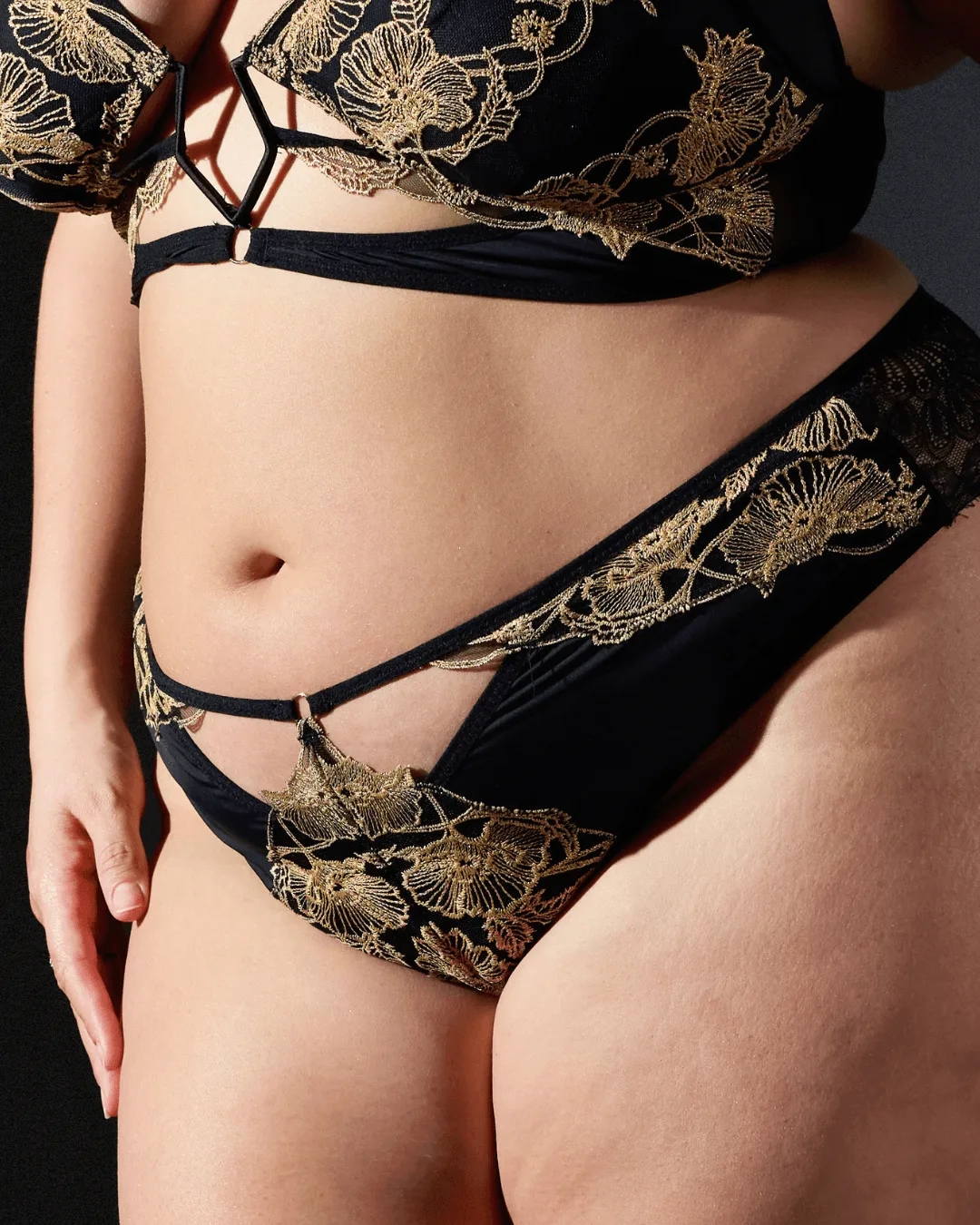
- Demeter Bikini: Metallic lace and microfiber panty with custom T&S metallic lace detailing and mesh cutouts. A regular panty option for days when you want decorative lace and mesh rather than absorbent layers.
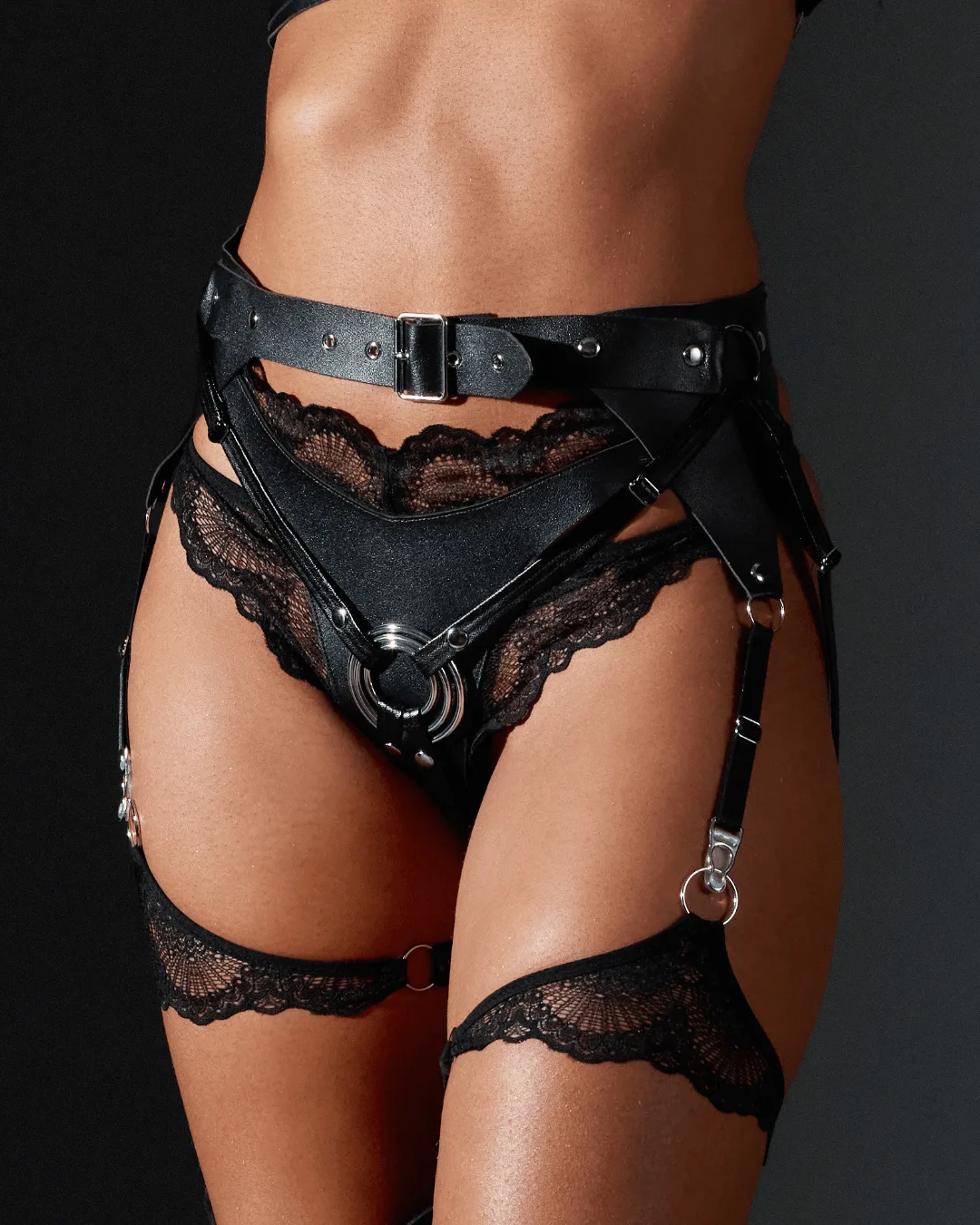
- Heroine Strap On Harness: Vegan leather strap-on style harness with three ring sizes, adjustable buckle belt, garter clips, back body straps, and swan hook closures at center-back. Shows how varied regular panty and harness styles can be when absorbency is not the priority.
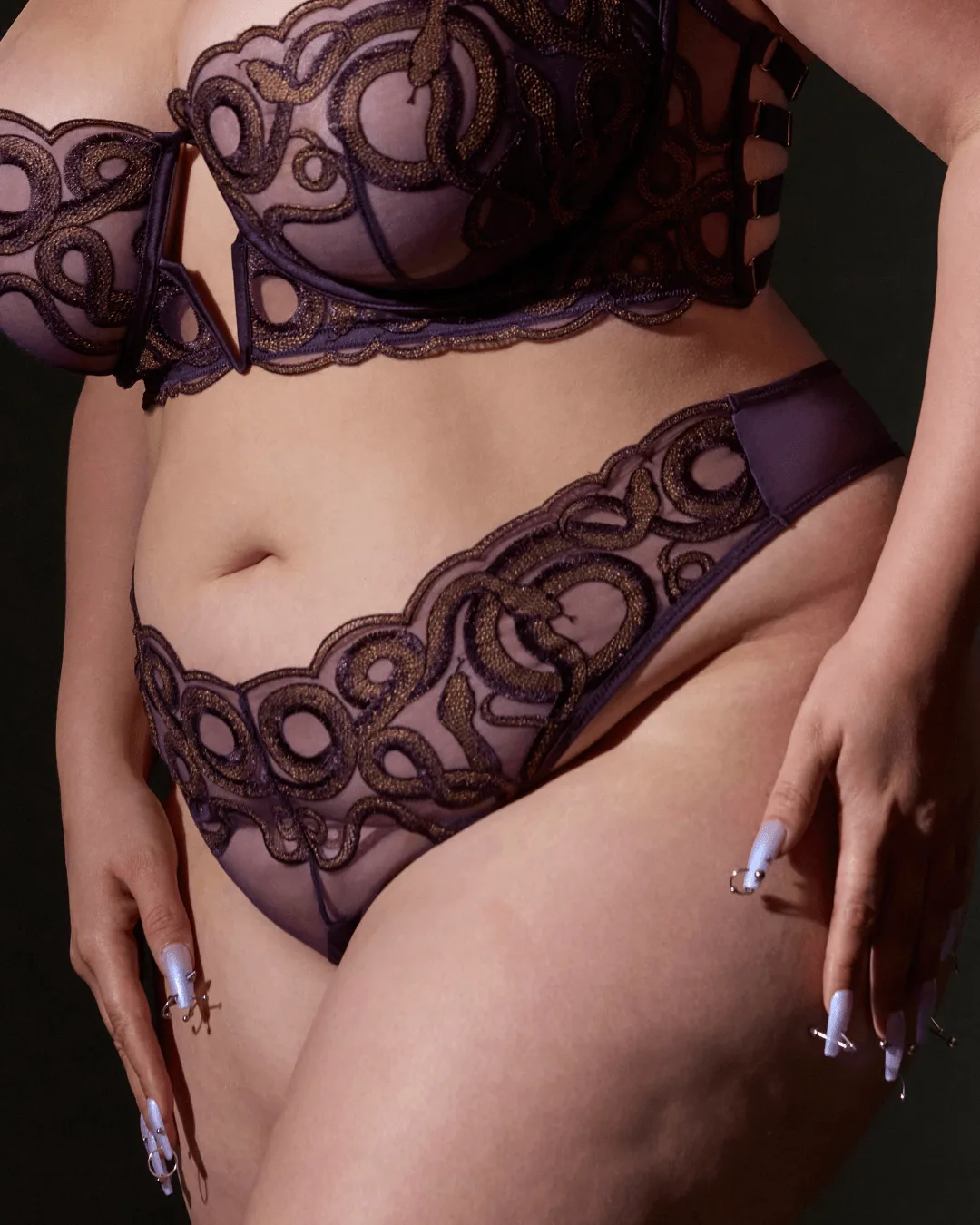
- Scylla Thong: Embroidered lace thong with iconic custom T&S snake design and microfiber and stretch mesh back. A lightweight regular panty choice for everyday wear when you do not need period protection.
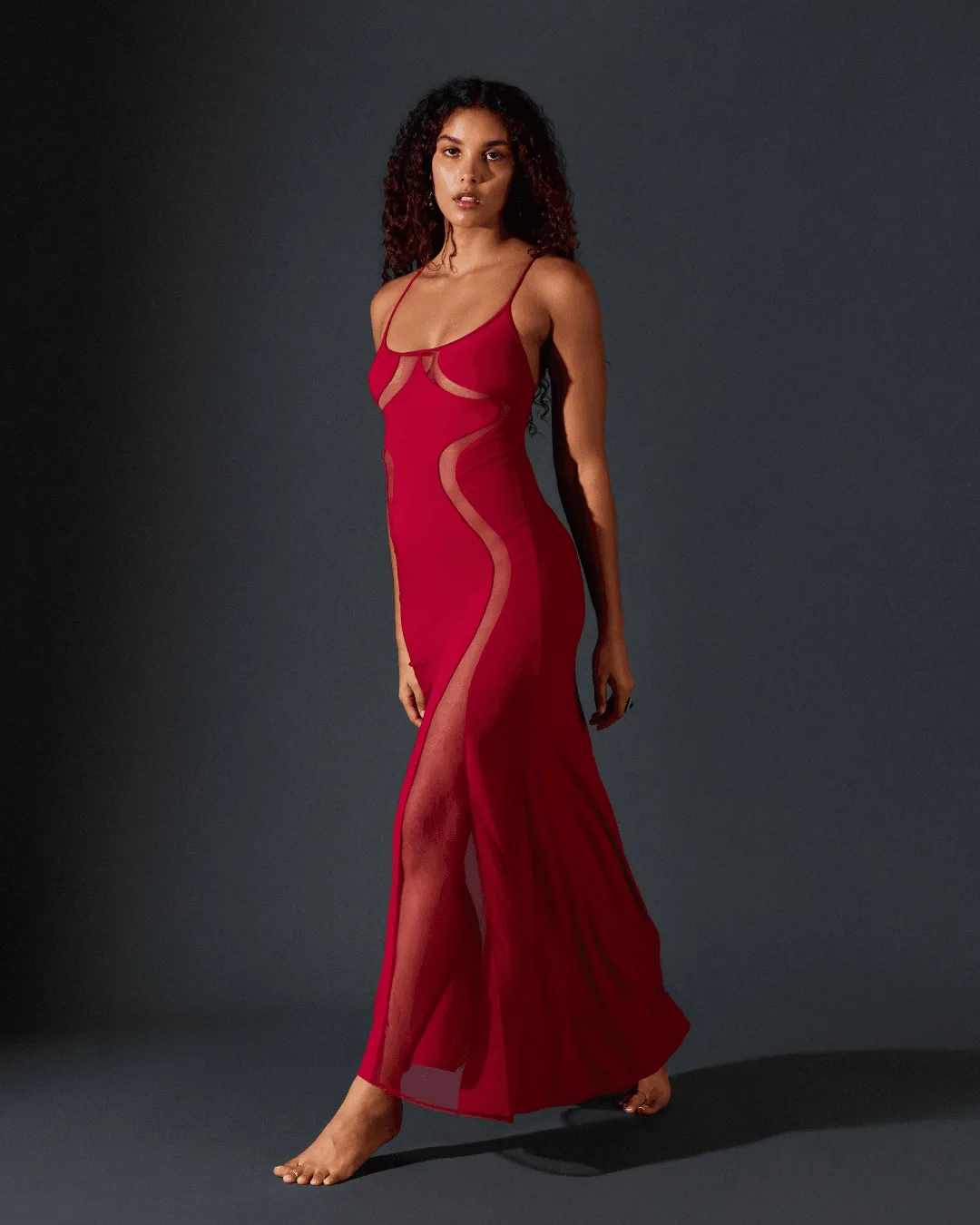
- Psyche Slip - Ruby: Dramatic floor-sweeping slip with serpentine color blocking and peek-a-boob cutouts, soft shiny cupro jersey and ultra-sheer tulle, straps crossed and tied at center-back for adjustability. An example of a slip that works as innerwear or outerwear, useful when you want a regular (non-absorbent) base layer.
Which should you choose?
Best for
- People with light to moderate flow who want reusable protection without pads
- Those building a period kit for overnight or backup coverage
- Anyone who prefers a snug, secure fit on period days
Not for
- People who want the thinnest possible panty with no extra layers
- Those who prefer disposable products and minimal laundry
- Anyone looking for a decorative lingerie look rather than absorbent function