Quick answer
To choose a pet bed for your dog's sleeping style, first identify how they typically curl up or stretch out. Then match that to a bed shape and support level — for example, a bolsters or flat cushion for snugglers, and a firm mattress for sprawlers.
Why sleeping style matters for bed choice
A dog that curls into a tight ball retains body heat differently than one that sprawls flat. Choosing a shape that suits their natural posture helps them feel secure and sleep deeper, while the wrong shape can leave them restless.
Some dogs change positions throughout the night. In that case, a simple rectangular or oval bed with open space, rather than a nest or donut with high walls, is more versatile.
Material and support trade-offs
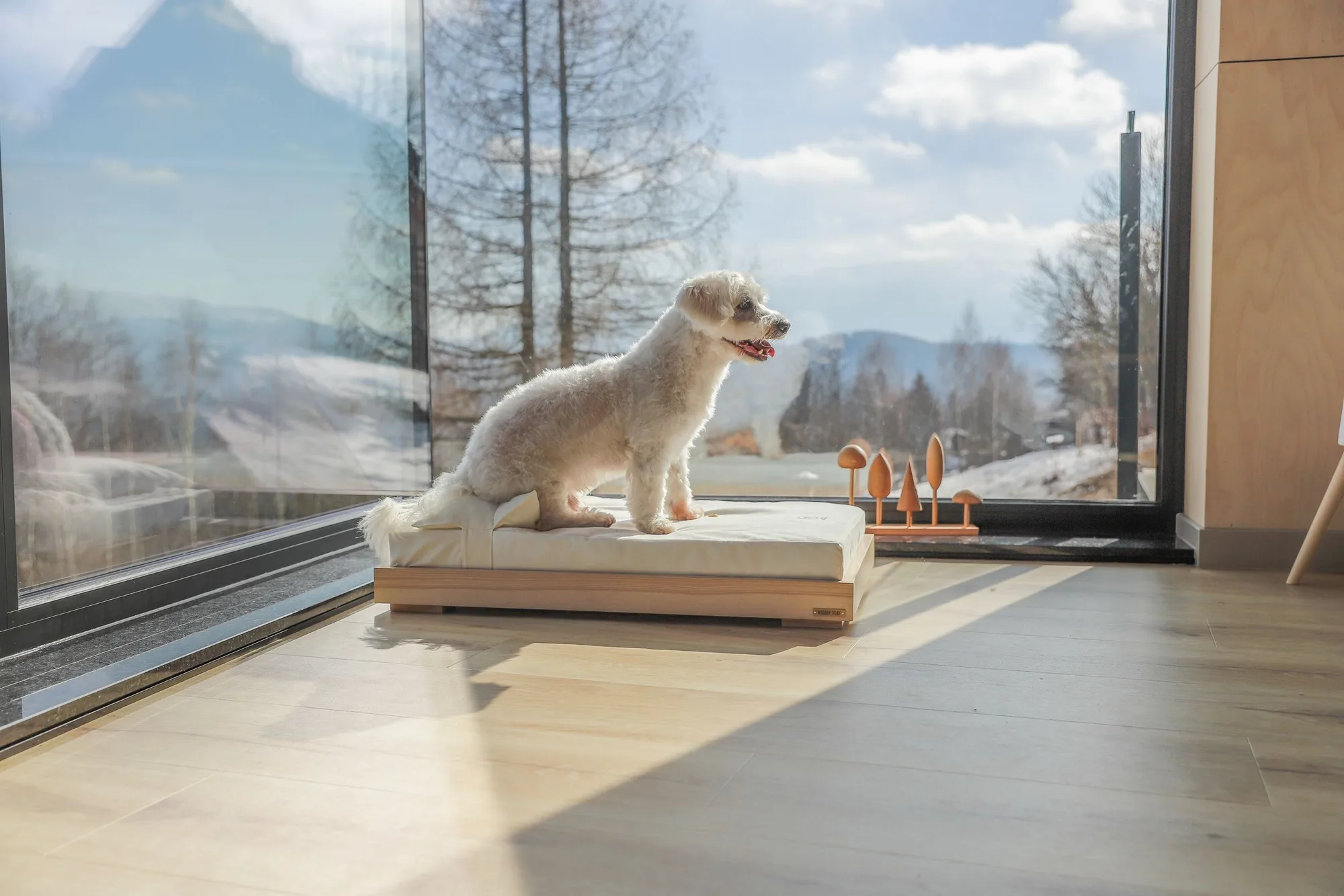
Solid wood frames offer durability and a natural look that blends with home decor, but they are heavier to move than fabric-only beds. The Pet Bed No.03 uses a solid wood construction designed for long use, while also allowing you to choose between an orthopedic mattress for joint support or a standard mattress for lighter needs.
Orthopedic foam can relieve pressure for older or larger dogs, but it retains more heat than ventilated materials. Consider your dog's age, weight, and whether they tend to overheat easily.
Decision rules for choosing by sleeping style
- Curler / ball sleeper: Choose a round, nest, or donut bed with raised edges. The enclosed shape helps them feel secure and preserves body heat. Look for a bed with soft filling in the walls that they can lean against. Measure your dog from nose to tail when curled up — add 4-6 inches for the minimal bed diameter.
- Side sleeper: A rectangular or oval bed with a flat cushion and a low bolster or no bolster works best. Side sleepers need enough space to stretch out without a wall interfering. For joint protection, consider an orthopedic mattress option like the one offered with the Pet Bed No.03. Get a bed that is at least as long as your dog from nose to base of tail, plus a few inches for sprawl room.
- Sprawler / belly sleeper: Choose a large, flat mattress-style bed without any raised edges. These dogs need maximum surface area. A firm, breathable cushion prevents overheating. A solid wood frame with a spacious flat surface, like the Pet Bed No.03 in its largest size, supports a belly-down posture without pressure points. Measure your dog from nose to tail while fully stretched — that measurement is the minimum bed length.
- Leaner (rests head on a surface): A bed with a higher rim or a separate head bolster gives dogs that like to rest their chin on something a comfortable spot. Look for a bed with a firm but padded edge. If your dog often places their head on furniture edges or pillows, a trimmed bolster bed is a good match.
Featured product
-
pet bed No.03: This pet bed combines a solid wood frame with two mattress choices: an orthopedic mattress for added joint support or a standard mattress. If your dog sleeps curled up or on their side with pressure on hips and shoulders, the orthopedic mattress option can help maintain comfort throughout the night.
pet bed No.03
Who is this guide for?
Best for
- Dog owners who want to match the bed shape to their dog's natural sleeping posture for better rest
- Small to medium dog owners looking for a durable, wood-framed bed with a joint-support option
Not for
- Dogs that prefer to sleep inside a completely enclosed cave or covered den
- Owners wanting a lightweight, portable bed that can be easily moved between rooms