Quick answer
Pack a pet first aid kit around four jobs: control bleeding, clean wounds, remove foreign objects, and stabilize your pet until you reach a vet. For most dog and cat owners, a small soft-sided kit with gauze, self-adhesive wrap, saline, tweezers, a digital thermometer, and a copy of your vet's contact info covers everyday scrapes and travel mishaps. Build one kit for home and a smaller duplicate for the car or stroller.
Start with the core contents every kit needs
A useful pet first aid kit contents list is shorter than most people expect. You need supplies that buy time, not supplies that replace veterinary care. Pack sterile gauze pads and rolled gauze, self-adhesive bandage wrap, medical tape, blunt-tipped scissors, fine tweezers, a digital thermometer, disposable gloves, saline wound flush, chlorhexidine or povidone-iodine antiseptic, and a small bottle of 3% hydrogen peroxide only if your vet has told you to use it for a specific situation.
Add a tick removal tool, a pill splitter, a syringe or dosing spoon, a spare slip lead, and a muzzle that fits your dog. Even a friendly dog in pain may bite, and a muzzle protects both of you. For cats, include a thick towel or blanket for restraint and a carrier liner you can throw away.
- Sterile gauze pads and rolled gauze
- Self-adhesive wrap and medical tape
- Blunt scissors, fine tweezers, tick tool
- Digital thermometer and water-based lubricant
- Saline flush and pet-safe antiseptic
- Disposable gloves and a spare slip lead
- Vet contact card and a copy of vaccination records
Dog first aid kit checklist: what to add for dogs
Dogs get cuts on paws, torn nails, insect stings, and stomach upset from eating something they should not have. A dog first aid kit checklist should include paw protection such as self-adhesive wrap or a boot, an Elizabethan collar or inflatable recovery collar to stop licking, and a spare leash. If your dog is a power chewer, add a safe chew to keep them occupied during recovery, but never use food as a reward right before a vet visit unless your vet approves.
Keep hydrogen peroxide out of the routine kit. It can damage tissue and is only useful for inducing vomiting under direct veterinary instruction. Instead, write your vet's after-hours number on a card and tape it inside the lid.
- Self-adhesive paw wrap or a spare boot
- Recovery collar to prevent licking
- Spare leash and a slip lead
- A safe, long-lasting chew for crate rest
Cat first aid kit essentials: what to add for cats
Cat first aid kit essentials lean toward restraint and stress reduction. Cats hide pain and panic easily, so include a thick towel for wrapping, a rigid carrier that opens from the top, and a pheromone wipe or spray if your cat responds to it. Add a pill pocket or a pill gun if your cat takes medication, and keep a small flashlight for checking eyes, ears, and mouth.
Cats are sensitive to many human medications. Never give acetaminophen, ibuprofen, or aspirin without veterinary direction. Pack only what your vet has approved for your cat, labeled with the dose and date.
- Thick towel and top-opening carrier
- Pheromone wipe or spray
- Pill gun or pill pockets
- Small flashlight for exams
Build a travel pet first aid kit that actually gets used
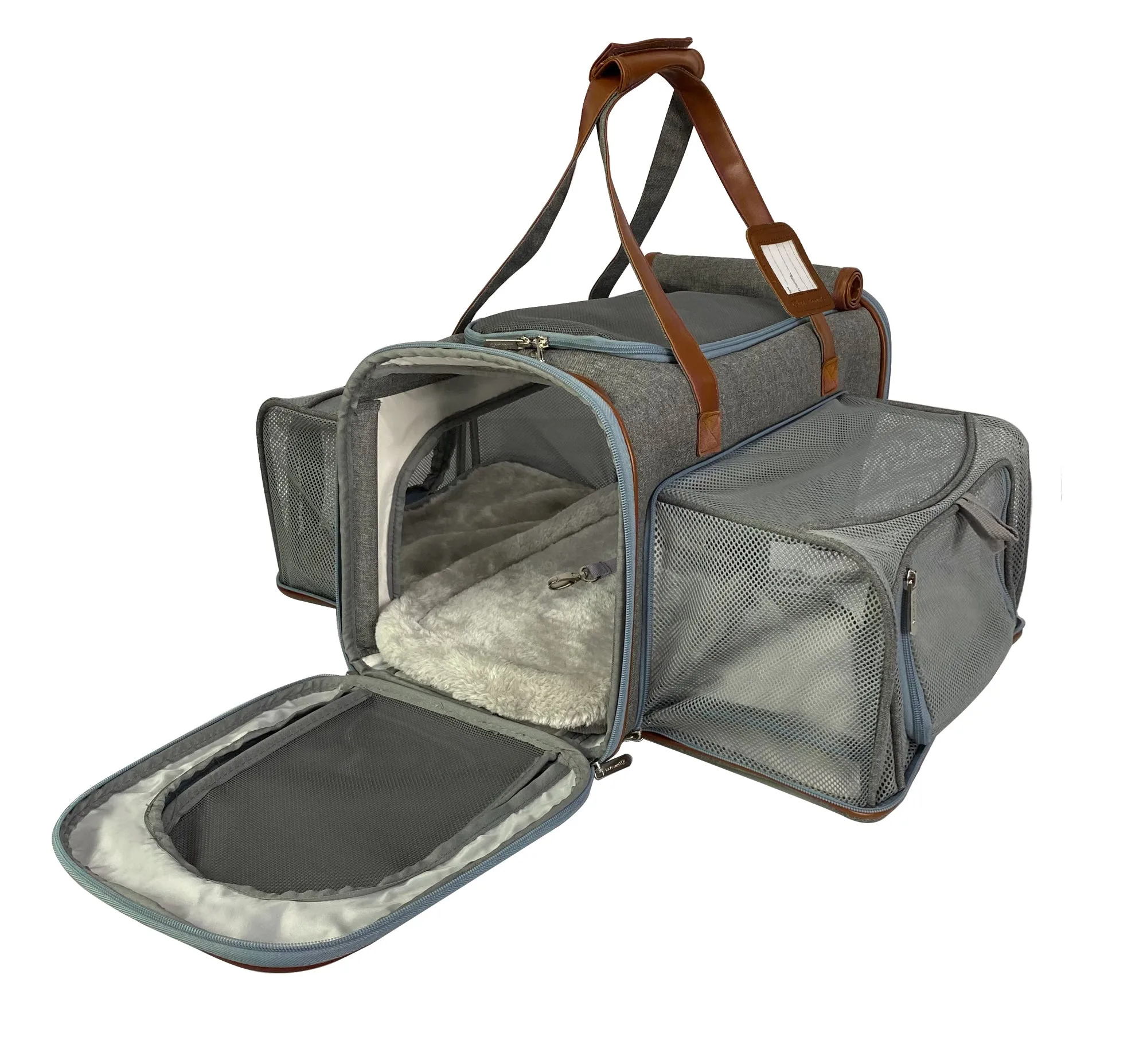
A travel pet first aid kit should be a smaller duplicate of your home kit, not the same bag you have to remember to grab. Keep it in the car, in a stroller basket, or in your pet's go-bag. Include the same core supplies in travel sizes, plus a collapsible bowl, a spare leash, waste bags, and a copy of your pet's rabies certificate if you cross state lines.
If you use a pet stroller, the underseat basket is a good place for a flat kit. Do not overload it; a heavy kit makes the stroller tip-prone on curbs. A soft-sided pouch that lies flat works better than a rigid box.
- Travel-size duplicate of the home kit
- Collapsible bowl and spare leash
- Waste bags and rabies certificate copy
- Flat soft pouch for stroller or car
How to store and refresh your kit
Check your kit every three months. Replace anything expired, dried out, or opened. Saline and antiseptic have shelf lives, and adhesive wrap loses stickiness in heat. Write the inspection date on a piece of tape on the lid so you can see at a glance when it was last checked.
Store the kit where you can reach it in seconds: near the main door, in the car, or beside your pet's crate. If you have both a dog and a cat, label separate pouches inside one bag so you are not sorting through supplies during a stressful moment. Keep a pet emergency supplies list taped inside the lid so you can restock quickly after use.
- Inspect every three months
- Replace expired or opened items
- Label dog and cat pouches separately
- Tape a restock list inside the lid
Decision rules for building your kit
- Home vs. travel: Build one full kit for home and a smaller duplicate for the car or stroller. Do not plan to move one bag between both. Two kits means you never leave supplies behind.
- Dog vs. cat: Add paw wrap and a recovery collar for dogs; add a thick towel, top-opening carrier, and pheromone wipe for cats. Species-specific additions matter more than a bigger bag.
- Medications: Only pack medications your vet has approved for your pet, labeled with dose and date. Never assume a human medication is safe. When in doubt, leave it out and call your vet.
- Chews and recovery: A long-lasting chew can help during crate rest, but skip it if your vet has restricted food or chews after a procedure. Follow discharge instructions over convenience.
Products that support a pet first aid routine
- Turmeric: Rooted Owl Turmeric features curcumin combined with black pepper to enhance curcumin absorption, along with Vitamin C to complement overall wellness. Some owners keep a joint-support supplement on hand for occasional discomfort during recovery or aging; ask your vet before adding it to a pet already on medication.
- Country Living Foldable Fabric Dog Toy Storage Bin - Convenient Organizer for Pet Accessories: The Collapsible Fabric Pet Toy Storage Basket is a durable fabric basket with a spacious interior for pet toys and a collapsible design for easy storage. A dedicated bin keeps chews, wraps, and recovery supplies separate from daily toys so your first aid pouch does not get raided.
- 4-in-1 Double Pet Stroller with Detachable Carrier and Travel Carriage: The 4-in-1 Double Pet Stroller comes with 2 detachable pet carriers and can be used as a double stroller, carrier bag, pet crate, or car seat. A stroller with a detachable carrier lets you move an injured small pet without lifting them repeatedly, and the underseat area can hold a flat travel kit.
- 5-6 Inch Braided Collagen Stick: These 5-6 inch braided collagen sticks are a long-lasting chew designed for powerful chewers in small statures, lasting 20% longer than bully sticks of the same size. A long-lasting chew can keep a dog occupied during crate rest, but skip it if your vet has restricted food or chews after a procedure.
Who this guide fits
Best for
- New dog or cat owners building a first kit
- Owners who travel with pets by car or stroller
- Multi-pet households that need labeled, separate pouches
Not for
- Owners looking for a substitute for veterinary care
- Pets with a known chronic condition that needs a vet-designed emergency plan
- Anyone who wants a single pre-assembled kit without customizing for their pet