Quick Answer
When a dog walks away from a puzzle toy, the cause is almost always one of four things: the difficulty jumped too fast, the reward isn't worth the work, the toy has a mechanical flaw, or the dog never learned the basic action. Fix the starting difficulty first, then the reward, then the cleaning routine. If your dog still ignores the toy after two or three short sessions with high-value treats, switch to a different puzzle style rather than pushing the same one.
Mistake 1: Starting at a Difficulty Your Dog Never Earned
The most common reason a dog ignores a puzzle toy is that the first session was too hard. A dog who has never slid a lid, lifted a flap, or nosed a drawer has no idea what the toy is asking. When the very first attempt fails, many dogs simply stop trying—and that learned giving-up carries over to the next toy.
Start with a puzzle where the reward is visible and the action is obvious: a treat under a loose flap, a kibble in an open channel. Let the dog succeed three or four times in a row before you add any resistance. Difficulty should increase only after your dog is finishing the current level in under a minute, not after a set number of days.
- One variable at a time: add a latch, a slide, or a lift—never all three at once.
- Short sessions beat long ones: two to five minutes is plenty for a beginner.
- End on a win. Put the toy away while your dog is still succeeding.
Mistake 2: Using Rewards That Aren't Worth the Work
A puzzle toy is a trade. If the food inside is your dog's everyday kibble, the payoff often doesn't justify the effort—especially for a dog who is already unsure of the mechanics. Save the highest-value treats for puzzle sessions and use them only there. That contrast is what makes the toy worth engaging with.
Smell matters more than size. Strong-smelling treats leave a scent trail on the wood or plastic, which keeps a dog working even after the food is gone. Tiny, low-odor kibble disappears without leaving a reason to keep searching.
- Reserve one specific treat for puzzle toys so the association stays strong.
- Avoid stacking the toy so full that treats fall out for free—free food teaches nothing.
- If your dog sniffs and walks away, the reward is the problem, not the toy.
Mistake 3: Skipping the Cleaning Routine
Pet puzzle toys collect saliva, treat residue, and crumbs in exactly the crevices your dog has to nose into. Over time that residue changes the smell of the toy and can make moving parts sticky or sluggish, so a puzzle that used to slide freely now sticks—and a sticking puzzle feels broken to your dog.
Clean after every few sessions, not once a season. Check the manufacturer's guidance for your specific material before soaking anything, and never submerge a toy with a sealed compartment or a wooden base. For wood puzzles, wipe rather than soak, and let the toy dry completely before the next session so the pieces don't swell or warp.
- Wipe food-contact surfaces after each use; deep clean weekly for heavy chewers.
- Dry fully before storage—trapped moisture is what ruins wood and promotes odor.
- Inspect moving parts for cracks or loose pieces at the same time you clean.
Mistake 4: Blaming the Dog for a Design Mismatch
Not every puzzle suits every dog. A dog who works with his paws needs a different mechanism than a dog who works with his nose. If your dog consistently paws at a flap-style toy but never touches a slider, that's information—not stubbornness. Match the mechanism to how your dog naturally investigates.
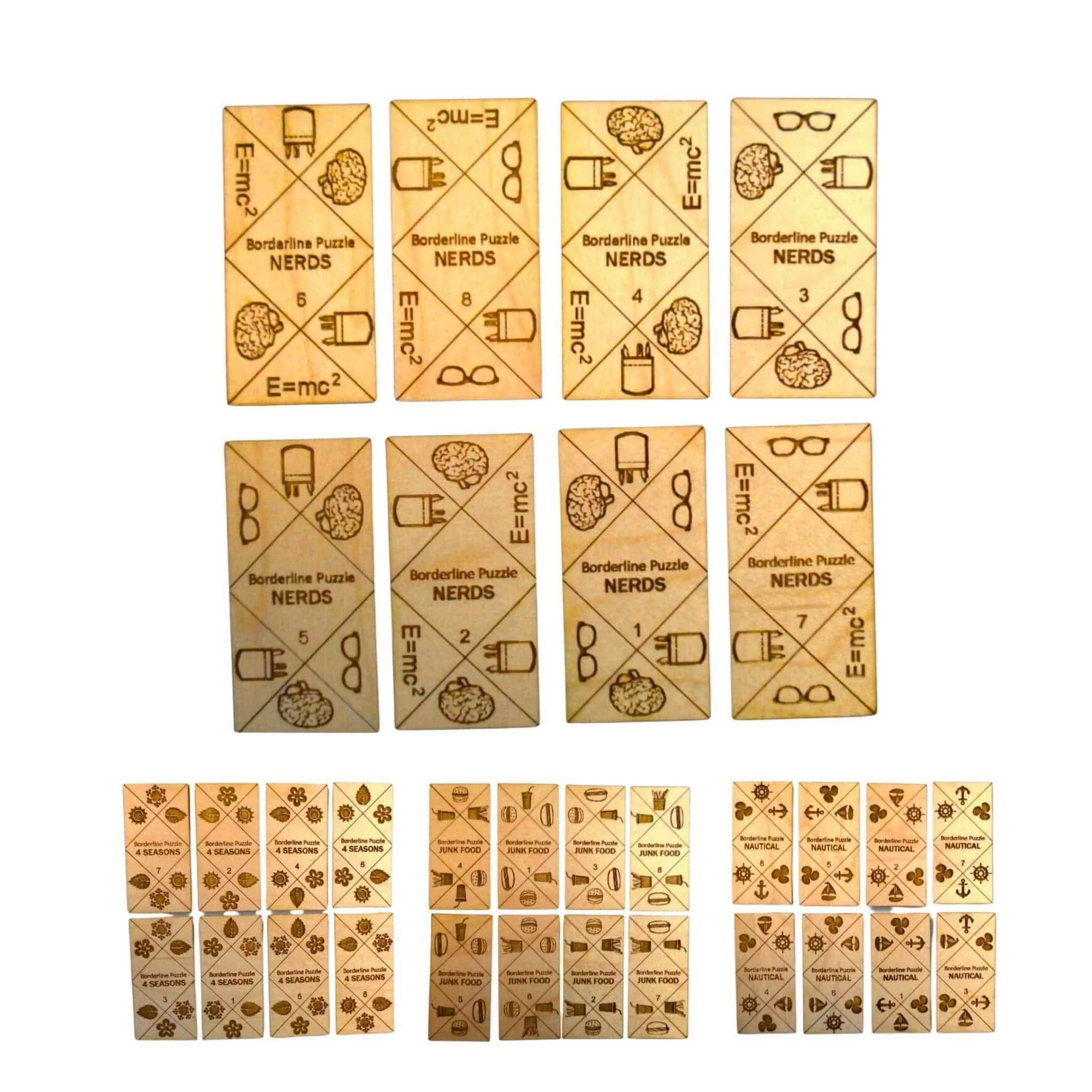
Design also sets a hard ceiling. A compact edge-matching puzzle with small engraved cards, for example, demands precise placement and fine motor control that most dogs simply don't have; that style belongs to human puzzling, not canine enrichment. Before you buy another toy, look at whether the required action is something your dog can physically perform.
- Nose workers: open channels, snuffle-style compartments, sliding lids.
- Paw workers: flip-up flaps, hinged lids, removable inserts.
- If two different styles both fail, the issue is usually difficulty or reward, not the dog's ability.
Symptom Checker: What Your Dog Is Telling You
- Sniffs once, then walks away: The reward isn't worth the effort, or the dog can't smell anything inside. Swap in a strong-smelling high-value treat and check that the toy's openings actually let scent escape. Re-test with better treats before changing toys.
- Paws or noses at it frantically, then quits: The mechanism is too stiff or too complex for the current skill level. Reduce the number of steps—remove a latch, loosen a slide, or pre-open one compartment so the dog gets an early win. If it doesn't improve in two sessions, drop to an easier puzzle.
- Ignores the toy but takes treats from your hand: The dog is engaged with you but not with the object, which usually means the toy was introduced too fast or was paired with a scary noise or slip. Leave it on the floor with treats visible and let the dog approach on his own. Stop structured sessions for a few days and let curiosity do the work.
- Used to love it, now ignores it: Either the puzzle is solved and boring, or residue and sticking parts have changed how it feels. Clean it thoroughly, then increase difficulty one step—or rotate it out for a week and bring it back. Rotate two or three toys instead of leaving one out permanently.
- Chews or destroys the toy instead of solving it: This is a mismatch between the toy and the dog's working style, and it's a safety signal. Remove the toy and choose a sturdier enrichment option built for chewing rather than a puzzle with small moving parts. Stop using that toy—do not keep offering it as a challenge.
A Note on Choosing Puzzle Toys for Your Household
- Borderline Wood Puzzle Series | Wood Edge Matching Brain Teaser: The Borderline Wood Puzzle Series is an edge-matching brain teaser with 8 laser-engraved wood cards (1.8" x 0.9" x 0.25") that must be arranged so symbols match in a square, packaged in a durable wood box with a flip-top lid. This is a human brain teaser, not a dog toy. Its small cards and precise symbol-matching are a choking and frustration risk for pets—keep it on a shelf your dog can't reach and give your dog a purpose-built enrichment toy instead.
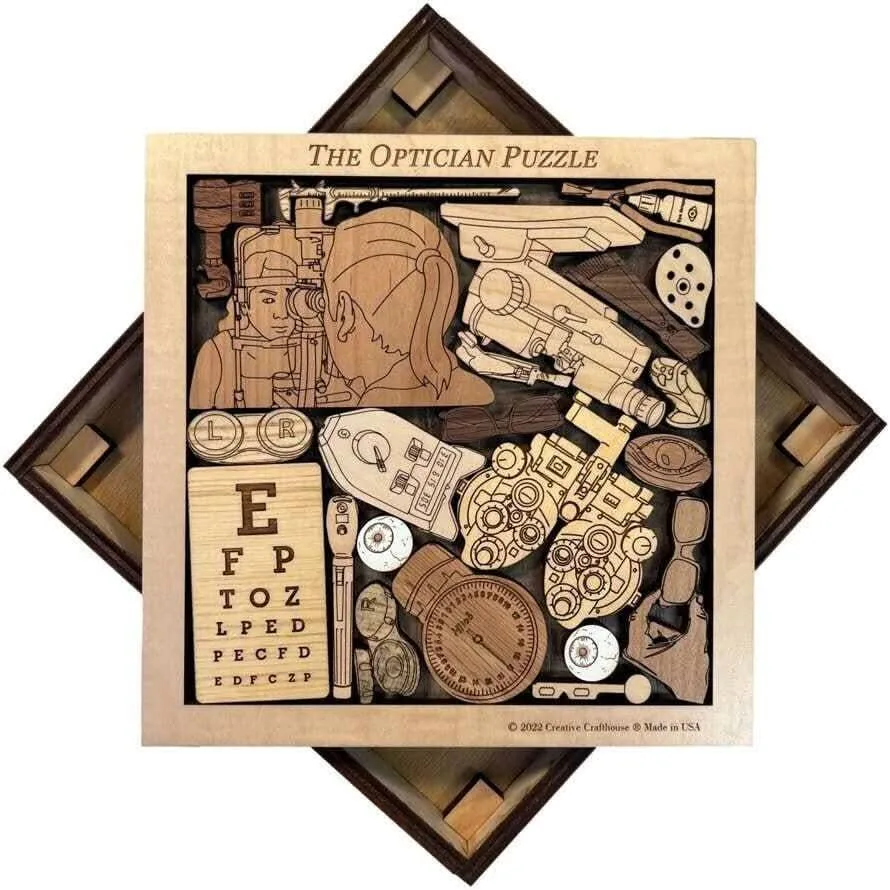
- Optician Wood Puzzle | Personalizable Graduation Gift for Eye Doctors: The Optician Wood Puzzle is made from 1/4" thick wood, incorporates at least four distinct wood types, measures 7.5 inches square including the cover, and includes elements such as a Vision Chart, Ophthalmoscope, Glasses, Eye Drops, Eye Shield, Phoropter, Visual Fields Tester, Contact Case, and Eyeball. Solid wood and small fitted pieces are for human hands only. If you keep wood puzzles in a home with dogs, store them above nose height and never leave loose pieces within reach.