Quick answer
Measure the height of your bed or couch from the floor to the top of the cushion, then divide by the number of steps you can fit. A four-step design suits most standard sofas and lower beds, while taller beds need more steps or a longer ramp. Choose stairs for pets who already climb confidently and a ramp for seniors, small breeds, or anyone short on floor space.
Start with the height, not the product photo
The single biggest mistake buyers make is choosing stairs by looks instead of by measurement. Use a tape measure from the floor to the exact surface your pet lands on, not the frame or mattress edge. A typical couch cushion sits around 18 inches high, while many beds range from 20 to 30 inches. Write that number down before you shop.
Next, think about the rise per step. Pets are most comfortable when each step is roughly 4 to 7 inches higher than the last. If your couch is 18 inches high, a 4-step design gives you a gentle rise. If your bed is 26 inches high, four steps means a steeper climb that some small dogs and cats will avoid. More steps, or a ramp, spreads the same height over a longer, easier path.
Stairs or a ramp? Match the path to your pet
Stairs work well for pets who already jump on and off furniture without hesitation. The repeated step motion builds confidence and gives cats the scratching and climbing outlet many of them want. Ramps suit dogs with joint issues, very small breeds, and anyone whose pet refuses to use steps. A ramp also takes less vertical space, but it needs a longer footprint on the floor.
If your pet is somewhere in between, look for a product that does both jobs or adapts to different furniture. A convertible cat stair and tree, for example, can serve as a climbing route to a bed and a resting platform once your cat arrives.
Weight limits, surface grip, and stability
Check the weight limit before you buy, especially for medium and large dogs. Many pet stairs are built for small to medium pets, and a sturdy-looking design can still wobble under a heavier dog. If the listing does not state a weight limit, treat that as a missing specification rather than assuming it will hold your pet.
Surface matters just as much. Carpeted steps give claws something to grip and reduce slipping on hard floors. Non-slip ramps serve the same purpose on a steeper incline. Also check the base width: a wider base resists tipping when your pet launches off the top step, which is exactly when accidents happen.
Measure your floor space before you commit
Stairs and ramps both need a clear landing zone at the bottom. Pull your furniture away from the wall, place the stairs, and check that your pet has at least a body length of flat floor to approach. If your bedroom is tight, folding pet stairs or a fold-flat ramp let you store the unit between uses instead of leaving it out permanently.
For a bed, also confirm the top step or ramp edge sits flush with the mattress. A gap of even an inch can catch a paw or make your pet hesitate. Adjustable or overlapping designs solve this, but a fixed-height unit may need a small rug or platform underneath to line up correctly.
Decision rules for height and space
- Couch under 20 inches high: Choose a 3- or 4-step design with a rise of 4 to 7 inches per step. Confirm the top step reaches the cushion without a gap. Four steps is the practical default for most sofas.
- Bed 20 to 30 inches high: Choose a 4-step design only if your pet climbs confidently. Otherwise choose a longer ramp or a unit with more platforms to reduce the rise per step. If your pet hesitates on the first step, switch to a ramp.
- Tight floor space or shared rooms: Pick folding pet stairs or a fold-flat ramp you can store between uses. Measure the folded height and weight against your storage spot. Folding designs trade a little stability for easy storage.
- Senior, small, or joint-sensitive pets: Prioritize a ramp or a low-rise step with a non-slip surface. Avoid steep step runs even if the height matches your furniture. Comfort beats step count for pets who need help.
Products that fit common height and space needs
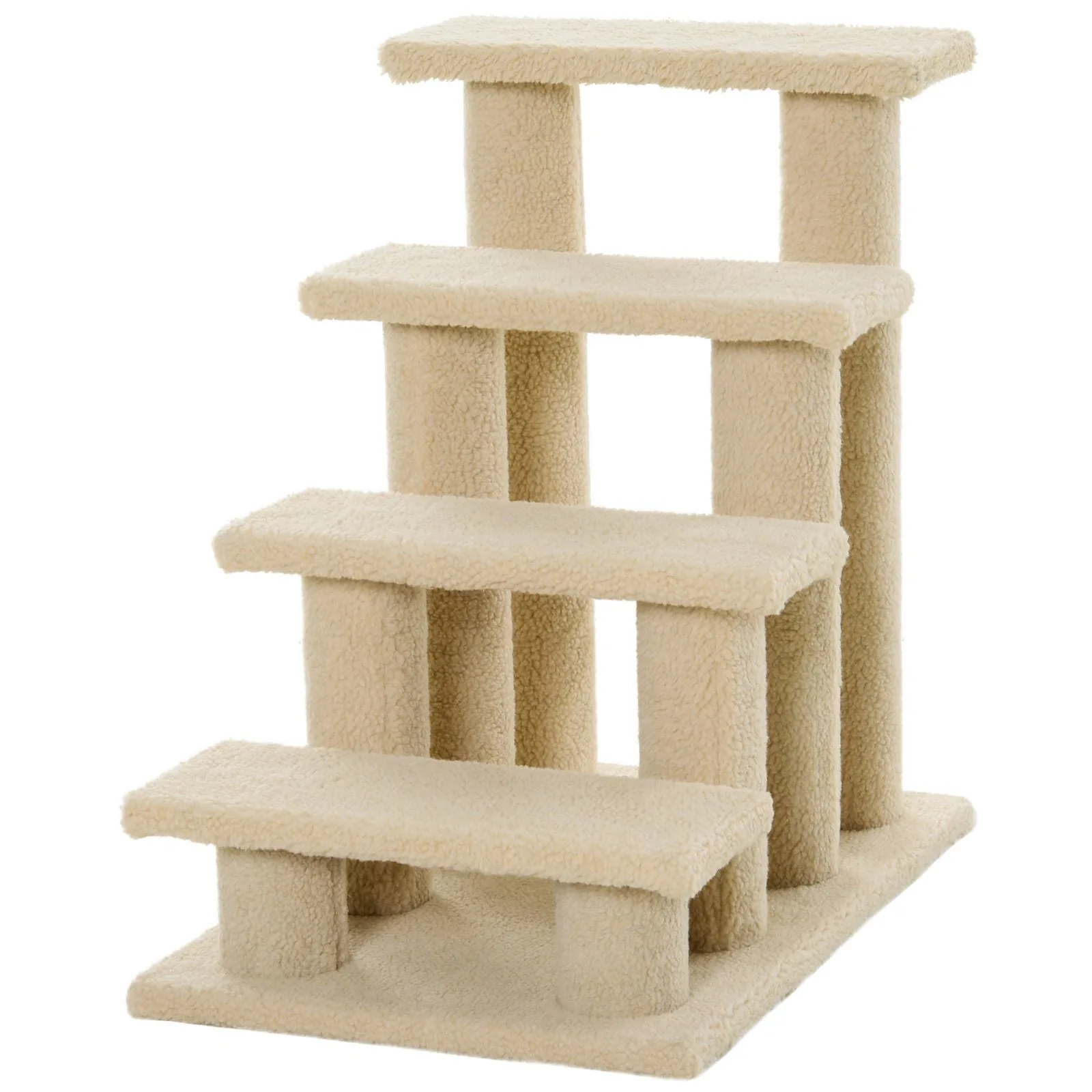
- Pet Stairs 25 4-Step Durable Particle Board Carpeted Cat Dog Ladder: This 4-step pet stairs uses a multilevel design with 8 posts and is built for small and senior pets who need help reaching furniture. The four steps suit standard couches and lower beds, and the carpeted surface gives claws grip on hard floors.
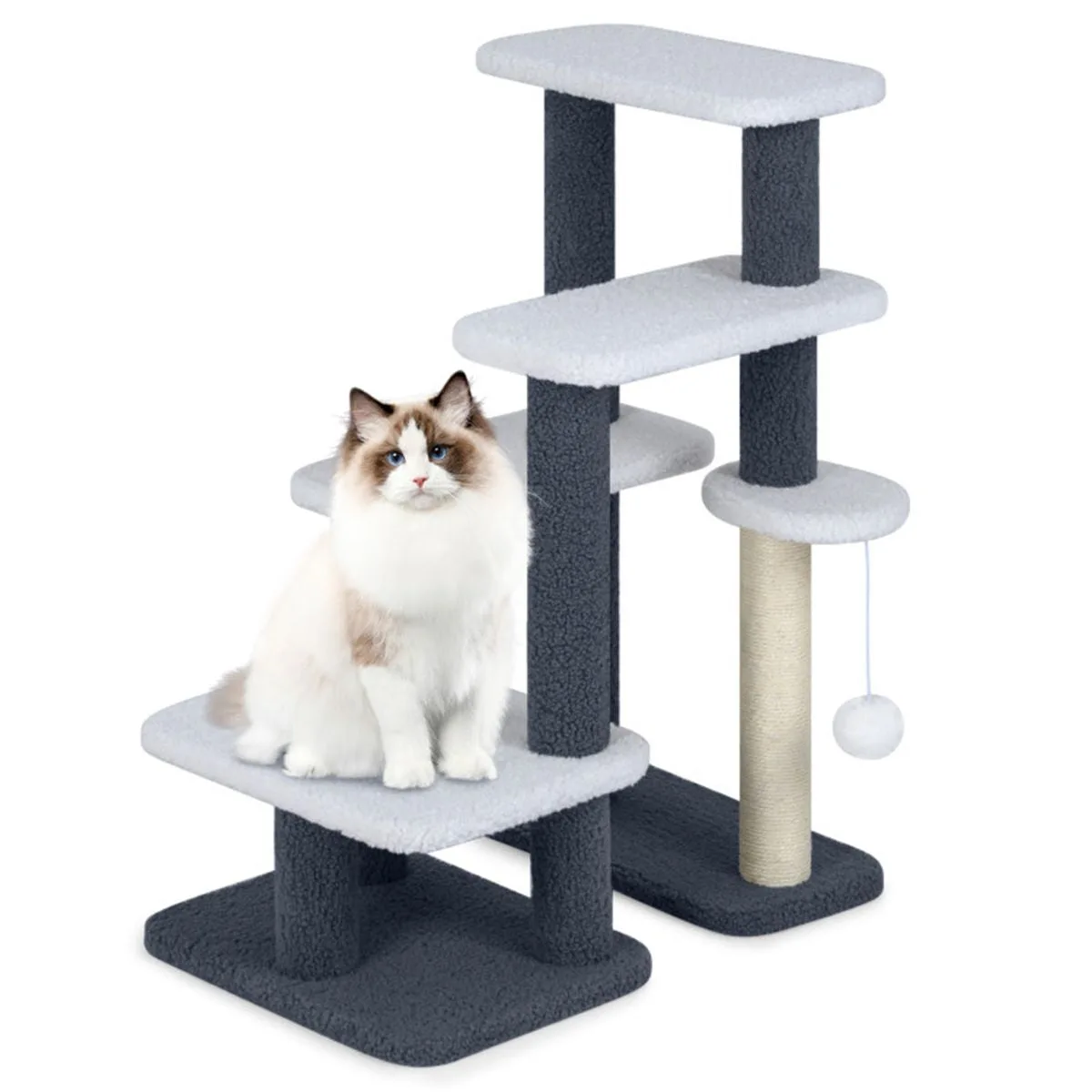
- 2-in-1 Cat Stairs & Tree with Sisal Scratching Post, 4 Levels: This 2-in-1 cat stairs and tree offers 4 spacious platforms plus an additional small platform and a sisal scratching post. It gives cats a climbing route to a bed while doubling as a resting and scratching spot, so it earns its floor space.
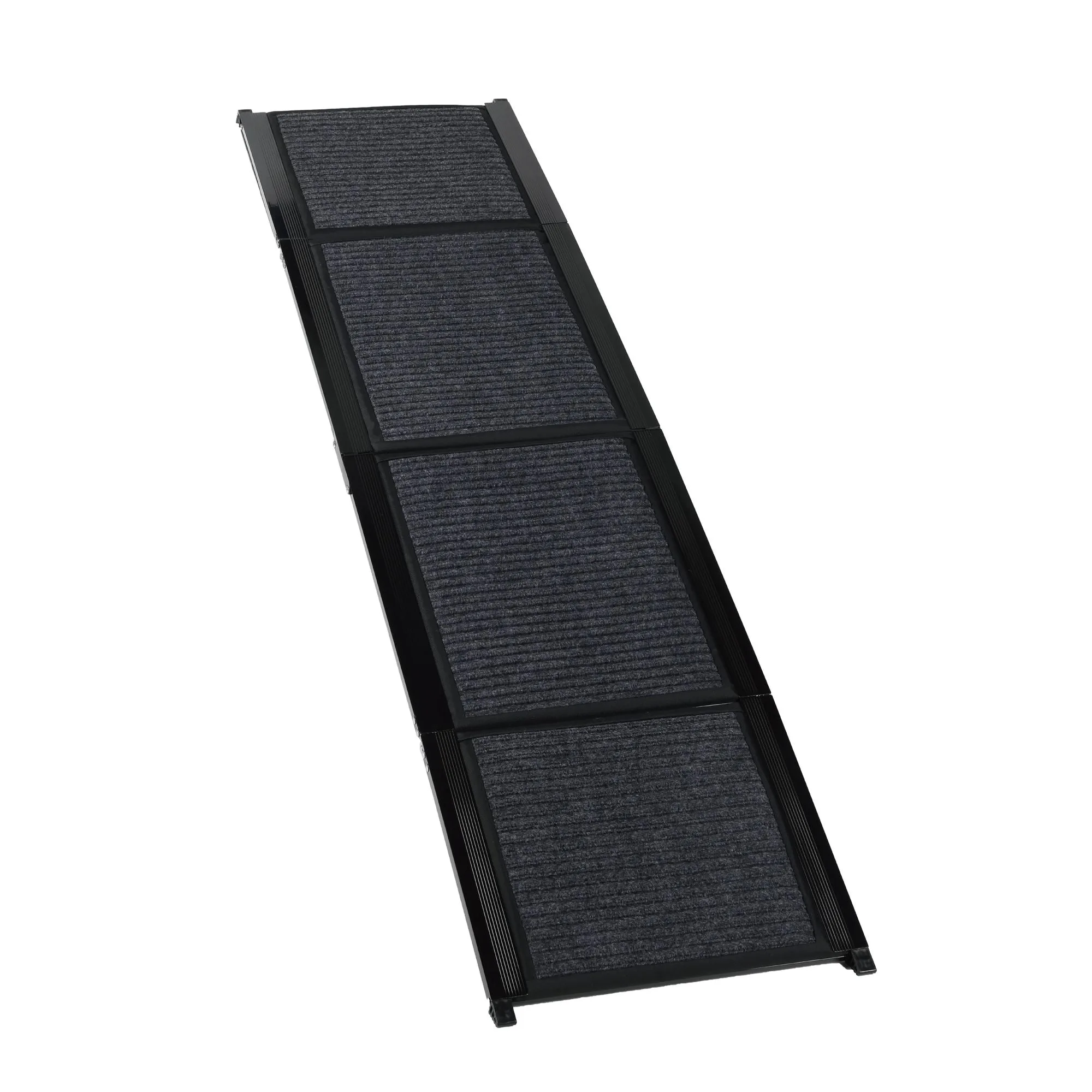
- Inch X 17.2 Inch Folding Dog Car Ramp, Portable Non Slip Pet Ramp: This folding dog car ramp folds flat to 18.3 inches high and weighs 16.1 pounds, with a padded foam handle for carrying. The low folded profile and light weight make it easy to store in a car or small room, and the non-slip surface helps dogs who avoid steps.
Who should choose which
Best for
- Cats and small dogs who already jump on furniture and need a safer route
- Owners of senior pets who need a gentler climb to a couch or lower bed
- Small rooms where folding pet stairs or a fold-flat ramp can be stored away
Not for
- Large dogs above the stated weight limit of a stair or ramp
- Pets who refuse steps entirely and need a flat, low-angle ramp instead
- Beds taller than 30 inches where a single stair unit cannot reach the surface