Quick answer
The Phone and Camera Bundle offers toddlers a hands-on, sensory-rich pretend play experience without the downsides of real screens, supporting creativity, fine motor skills, and social interaction.
Why screens fall short for toddlers
Real smartphones and tablets demand passive consumption and often overstimulate young children with fast-moving images and sounds. The American Academy of Pediatrics recommends avoiding digital media for children under 18 months, except for video chatting. Even for older toddlers, screen time can crowd out active, imaginative play that builds problem-solving skills and emotional regulation.
Wooden pretend play toys like the Phone and Camera Bundle offer a deliberate alternative. They invite toddlers to create their own stories and interactions, rather than simply reacting to a screen. This type of open-ended play supports language development, social skills, and cognitive flexibility.
What the Phone and Camera Bundle offers instead
The bundle includes a wooden camera with a kaleidoscope lens and a squishy button for snapping imaginary photos, plus a wooden mobile phone for pretend calls. These features engage a toddler's curiosity without any blue light, autoplay videos, or addictive apps.
Because the toys are physical and require active manipulation, they strengthen fine motor skills and hand-eye coordination. The kaleidoscope lens adds a visual surprise that sparks wonder, but it's the child's own imagination that drives the play. There are no right or wrong ways to use them, which encourages experimentation and confidence.
The trade-off: less digital literacy, more developmental depth
Choosing wooden pretend play over real screens means your toddler won't learn to swipe or tap a touchscreen early. But that's a feature, not a bug. Early screen use has been linked to delays in language and social skills, while pretend play with tangible objects builds the foundational abilities that make later digital learning more effective.
The Phone and Camera Bundle also supports parallel and cooperative play. Siblings or friends can each take a device and engage in shared pretend scenarios, something a single tablet rarely encourages. This social dimension is critical for developing empathy and communication skills.
Phone And Camera Bundle vs Real Screens: Trade-offs at a Glance
- Sensory engagement: The wooden camera's kaleidoscope lens and squishy button provide tactile and visual feedback that a real screen cannot match. Toddlers feel, twist, and press, building fine motor skills and curiosity. Choose the bundle if you want hands-on sensory play that strengthens motor control.
- Screen-free benefits: No blue light, no autoplay, no ads. The bundle encourages active imagination and social pretend play, which supports language development and emotional regulation better than passive screen time. Choose the bundle to prioritize developmental benefits over digital familiarity.
- Digital readiness: Real screens teach toddlers how to navigate touch interfaces and digital content. The bundle does not. If you want your child to become comfortable with technology early, a real device (with strict limits) may be needed. Choose a real screen only if early digital literacy is a specific goal, and always with time limits and co-viewing.
Product facts
-
Phone And Camera Bundle: The Camera features a kaleidoscope lens that brings the world into a swirl of colors and shapes, complete with a squishy button to 'snap' imaginary photos. This tactile and visual feature stimulates sensory exploration without overstimulation, letting toddlers experiment with cause and effect in a calm, screen-free way.
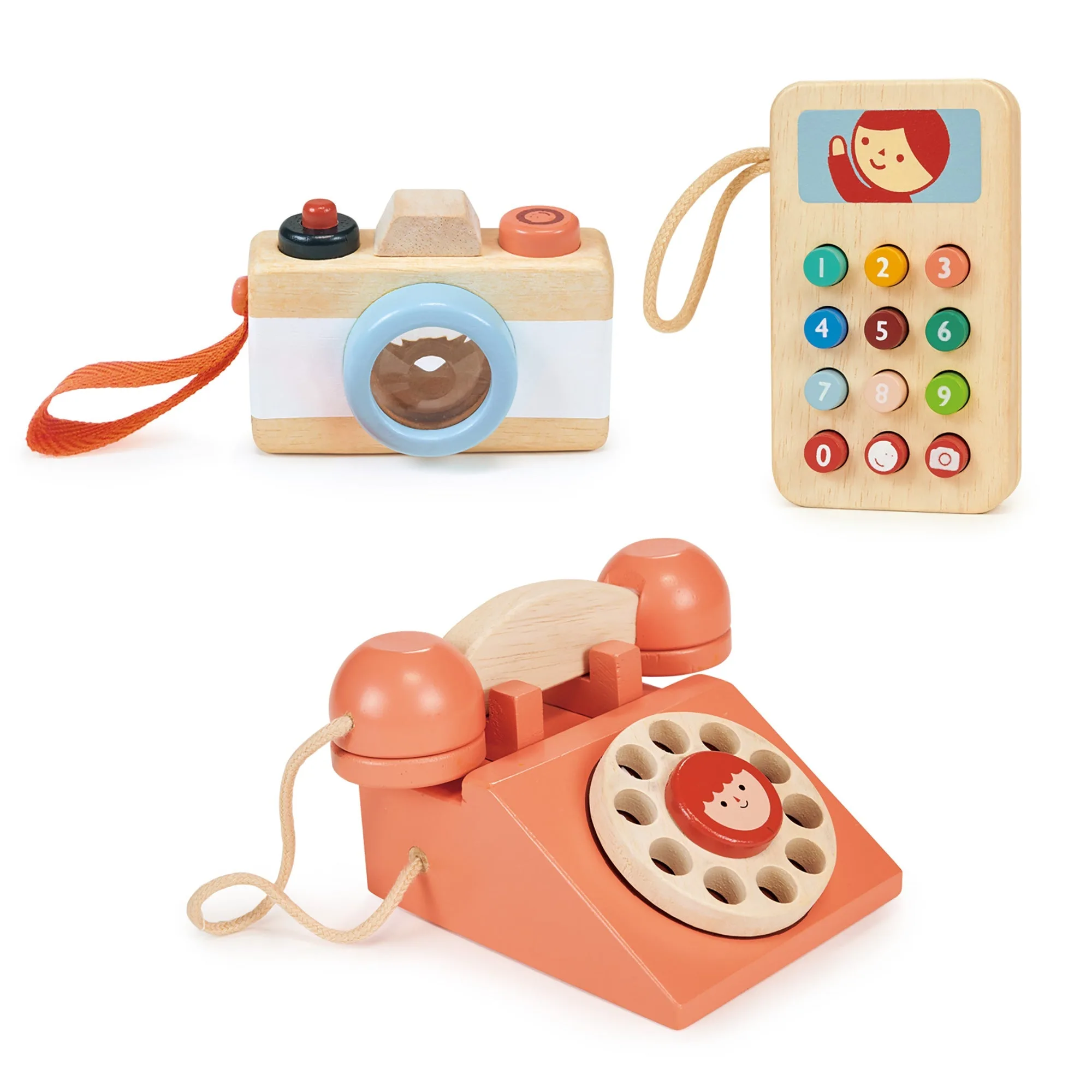
Phone And Camera Bundle
Which option fits your family?
Best for
- Parents who want to delay screen exposure and encourage open-ended, imaginative play
- Families looking for durable, sensory-rich toys that support fine motor development and social interaction
Not ideal for
- Parents who want their toddler to learn how to use a smartphone or tablet early
- Situations where a child needs a quiet, solo digital activity (e.g., during a long car ride)