Quick answer
Choose pigs ears when you want a single-session, edible chew your dog consumes under supervision. Choose a chew ball when you want a reusable, interactive toy that also supports training and fetch. If your dog is a moderate chewer, the deciding factor is not which is tougher but whether you want the chew to disappear or stay in the toy bin.
The core difference: edible chew vs. durable toy
Pigs ears are a natural dog treat. They are meant to be eaten, they have a limited lifespan, and they require you to watch your dog while they chew. A chew ball is a toy. It is meant to be reused, it can be thrown or rolled, and it often doubles as a training reward delivery tool. That difference drives every other decision: cost per use, storage, cleaning, and how you supervise.
When people search for pigs ears vs chew ball, they often want to know which one lasts longer. That is the wrong question. A pigs ear is not supposed to last; it is supposed to be consumed. A chew ball is not supposed to be eaten; it is supposed to survive. Judge each one by its own job.
How to match the chew to your dog's chewing style
Watch how your dog chews for one week before buying anything. Some dogs gnaw slowly and deliberately. Others bite, shake, and try to swallow large pieces. The first type can handle a wider range of chews. The second type needs you to be more selective and more present.
For a moderate chewer, a soft chew ball with some give is often a better daily choice than a hard, brittle chew. A ball that flexes gives your dog feedback and keeps the interaction going without the same risk of sudden breakage. If your dog loses interest in toys quickly, an edible chew can reset their focus because the payoff is obvious.
Durability is not one number
Chew ball durability depends on material, thickness, and how the ball is used. A ball used for fetch on grass lasts longer than one used as a solo chew on concrete. A ball with a loop or handle introduces a different failure point: the loop can be chewed, so it needs inspection before every session.
Pigs ears do not have a durability rating in the same sense. Their quality varies by thickness, smoke level, and source. A thick ear may take longer to finish, but it is still an edible item. Do not treat a pigs ear as a long-lasting chew just because it feels firm.
Supervision rules for each option
Pigs ears: supervise every time. Remove the ear when it becomes small enough to swallow whole. If your dog guards food or chews, separate them from other pets. Discard any ear that smells rancid or has been in the toy bin for weeks.
Chew balls: inspect before and after play. Look for cracks, missing chunks, or a chewed-through loop. Replace the ball when it no longer holds its shape or when small pieces can be torn off. A chew ball is not a pacifier; it is a piece of equipment.
Cost per use and storage
Pigs ears are a consumable. You buy them, they disappear, and you buy more. Chew balls are a one-time purchase until they wear out. If your dog chews daily, the cheaper option per session may be the ball. If your dog chews only occasionally, a bag of pigs ears may last longer in the pantry.
Storage matters too. Pigs ears need a dry, sealed container to avoid spoilage. Chew balls need a quick rinse and air dry. Neither should sit in a hot car.
When to choose a chew ball with a handler loop
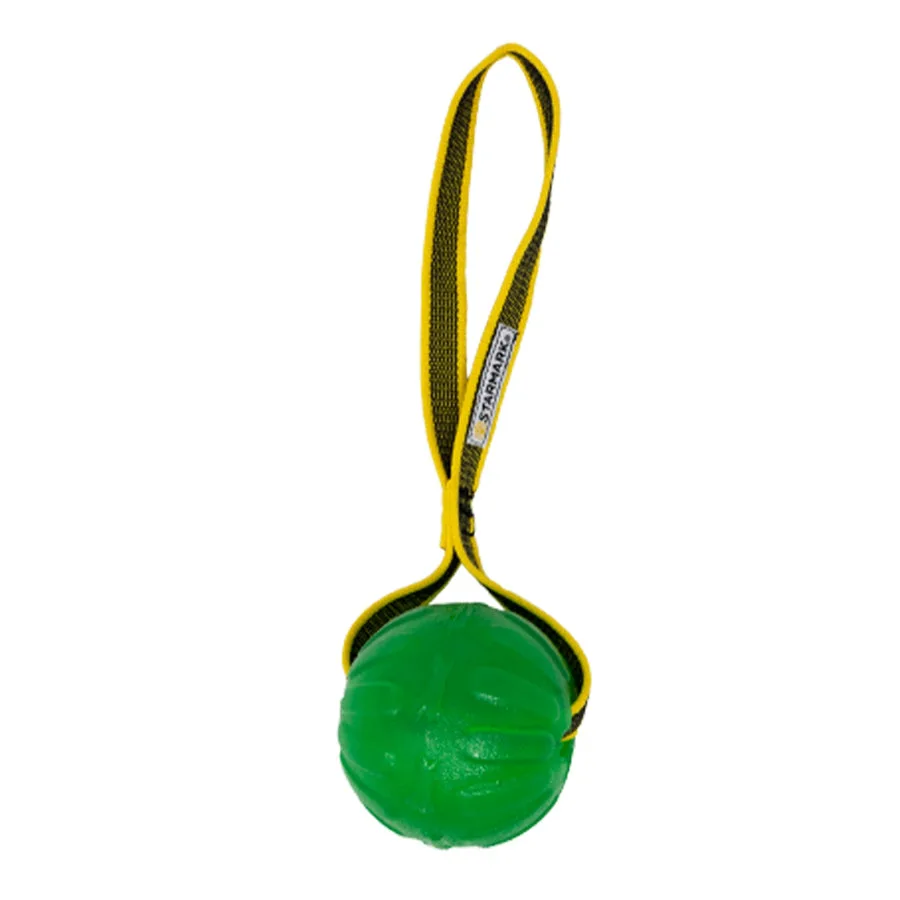
A chew ball with a loop, like the Starmark GripCord Chew Ball, is designed for interactive play and training engagement. The loop lets you hold the ball while your dog grips and tugs, which is useful for teaching a release or building drive. That same loop is not indestructible. If your dog is a dedicated loop chewer, choose a solid ball instead.
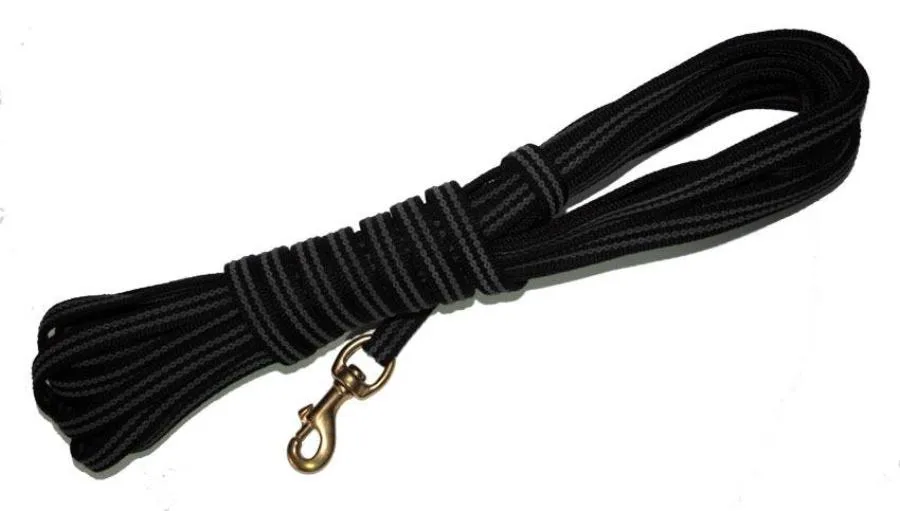
For dogs that need to run and track while staying connected, a long line is a separate tool, not a chew. The Gripper Long Lines come in 10-metre lengths and are built for training in drive, tracking, and hiking. They are not chew toys, and leaving one within reach of a chewer will shorten its life.
Decision rules for pigs ears vs. chew balls
- If you want a chew your dog finishes: Choose pigs ears. They are edible, single-use, and require direct supervision. Remove the ear when it becomes small enough to swallow. Best for occasional chews and dogs that lose interest in toys.
- If you want a reusable toy that supports training: Choose a chew ball. Look for a size your dog can hold without choking and a material that gives some flex. Inspect for cracks and loop damage before each session. Best for daily engagement, fetch, and reward-based training.
- If your dog is a moderate chewer: Start with a soft chew ball for interactive play and keep pigs ears for supervised downtime. Do not rely on either one as a sole solution for a heavy chewer. Match the chew to the moment, not to a durability label.
- If your dog guards chews: Feed pigs ears in a separate room or crate. Use chew balls for one-on-one play only. Never leave high-value chews loose in a multi-dog home. Supervision is the real safety feature.
Product facts that affect your choice
- Starmark GripCord Chew Ball - Soft Ball: Starmark GripCord Chew Ball is described as a super tough ball with an easy-grip loop, and the catalog notes it is a soft ball that gives feedback for engagement games or training. The loop makes it a training and tug tool, not just a fetch toy. The soft feedback is helpful for moderate chewers, but the loop needs inspection because it is the most chewable part.
- Gripper Long Lines - 10m Lengths: Gripper Long Lines are 10-metre premium long lines, 5/8 inch (16 mm) wide, intended for training in drive, tracking, nosework, hiking, or giving a dog more room while staying under control. A long line solves the off-leash control problem, but it is not a chew. Pairing a long line with a chew ball gives you a training system; leaving the line available as a chew creates a safety and durability problem.
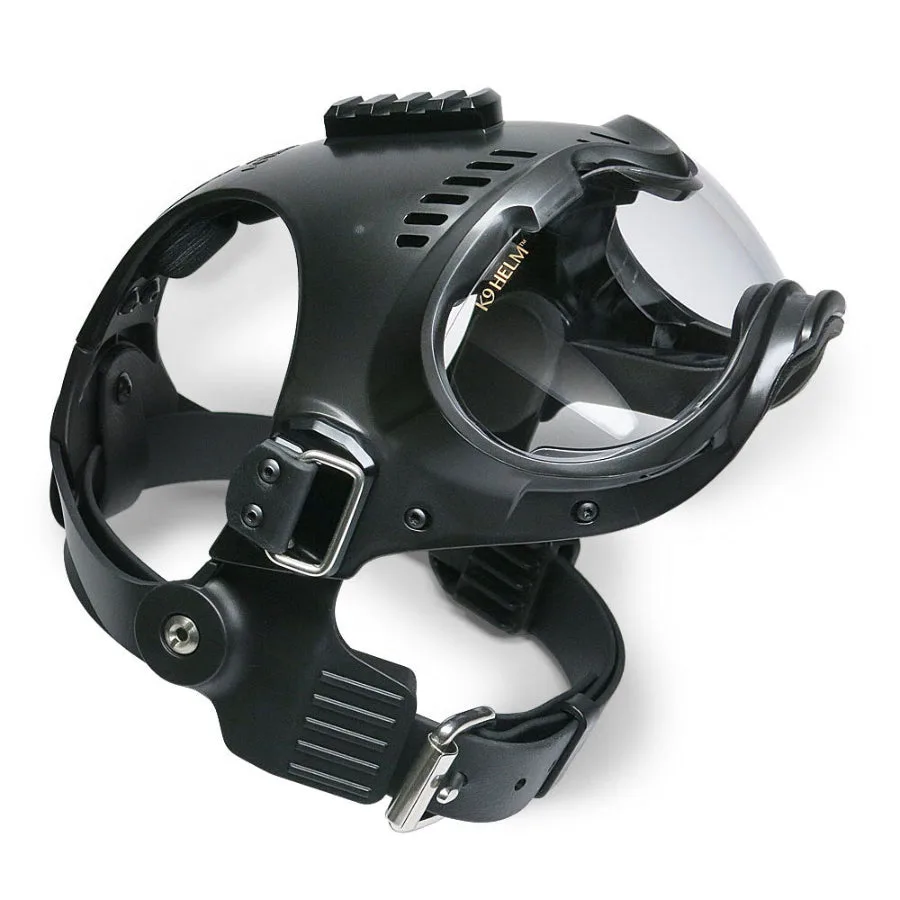
- K9 Helm Helmet - CS1-A2 GoggleHelm: K9 Helm Helmet CS1-A2 GoggleHelm is a custom preorder tactical dog helmet built in the USA, developed from a US Army contract completed in 2022 with K9 handlers at Ft. Bragg, NC. This is a specialized safety item for working dogs, not a chew. If your dog needs head or eye protection during training, it is a separate purchase from any chew decision.
Who should choose which
Choose pigs ears if
- You want a natural, edible chew for supervised sessions
- Your dog is motivated by food and finishes chews quickly
- You have a single dog or can separate dogs during chew time
Choose a chew ball instead if
- Your dog swallows large pieces without chewing
- You need a toy that survives daily solo chewing
- You want a reusable training tool for fetch or tug