Quick answer
Choose a reformer if you want the widest range of Pilates exercises, smooth carriage work, and a setup that supports both mat-style and equipment-based sessions. Choose a tower if you mainly want spring resistance for standing, seated, and lying exercises and have limited floor space. For most home users who can dedicate a permanent spot, a reformer like the Sienna Reformer or Ivory Reformer offers more long-term versatility.
What a tower and a reformer actually do differently
A Pilates tower uses a vertical frame with springs and bars to provide resistance for exercises performed sitting, standing, or lying on a mat. It is compact and often less expensive than a reformer, but it does not have a moving carriage. A reformer, by contrast, has a sliding carriage on a frame, which adds a dynamic element to exercises and supports a broader vocabulary of movements, including footwork, leg presses, and long-box work.
The tower and reformer difference comes down to how resistance is applied. On a tower, you push or pull against springs attached to a fixed frame. On a reformer, you move the carriage with your body weight and spring tension, which challenges balance and control in a different way. If you want to replicate studio reformer classes at home, a reformer is the closer match.
Space and storage: what each setup demands
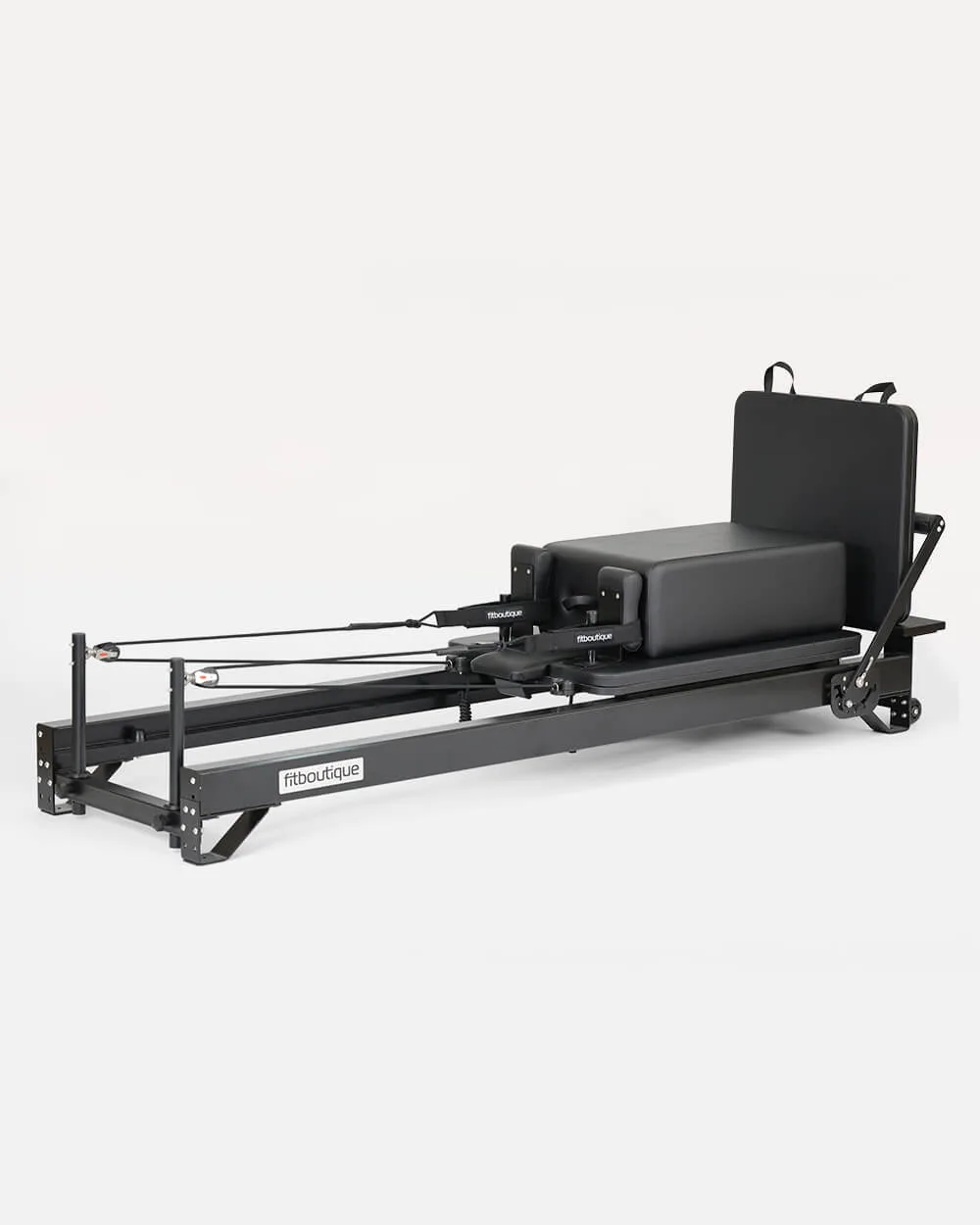
A tower typically needs a clear wall area and enough floor space for a mat, but it does not require the long footprint of a reformer. Some towers fold or disassemble, though setup and takedown can be fiddly if you plan to store it after each session. A reformer needs a longer, dedicated floor area. Foldable models like the Ivory Reformer can be stored upright, which helps in multi-use rooms, but they still need clearance to fold and unfold safely.
For a home pilates tower setup, measure the wall space and check ceiling height if you plan to use overhead springs. For a reformer, measure the full length with the carriage extended and allow at least a foot of clearance on each side for mounting and dismounting. If your room doubles as a living area, a foldable reformer is more practical than a fixed tower that stays in place.

foldable reformer
Cost comparison: reformer vs tower
Towers are generally less expensive than reformers, but the gap narrows when you compare commercial-grade equipment. A basic tower might cost a few hundred dollars, while a studio-quality reformer can run well over $1,500. At FitBoutique, the Ivory Reformer is priced at $1,808.33 (compared to $2,699.00), and the Sienna Reformer is $2,177.34 (compared to $3,299.00). These are commercial-grade machines with aluminium frames and six-spring systems, so they represent a longer-term investment than a typical home tower.
When weighing reformer vs tower cost, factor in the exercises you will actually do. If you only want spring resistance for arm and leg work, a tower is cost-effective. If you want to progress through a full reformer repertoire, the higher upfront cost of a reformer may replace the need for multiple pieces of equipment.
Exercise range and progression
A tower supports a wide range of spring-based exercises, but it lacks the moving carriage that defines reformer work. That means you cannot do exercises like the elephant, stomach massage, or long stretch series in the same way. A reformer opens up these movements and allows for smooth transitions between exercises, which is why studios build their classes around it.
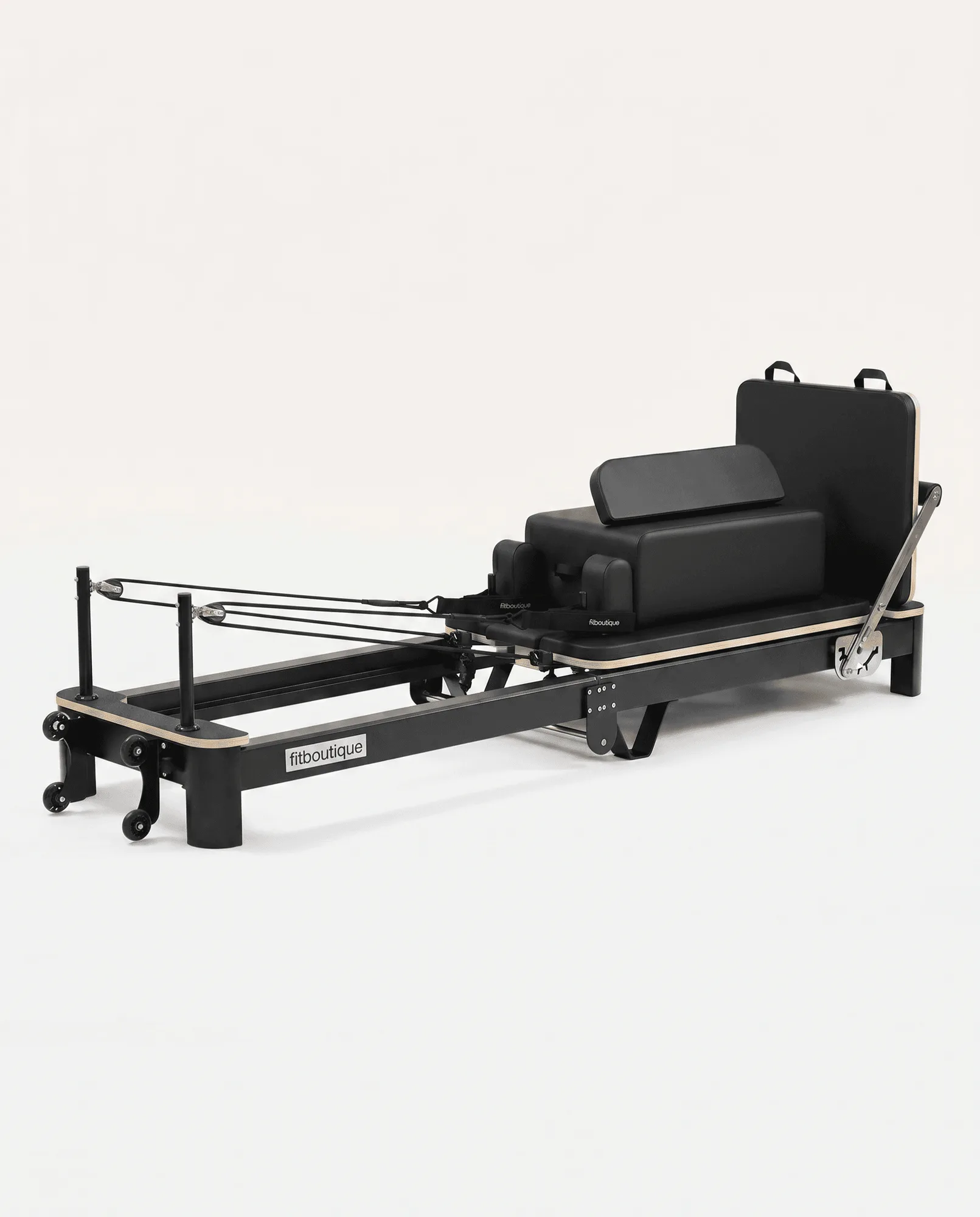
If you are new to Pilates and unsure which pilates equipment first, consider your goals. For general strength and flexibility with a smaller footprint, a tower is a sensible start. For a studio-like experience at home with room to progress, a reformer is the more versatile choice. The Sienna Reformer and Space Black Reformer both offer a six-spring system and commercial-grade construction, so they can handle daily use as your practice advances.
Pilates tower benefits and limitations
The main pilates tower benefits are space efficiency, lower cost, and the ability to target specific muscle groups with spring resistance. Towers are also easier to move if you rearrange your room. However, they do not provide the dynamic carriage feedback that helps develop core control and balance in the same way a reformer does. If you crave the feeling of a studio reformer class, a tower may feel limited over time.
Key trade-offs at a glance
- Footprint vs. exercise variety: A tower takes less floor space but limits you to spring-based exercises without a moving carriage. A reformer needs more room but supports a full repertoire of carriage exercises. Measure your space first; if you can dedicate at least 8 feet of length, a reformer is more versatile.
- Upfront cost vs. long-term value: Towers cost less initially, but a commercial-grade reformer like the Ivory Reformer or Sienna Reformer can replace multiple pieces of equipment and last for years. If you plan to practice regularly for years, invest in a reformer; if you are testing the waters, a tower is a lower-risk entry.
- Storage convenience vs. stability: Foldable reformers like the Ivory Reformer store upright but may have a slightly more complex setup. Non-fold models like the Sienna Reformer stay ready to use but require permanent space. Choose foldable if you must clear the floor daily; choose fixed if you have a dedicated studio corner.
Reformer options for home setups
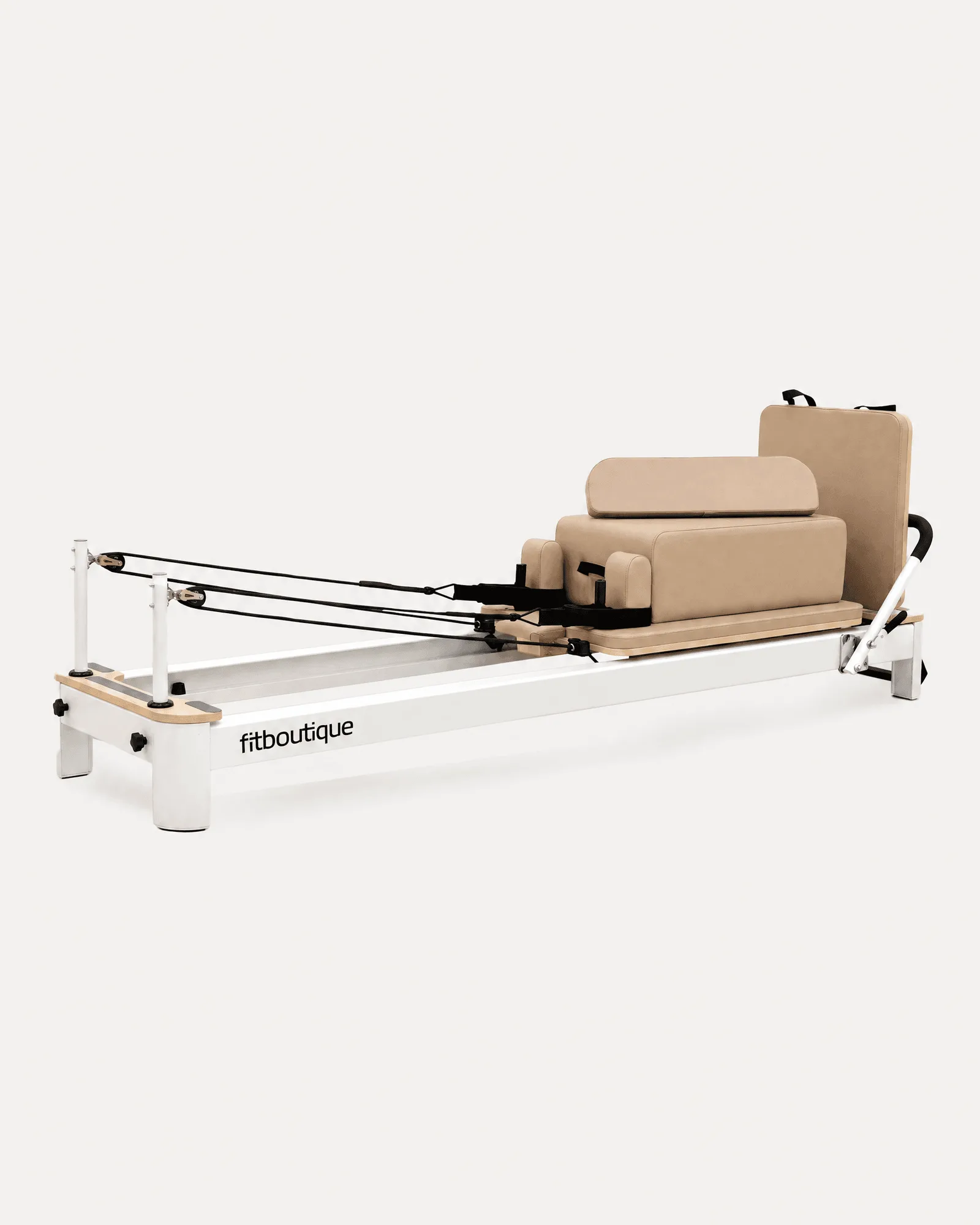
- Sienna Reformer: The Sienna Reformer is a non-fold commercial model with a full aluminium frame and 6 spring system, designed for permanent studio or home setup. If you have a dedicated space and want a stable, permanent reformer that can handle daily use, this model avoids the setup and takedown of a foldable design.
- Ivory Reformer: The Ivory Reformer is a commercial-grade aluminium reformer with a foldable frame, centre support bar, and wheels, allowing it to store upright. This is the better choice if your home gym shares space with living areas and you need to free up floor space between sessions.
- Space Black Reformer: The Space Black Reformer features a larger studio frame and 6 spring system, built for high-traffic studios and serious training environments. If you are tall or plan to train intensively, the larger frame may offer more room for exercises, but check your floor dimensions before buying.
Which setup fits your home?
Best for
- Home users with a dedicated room or corner who want a studio-like reformer experience and are ready to invest in a commercial-grade machine.
- People who want to progress through a full reformer repertoire and value smooth carriage work for core and balance training.
Not for
- Anyone with very limited floor space who cannot accommodate a reformer's length, even a foldable one.
- Budget-focused beginners who primarily want spring resistance for targeted exercises and are not ready for a larger investment.