Quick answer
If you want the widest range of full-body exercises and plan to train at home several times a week, buy a reformer first. Choose a Pilates chair first only if your floor space is very tight, your budget is smaller, or you mainly want a compact prop for standing and balance work. A reformer gives you more exercise options and a longer progression path; a chair is smaller and cheaper but more limited.
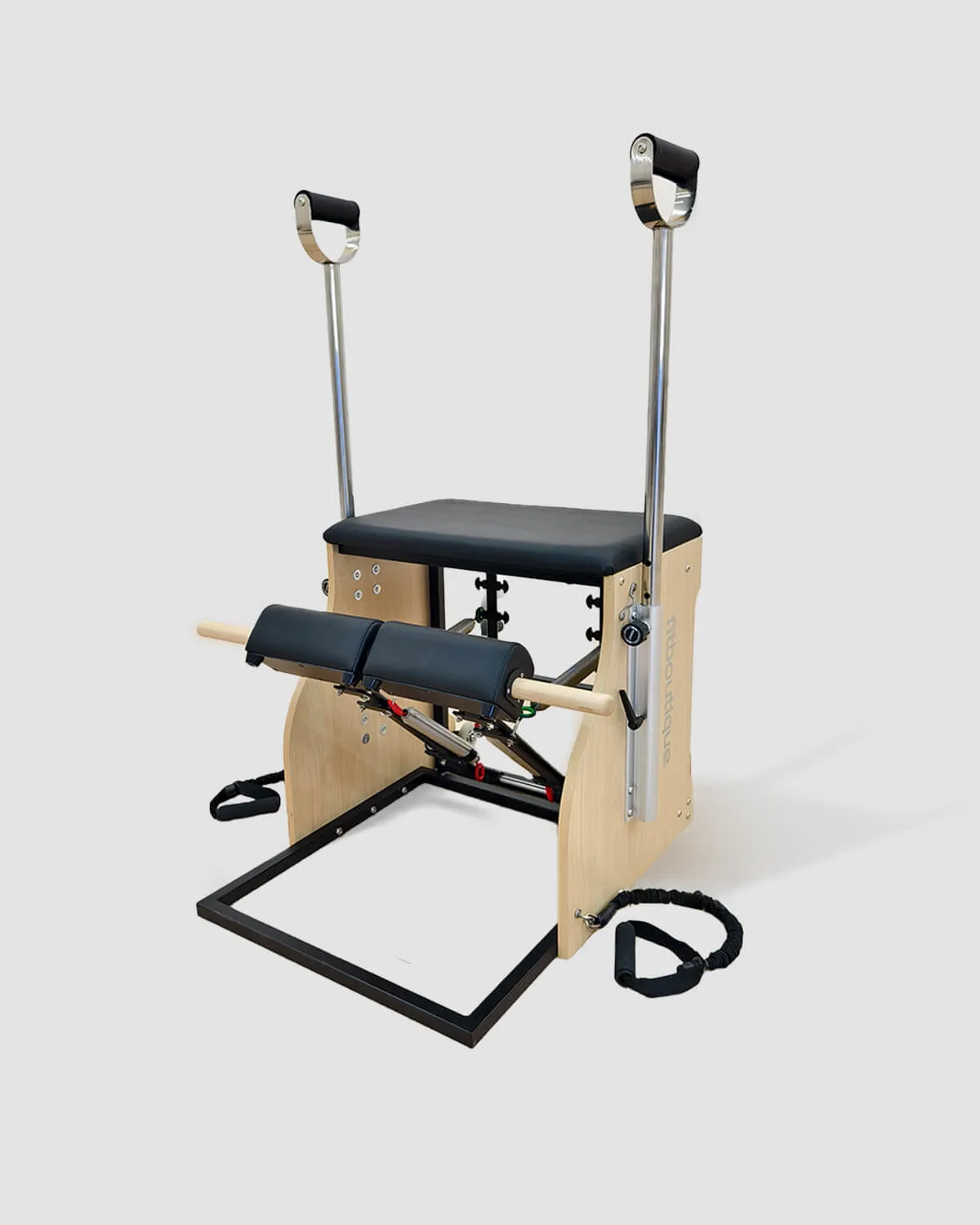
Pilates chair
What each machine actually does
A reformer uses a sliding carriage, springs, and a footbar to create resistance in both directions. You can lie, sit, kneel, or stand on it, which is why it supports hundreds of exercises and full-body strength, mobility, and control work. A Pilates chair is a small, stable platform with a pedal or pedals and springs. It is usually used seated, standing, or in a lunge position, and it is excellent for balance, single-leg strength, and short focused sessions.
The practical difference is range. A reformer can replace several pieces of home Pilates equipment for many people. A chair is a specialized tool that works best as a second purchase or as a compact option when a reformer will not fit.
How to decide based on your space
Measure the longest wall or open floor area you can dedicate to training, then add at least 60 cm of clear space around the machine for getting on and off. A reformer needs a longer footprint, but foldable models can be stored upright when not in use. A chair takes up far less floor space and can often live against a wall or in a corner.
If you have a dedicated room or a wall you can clear, a reformer is usually the better long-term buy. If you train in a shared living room and must put equipment away after every session, a foldable reformer or a chair is more realistic.
- Dedicated room or clear wall: reformer first.
- Shared living space with daily setup and pack-down: foldable reformer or chair.
- Very small apartment with no storage wall: chair first, or wait until you can store a reformer upright.
How to decide based on budget
A Pilates chair typically costs less than a reformer, so it is the lower-risk first purchase if you are unsure how often you will train. A reformer costs more, but it replaces more equipment and supports more of the exercises you would do in a studio class.
Set a total budget that includes delivery, any mat or props, and the space you are giving up. If the reformer you want is only slightly above your chair budget, it is usually worth stretching for the reformer because it will keep you challenged longer.
How to decide based on your training goals
Choose a reformer first if your goals are full-body strength, controlled mobility, rehab-style progression, or replicating studio classes at home. Choose a chair first if your goals are balance, single-leg strength, standing stability, or short 15 to 20 minute sessions.
If you are recovering from an injury, follow your clinician's advice on which apparatus is appropriate. Neither machine is a substitute for medical guidance.
What to check on a reformer before you buy
Look for a commercial-grade frame, a smooth carriage glide, and a spring system that lets you change resistance in clear steps. A six-spring system gives you more options than a three- or four-spring setup, especially as you get stronger. Check whether the frame folds and whether it has wheels and a center support bar, because that determines whether you can store it upright without straining your back.
Also confirm the upholstery and padding are described as premium or commercial grade, since thin padding becomes uncomfortable in longer sessions.
What to check on a chair before you buy
Check the pedal resistance range, the stability of the base, and the seat height relative to your body. A chair that wobbles under load is not safe for standing work. If you are tall, look for a model with enough pedal travel so you are not locked into a short range of motion.
Because chair specifications vary widely and are often less detailed than reformer listings, ask the seller directly about weight capacity, pedal spring resistance, and footprint if those details are not published.
Decision rules: chair or reformer first
- Rule 1: Space under 2 metres of clear floor: Buy a chair first, or choose a foldable reformer only if you can store it upright against a wall. If you cannot store it upright, the reformer will become a trip hazard and you will stop using it.
- Rule 2: Budget under the price of a foldable reformer: Buy a chair first and upgrade later, or save until you can afford a reformer with a 6 spring system. A cheap reformer with limited springs will frustrate you faster than a good chair.
- Rule 3: You want to replicate studio classes: Buy a reformer first. A chair cannot replicate the carriage-based repertoire you do in class. Match the equipment to the training you already enjoy.
- Rule 4: You train standing, for balance, or for short sessions: Buy a chair first. It is purpose-built for standing and single-leg work. A chair is a focused tool, not a full replacement for a reformer.
- Rule 5: You are buying for a household with multiple users: Buy a reformer first if at least one person will use it several times a week; add a chair later as a supplement. The reformer has the broader progression path for different bodies and goals.
Reformer options from our catalog
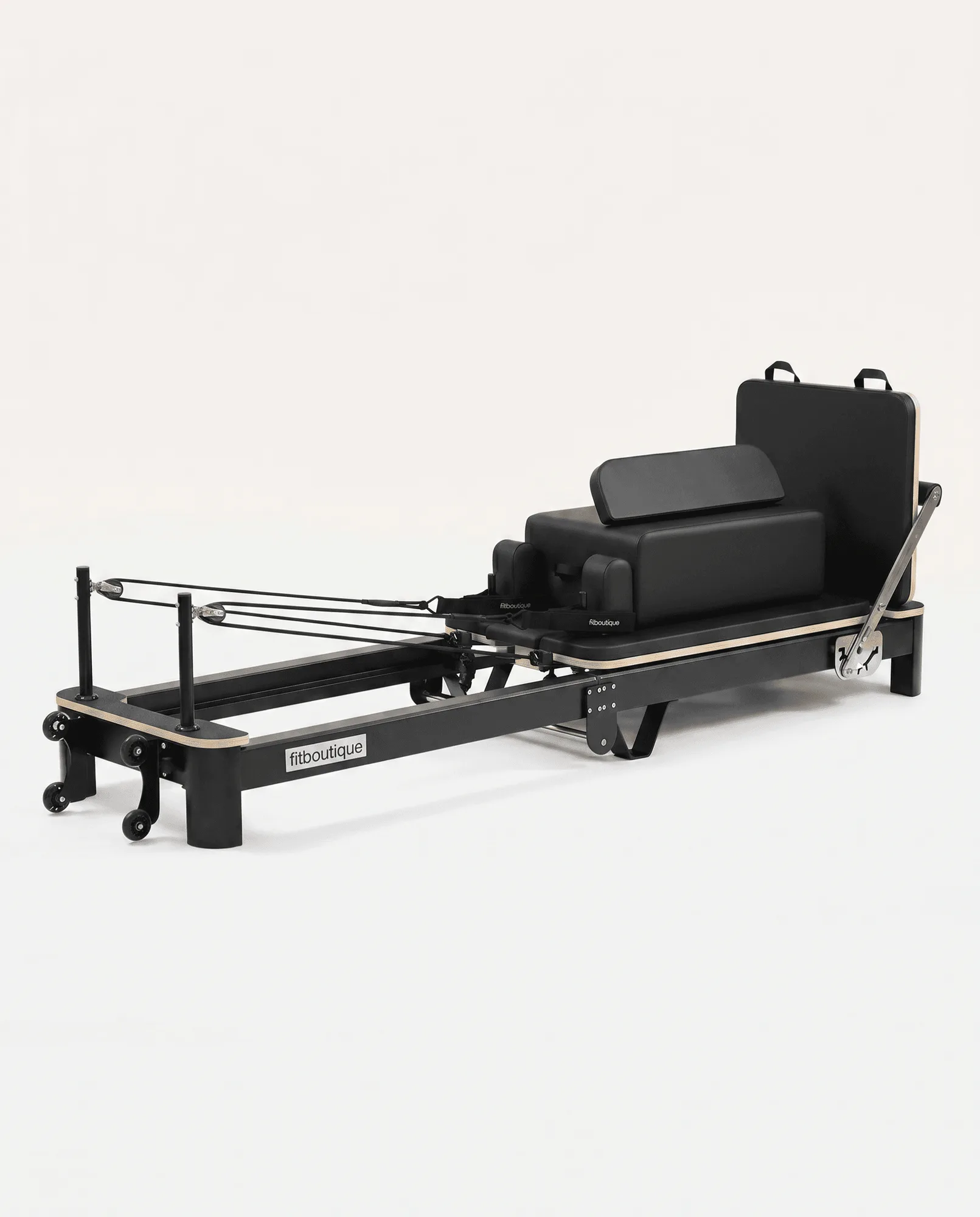
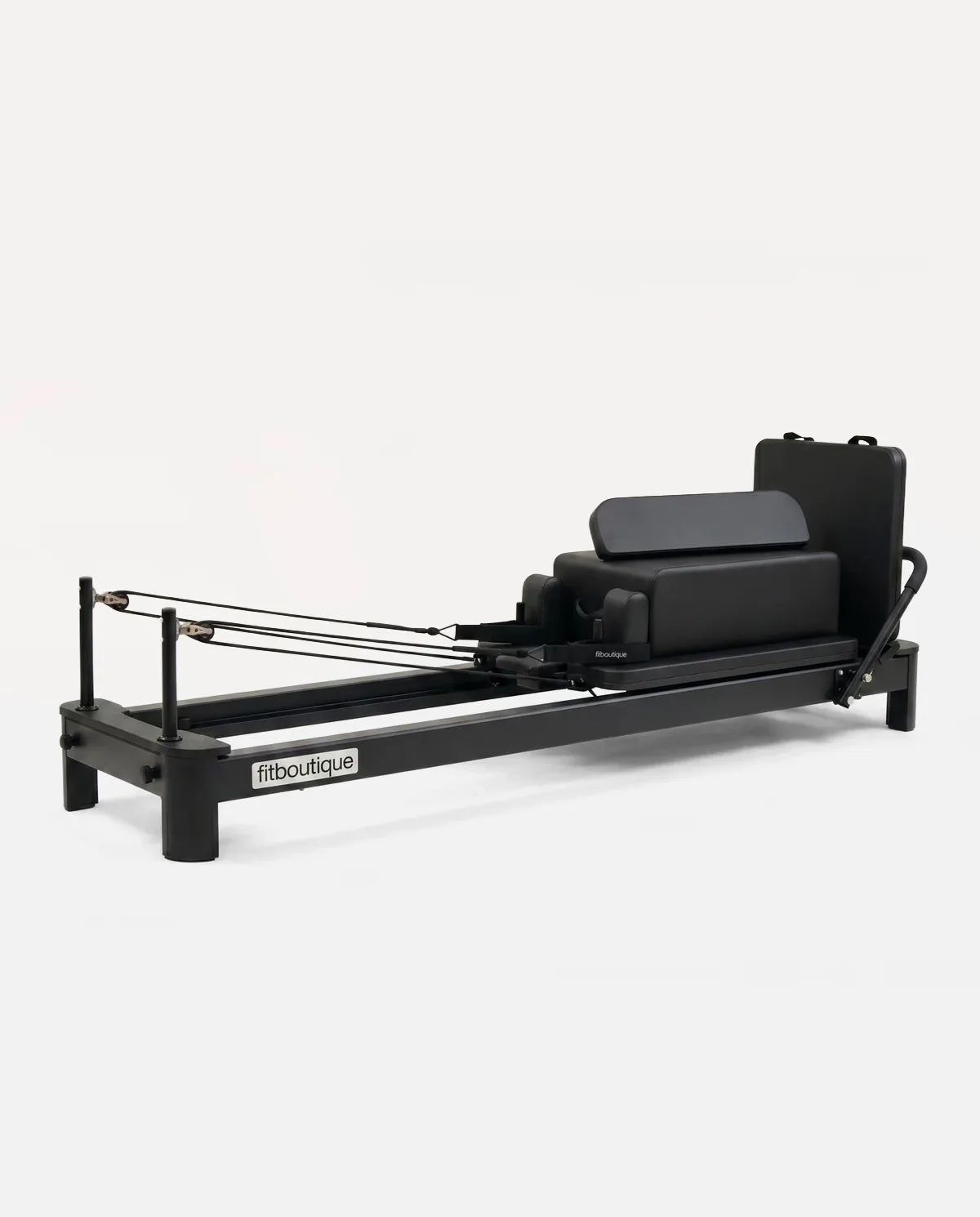
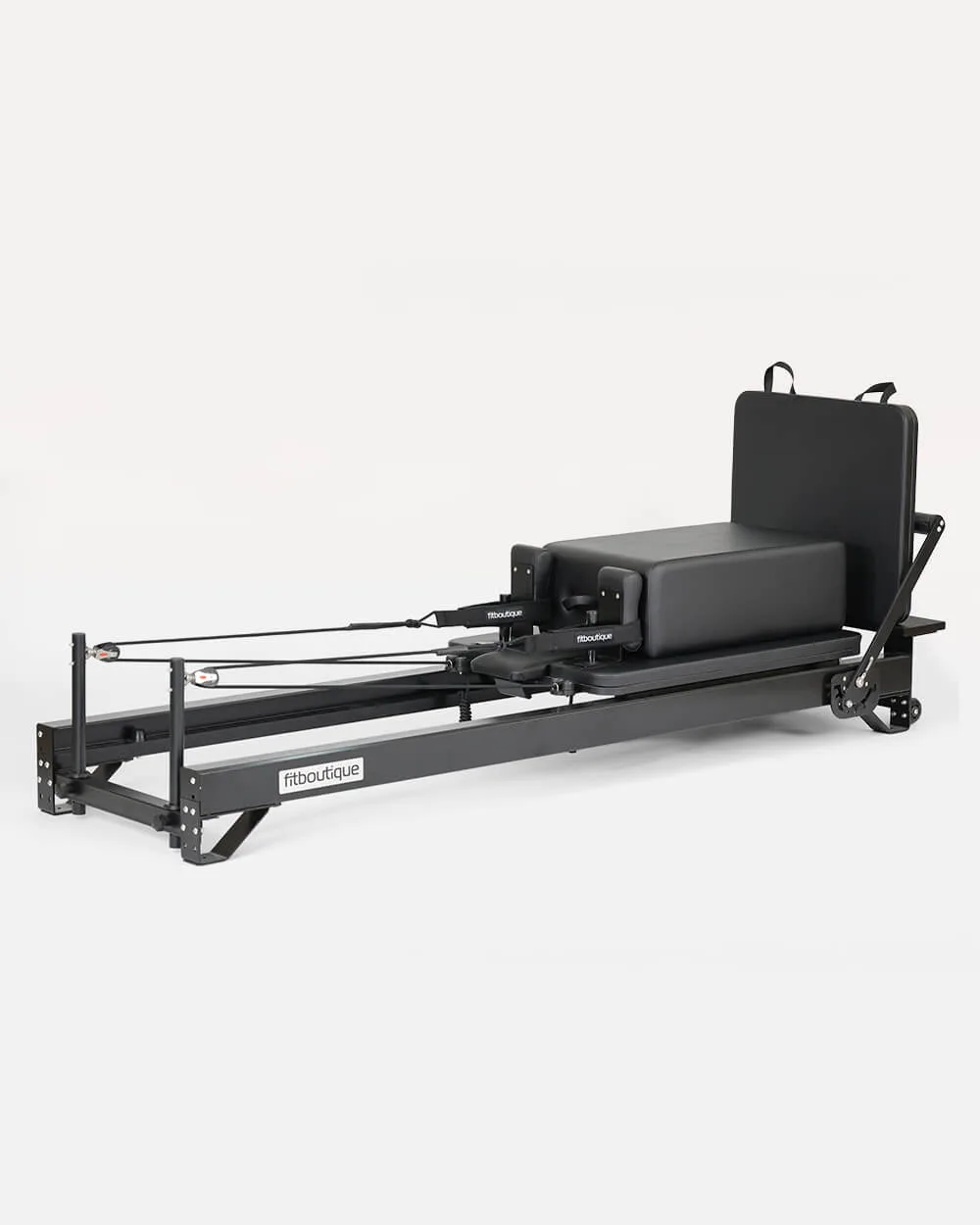
- Ivory Reformer: Commercial grade aluminium reformer with a 6 spring system, premium padding, smooth carriage glide, and a foldable frame with a centre support bar and wheels for upright storage. A good first reformer if you want studio-level performance but need to store it upright between sessions.
- Foldable Reformer: Commercial grade foldable aluminium reformer with high grade aluminium and steel construction, a 6 spring system, premium padding, and a smooth gliding carriage. A slightly lower-cost foldable option that still gives you a full studio-style spring system and storable frame.
- Onyx Reformer: Non-fold commercial model with a full aluminium frame, 6 spring system, and a grounded, solid feel under load, finished in full black. Choose this if the reformer will stay in one place and you want maximum stability rather than portability.
- Space Black Reformer: Commercial grade reformer with a larger studio frame, 6 spring system, smooth carriage glide, and solid construction for daily use in high traffic studios. Best for a permanent home studio or a professional setting where the reformer is used every day.
Who should buy which first
Buy a reformer first if you are
- Training at home three or more times a week and want full-body strength and mobility work
- Replicating studio reformer classes without travelling to a studio
- Working with a clinician or instructor who has prescribed reformer exercises
- Able to dedicate a wall or room and store the machine upright or leave it set up
Buy a chair first instead if you are
- Working with less than two metres of clear floor space and no upright storage
- On a tight budget and unwilling to wait or save for a reformer
- Mainly interested in standing balance, single-leg strength, or short sessions
- Buying a second, portable piece of equipment to supplement a reformer you already own