Quick answer
Wash removable pillow covers inside out in cold water on a gentle cycle, then air dry or tumble on low. Always check the care label first, because fabric and trim decide the method. Store clean, fully dry covers flat or rolled in a breathable bin, not a sealed plastic bag.
Decorative pillow covers take more handling than most people expect. They get leaned on, tossed on the floor, and rotated with the seasons, so they collect dust, oils, and the occasional spill long before the insert wears out. A simple routine keeps them looking sharp and extends the life of the covers you actually love.
The catch is that covers are not all the same. A quilted cotton cover, a printed fine-art panel, and a pin-backed accent piece each need slightly different treatment. The questions below cover the situations that come up most often, from spot cleaning to storing covers between holidays.
How do I wash removable pillow covers without fading them?
Turn the cover inside out and close any zipper or button closure before it goes near water. Wash in cold water on a gentle or delicate cycle with a mild detergent, and skip bleach and fabric softener, which can dull printed colors and leave a residue that attracts dust. If the cover has embroidery, appliqué, or a printed panel, use a mesh laundry bag for extra protection.
Cold water and low agitation matter more than the detergent brand. Hot water is the fastest way to shrink cotton and fade a print, and a heavy cycle can pull seams. When in doubt, hand wash in a sink with a drop of mild soap, rinse until the water runs clear, and press the water out gently instead of wringing.
- Zip or button the closure so it does not snag other items.
- Use a mesh bag for covers with trim, embroidery, or a printed panel.
- Never mix a delicate cover with towels or jeans.
Can I wash a decorative pillow cover that is not removable?
If the cover is sewn shut, you are cleaning the whole pillow, not just the cover. Spot clean with a barely damp cloth and a tiny amount of mild soap, working from the outside of the stain inward so you do not spread it. Let it air dry completely before putting it back on a chair or bed.
For a non-removable pillow with a large stain or a musty smell, professional cleaning is the safer choice. A cover that cannot be removed also cannot be inspected for hidden damage, so avoid soaking it. If the pillow is decorative and rarely handled, regular vacuuming with a brush attachment will remove most surface dust.
- Blot, do not rub, to keep the fabric pile smooth.
- Test any cleaning solution on a hidden seam first.
- Air dry away from direct sun to prevent fading.
How should I dry pillow covers so they keep their shape?
Air drying is the gentlest option. Lay the cover flat on a clean towel or hang it over a drying rack, and reshape the seams while it is still damp. If you use a dryer, choose the lowest heat setting and remove the cover while it is slightly damp, then smooth it flat to finish drying. High heat is what causes shrinkage and warped corners.
Tumble drying with a clean dryer ball can soften stiff cotton, but skip it for covers with delicate trim or a printed surface. Direct sunlight will fade colors over time, so dry indoors or in a shaded spot. If a cover comes out wrinkled, a quick press with a warm iron on the reverse side usually smooths it without touching the print.
- Reshape seams before the fabric dries completely.
- Use low heat only, and check the cover every few minutes.
- Iron on the reverse side, never directly on a print or trim.
What is the best way to store pillow covers between seasons?
Store only covers that are clean and completely dry. Fold them flat or roll them loosely, and stack them in a breathable cotton bin or a pillowcase rather than a sealed plastic tote. Plastic traps moisture and can cause mustiness, especially in humid climates. A small sachet of lavender or cedar nearby helps keep storage fresh without perfuming the fabric.
Keep stored covers out of direct sunlight and away from damp basements or hot attics. If you rotate covers seasonally, label the bin so you are not digging through every pillow in the house. Storing covers flat also prevents the deep creases that form when they are crammed into a drawer.
- Never store a cover that is still damp.
- Use a breathable bin or pillowcase, not a vacuum-sealed bag.
- Label seasonal bins so rotation stays easy.
How do I clean decorative pillows with pins or embellishments?
Remove any pin or removable embellishment before washing the cover. Enamel pins and similar accessories should be wiped with a soft, dry cloth and kept away from water, since moisture can dull the finish or loosen the backing. Store pins on a felt board or in a small tin so they do not scratch other covers in storage.
If an embellishment is permanently attached, treat the pillow as spot-clean only. A pin like the Watering Can Enamel Art Pin is designed to move between jackets, hats, and bags, so it does not need to stay on the pillow at all. That makes the cover easier to wash and gives you more ways to use the pin.
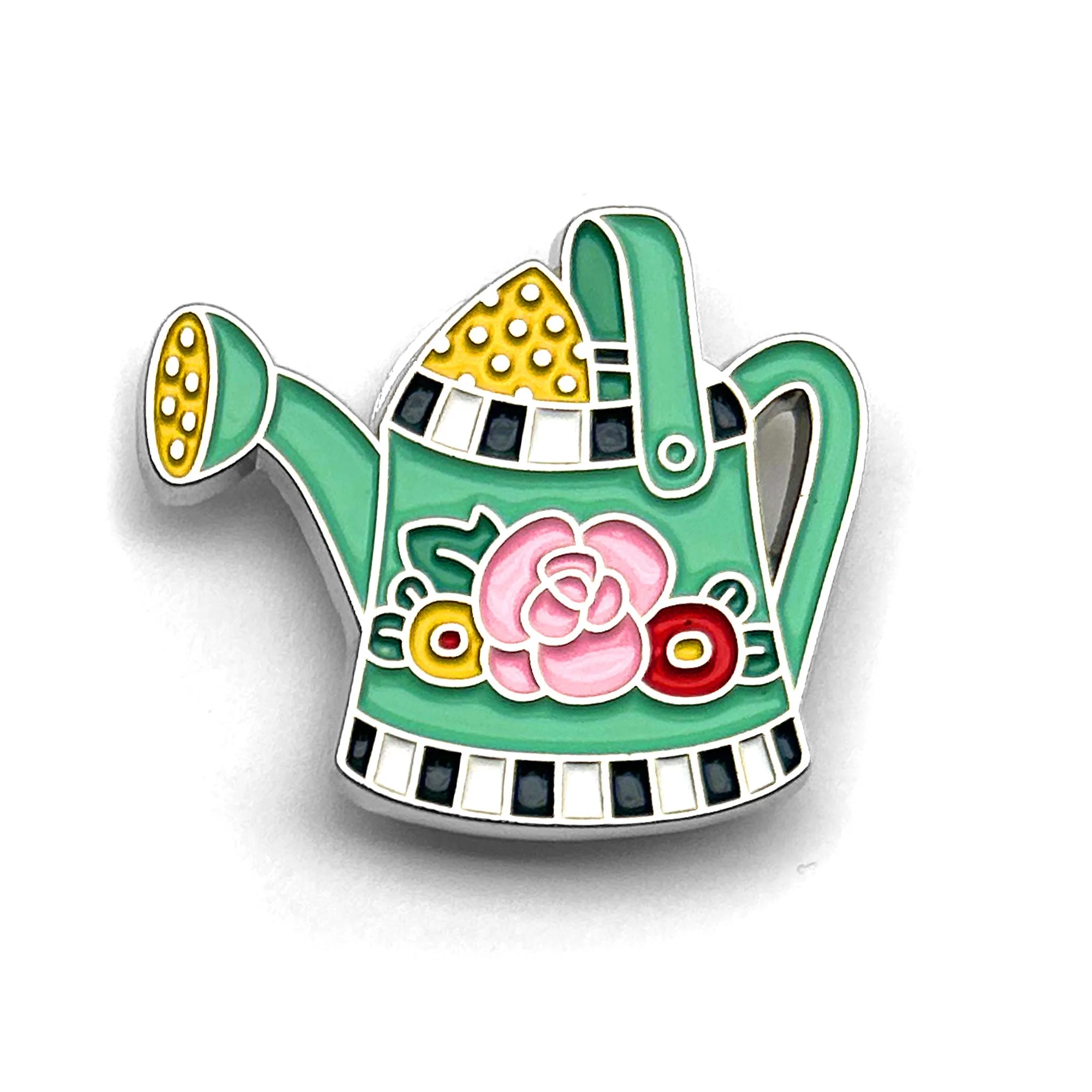
Watering Can Enamel Art Pin
- Take pins off before washing the cover.
- Wipe enamel pins with a dry cloth, never soak them.
- Store pins separately to avoid scratches.
How often should I wash pillow covers?
Wash covers that touch your face or hair about every one to two weeks, the same rhythm as sheets. Decorative covers that sit on a sofa or bench and are mostly looked at rather than leaned on can go four to six weeks. Any cover that has been sneezed on, spilled on, or used by a pet should be washed right away.
If someone in the house has allergies, lean toward the shorter end of that range and vacuum the covers between washes. A quick pass with a brush attachment removes dust and pet hair before it works into the weave. Rotating two or three covers per pillow also spreads out the wear so no single cover takes all the handling.
- Face-contact covers: every one to two weeks.
- Display-only covers: every four to six weeks.
- Wash immediately after spills, illness, or pet contact.
Pillow cover care quick reference
Washing a removable cover
Turn inside out, close the closure, use cold water and a gentle cycle with mild detergent. Skip bleach and fabric softener to protect prints and texture.
Drying without shrinkage
Air dry flat or tumble on low heat, removing the cover while slightly damp. High heat is the main cause of shrinkage and warped corners.
Storing between seasons
Store only clean, fully dry covers flat or rolled in a breathable bin. Avoid sealed plastic, damp basements, and direct sunlight.
Product care notes
- Never Delay Joy Fine Print: Printed on high-quality, textured paper in standard frame sizes, with an option to add Mary's signature; all fine prints are created to order and may take up to one week to process. Textured paper and made-to-order timing mean you should keep this print out of damp rooms and plan ahead if you are framing it as a gift.
- Watering Can Enamel Art Pin: Measures approximately 1.25 x 1 inches and is designed to go on a jean jacket, hat, lapel, tie, backpack, or briefcase. Because the pin is removable and meant to travel, you can take it off before washing a pillow cover and keep the enamel finish dry.
Pillow covers reward a little attention. Check the label, wash cold and gently, dry with low heat or air, and store them clean and breathable. Do that, and your favorite covers will keep their color and shape through every seasonal rotation.