Quick answer
For most play areas, pick a kids floor pillow that is 2–4 inches thick, sized so your child can sit cross-legged without hanging off the edge, and firm enough to hold its shape when they flop down. If your child mostly builds and climbs, choose a thinner, firmer pillow that won't slide; if they mostly read and rest, a slightly thicker, softer pillow works better.
A playroom pillow is the quiet counterweight to all the climbing, swinging, and building that happens in the same room. It gives kids a landing spot for reading, snack breaks, and pretend play, and it can double as a soft barrier between a busy play zone and the rest of the room. The tricky part is that 'comfy' and 'supportive' pull in different directions, and the wrong pillow either flattens in a month or gets kicked aside because it is too stiff to enjoy.
This guide gives you concrete decision rules instead of a generic checklist. You will see how thickness, size, and firmness change what a pillow is good for, how to match it to the way your child actually plays, and where a pillow fits alongside larger pieces like climbing structures and playroom bundles. The goal is a playroom pillow your child reaches for daily, not one that lives in a corner.
Start with how your child uses the play area
The single most useful question is what happens on the floor. If your child mostly climbs, balances, and builds, the pillow is a rest stop, not a destination. In that case, a thinner pillow of roughly 2 inches keeps the floor feeling stable and won't create a trip hazard near a ramp or climbing wall. If your child spends long stretches reading, drawing, or setting up toy scenes, a 3–4 inch pillow gives more cushion for sitting and lying down.
Think about where the pillow will live, too. A pillow placed directly under a climbing structure or monkey bars will get stepped on and shoved around. A pillow placed beside the active zone, or in a reading corner, lasts longer and gets used more. If you are not sure yet, start thinner and add a second pillow later; two thin pillows are easier to rearrange than one thick pillow that is always in the way.
- Active play zone: choose a thinner, firmer pillow that stays put.
- Reading or quiet corner: choose a thicker pillow for longer sitting.
- Mixed use: choose a mid-thickness pillow and keep it at the edge of the play zone.
Thickness, size, and firmness: the three decisions
Thickness controls how the pillow feels under a sitting child. Under about 2 inches, most kids feel the floor through the pillow, which is fine for tummy time and floor games but tiring for sitting. Around 3 inches is the practical middle for a kids floor pillow: enough cushion to be comfortable, low enough that kids can get on and off without help. Above 4 inches, the pillow starts to behave like a small mattress and needs more floor space.
Size matters more than most parents expect. A pillow that is too small forces kids to perch on the edge, which defeats the purpose. As a rule, the pillow should be wide enough that a child can sit cross-legged with a few inches of margin on each side. Firmness is the last decision: a firmer pillow holds its shape and supports a child who leans back on their hands, while a softer pillow is more inviting for lying down but needs fluffing and may flatten faster.
- Measure your child's cross-legged seat width before buying.
- Firmer for active sitters, softer for loungers.
- If two children will share it, size up rather than stacking pillows.
How a playroom pillow fits with climbing and play equipment
A pillow works best as part of a small circuit: climb, move, then rest. If you already have a climbing wall or a playground climber, place the pillow a step or two away from the landing zone so it does not interfere with safe dismounts. For a compact setup, a pillow plus a small climbing wall gives you both active and quiet play in one room without adding another large piece of furniture.
If you are building the play area from scratch, it helps to decide the pillow's job before you buy the big pieces. A pillow is not a safety mat, and it should not be used as one under climbing equipment. Treat it as comfort furniture: it softens the reading corner, gives kids a place to cool down between activities, and can be moved out of the way when the room needs open floor space.
- Never use a pillow as a landing mat under climbing equipment.
- Keep the pillow outside the fall zone of any climber or wall.
- Move the pillow to a shelf or corner when the room needs open space.
Materials and care: what to check before you buy
Playroom pillows take more abuse than bedroom pillows. Look for a removable, machine-washable cover, because spills, crumbs, and marker stains are normal in a play area. A zipper closure is easier to manage than buttons or ties when you are washing the cover weekly. If the cover is not removable, treat the pillow as spot-clean only and keep it away from snack time.
Filling matters for longevity. A pillow that loses its shape after a month usually has filling that shifts to the edges. If you can, choose one with a firmer, more structured fill for a kids floor pillow, and check the seams, since kids will drag it across the floor. There is no universal standard for 'supportive' in kids pillows, so judge by how it feels when you press down with your palm: it should spring back, not stay compressed.
- Removable, washable cover is the single most practical feature.
- Press the pillow with your palm; it should recover its shape.
- Check seams and zipper quality before the first wash.
Decision rules for buying a play area pillow
- Rule 1: Match thickness to the main activity: Choose about 2 inches for active play zones where the pillow is a brief rest stop, and 3–4 inches for reading or lying-down corners. If you cannot decide, 3 inches is the safest middle. Checkpoint: can your child sit cross-legged without feeling the floor? If not, go thicker.
- Rule 2: Size for the sitter, not the room: Measure your child's seated width and add a few inches of margin. A pillow that is too small gets perched on and abandoned; a pillow that is too large takes over the play floor. Checkpoint: two children sharing one pillow means sizing up, not stacking.
- Rule 3: Firmer for support, softer for lounging: A firmer fill holds its shape for kids who sit up and lean on their hands. A softer fill is more inviting for lying down but needs more fluffing and may flatten sooner. Checkpoint: press the pillow with your palm; it should spring back, not stay compressed.
- Rule 4: Washability is not optional: Choose a removable, machine-washable cover with a zipper. If the cover is not removable, plan for spot cleaning and keep the pillow away from snacks and art supplies. Checkpoint: if you cannot wash it, it will not survive a playroom.
- Rule 5: Keep it out of the fall zone: A pillow is comfort furniture, not a safety mat. Place it a step or two away from climbing walls, climbers, and monkey bars so it never interferes with a safe dismount. Checkpoint: if a child could land on it from a climber, move it.
Playroom pieces that pair well with a pillow
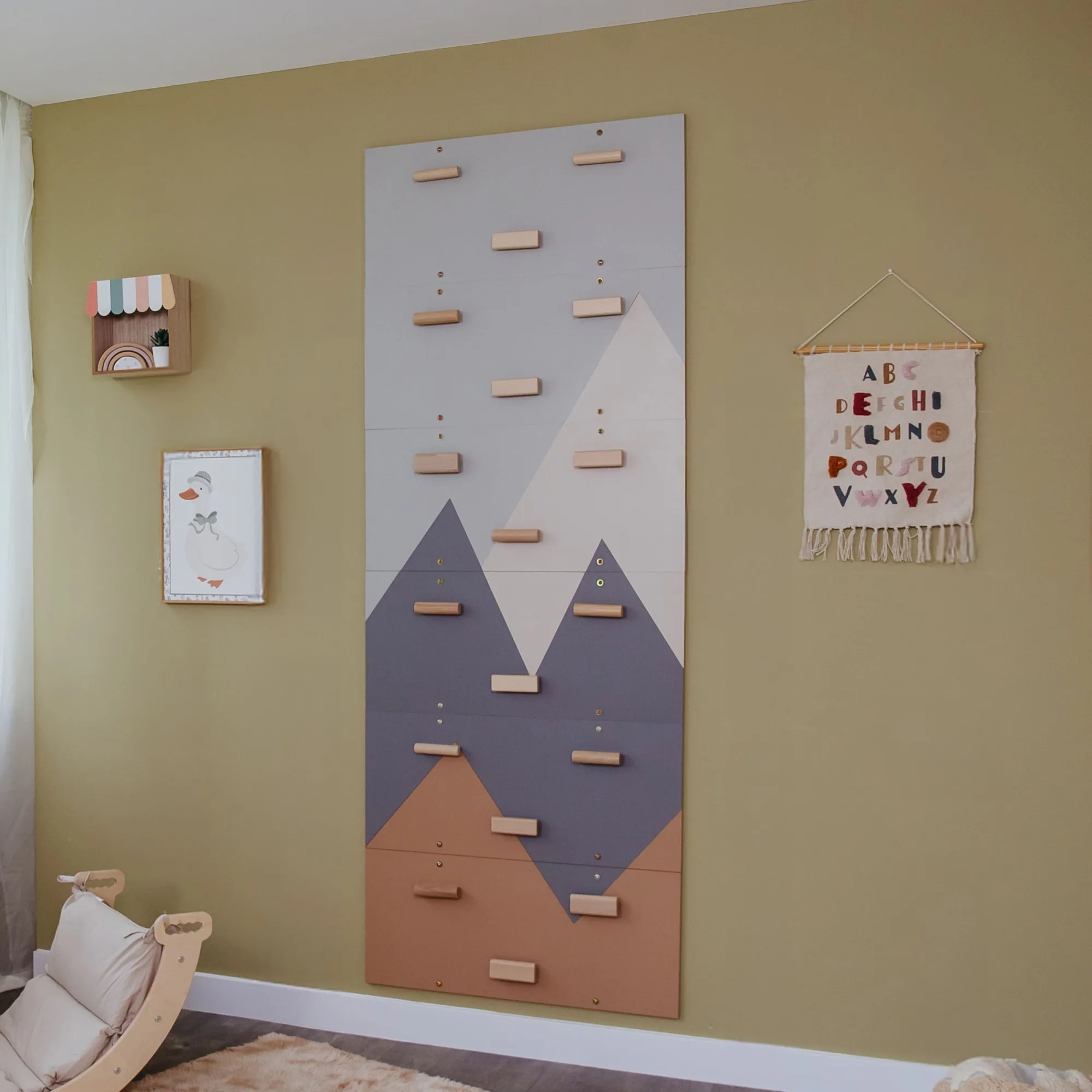
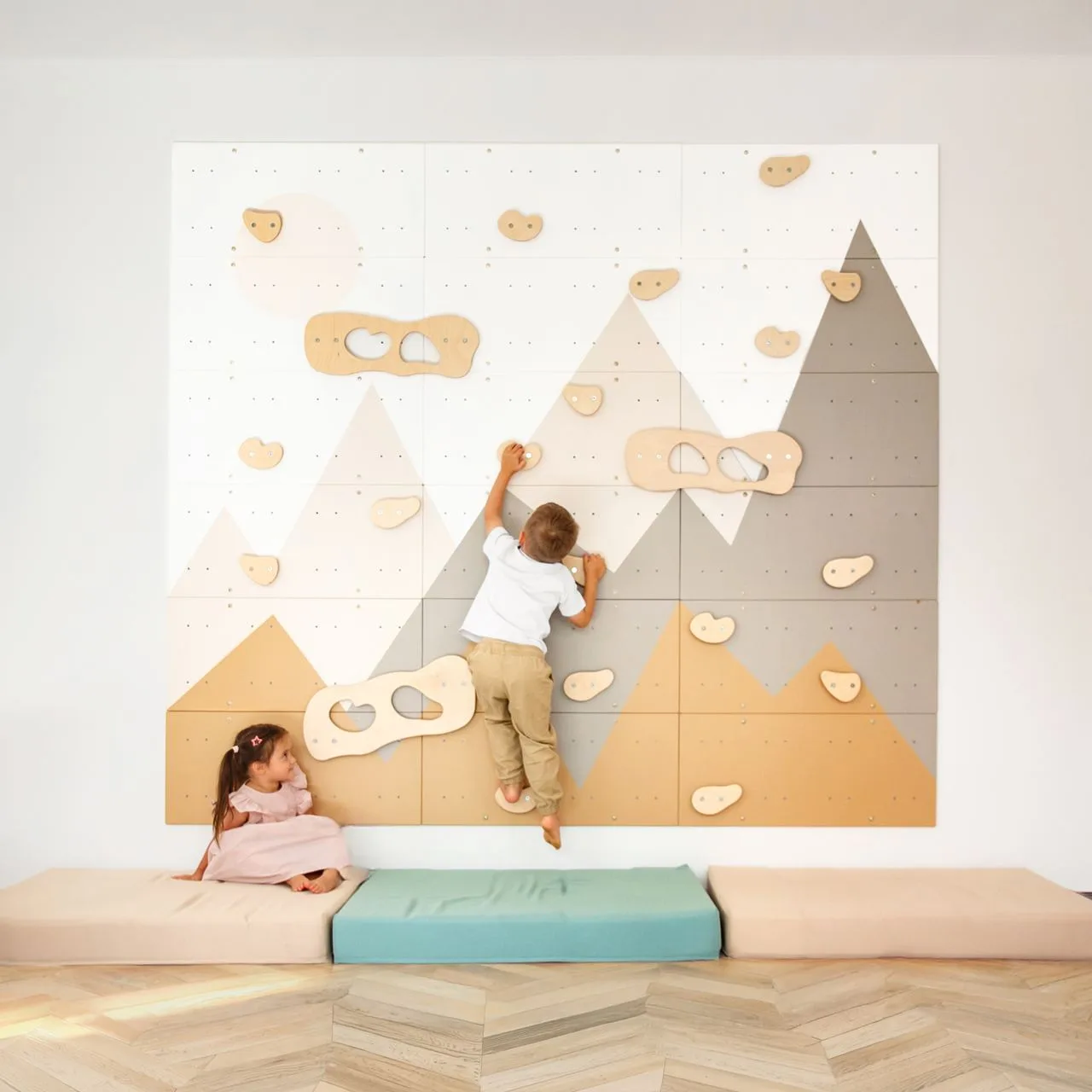
- Kids Indoor Climbing Wall “Mountain”: A compact indoor climbing wall kit designed to turn a small room into an active environment. In a small playroom, this wall plus a kids floor pillow creates a climb-then-rest loop without needing a large playground.
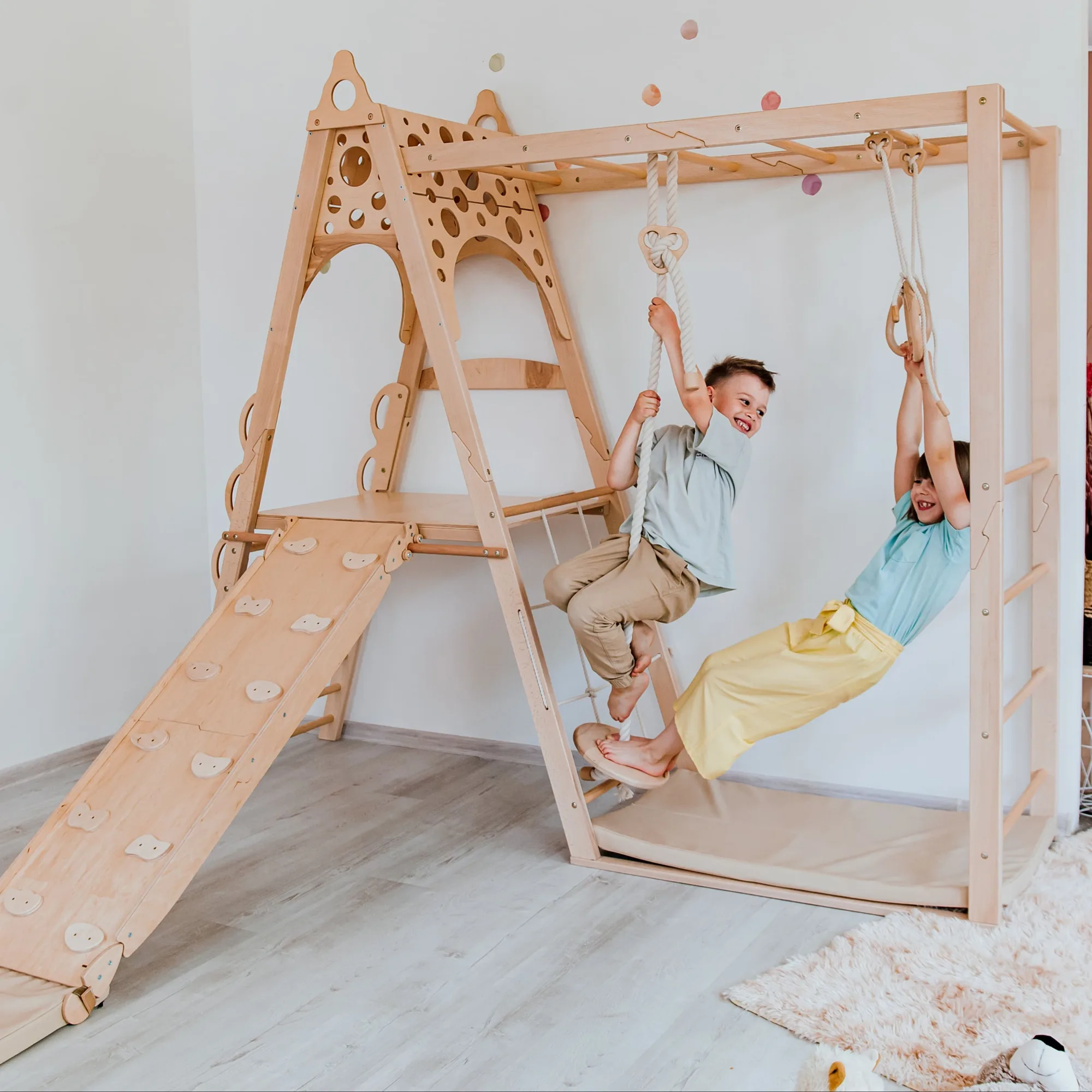
- Kid Climbing Structure: A teepee-shaped structure made from smooth beech wood with climbing ladders, monkey bars, rope accessories, a rock ramp, and a mat for safety. Because it already includes a mat, you do not need to repurpose a pillow as a safety mat; the pillow can stay in the quiet corner.
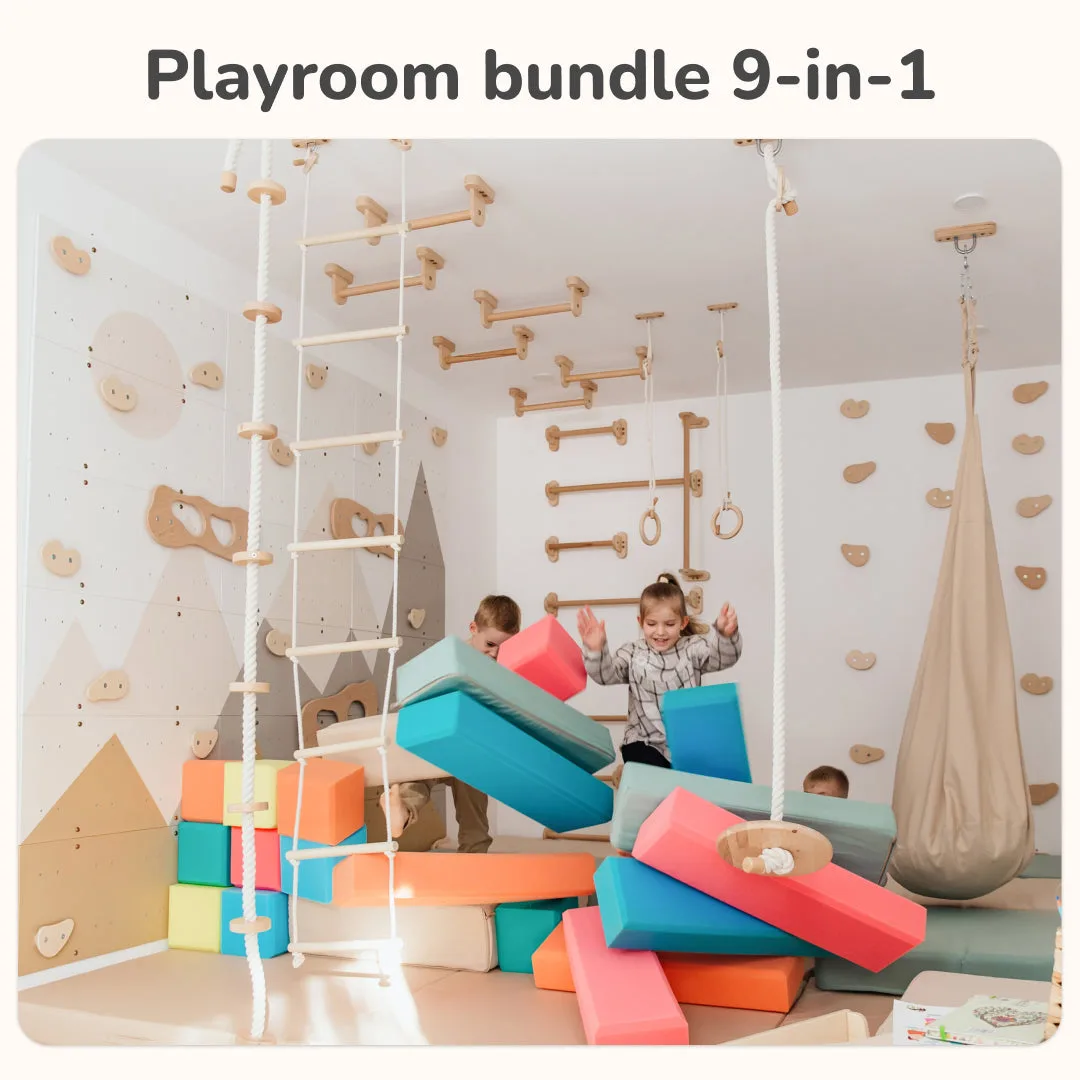
- Ultimate Playroom Deal, 9-in-1 Playroom Bundle: A full-scale activity set that combines climbing, swinging, building, and sensory play elements for active kids of different ages. In a bundle-heavy playroom, a pillow is the one soft element that gives kids a defined place to slow down between activities.
Is a play area pillow right for your family?
Best for
- Families with a dedicated reading or quiet corner inside the playroom
- Kids who alternate between active climbing and floor-based pretend play
- Small playrooms where a full piece of furniture will not fit
Not for
- Use as a safety mat or landing pad under climbing equipment
- Families who need a full-size seating or sleeping surface
- Homes where the pillow will be left in a walkway or fall zone
A good playroom pillow is the piece your child uses between adventures, not during them. Decide on thickness, size, and firmness based on how your child actually plays, keep it washable, and place it outside the fall zone of any climber. If you are still building the play area, start with the active pieces and add the pillow last, once you know where your child naturally settles.