Quick answer
Measure your usable table area first, then pick the mat shape that matches your table and seating. For most round or oval tables, an oval mat such as the Westmark Placemat »Fun« oval at 45.5 x 29 cm keeps the setting visually aligned. For square or rectangular tables, choose a square mat that leaves at least 2 cm of bare table between neighboring settings so plates and cutlery do not crowd.
Start with three measurements, not the mat shape
Before comparing oval or square mats, measure the usable table surface, not the tabletop edge. Note the length and width you can actually set places on, then subtract any permanent centerpiece or lazy Susan footprint. Next, measure your largest dinner plate and add 4–6 cm on each side for cutlery and a glass. That combined figure is your minimum mat size. Finally, count how many people sit at the table at once. Divide the usable table length by the number of settings to see your real per-person width. If that number is under 40 cm, a narrower mat or a staggered layout will work better than a large square one.
Oval placemat dimensions and when the shape helps
Oval mats follow the curve of round and oval tables, so the place setting looks intentional rather than boxy at the edge. The Westmark Placemat »Fun« oval measures 45.5 x 29 cm, which is a standard single-setting footprint: it holds a dinner plate with room for a fork, knife, and a glass at the top corner. Because the oval narrows at the ends, it also leaves more bare table between neighbors than a square mat of the same length. That matters on smaller round tables where square corners would otherwise collide. The trade-off is straight edges: on a rectangular table, oval mats can look slightly informal and leave small triangular gaps at the corners.
Square vs oval placemat: match the shape to the table
Use the table shape as your first filter. Rectangular and square tables usually look best with square or rectangular mats because the straight lines echo the table edge and create an even grid across the surface. Round and oval tables look best with oval or round mats, which avoid awkward overhang at the curve. If your table is extendable, remember that the leaf changes the shape: a round table with a leaf inserted becomes oval, so oval mats stay useful. If you mix shapes, keep the mat shape consistent across all settings; mixed shapes read as clutter even when the sizes are correct.
Material and care decisions that affect size choice
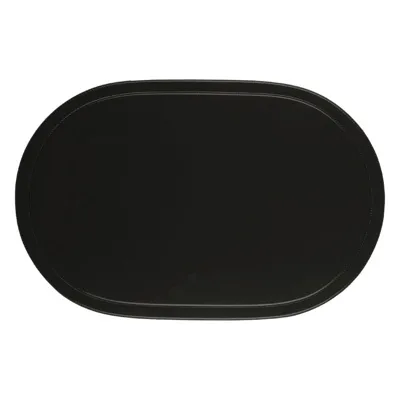
Material changes how a mat behaves at the edge of the table. Flexible mats can overhang slightly without tipping a glass, while stiffer mats need to sit fully on the surface. For daily family meals, a wipe-clean mat in a dark color hides crumbs and small stains; the black finish on the Westmark Placemat »Fun« oval is a practical choice for that reason. For occasional formal settings, a larger mat gives more visual weight. Whichever material you choose, check that the mat lies flat out of the packaging; if it curls, a few hours under a heavy book usually flattens it. Replace mats when the edges crack or the surface no longer wipes clean, since a worn mat can scratch a finished table.
How to test the fit before you commit
You can check a mat size without buying it. Cut a piece of paper or cardboard to the exact dimensions, place it on the table, and set a full place setting on top. Check three things: whether the plate sits fully on the mat, whether cutlery stays on the surface, and whether there is at least 2 cm of bare table between this setting and the next. If the paper version feels crowded, a smaller mat or fewer settings will solve it. This test also reveals whether your table needs a runner or tablecloth underneath, which changes how much grip the mat needs.
Decision rules for choosing a placemat size
- Rule 1: Match mat shape to table shape: Choose oval mats for round or oval tables and square mats for square or rectangular tables. If the table extends with a leaf, oval mats stay useful on the oval version.
- Rule 2: Keep at least 2 cm between settings: Measure the usable table length, divide by the number of settings, and subtract the mat length. If the result is under 2 cm, use a smaller mat or fewer settings. Crowded settings cause knocked glasses more often than mat size alone.
- Rule 3: Check plate and cutlery coverage: A mat should hold the full dinner plate plus cutlery on both sides. A 45.5 x 29 cm oval covers a standard single setting. If cutlery hangs off the mat, choose a larger size or a rectangular mat.
Products that fit these rules
- Placemat »Fun« oval, 45,5 x 29 cm, black: Oval placemat measuring 45.5 x 29 cm in black. A single-setting size that suits round and oval tables and hides everyday crumbs.
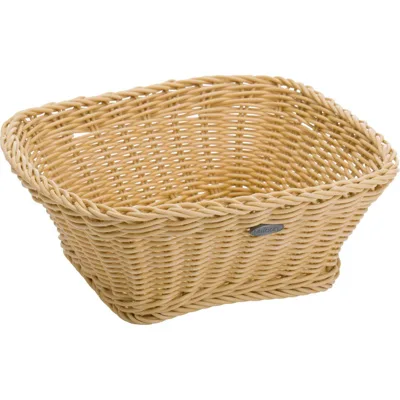
- Basket »Coolorista« square, 23 x 23 x 9 cm, light beige: Square basket measuring 23 x 23 x 9 cm in light beige. Useful beside the table for napkins or cutlery so the setting stays clear.
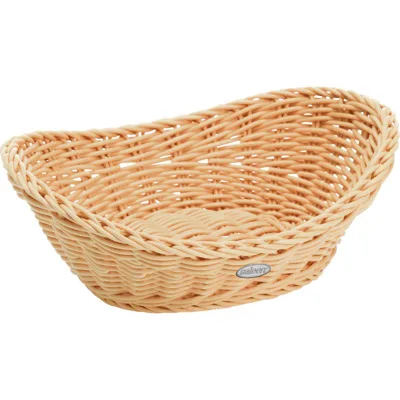
- Basket »Coolorista« oval, 23,5 x 18 x 6/8 cm, light beige: Oval basket measuring approximately 23.5 x 18 x 6/8 cm in light beige. A compact option for holding small table items without crowding the placemat.
Who should choose which
Best for
- Households with round or oval dining tables who want an aligned, curved setting
- Everyday family meals where a wipe-clean dark mat hides crumbs
- Buyers who want a single-setting size that leaves room between neighbors
Not for
- Rectangular tables where straight-edged square mats create a cleaner grid
- Very narrow tables where a 45.5 x 29 cm mat leaves no gap between settings
- Formal settings that need a larger, heavier mat for visual weight