Quick answer
Choose a play kitchen if your child loves role-playing daily routines and social interaction; pick a dollhouse if they prefer detailed, imaginative storytelling and solo play.
Play style and imagination
A play kitchen invites active, collaborative play—children mimic cooking, cleaning, and hosting, often with siblings or friends. A dollhouse, by contrast, encourages quieter, narrative-driven play where kids direct characters and create stories.
Think about your child's natural tendencies: do they thrive on movement and conversation, or do they enjoy focused, intricate scenarios? Both toys build creativity, but they exercise different muscles.
Space and footprint
Play kitchens are typically larger and need floor space, often becoming a room's centerpiece. Dollhouses are more compact and can be placed on a table, shelf, or corner, making them easier to fit into smaller rooms or shared spaces.
Measure your available area before committing. If space is tight, a dollhouse may be the practical choice; if you have a dedicated playroom, a kitchen can anchor the room beautifully.
Skill development focus
Play kitchens emphasize practical life skills—sorting, measuring, sequencing—and encourage language development through role-playing. Dollhouses foster fine motor skills, spatial reasoning, and emotional intelligence as children navigate social scenarios.
Neither is 'better' academically; they simply target different developmental areas. Consider what you'd like to encourage most at this stage.
Trade-offs at a glance
- Play kitchen: social and active: Best for children who enjoy role-playing with others, moving around, and imitating real-life routines. It encourages cooperation and language use. If your child loves 'helping' in the kitchen, this is a strong signal.
- Dollhouse: independent and narrative: Best for children who like to invent stories, arrange furniture, and play solo for extended periods. It supports fine motor and storytelling skills. Watch how your child plays with small figures or action sets—do they create plots?
- Space and budget: Play kitchens generally require more floor space and a larger budget. Dollhouses are more compact and often less expensive, but can still offer rich detail. Measure your room and set a budget before browsing to narrow options.
Product highlights
-
Ultimate Corner Play Kitchen with Lights & Sounds - Natural: The Ultimate Corner Play Kitchen features lights and sounds on the stovetop and ice maker, plus turning oven knobs and opening appliance doors. Interactive features make kitchen play more immersive, which can keep children engaged longer and spark more creative cooking scenarios.
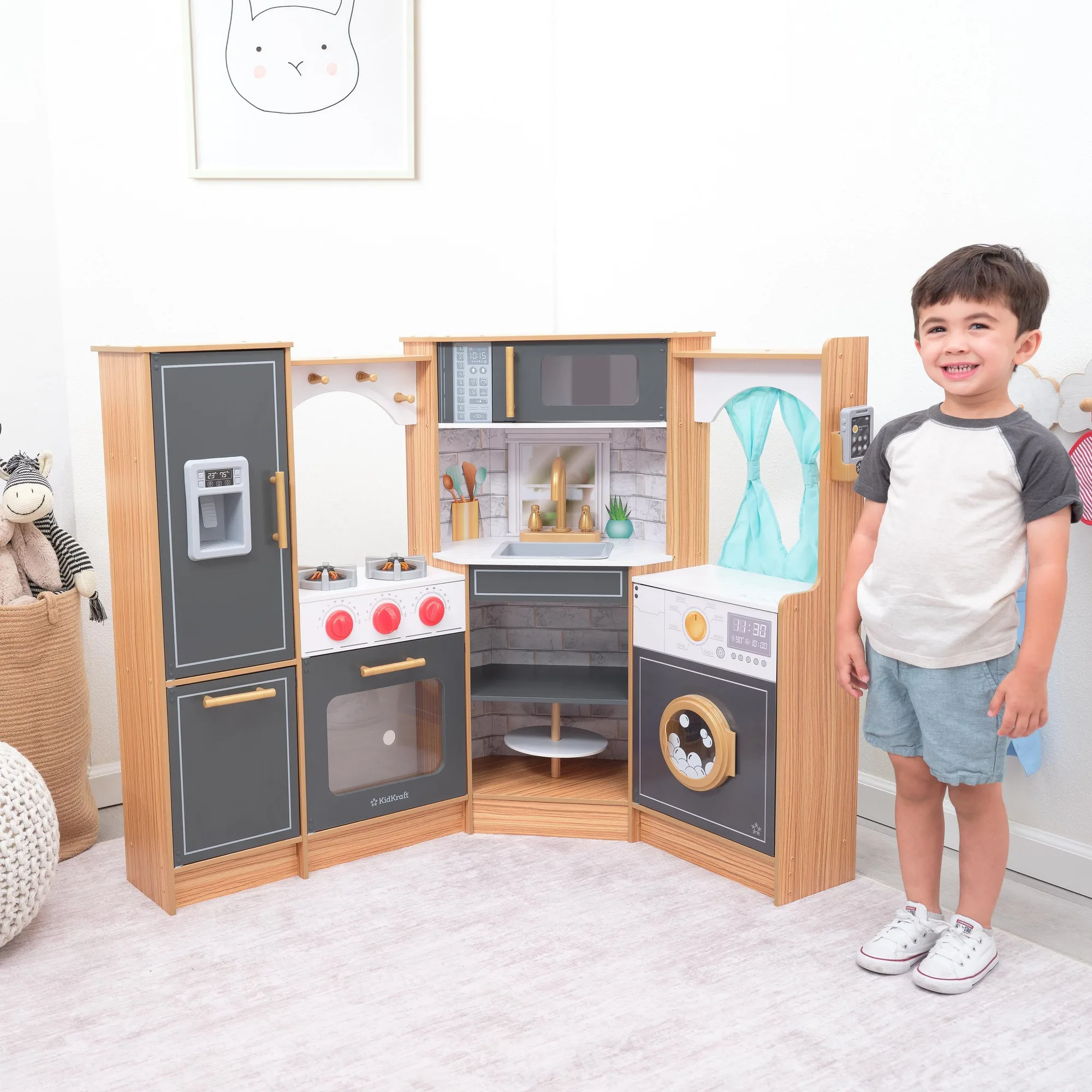
Ultimate Corner Play Kitchen with Lights & Sounds - Natural
-
Metropolis Train Set & Table: The Metropolis Train Set & Table includes 100 pieces, a magnetic three-car train, and an elevated track with a double-decker suspension bridge. If you're considering a dollhouse for its detailed world-building, a train table offers a similar scale of imaginative play with a different theme.
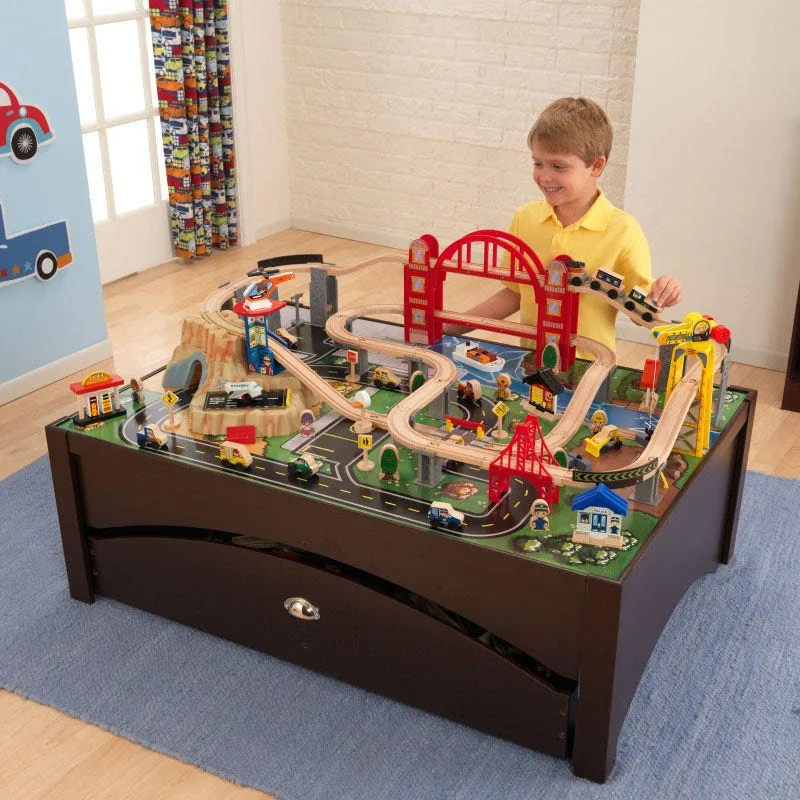
Metropolis Train Set & Table
Which toy fits your child?
Best for
- Children who love pretend cooking, hosting, and collaborative play
- Families with ample floor space and a budget for a larger toy
Not for
- Children who prefer quiet, solo storytelling with small figures
- Tight spaces where a large footprint would be a problem