Quick answer
Both a play kitchen and real kitchen tasks support toddler learning, but they spark different skills. For open-ended imaginative play and safe independence, a play kitchen like Lalo's The Play Kitchen is a top choice; for practical life skills and sensory learning, real kitchen tasks are invaluable.
Developmental benefits of a play kitchen
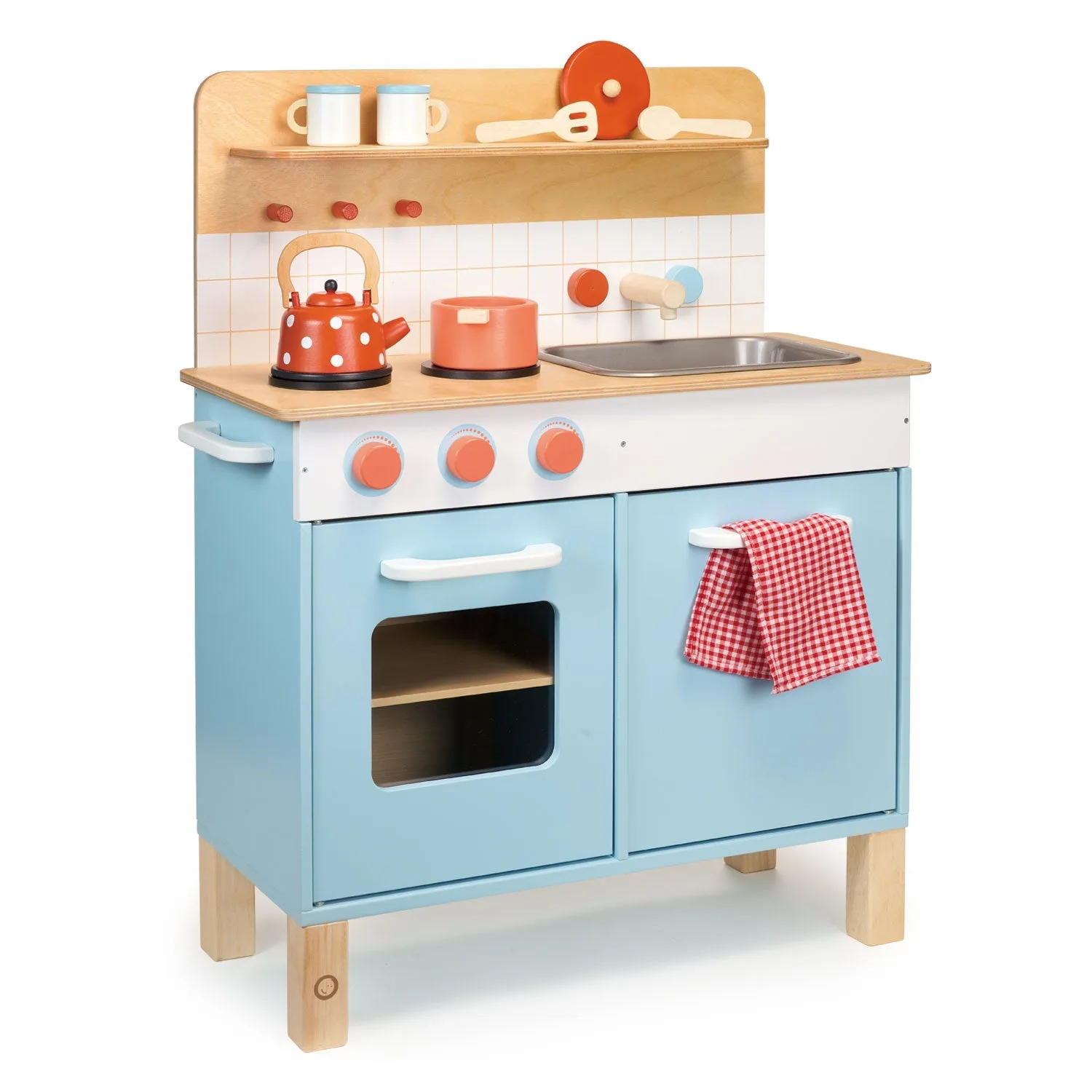
A play kitchen offers a safe, child-sized environment where toddlers can imitate adult roles, practice language, and build social skills through pretend scenarios. It encourages open-ended play, which supports creativity and problem-solving without the risks of a real kitchen.
Lalo's The Play Kitchen features interactive knobs and doors, allowing toddlers to organize and explore. Its upgraded design requires no tool assembly and can be set up in under 5 minutes, so your child can start playing almost immediately.
Real kitchen tasks: practical learning in action
Involving toddlers in real kitchen activities—like washing vegetables, stirring batter, or setting the table—builds fine motor skills, following directions, and a sense of responsibility. These tasks provide concrete sensory experiences and teach real-world cause and effect.
However, real kitchen tasks require constant supervision and careful selection of age-appropriate activities to ensure safety. They also demand more patience from parents, as tasks take longer and can be messy.
The trade-off: imagination vs. reality
The key trade-off is between imaginative play and practical skill development. A play kitchen fuels creativity and social-emotional growth, while real kitchen tasks build practical life skills and sensory understanding. Neither replaces the other; they complement each other in a child's development.
For toddlers under three, a play kitchen is often more suitable because it allows independent exploration without safety hazards. As children grow, incorporating simple real tasks can extend their learning.
Play kitchen vs. real kitchen: trade-offs at a glance
- Play kitchen: imaginative play: Encourages role-play, language development, and social skills. Safe for independent exploration. Best for toddlers who enjoy pretend scenarios. If imaginative play is your priority, a play kitchen is the clear winner.
- Real kitchen: practical skills: Builds fine motor skills, following instructions, and responsibility. Provides sensory learning but requires supervision and patience. For practical life skills, start with simple, supervised tasks.
- Combined approach: Use a play kitchen for independent play and real kitchen for guided activities. This balance supports both imaginative and practical development. Consider integrating both to maximize learning opportunities.
Product spotlight
-
The Play Kitchen: The Play Kitchen is back with an upgraded design. No tool assembly that can be completed in under 5 minutes! This means you can have it ready for play almost instantly, reducing setup time and getting your toddler engaged sooner.
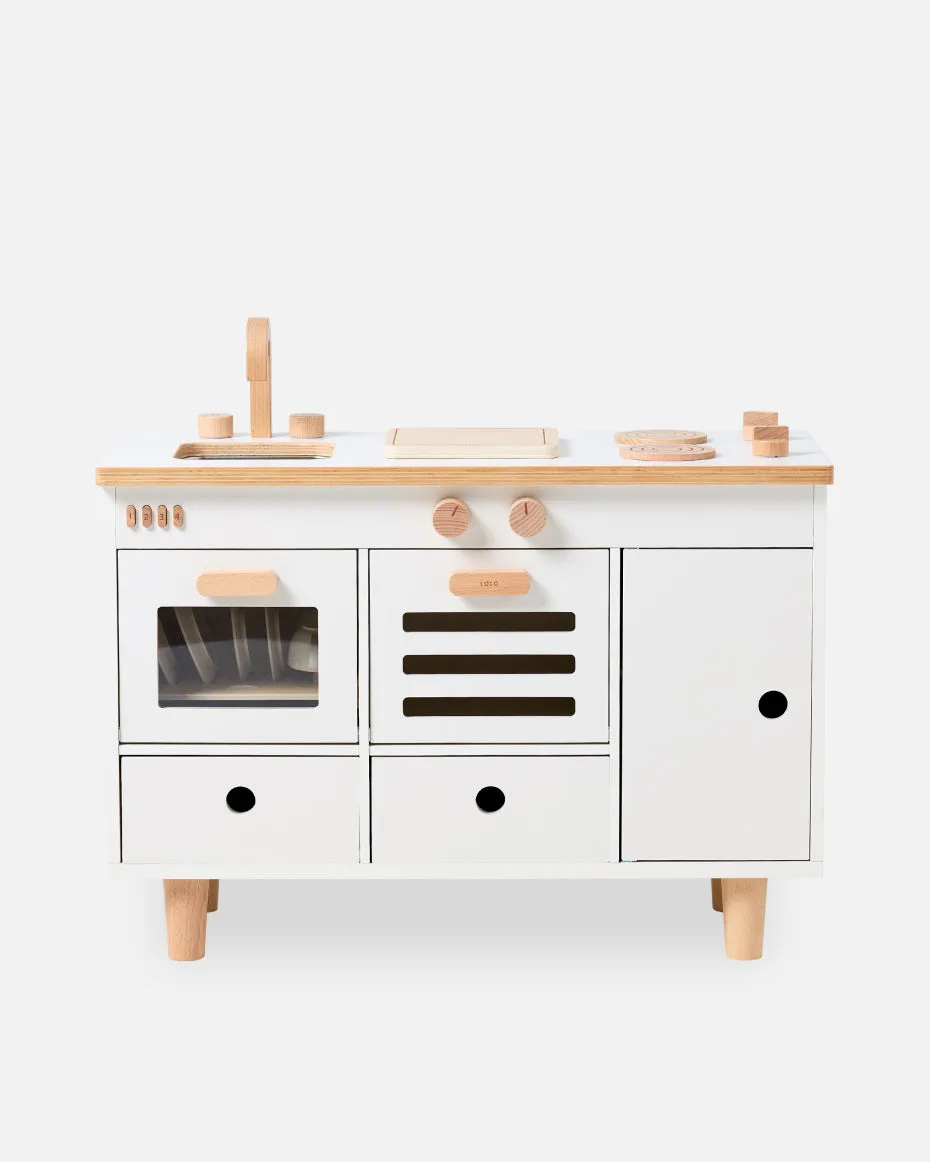
The Play Kitchen
Which is right for your toddler?
Best for
- Toddlers who love pretend play and need a safe space to mimic adult roles
- Parents seeking a mess-free, low-supervision play option that sparks creativity
Not for
- Parents who specifically want to teach real cooking skills and safety rules
- Toddlers who show little interest in pretend play and prefer hands-on real activities