Quick answer
Shake or vacuum loose crumbs first, spot clean with a mild soap and damp cloth, and air-dry the mat completely flat before folding it away. For fabric mats with removable parts, wash only what the care label allows, and never store a mat that is still damp.
Know what your mat is made of before you wet it
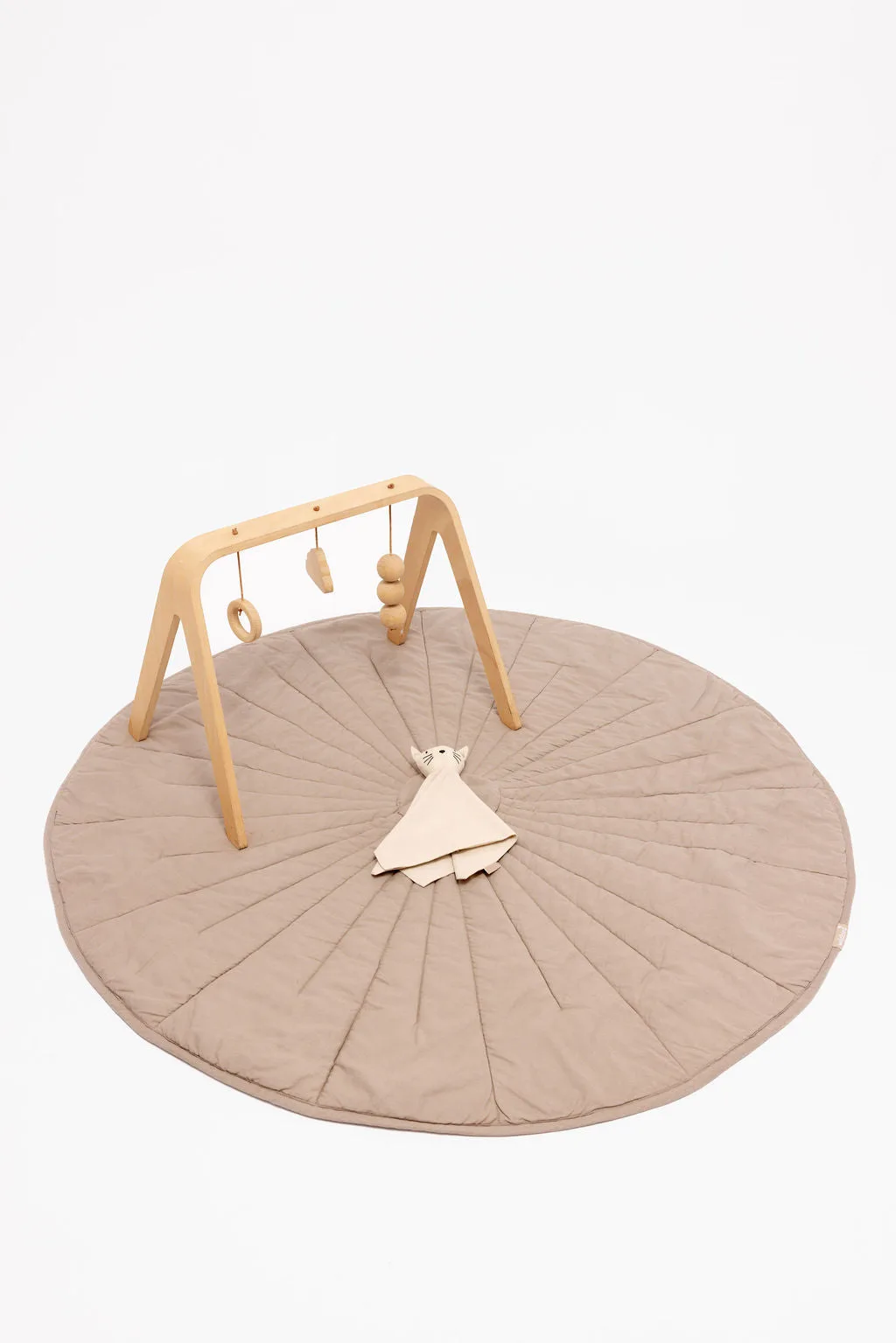
Play mats fall into a few broad groups: wipe-clean foam or coated mats, quilted fabric mats, and fabric mats with removable toy or teether attachments. Each group tolerates a different level of moisture. A coated mat can handle a damp cloth and mild soap. A quilted fabric mat may need spot cleaning or a gentle machine cycle depending on its label. Mats with attached toys need those pieces removed before any washing so metal rings, wooden parts, or snaps do not rust, warp, or tangle.
Check the care label or product page before your first clean. If the maker does not list a washing method, treat the mat as spot-clean only. That is not a flaw in the product; it simply means the safest path is the one the maker tested.
Build a two-minute daily reset
Most play mat grime is surface-level: crumbs, pet hair, spit-up residue, and sticky snack fingerprints. A daily reset keeps those from working into fibers or seams. Shake the mat outdoors or over a bin, then run a vacuum hose or a lint roller across both sides. Wipe visible sticky spots with a barely damp cloth and let the area air-dry before the mat goes back down.
This daily habit matters more than a deep clean. A mat that gets a quick pass every day rarely needs a full wash, which means less wear on the fabric and fewer chances of shrinkage or fading.
Spot clean the right way
Mix a few drops of mild dish soap or baby-safe laundry detergent in lukewarm water. Dampen a microfiber cloth, wring it out so it is not dripping, and blot the stain from the outside in. Blotting stops the stain from spreading into a larger ring. Rinse the cloth with clean water and blot again to lift soap residue, then press a dry towel over the area.
Skip abrasive scrubbing pads, bleach sprays, and heavy vinegar solutions on printed or coated mats. They can dull the surface, lift ink, or leave a residue that ends up on your baby's hands.
When and how to wash a fabric mat
If the label allows machine washing, remove every detachable piece first, close any hook-and-loop tabs, and use a gentle cycle with cold water. Wash the mat alone or with other soft items so zippers and hardware do not snag the fabric. Use a small amount of mild detergent and skip fabric softener, which coats fibers and can reduce absorbency.
Air-dry the mat flat or draped over a drying rack. High heat is the most common cause of shrinking, warping, and seam puckering, so keep it out of the dryer unless the label specifically permits it. If a mat has a non-slip backing, heat can also break down the grip.
Store it so it is ready for the next use
Once the mat is fully dry on both sides, fold or roll it loosely. Tight, sharp folds pressed into the same crease for months can leave permanent lines in foam and quilted fabric. Store the mat flat on a shelf, upright in a bin, or rolled around a cardboard tube if you have the space.
Choose a breathable cotton bag or open bin rather than a sealed plastic tote. Trapped moisture is what causes musty smells and mildew, especially in humid climates. If you are storing the mat between babies, clean it first, dry it completely, and add a small moisture-absorbing packet to the storage bin.
Handle the small parts that come with the mat
Mats with attached toys, rings, or teethers need those pieces cleaned separately. Wooden parts should be wiped with a damp cloth and dried immediately rather than soaked. Fabric attachments that snap on and off can usually be washed with the mat or on their own, which is easier than trying to clean around a fixed toy.
If a toy attachment is not removable, clean around it with a cotton swab or a soft brush. Forcing water into a fixed joint is how you get rust, trapped moisture, and a smell you cannot reach.
Your play mat care routine, step by step
- Step 1: Read the care label and remove attachments: Check the mat's label or product page for washing instructions. Take off any snap-on toys, teethers, or fabric pieces before you clean anything. If there is no washing instruction, treat the mat as spot-clean only.
- Step 2: Shake and vacuum both sides: Take the mat outside or over a bin, shake it out, then vacuum or lint-roll the top and bottom. Pay attention to seams and corners where crumbs collect. Do this daily. It prevents most stains from ever setting.
- Step 3: Spot clean with mild soap and a damp cloth: Mix a few drops of mild soap in lukewarm water, wring the cloth out well, and blot stains from the outside in. Rinse with a clean damp cloth and press dry with a towel. Never scrub hard or soak a coated or printed mat.
- Step 4: Machine wash only if the label allows it: Use cold water, a gentle cycle, and mild detergent. Wash the mat alone or with soft items, and skip fabric softener. Hot water and heavy loads are the fastest way to shrink or warp a mat.
- Step 5: Air-dry completely flat: Lay the mat flat or drape it over a rack. Let both sides dry fully before folding or storing it. If you can feel any coolness or dampness, it is not dry yet.
- Step 6: Store loosely in a breathable spot: Fold or roll the mat loosely and keep it flat, upright, or rolled in a cotton bag or open bin. Avoid sealed plastic and tight creases. Add a moisture-absorbing packet if you are storing the mat for months.
Products that fit this care routine
- Sparrow - Linen + Maple Ring Teether: The Sparrow teether pairs a carved maplewood bird with a soft linen length that snaps on and off for easy washing. Because the linen snaps off, you can wash the fabric part whenever it gets chewed or drooled on without soaking the wooden bird.
- Damson - CloudBlend™ Sleep Gown: The Damson sleep gown is made from CloudBlend fabric and is described as a wearable blanket that keeps baby cozy without sacrificing safety. If your baby naps on the play mat, a wearable blanket style gown keeps them warm without a loose blanket on the floor.
- Ringo - CloudBlend™ Footed Pajamas: Ringo footed pajamas use the same CloudBlend fabric and come in sizes, with a soft sage green print featuring mustard and rust ocean details. Footed pajamas cover the feet during floor play, so there is less bare skin picking up lint, crumbs, or pet hair from the mat.