Quick answer
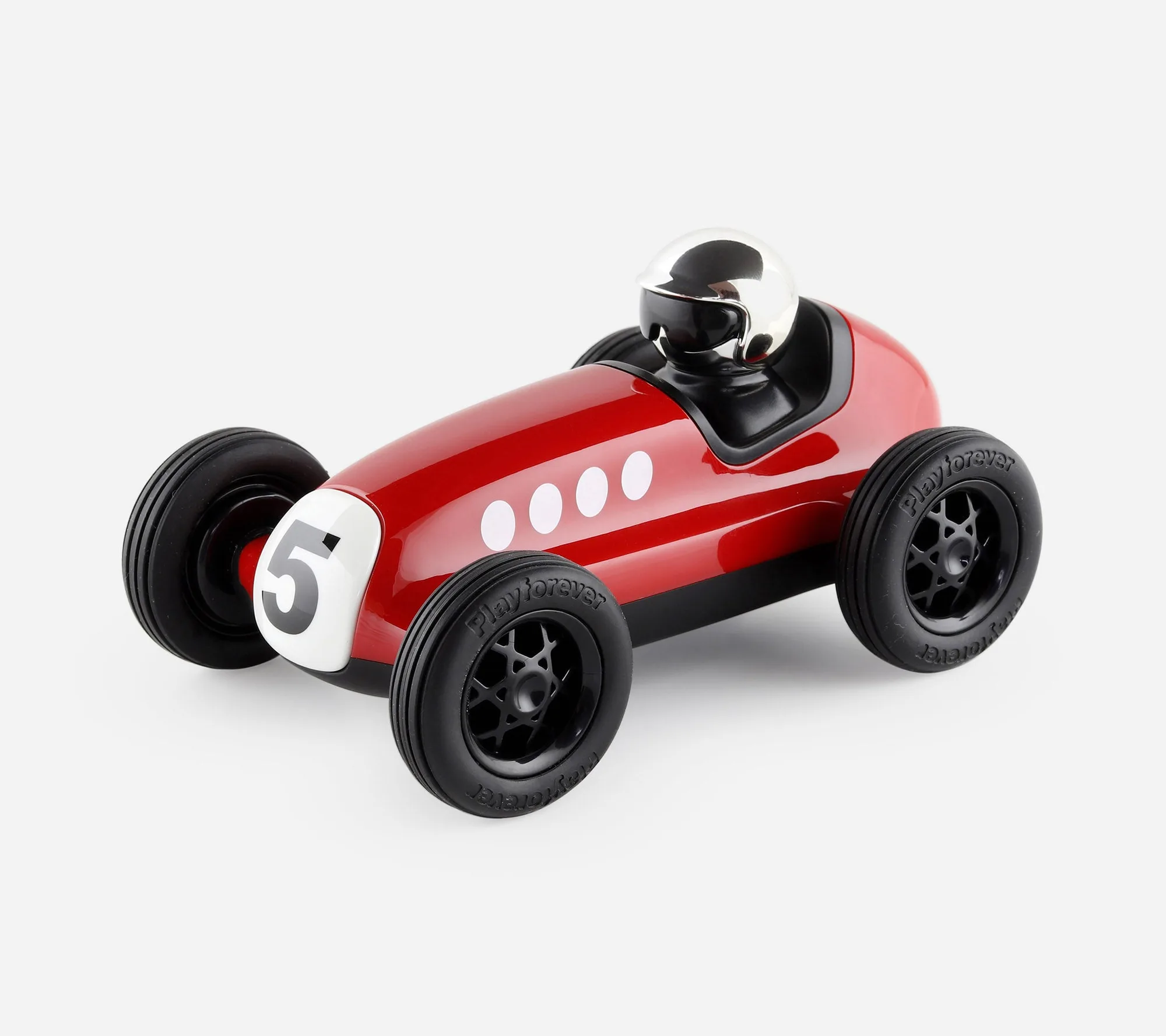
The Playforever Velocita Emilio is a collector-grade toy car inspired by the dangerous, high-speed F1 racing of the 1970s. It suits kids who play and adults who keep, and at USD 27.28 it sits in the middle of the Playforever racing range. Choose it if you want a piece with clear 1970s F1 character; choose Malibu Benjamin or Malibu Lucas if you prefer the cigar-shaped cars of the late 1950s and early 1960s.
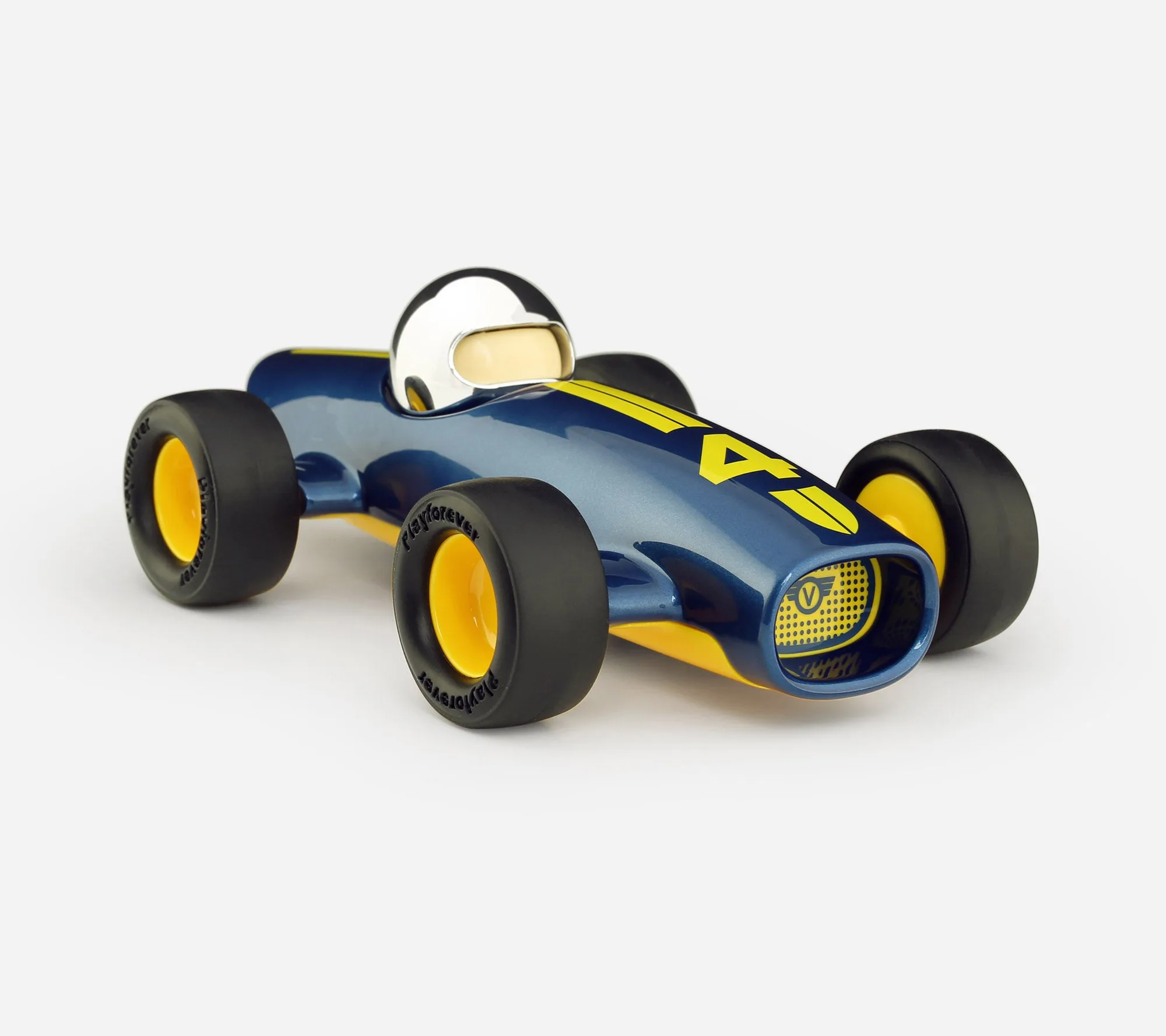
Malibu Lucas
What the Velocita Emilio's 1970s F1 design actually means
Playforever describes the Velocita collection as inspired by the F1 scene of the 1970s, a period when racing was a dangerous, high-speed game. That influence shows in the car's proportions and attitude rather than in any specific real-world livery. If you know that era of motorsport, the Emilio will read as a tribute; if you don't, it still reads as a purposeful, fast-looking toy car.
Because the catalog does not list exact dimensions, you should treat the Emilio as a shelf piece whose footprint you confirm before buying. The absence of published measurements is a limitation, not an oversight: Playforever's cars vary enough between collections that guessing from photos is unreliable. If precise fit matters, measure your display space and compare against the other cars in the range before you commit.
How the Velocita Emilio compares with other Playforever racing cars
The closest alternatives in the current lineup are the Malibu cars, which draw on the cigar-shaped Formula 1 cars of the late 1950s and early 1960s but with a modern Playforever twist. The Malibu Benjamin and Malibu Lucas share that same design brief, so the choice between them is mostly about color and price rather than shape. The Turbo Miami looks to the 1980s, when turbocharging and downforce defined the racing, giving it a different visual energy again.
In price terms, the Emilio at USD 27.28 sits above Malibu Lucas at USD 25.41 and Malibu Benjamin at USD 26.18, but below Turbo Miami at USD 29.48. All four are collector-grade icons intended for kids who play and adults who keep. If you are building a small timeline of racing eras, the Malibu, Velocita, and Turbo cars cover three distinct decades without duplicating a silhouette.
Fit guidance: shelf, hand, and collection
For shelf display, the Emilio works best as a single focal point or as part of a three-car era lineup. Because exact dimensions are not supplied, avoid planning a tightly packed row until you have the car in hand. Leave generous spacing so the 1970s-inspired shape reads clearly rather than being crowded by taller or wider pieces.
For play, the Emilio is built for kids who play, but it is also collector grade, so it rewards gentle handling. If the car will live mostly on the floor, the lower-priced Malibu Lucas is a more forgiving first racing car. If it will sit on a desk or shelf and only come down occasionally, the Emilio's design character justifies the small premium.
For collections, the Emilio fills the 1970s slot that the Malibu and Turbo cars do not cover. That makes it the natural next purchase if you already own a Malibu or a Turbo Miami and want to extend the story rather than repeat it.
Decision rules for buying the Velocita Emilio
- If you want a specific racing era: Pick the Emilio for 1970s F1 character, Malibu Benjamin or Malibu Lucas for late 1950s and early 1960s cigar shapes, or Turbo Miami for 1980s turbo and downforce inspiration. Match the car to the decade you care about, not to the price.
- If exact dimensions are critical: The catalog does not publish dimensions for the Emilio, so confirm the size before buying if it must fit a tight shelf or display case. Measure your space first; treat photos as a guide only.
- If budget is the deciding factor: Malibu Lucas at USD 25.41 is the lowest-priced racing car here, the Emilio is USD 27.28, and Turbo Miami is USD 29.48. The Emilio is the middle option; only pay more for Turbo Miami if the 1980s theme matters to you.
- If the car will be played with hard: All four are collector grade, but the lower-priced Malibu cars make more sense as everyday floor toys. Keep the Emilio for gentler play or display if you want it to stay pristine.
Key product facts
- Velocita Emilio: Collector grade icon for kids who play and adults that keep; inspired by the dangerous, high-speed F1 scene of the 1970s. It is designed to be handled but also displayed, so it suits households that want one car to do both jobs.
- Malibu Benjamin: Rollin' Icon drawing on the cigar-shaped Formula 1 cars of the late 1950s and early 1960s, with a modern Playforever twist and built for speed. A direct alternative if you prefer the earlier, narrower racing silhouette over the 1970s look.
- Turbo Miami: Collector grade icon inspired by 1980s Formula 1, when turbocharging and downforce defined the racing. The choice if you want the most recent era represented and do not mind paying the highest price in this comparison.
Who should buy the Velocita Emilio
Best for
- Adults building a small display of Playforever racing cars across different eras
- Older kids who appreciate a car with a clear 1970s F1 look
- Buyers who want a collector-grade piece that can still be handled
Not for
- Shoppers who need published dimensions before buying for a tight space
- Anyone looking for the lowest-priced Playforever racing car
- Buyers who prefer the earlier cigar-shaped Formula 1 silhouette