Quick answer
Buy an all-in-one playroom bundle when you want one coordinated kids playroom set, a single delivery, and a predictable footprint. Buy separate pieces when your child is still growing into climbing, your room has awkward corners, or you want to upgrade one element at a time. The right call depends on your space and how long you plan to keep the setup.
A playroom bundle and a piece-by-piece climbing setup can end up costing similar money, but they solve different problems. Bundles simplify planning and usually cover more play styles in one order. Separate buying gives you control over what arrives first and how the room evolves.
This comparison uses real WoodandHearts climbing sets to show where each approach wins, where it costs you, and how to match the choice to your child's age and your available floor space.
What a playroom bundle actually includes
An all-in-one playroom bundle typically combines several climbing or play elements into one coordinated set. The Kid Climbing Structure is a good example: it combines climbing ladders, monkey bars, rope accessories, and a rock ramp, plus a mat for safety, in a teepee-shaped frame made from smooth beech wood. That is a lot of play variety in one footprint.
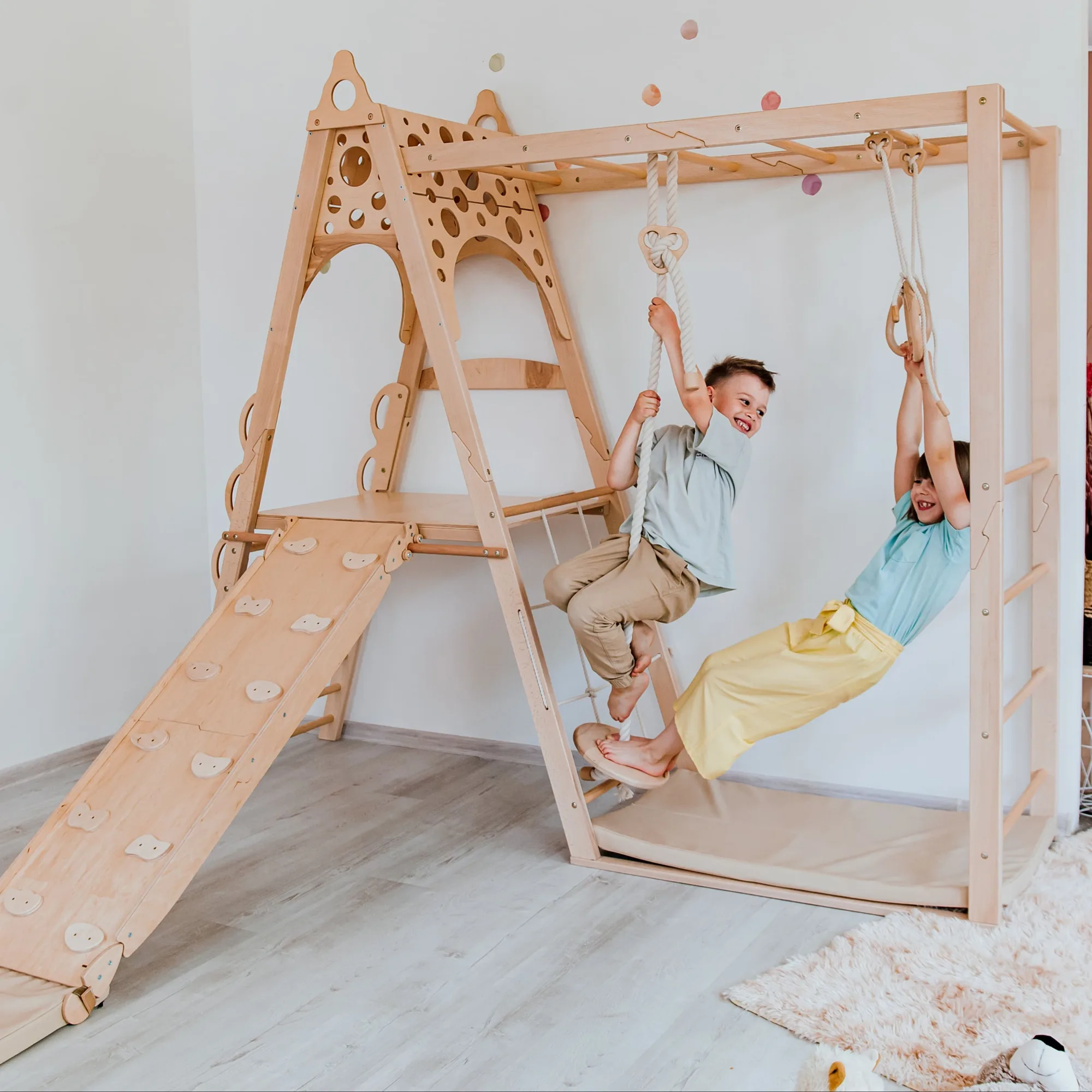
Kid Climbing Structure
The trade-off is that a bundle locks you into one design and one placement. If your room has a low sloped ceiling or a narrow doorway, a large combined structure may not fit as neatly as two smaller pieces placed on opposite walls.
- Measure the assembled footprint, not just the box dimensions, before ordering a bundle.
- Check that the bundle's play elements match your child's current age range.
What buying separately looks like
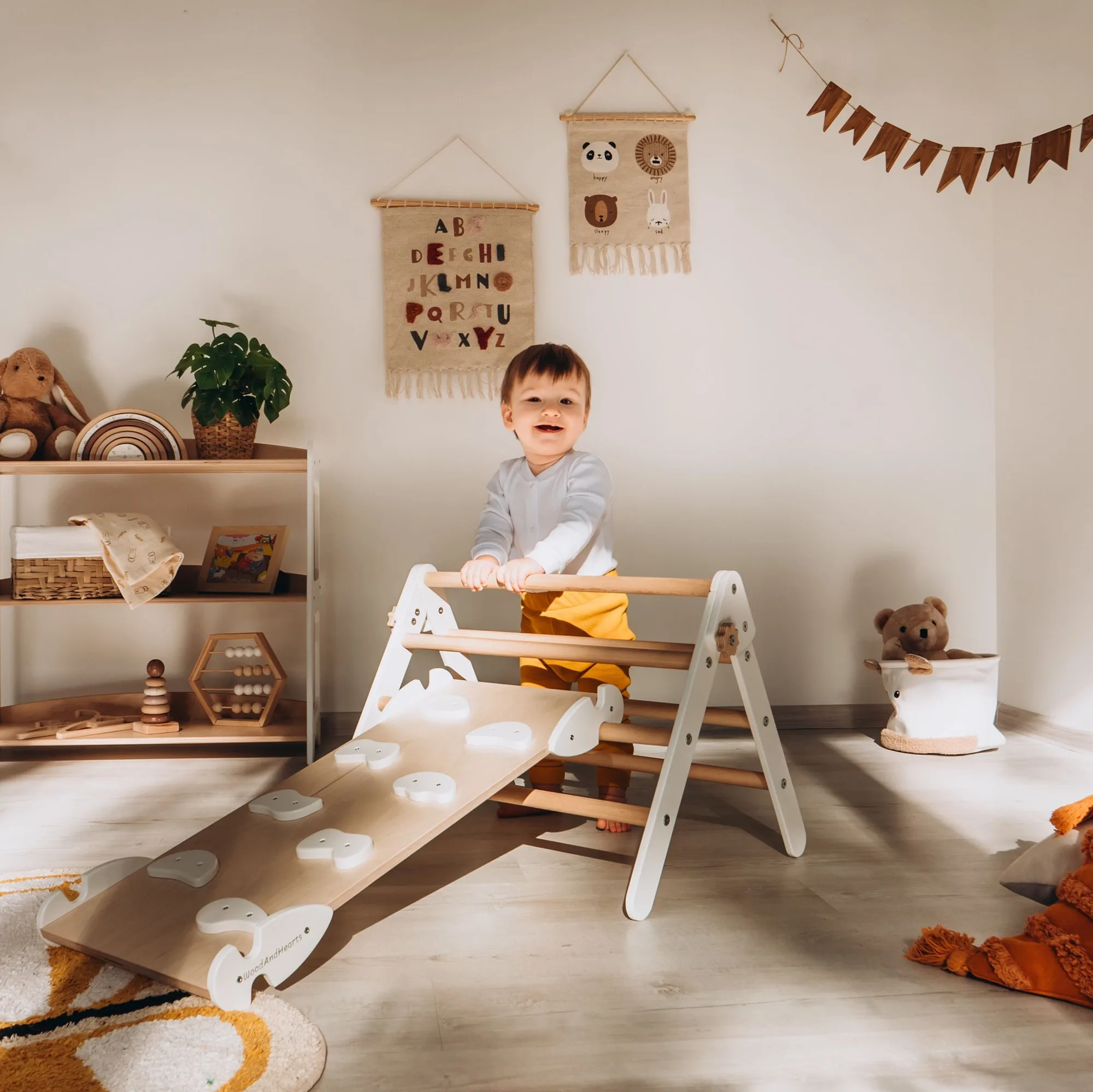
Buying separately means starting with one piece and adding more later. A common path is a Baby Climbing Gym for children up to 4 years old, then a Home Climbing Wall for ages 3 to 8, then a larger structure as skills grow. Each purchase is smaller, so the total cost is spread over months or years.
The trade-off is coordination. Separate pieces may not match in color or wood tone, and you may pay more in total shipping or repeat delivery fees. You also have to plan the layout yourself instead of following one included design.
- Keep a simple floor plan so new pieces do not crowd the play zone.
- Buy the first piece for the age your child is now, not the age they will be in two years.
Cost comparison: upfront total vs spread out
Bundles usually show a lower total than adding the same elements one by one, but the upfront amount is higher. For example, the Kids Indoor Climbing Wall “Mountain” is listed at USD 221.00 against a catalog comparison price of USD 441.99, and the Indoor Rock Wall is listed at USD 142.50 against a comparison price of USD 284.99. Those comparison prices show what a comparable separate purchase could cost.
Buying separately lets you match spend to budget cycles. You might start with the Baby Climbing Gym at USD 64.80, then add a larger wall later. The trade-off is that you may never capture the same bundled value, and small repeat orders can add up.
- Compare the bundle price against the sum of the individual pieces you actually want.
- If you only need one climbing element, a bundle is usually more than you need.
Space comparison: one footprint vs several
A bundle concentrates play into one zone. That can be an advantage in a small room because you are not spreading equipment across every wall. The Indoor Climbing Wall is described as compact and suitable for even the smallest room, which makes it a strong anchor for a bundle-style setup.
Separate buying spreads the footprint. You can put a low piece under a window and a taller wall on a solid wall, which helps in irregular rooms. The trade-off is that more pieces mean more edges, more wall fixings, and more places to check for safety over time.
- Sketch the room and mark doors, radiators, and furniture before deciding.
- Leave clear floor space in front of every climbing element for safe landings.
Age range and skill progression
Bundles tend to serve a wider age band because they include several challenge levels. The Kid Climbing Structure is built for active play and skill-building, boosting balance, grip strength, and confidence, which suits children who already climb confidently. The Indoor Rock Wall is aimed at energetic kids aged 3 to 10.
Separate buying lets you match each piece to a specific stage. The Baby Climbing Gym is designed for children up to 4 years old, and the Home Climbing Wall is aimed at ages 3 to 8. The trade-off is more decisions and more chances to buy something your child outgrows before you add the next piece.
- For toddlers, start with a low, floor-based piece before any wall-mounted set.
- For school-age children, prioritize height and grip challenge over extra accessories.
Installation and long-term flexibility
A bundle usually arrives as one system with one set of instructions, which simplifies installation day. Separate buying means multiple installations, and wall-mounted pieces may need solid walls or studs. The Indoor Climbing Wall and Home Climbing Wall are both wall-based, so plan their positions carefully.
Long term, separate pieces are easier to move, sell, or hand down individually. A bundle is harder to split if you move to a smaller home. The trade-off is that a bundle often looks more cohesive and intentional in a dedicated playroom.
- Confirm wall type and stud locations before ordering any wall-mounted climbing set.
- Keep the assembly instructions and spare hardware if you plan to move.
Trade-offs to weigh before you buy
- Upfront cost vs total value: A bundle such as the Kid Climbing Structure lists at USD 706.00 against a comparison price of USD 1411.99, but you pay most of it at once. Separate buying spreads cost across months but may total more. Choose the bundle if you have the budget now and want the lower total.
- One footprint vs flexible placement: Bundles concentrate play in one zone, which suits small rooms. Separate pieces can be placed around a room, which helps with awkward layouts but adds more edges and fixings to check. Choose separate pieces if your room has irregular walls or limited solid wall space.
- Age fit vs future-proofing: The Baby Climbing Gym suits children up to 4, while the Indoor Rock Wall targets ages 3 to 10. A bundle may cover several ages at once; separate buying lets you match each piece to the current stage. Match the first purchase to your child's age now, then add as skills grow.
- Installation effort: One bundle means one installation session and one set of instructions. Multiple separate pieces mean multiple installations, and wall-mounted sets need suitable walls. Check wall type and studs before ordering any wall-mounted climbing set.
Product facts that affect the decision
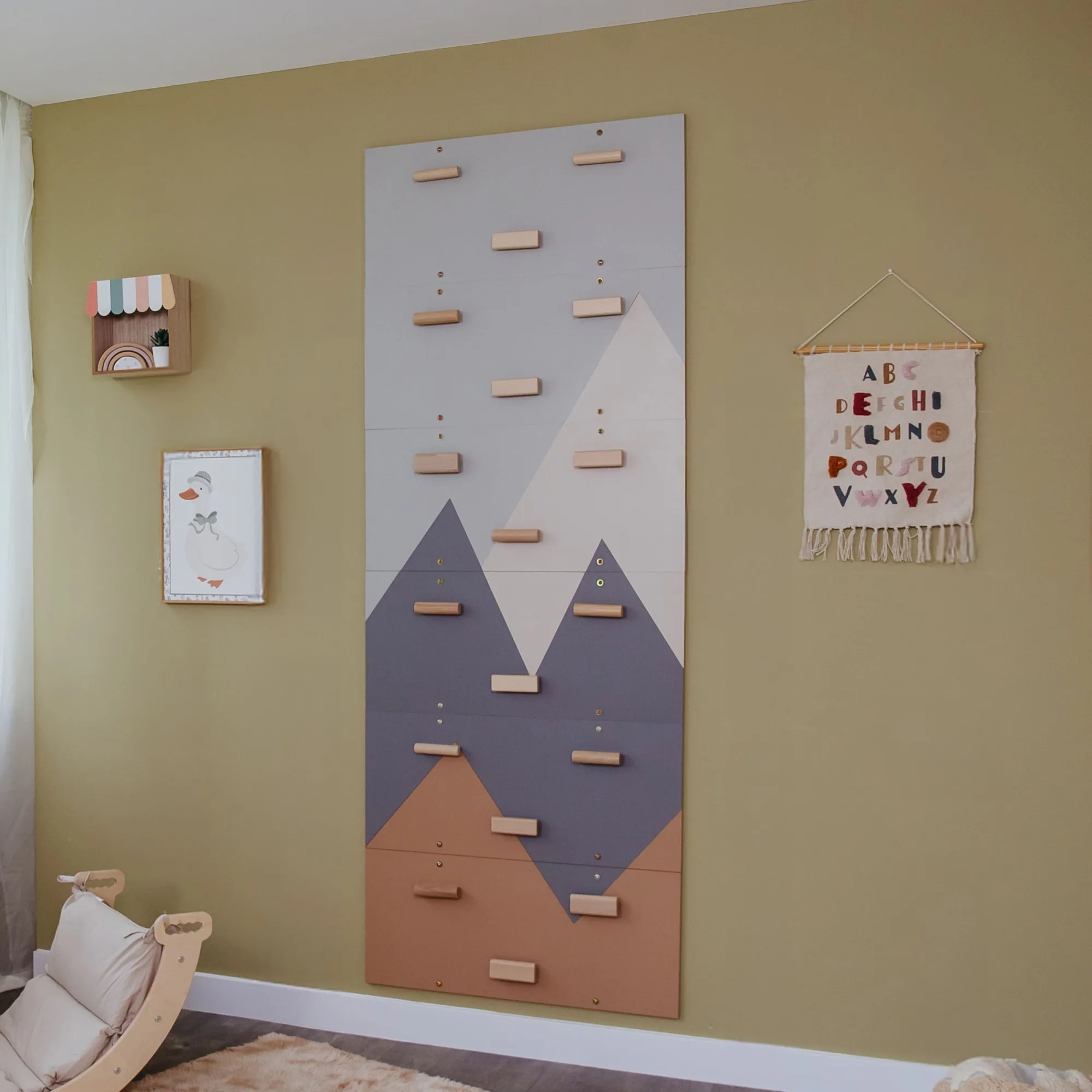
- Kids Indoor Climbing Wall “Mountain”: Listed at USD 221.00 with a catalog comparison price of USD 441.99, described as a compact set that transforms any small room into a fun and active environment. A compact wall set is a practical bundle anchor for small rooms, and the comparison price shows the potential saving versus buying equivalent pieces separately.
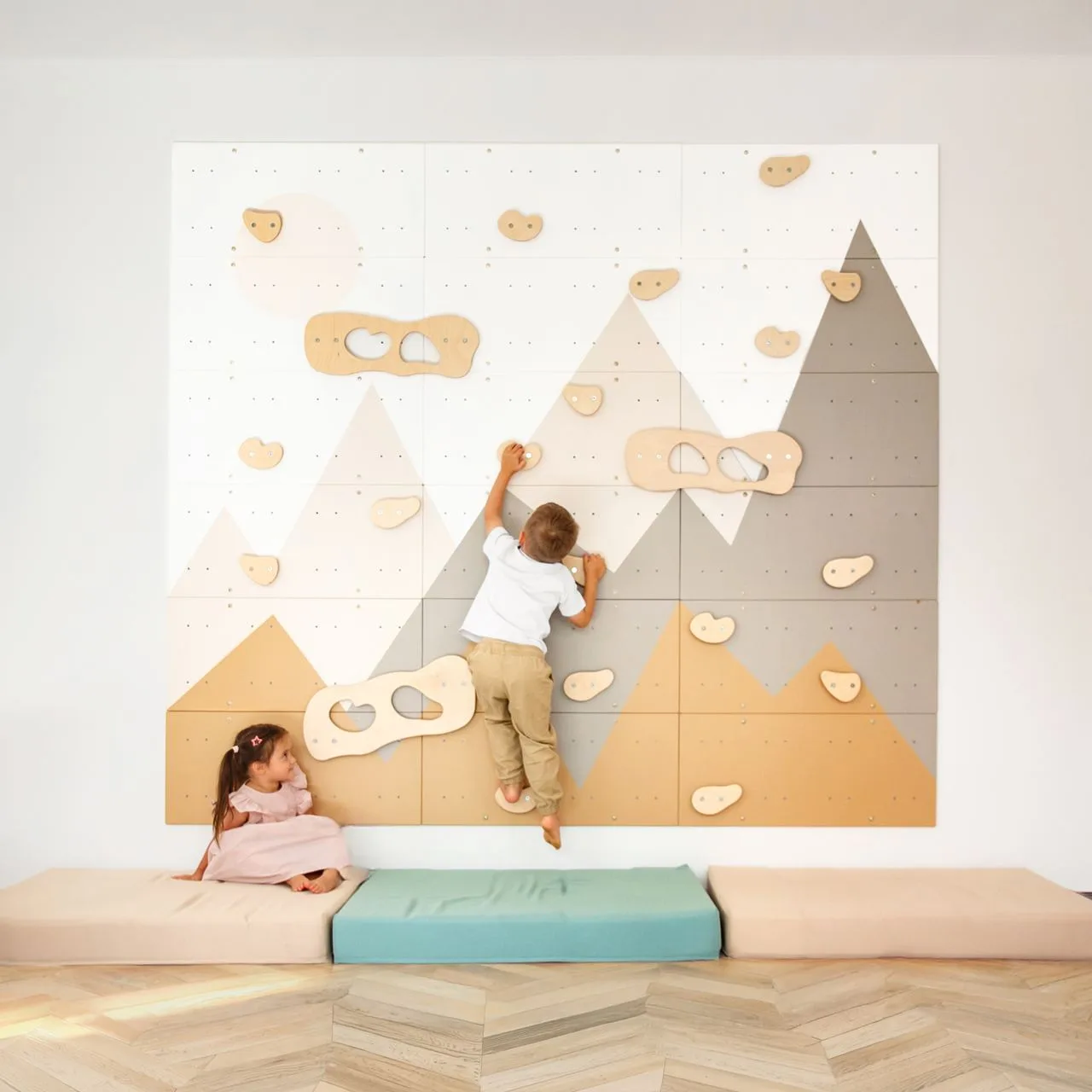
- Indoor Climbing Wall: Listed at USD 1039.49 with a catalog comparison price of USD 2078.99, described as compact and suitable for even the smallest room, for toddlers and preschoolers with no special preparation. This is the higher-investment end of a bundle; it suits families who want one substantial wall system rather than several small pieces.
- Indoor Rock Wall: Listed at USD 142.50 with a catalog comparison price of USD 284.99, designed for energetic kids aged 3 to 10, with Set and Color options. A lower-cost single piece with color choices, which makes it a good first separate purchase or an add-on to an existing setup.
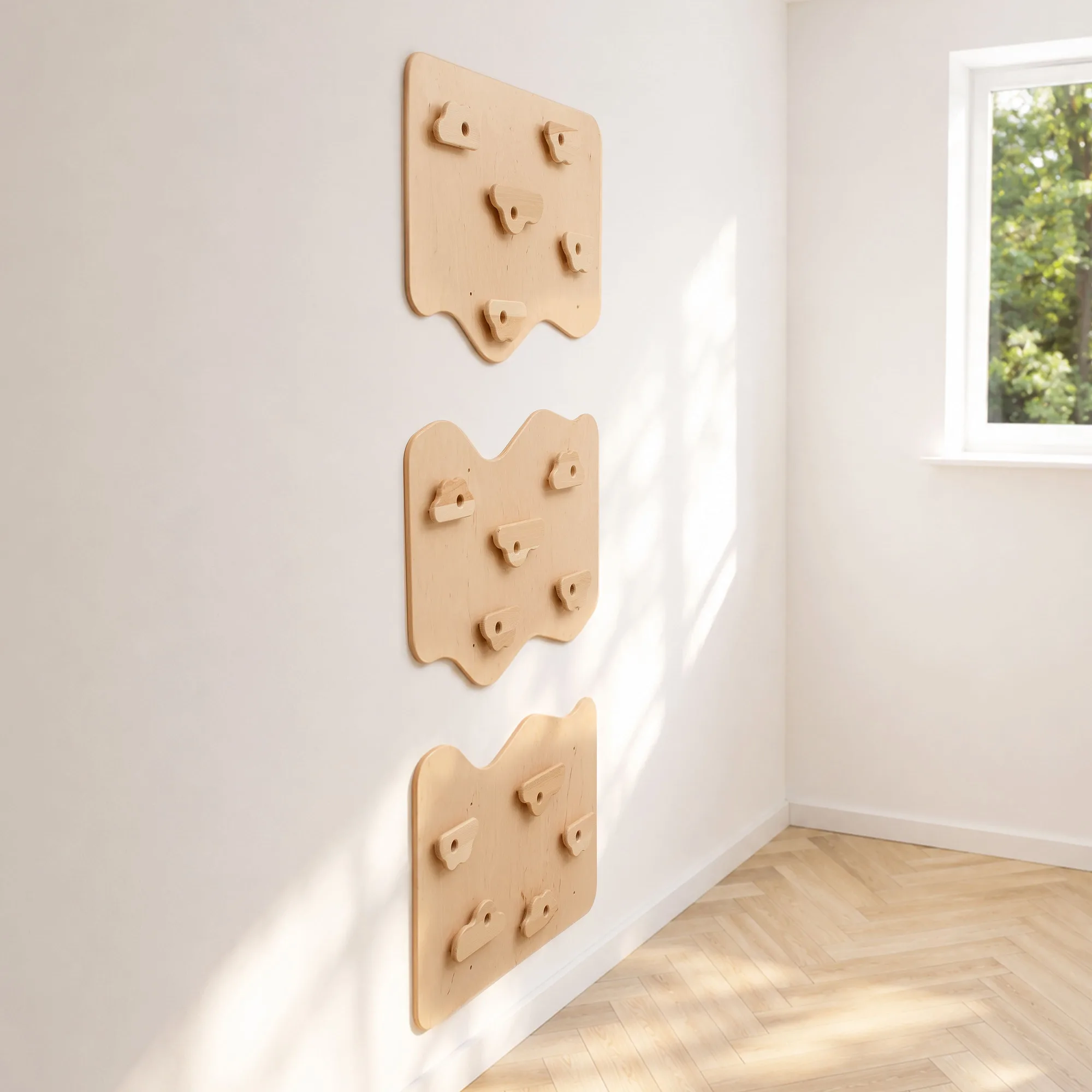
- Home Climbing Wall: Listed at USD 188.00 with a catalog comparison price of USD 375.99, for kids aged 3 to 8, with Color and Set options. A mid-range wall piece that can start a separate-buying path or complete a bundle for a specific age band.
Which approach fits your family
Best for
- Families with a dedicated playroom who want one coordinated kids playroom set and a predictable footprint.
- Parents of children who already climb confidently and will use several play styles, such as ladders, monkey bars, and a rock ramp, in one structure.
- Buyers who prefer a single delivery and one installation session.
Not for
- Families with very small or irregular rooms where one large structure will not fit.
- Parents of toddlers under 3 who need a low, floor-based piece first.
- Buyers who want to test their child's interest before spending on a full indoor playground bundle.
There is no universal winner in the playroom bundle vs separate debate. If you have the space, the budget, and a child who already climbs, an all-in-one bundle like the Kid Climbing Structure gives you the most play variety in one footprint. If your room is tight, your child is still a toddler, or you want to add pieces over time, start with one well-chosen climbing set and build from there.