Quick answer
Start with a low open shelf for daily-use toys, add a wall rack or rail for climbing gear and dress-up items, and use hidden storage only for out-of-season or quick-clean bins. If your playroom also holds active equipment, choose storage that keeps the floor clear and anchors to the wall.
Playroom storage works best when it matches how your child actually plays, not when it hides everything behind closed doors. Open shelves make clean-up easier for young children, while racks and hidden storage solve specific problems like wet gear, small parts, and visual clutter.
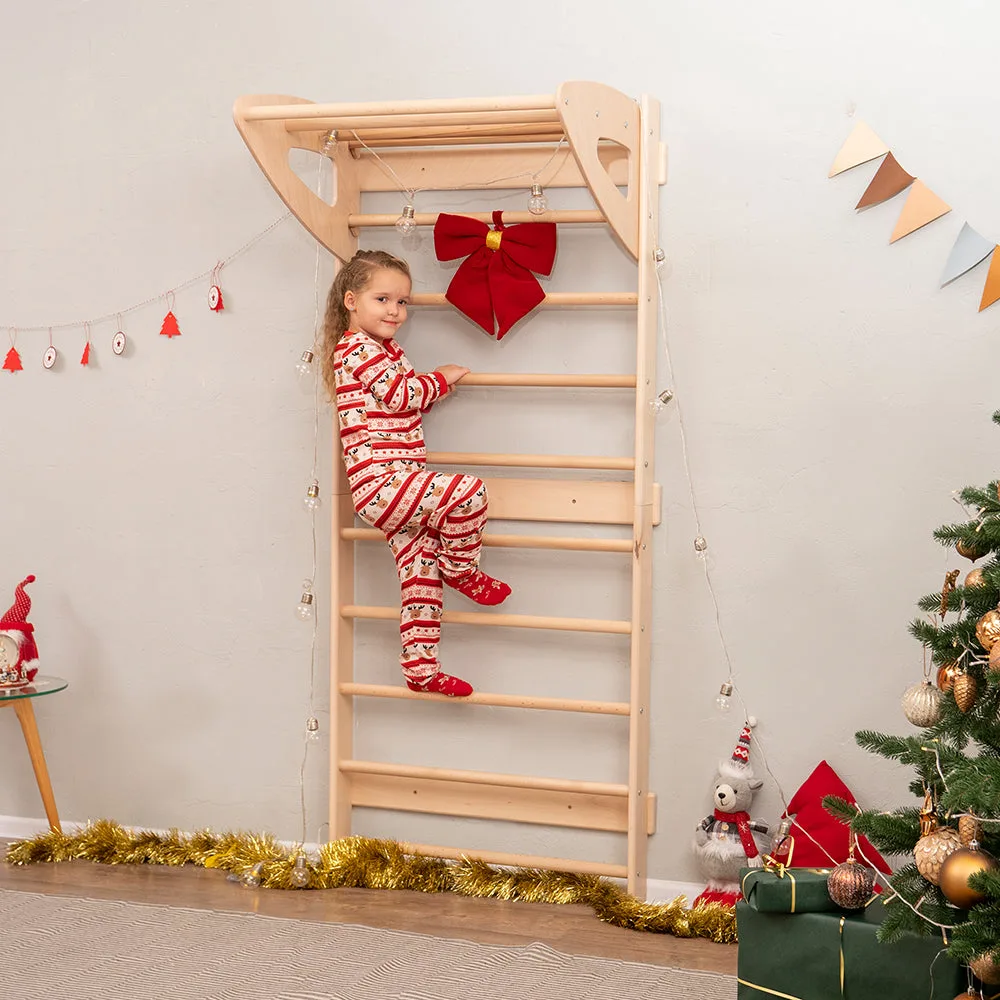
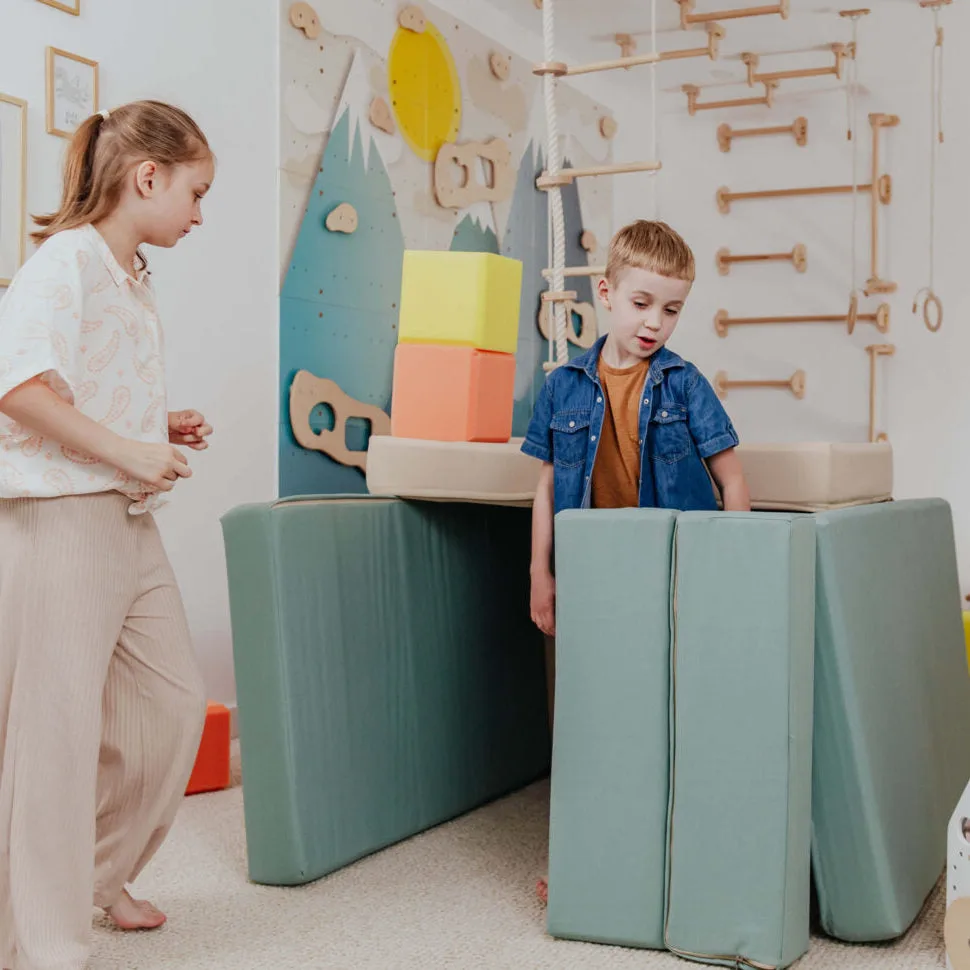
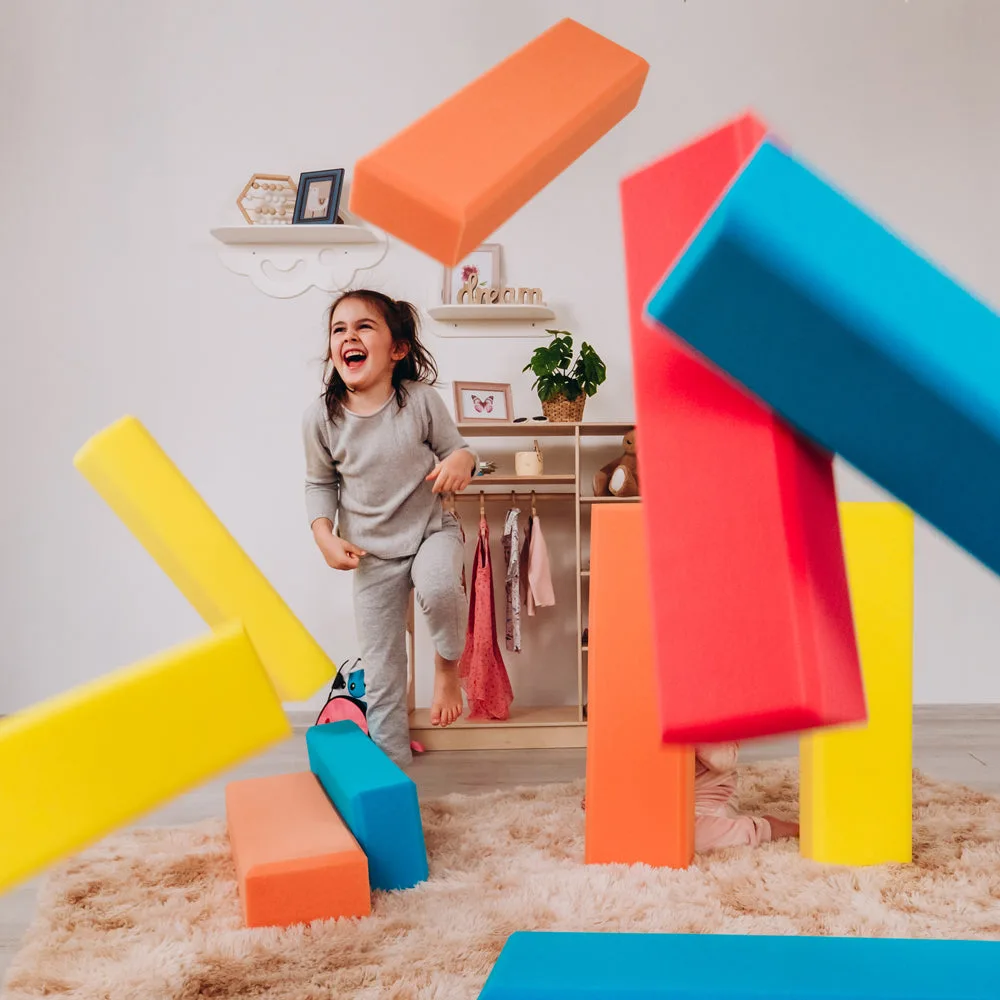
This buying guide gives you decision rules for choosing between shelves, racks, and hidden storage, with fit guidance for small rooms and active play zones. You will also see how real products like the Foam Building Blocks and Indoor Play Gym can shape your storage plan.
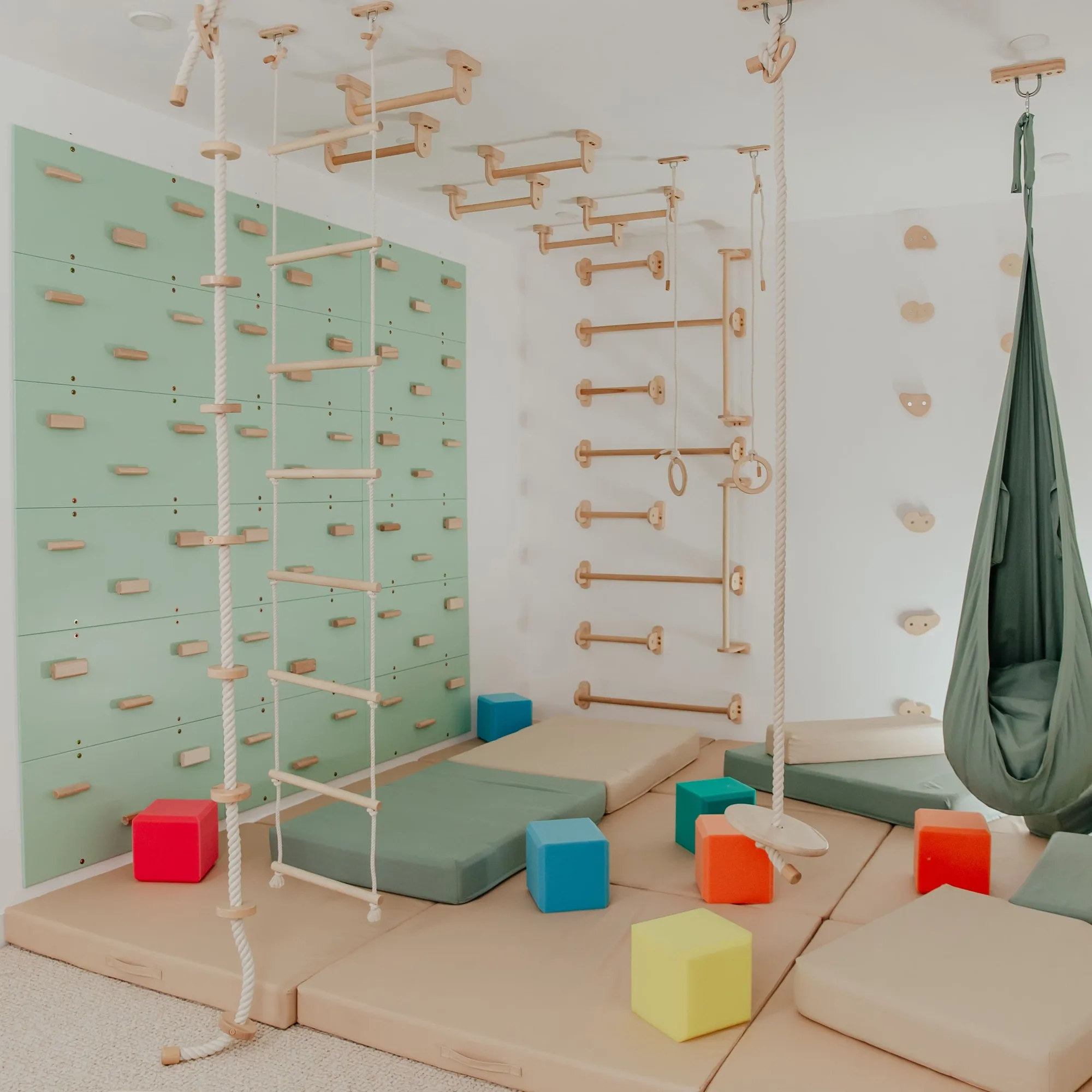
Indoor Play Gym
Start with the play pattern, not the furniture
Before you buy any kids storage furniture, watch where toys pile up. If blocks, cars, and dolls end up on the floor every day, a low open shelf with bins will get more use than a tall cabinet. If dress-up clothes and climbing ropes are always in a heap, a wall rack or a set of hooks solves the real problem. Hidden storage is best for items you want out of sight but still reachable, such as rotate-in toys or spare covers.
A simple rule: put daily-use items at child height in open storage, put weekly items in closed or hidden storage, and put seasonal or spare items high or behind doors. This keeps playroom organization realistic and prevents the storage itself from becoming a climbing hazard.
- Measure the floor area you want to keep clear before choosing shelf depth.
- Count how many toys your child uses in a typical day; that number sets your open-storage capacity.
- Walk the room at child height to spot sharp corners, tipping risks, and reachable small parts.
Shelves: best for daily access and independent clean-up
Open shelves are the workhorse of playroom storage solutions because they let children see and reach what they need. A low shelf with open cubbies supports independent clean-up and makes toy rotation easier. For small rooms, choose a shelf that is tall rather than deep, so it uses wall space without eating floor space. If the shelf will sit under a window or next to a climbing frame, keep the top clear and anchor the unit to the wall.
Shelves are not the right choice for every toy. Sets with many small pieces will look messy on open shelves, and soft foam blocks may need a bin rather than a flat shelf. In those cases, combine a shelf for books and puzzles with a rack or hidden bin for the rest.
- Choose open shelves for toys your child uses daily.
- Use bins on shelves to group small parts and simplify clean-up.
- Anchor tall shelves to the wall, especially in rooms with active play.
Racks and rails: keep active gear off the floor
Racks and wall rails are the most underused playroom storage idea. They hold climbing ropes, swings, dress-up clothes, and bags without taking floor space. In a playroom with a Swedish wall or indoor playground, a rack near the equipment keeps accessories visible and ready to use. The key is to mount the rack at a height your child can reach safely, and to keep hanging items short enough that they do not become a swinging hazard.
A rack also helps you inspect gear. When a climbing rope or swing hangs in the open, you can see wear and tear quickly. If you store the same items in a closed bin, damage can go unnoticed until playtime.
- Mount racks into studs or use appropriate wall anchors for the load.
- Keep hanging items above tripping height but below adult shoulder height.
- Use a rack for items that need to dry or be inspected often.
Hidden storage: useful for rotation, not for daily toys
Hidden storage, such as closed cabinets, under-bed bins, or lidded benches, is best for toy rotation and quick clean-up before guests arrive. It is not a good primary system for toddlers, who need to see their toys to choose them. A common mistake is buying a large closed cabinet first, then discovering that your child never opens it. Start with open storage, then add hidden storage for the overflow.
If you use hidden storage, label bins with pictures or words so your child can find things independently. Avoid heavy lids that can pinch fingers, and never store climbing equipment in a place where it can fall on a child.
- Use hidden storage for out-of-season toys and spare covers.
- Choose bins with light lids or no lids for young children.
- Label hidden storage so your child can still find favorite items.
Fit guidance: small rooms, shared spaces, and active zones
In a small playroom, storage must earn its floor space. Choose vertical shelves over deep cabinets, and use wall racks for gear that would otherwise sit on the floor. If the room doubles as a bedroom, pick storage that matches the furniture style and can be anchored securely. For active zones with climbing frames or swings, keep a clear safety perimeter around the equipment and put storage outside that zone.
Shared playrooms need zones. Give each child a labeled shelf or bin, and keep group toys like Foam Building Blocks in a central open bin. If you have a large set like the Indoor Play Gym, plan storage for its accessories near the equipment, not across the room.
- In small rooms, go tall and shallow rather than wide and deep.
- Keep storage out of the fall zone around climbing and swinging equipment.
- Use labeled zones to reduce arguments in shared playrooms.
Decision rules for playroom storage
- If your child cleans up independently: Choose low open shelves with bins at child height. Avoid closed cabinets as the main system. Open storage wins for daily toys.
- If the floor is always covered with active gear: Add a wall rack or rail for climbing ropes, swings, and dress-up items. Mount it securely and keep hanging items short. Racks protect gear and clear the floor.
- If the room looks cluttered but toys are used daily: Use hidden storage for rotation and overflow, not for the toys your child plays with every day. Label bins with pictures. Hidden storage is a supplement, not a solution.
- If the playroom is small: Go vertical with a tall, shallow shelf and wall racks. Measure the clear floor area you need for active play before buying. Depth is the enemy in small rooms.
Product facts that affect your storage plan
- Foam Building Blocks: Colorful large Foam Building Blocks are a safe construction toy that makes any play space more exciting. They are a great addition to playrooms in kindergartens and elementary schools, with no age restrictions for play. Large foam blocks need open floor space and a wide bin or shelf, not a small cubby. Plan storage that lets children pull them out and put them back without lifting heavy lids.
- Indoor Play Gym: The Indoor Play Gym is designed for children aged 3 and up and combines climbing, swinging, and balancing elements. It comes with everything you need to create a complete play area. A complete play gym creates a dedicated active zone. Store its accessories on a nearby rack or shelf so the floor stays clear and the equipment stays ready to use.
- Foam Block Cover: Replaceable Foam Block Covers help blocks stay fresh with daily active use. They are available in multiple colors and can be used with Foam Building Blocks. Spare covers need a labeled hidden storage spot. Keeping them accessible makes it easy to refresh blocks without buying a whole new set.
Who this storage approach fits
Best for
- Families with active playrooms that include climbing frames, swings, or play gyms
- Parents who want children to clean up independently with open shelves and labeled bins
- Small rooms that need vertical storage and wall racks instead of deep cabinets
Not for
- Households that want all toys completely out of sight at all times
- Rooms with no wall space for anchoring shelves or racks
- Families who prefer a single large toy box instead of zoned storage
Choose storage that matches your child's daily play, not the neatest catalog photo. Start with one low open shelf and one wall rack, then add hidden storage only for rotation and overflow. That combination keeps the floor clear, supports independent clean-up, and makes your playroom work for years.