Quick Answer
For D+ cups, choose an underwired plunge bra with a firm band, a low but not extreme center gore, and cups that fully contain your breast tissue when you scoop and swoop. If you spill over the top or the center pulls away, go up one cup size before you go up a band size. If the band rides up or the wires dig in, fix the band first — the band does most of the lifting.
What Makes a Plunge Bra Work for D+ Cups
A plunge bra for D+ cups has to do two jobs at once: create a low neckline and still support a heavier bust. The key is the relationship between the center gore, the wire shape, and the band. A deep plunge bra fit relies on the band anchoring low and firm around your ribcage, while the underwires follow your breast root instead of sitting on top of it. If the band is loose, the center gore will pull away from your chest and the cups will tip forward, which is how spillage starts.
For a low cut bra for a large bust, look for a center gore that is low enough to disappear under a V-neck but not so low that the cups lose their structure. The cups should be seamed or molded in a way that lifts from the bottom and side rather than pressing the breasts flat. When you try it on, the top edge of the cup should lie smooth against your skin, not cut in or float away.
How to Check Fit Before You Buy
Fasten the band on the loosest hook and adjust the straps so they sit flat without digging. Scoop your breast tissue from under your arm into the cup, then look in a mirror from the side. The wire should sit flat against your ribcage at the center and under the bust. If the center gore floats more than a finger's width away, the cup is usually too small or too shallow for your shape.
Next, raise your arms and lean forward. If your breasts spill over the top edge, you need a larger cup or a taller cup shape. If the cup wrinkles at the top, that is a plunge bra gapping fix moment: the cup is likely too large or too deep for your upper breast tissue. Try a smaller cup or a different plunge depth. Gapping at the top with a firm band usually means the cup shape, not the band size, is wrong.
Plunge vs Balconette for Large Bust
The plunge vs balconette for large bust decision comes down to neckline and coverage. A balconette bra has a higher center gore and a more horizontal top edge, which can give a rounder, more contained shape under wide necklines. A plunge bra sits lower at the center and separates the breasts, which is better under deep V-necks and wrap tops. If you have soft or pendulous breast tissue, a balconette may feel more secure because it covers more of the upper cup. If you are full on top, a plunge can work well as long as the cup edge is firm and the band is snug.
Neither style is universally better. The right choice depends on your outfit, your breast shape, and how much center separation you want. Many D+ cup wearers keep one of each: a plunge for low necklines and a balconette for days when they want maximum coverage and a rounder profile.
Underwired Plunge Bra Support: What to Look For
Underwired plunge bra support comes from three places: the band, the wire, and the strap placement. The band should provide about 80% of the support, so it needs to be firm enough to stay level all the way around. If the back rides up, go down a band size and up a cup size. The wires should encase your breast root without poking your underarm or sitting on your ribcage. Straps should be wide enough not to dig in, and they should not do all the work — if you have to tighten them hard to get lift, the band is too loose.
For D+ cups, a leotard back or a wider band with more hooks can distribute weight better than a narrow band with two hooks. If you are between band sizes, choose the firmer band and use an extender for the first few wears. A new bra should fasten comfortably on the loosest hook so you can tighten it as the elastic relaxes over time.
Decision Rules for Buying a Plunge Bra in D+ Cups
- If the center gore floats away from your chest: Go up one cup size or choose a plunge with a slightly higher center gore. A floating gore means the cup is too shallow or too small, not that the band is too tight. Fix the cup first; only change the band if the back rides up.
- If the top edge of the cup cuts into your breast tissue: Look for a plunge with a taller or more flexible top edge, or size up in the cup. A firm, flat edge that does not dig in is the goal. Spillage at the top is a cup-size signal, not a strap-tightness signal.
- If the cup wrinkles or gaps at the top: Try a smaller cup or a shallower plunge shape. Gapping often happens when the cup is too deep for your upper breast tissue, even if the band is correct. A plunge bra gapping fix is usually a cup-shape change, not a band change.
- If the band rides up in the back: Go down one band size and up one cup size. The band should stay level all the way around; if it climbs, it cannot anchor the wires. A level band is the foundation of underwired plunge support.
- If you need a low neckline but want more coverage: Compare a plunge with a balconette. A balconette has a higher center gore and more upper coverage; a plunge separates more and sits lower. Choose based on the neckline you wear most, not on a universal rule.
Product Facts That Matter for Fit
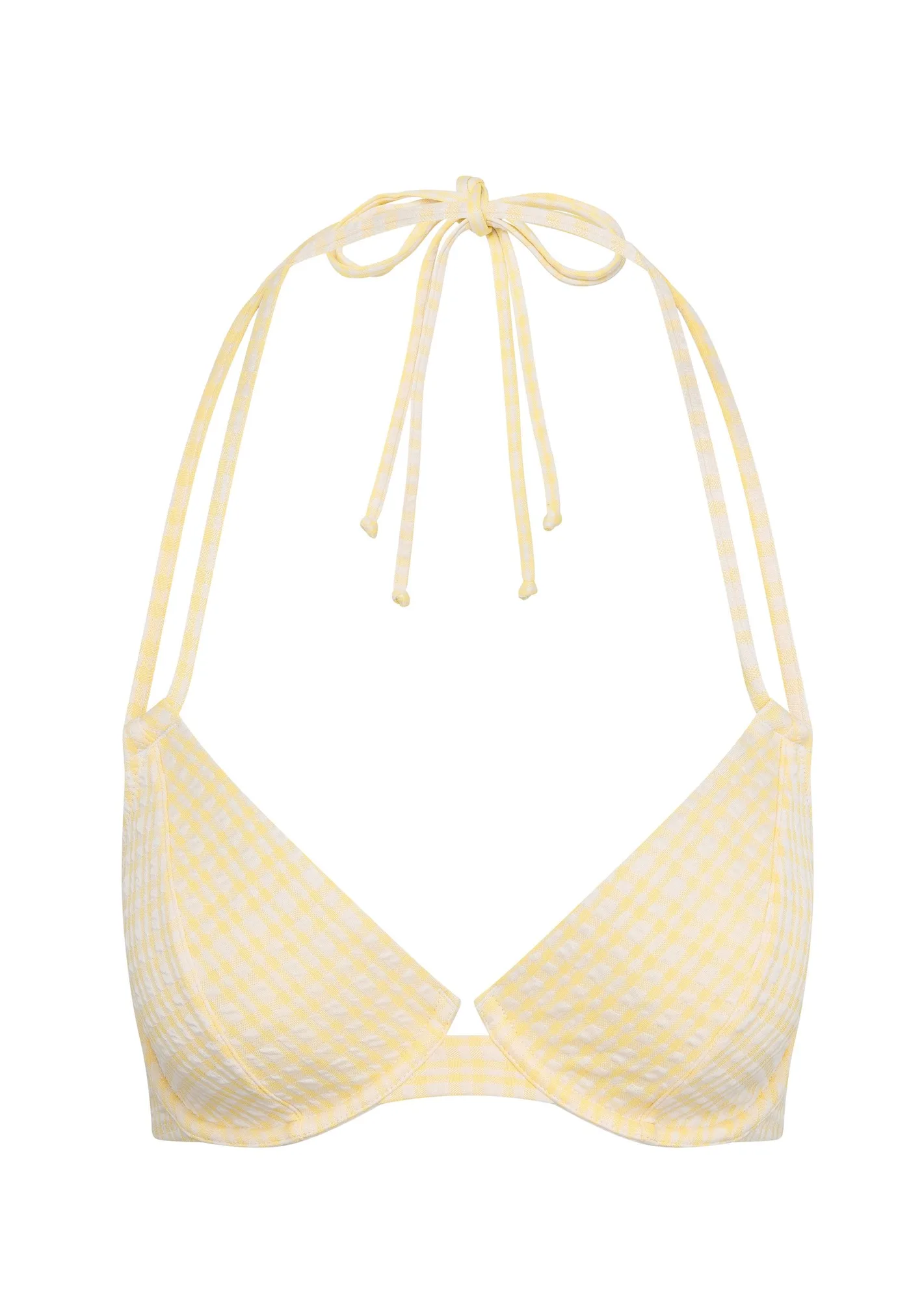
- Fuller Bust Jolie Yellow Gingham Underwired Halter Bikini Top, DD-GG Cup Sizes: Fuller Bust Jolie Yellow Gingham Underwired Halter Bikini Top, DD-GG Cup Sizes, halter neck underwired triangle style for the fuller bust. If you want a plunge-like low neckline in swimwear, this halter style shows how an underwired triangle can support DD-GG cups without a high center gore. It is a useful reference when you are comparing plunge bra depth to bikini top coverage.
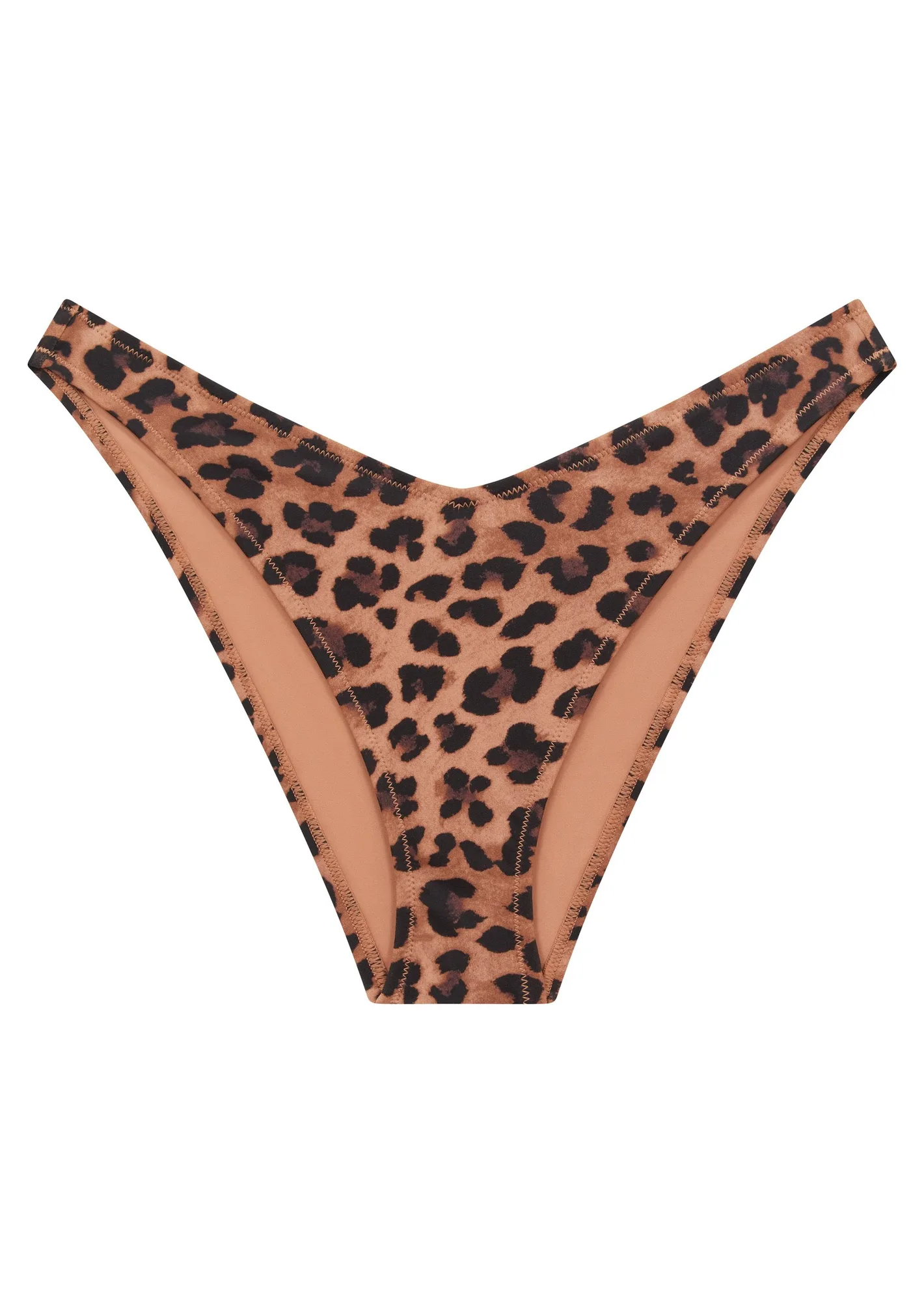
- Dusky Vegas Leopard Print High Leg Bikini Brief: Dusky Vegas Leopard Print High Leg Bikini Brief, high leg with Brazilian cut on the back and a V back waist, sizes XS-XL. A low-rise or high-leg brief changes where your waistband sits, which can affect how a plunge bra or bikini top looks under a low-cut outfit. This brief is a good match when you want a cheeky but flattering fit with a plunge top.
Who This Plunge Fit Advice Is For
Best for
- D+ cup wearers who want a low neckline without spillage
- Full-on-top or even shapes that need separation and lift
- Anyone comparing plunge vs balconette for large bust coverage
Not for
- Wearers who prefer a high center gore and maximum upper coverage
- Soft or pendulous breast shapes that feel more secure in a balconette
- Anyone who needs a wireless or non-underwired bra for support