Quick answer
Yes, Poke-a-Dot books support sensory learning by combining tactile popping buttons with counting and animal recognition, making them a solid choice for toddlers who need hands-on engagement.
What makes them sensory-friendly
Poke-a-Dot books rely on a simple cause-and-effect mechanism: each press of a button produces a distinct click or pop sound. That immediate feedback is what appeals to toddlers exploring cause and effect, and it keeps their attention longer than a static page. The sturdy board book format also means little hands can turn pages without tearing them, which reduces frustration during independent play.
Where they fall short
The sensory input is primarily auditory and tactile. If your child seeks strong visual stimulation (like high-contrast patterns or moving parts) or heavy proprioceptive feedback, these books may feel one-note. The buttons are also fixed in place, so there is no texture variation across the page. For children who need more diverse sensory input, pairing a Poke-a-Dot book with a textured toy or a fidget item can round out the experience.
Frequently asked questions
Are Poke-a-Dot books durable enough for a 1-year-old?
Yes. The board book construction holds up to chewing, drooling, and repeated poking. The buttons are recessed and securely attached, so they do not pop out easily. That said, no book is indestructible—supervised play is still wise for the youngest readers.
Do the buttons help with fine motor skills?
Yes. Each press requires a pincer or fingertip motion that strengthens the small muscles in a toddler’s hand. The repeated action of poking and releasing also builds hand-eye coordination. For a child who is still developing a pincer grasp, the buttons offer a low-stakes way to practice. If your child struggles with fine motor tasks, starting with a single-page Poke-a-Dot book can feel less overwhelming than a multi-activity toy.
Can these books replace a dedicated sensory toy?
Not entirely. Poke-a-Dot books are excellent for focused, quiet-time learning, but they only offer one type of sensory input (auditory click/pop plus tactile press). A dedicated sensory toy typically provides multiple textures, vibrations, or visual effects. Think of the book as a supplement to, not a replacement for, a varied sensory diet. Use a Poke-a-Dot book as part of a rotation that includes textured blocks, putty, or water play for balanced sensory input.
Product details
-
Poke-a-Dot: Good Night, Animals Board Book: Poke the irresistible buttons to hear satisfying “clicks” and “pops” as you count down to bedtime for all the sleepy animals. This auditory-tactile feedback loop gives toddlers a clear reward for each press, reinforcing cause-and-effect learning and keeping them engaged.
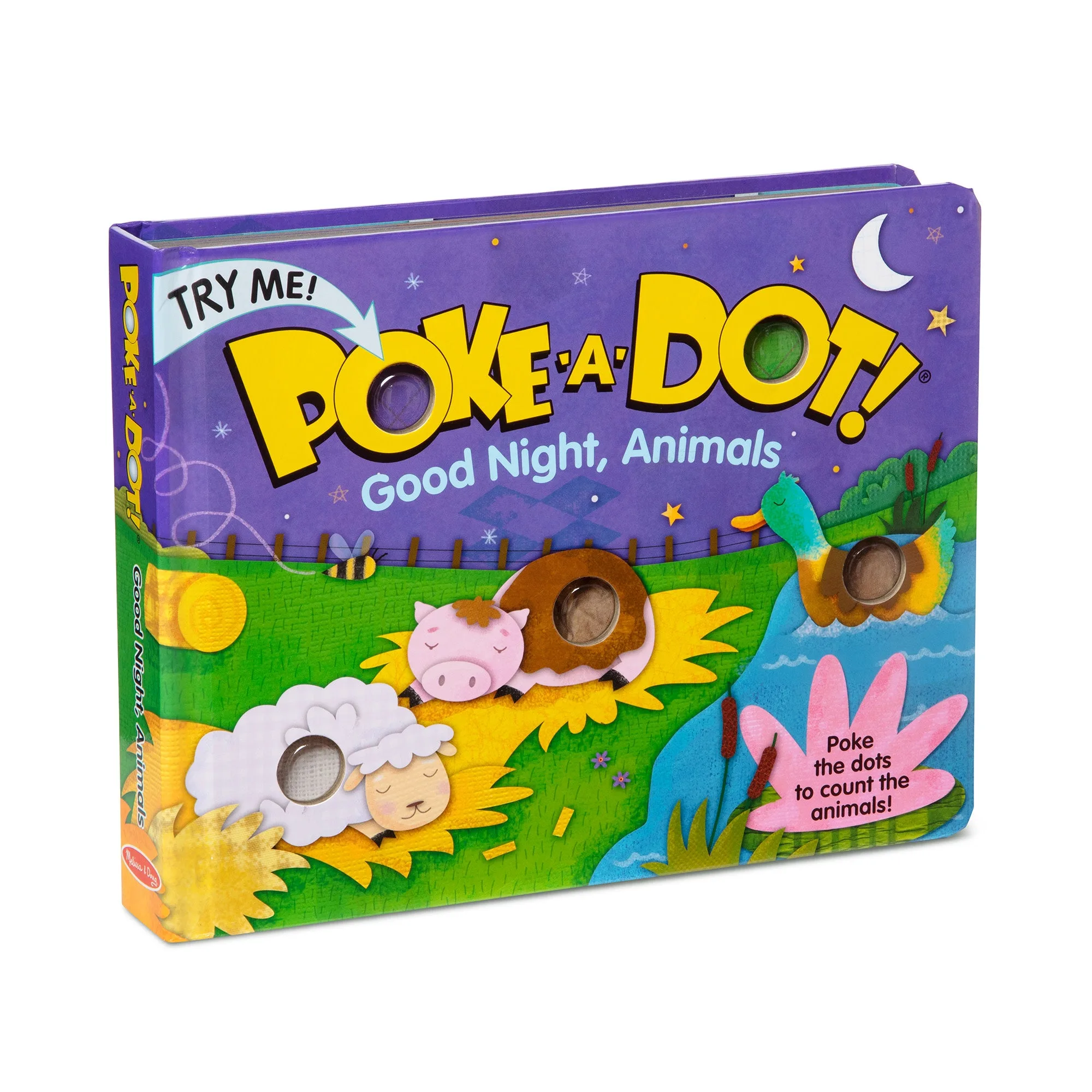
Poke-a-Dot: Good Night, Animals Board Book