Quick answer
For most daytime driving, polarized sunglasses provide superior glare reduction and visual comfort. However, if your car has an LCD or heads-up display that you rely on, non-polarized lenses may be the safer choice.
The glare problem on the road
Glare from wet pavement, other cars' windshields, and reflective road signs can momentarily blind you. Polarized lenses use a vertical filter to block horizontal light waves, cutting that harsh glare and reducing eye strain. That's why many drivers reach for polarized sunglasses driving.
The LCD screen trade-off
Polarized lenses can make LCD screens — like your car's infotainment display, GPS, or a heads-up projection on the windshield — appear dark or completely black. If you frequently glance at those screens, non polarized sunglasses might be a better fit. Some modern vehicles have screens that are polarized at a different angle, but it's not guaranteed.
Decision rules for choosing driving eyewear
- Do you drive mostly in bright, direct sunlight?: Choose polarized lenses. They eliminate horizontal glare from roads and other vehicles, reducing eye fatigue on long trips.
- Do you rely on a dashboard LCD or heads-up display?: Test polarized lenses first. If the screen becomes unreadable, switch to non-polarized lenses. Some drivers keep a non-polarized pair just for that vehicle. If your car has a HUD, non-polarized lenses are often the safer bet.
- Do you drive at dawn, dusk, or at night?: Never wear polarized sunglasses in low light. They reduce too much light, making hazards harder to see. Use clear or lightly tinted non-polarized eyewear instead. Keep a dedicated low-light pair in your glovebox.
Lens options from goodr
-
Drinks Seawater, Sees Future: Drinks Seawater, Sees Future features navy OG frames with blue gradient lenses. The blue gradient tint reduces overall brightness while maintaining good color perception, making it a versatile choice for bright daytime driving.
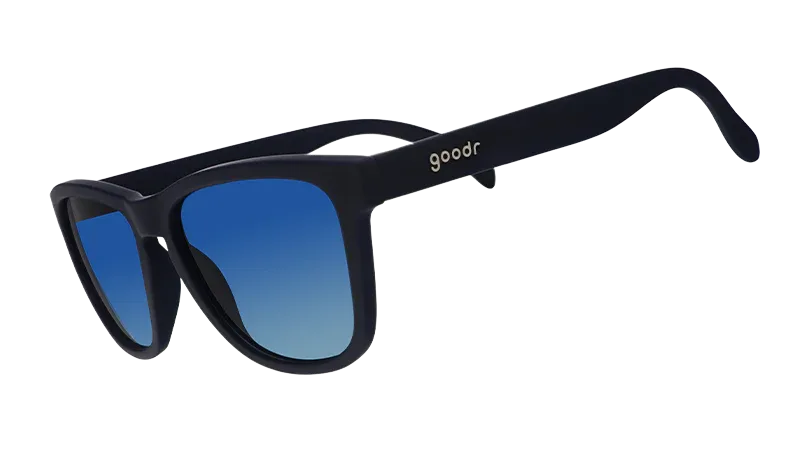
Drinks Seawater, Sees Future
-
Lilac It Like That!!!: Lilac It Like That!!! offers perfectly pale purple OG frames. A lighter tint like pale purple can be more comfortable for drivers who transition between sun and shade frequently, though it provides less glare reduction than a darker lens.
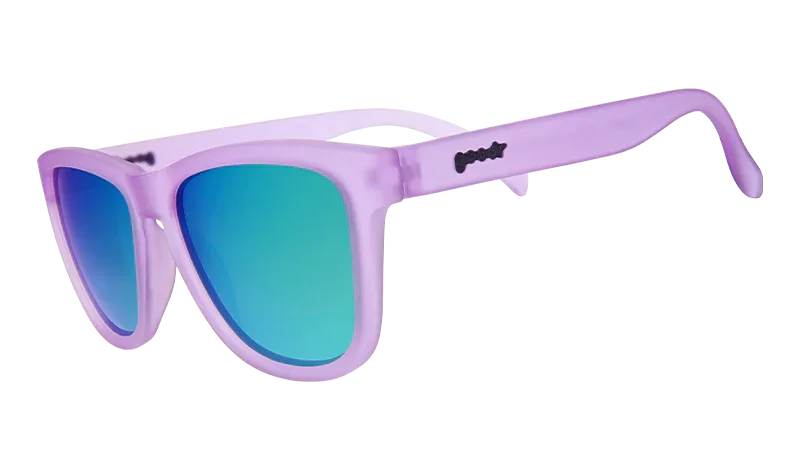
Lilac It Like That!!!
Which driving lens fits you?
Best for
- Daytime commuters who face strong sun and road glare
- Drivers who rarely use dashboard screens or have a compatible display
Not ideal for
- Drivers who depend on LCD infotainment or heads-up displays
- Anyone who regularly drives in low-light conditions