Quick answer
Stitch the Pope Leo Bobble from the face outward, not from the background in. On an 18 mesh hand-painted canvas, use basketweave or tent in the face and hands for maximum detail, reserve decorative stitches for vestment panels, and build a three-value thread palette for every white area so the vestments read as fabric instead of flat blocks.
Why this canvas rewards a slower stitch plan
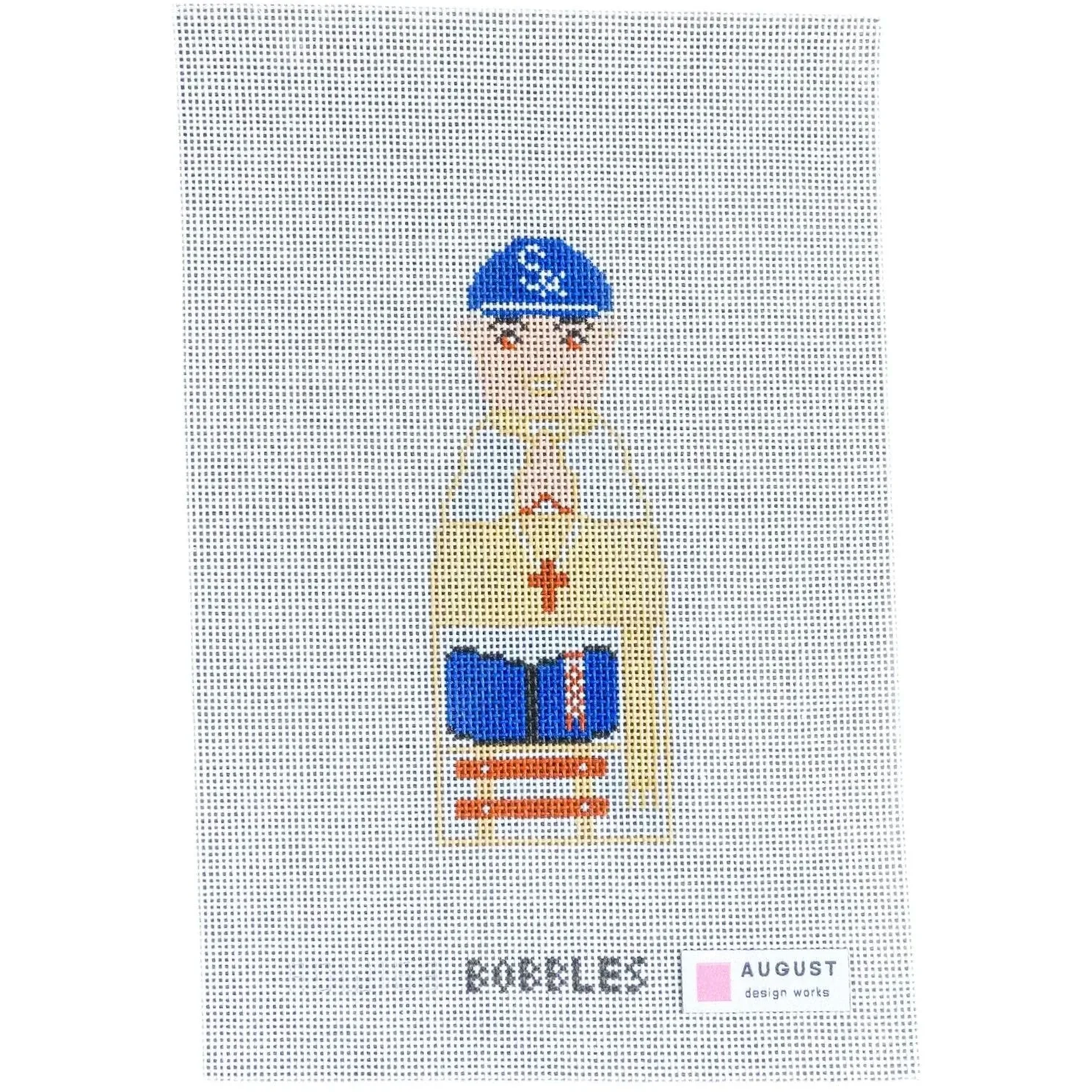
The Pope Leo Bobble belongs to the Bobbles Series of hand-painted canvases designed to be stitched, displayed, and collected, and this particular design is inspired by Pope Leo XIV's leadership, humility, and vision, with a biography that includes being born in Chicago in 1955 and serving in Peru before his election. That background matters at the frame: the canvas is a portrait first and a bobble second, so the face and the white vestments carry the recognition, while the rounded bobble form carries the charm.
Because the canvas is hand-painted, the painted lines are your guide, not a strict boundary. Treat them as a suggestion for color placement and let your stitches decide the final edge. That freedom is exactly why a plan helps: without one, it is easy to over-stitch the face, flatten the vestments, or run out of a thread color halfway through a large background area.
Build a thread palette in three passes
Start with the face and hands, because those are the areas where a wrong thread choice is most visible and most expensive to undo. Pull skin tones in at least two values, then add a third only if the painted shading clearly calls for it. On an 18 mesh canvas, fine shading reads well, so a small step between values is usually better than a dramatic one.
Next, handle the white vestments as a group rather than as one color. White is the hardest area to keep interesting, so choose a cool white, a warm white, and a soft shadow tone that sits between them. Stitch the lit panels in the brightest value and the folds in the shadow tone, and use the middle value where the fabric turns. This is the single change that most improves a religious needlepoint canvas with large white areas.
Finally, add the accents: gold or metallic for trim, a deep tone for the zucchetto, and one or two background colors. Buy the background last so you can match it to the finished figure instead of guessing in advance.
- Two skin values minimum; add a third only if the painted shading asks for it.
- Three whites: cool, warm, and a soft shadow tone for folds.
- Metallics for trim only, kept to small areas so they stay special.
- Background thread purchased after the figure is stitched.
Match stitch choice to mesh and to area
Mesh count sets your ceiling on detail. On 18 mesh, the intersections are small enough that basketweave and tent can hold facial features, so keep those stitches in the face, hands, and any fine painted line. Decorative stitches belong in the vestment panels, the background, and the bobble's rounded form, where they add texture without destroying a likeness.
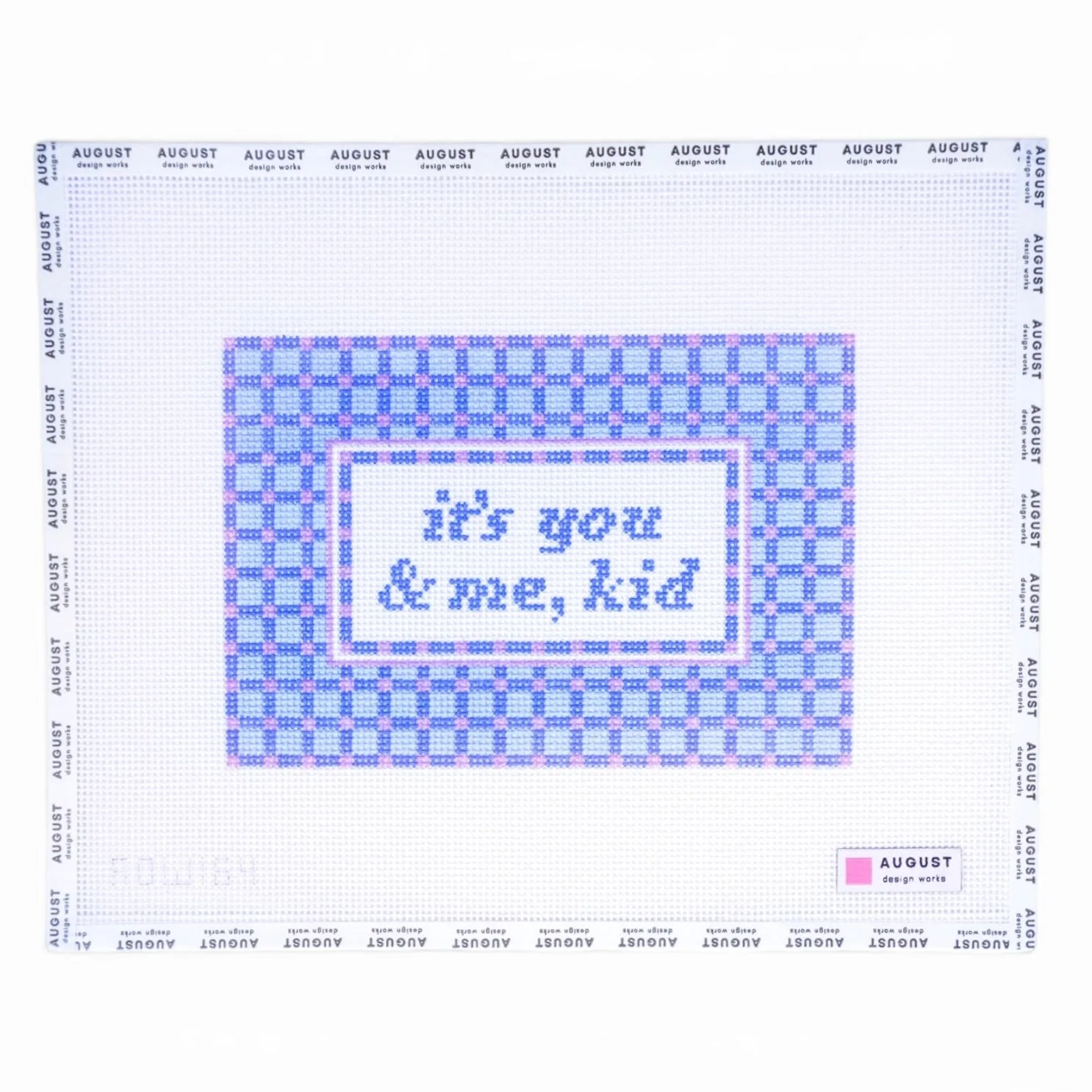
If you are working a 13 mesh canvas instead, plan for larger stitches and simpler shapes. The It's You & Me, Kid canvas is a 13 mesh design with an 11.5 x 9 canvas size and a 7.5 x 5 design size, so the stitched area is smaller than the canvas and the stitches are visibly chunkier. The same principle applies to any 13 mesh piece: fewer values, larger stitch units, and texture doing more of the work than shading.
One honest limitation: the product records do not list thread, stitch guides, or option types for these canvases, and canvases do not come with thread. You will need to source your own palette, which is more freedom but also more planning.
Protect the face and the white areas
Two areas cause most of the frustration on a portrait canvas. The first is the face: every stitch you place there is visible, so stitch it early, in good light, and stop while you still like it. The second is white: large white areas show every inconsistency in tension, so keep your stitches relaxed and consistent rather than tight.
If you plan to display the finished piece, decide the finish before you stitch the last background thread. A stretched and framed bobble reads differently than one finished as an ornament or a small pillow, and the decision affects how much background you need to fill.
Stitching order for the Pope Leo Bobble
- 1. Read the painted canvas before threading a needle: Lay the canvas flat under bright light and mark the face, hands, vestment panels, trim, and background with removable tape or a light pencil line on the canvas margin. Decide which areas are detailed and which are textured. Checkpoint: if you cannot tell where the face ends and the vestment begins, the lighting is too dim to plan accurately.
- 2. Stitch the face and hands first: Work the skin areas in basketweave or tent using your two or three skin values, following the painted shading rather than smoothing it out. Keep the stitches relaxed so the painted line still shows at the edges. Common mistake: over-shading the face with too many values, which makes a small portrait look muddy.
- 3. Work the white vestments in value order: Stitch the brightest panels first, then the mid-tone turns, then the shadow folds. Keep tension even across all three so the whites read as one fabric. Checkpoint: step back at arm's length. If the vestments look like three separate fabrics, your values are too far apart.
- 4. Add trim and small accents: Stitch metallic or gold trim last among the figure elements, keeping it to thin lines and small areas. Use a slightly shorter stitch than the surrounding area so the trim stays crisp. Common mistake: running metallic thread across a large panel, which dulls the contrast and wears poorly.
- 5. Fill the background with a texture stitch: Choose a decorative stitch for the background and work it in a color that supports the figure rather than competing with it. Keep the stitch direction consistent across the whole background. Checkpoint: the background should recede. If your eye lands there first, the color is too strong.
- 6. Block, then decide the finish: Block the finished canvas square before framing, finishing as an ornament, or mounting it. Blocking is what makes a bobble look round instead of wavy. Next step: if you plan to display it alongside other Bobbles Series pieces, block them all to the same dimensions before finishing.
Canvas facts that shape your plan
- Pope Leo Bobble - Needlepoint Canvas: The Pope Leo Bobble is a hand-painted 18 mesh canvas in the Bobbles Series, inspired by Pope Leo XIV and designed to be stitched, displayed, and collected. The 18 mesh count supports fine facial detail, so basketweave and tent in the face are realistic choices rather than compromises.
- It's You & Me, Kid - Needlepoint Canvas (Wholesale): It's You & Me, Kid is a 13 mesh hand-painted canvas with an 11.5 x 9 canvas size and a 7.5 x 5 design size, and it does not come with thread. It shows what a lower mesh count means in practice: larger stitches, a smaller design area within the canvas, and a thread palette you supply yourself.