Quick answer
A surge protector is insurance: it sacrifices itself to stop a catastrophic voltage spike from destroying your gear. A power conditioner does that job too, but it also filters the everyday electrical noise that can mask low-level detail. If your system already sounds good and you only fear storms, a quality surge protector is enough. If you hear a persistent haze, hum, or flat dynamics, power conditioning for hi-fi is the upgrade that addresses the cause.
Most audio owners ask the same question after a close call with a storm or a new component: do I need a power conditioner, or is a surge protector enough? The two devices overlap, but they solve different problems. One is a safety net for rare events; the other is a daily filter for the noise that rides along on your AC line.
This comparison looks at what each device actually does, where they overlap, and which one fits your system. We will use real examples from AudioQuest's PowerQuest line and NRG-Z3 power cable to show how the choice plays out in practice.
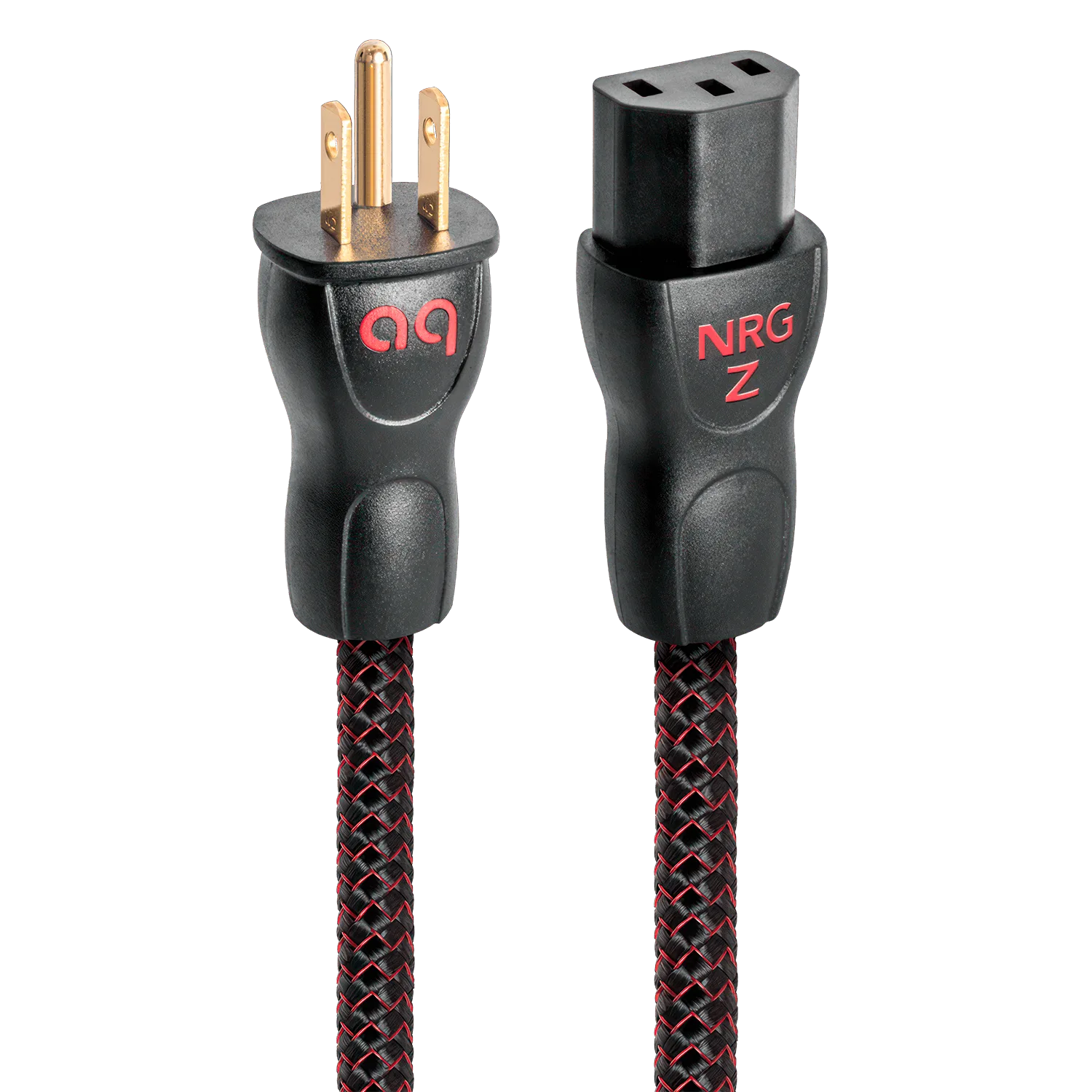
NRG-Z3
What a surge protector does and does not do
A surge protector's job is to clamp or divert a sudden voltage spike before it reaches your equipment. That spike might come from a lightning strike, a utility switching event, or a large appliance cycling on the same circuit. The protector absorbs the hit and, in a serious event, may sacrifice itself. It does nothing for the low-level noise that is present on the line every day.
That distinction matters because most audible power problems are not spikes. They are continuous high-frequency noise from dimmers, motors, computers, and Wi-Fi gear sharing the same electrical path. A surge protector will pass that noise straight through, so your system still sounds the way it always did.
- Check the clamping voltage and energy rating if you only need spike protection.
- Replace a surge protector after a major event; its protection is consumable.
What a power conditioner adds
A power conditioner combines surge protection with filtration. It reduces the noise and distortion on the AC line so your components see a cleaner supply. The practical result is not more bass or treble; it is a quieter background that lets existing detail come through. On a revealing system, that can make instruments feel more separated and dynamics more natural.
The PowerQuest 303 Factory Certified Refurbished is a clear example. Its advanced power filtration is designed to remove significantly more noise and distortion than typical power conditioners, and it ships with a detachable PQ-415 cable using AudioQuest's high-purity Semi-Solid Long-Grain Copper conductor metal, in which strands are packed more tightly. That cable is part of the conditioning, not an afterthought.
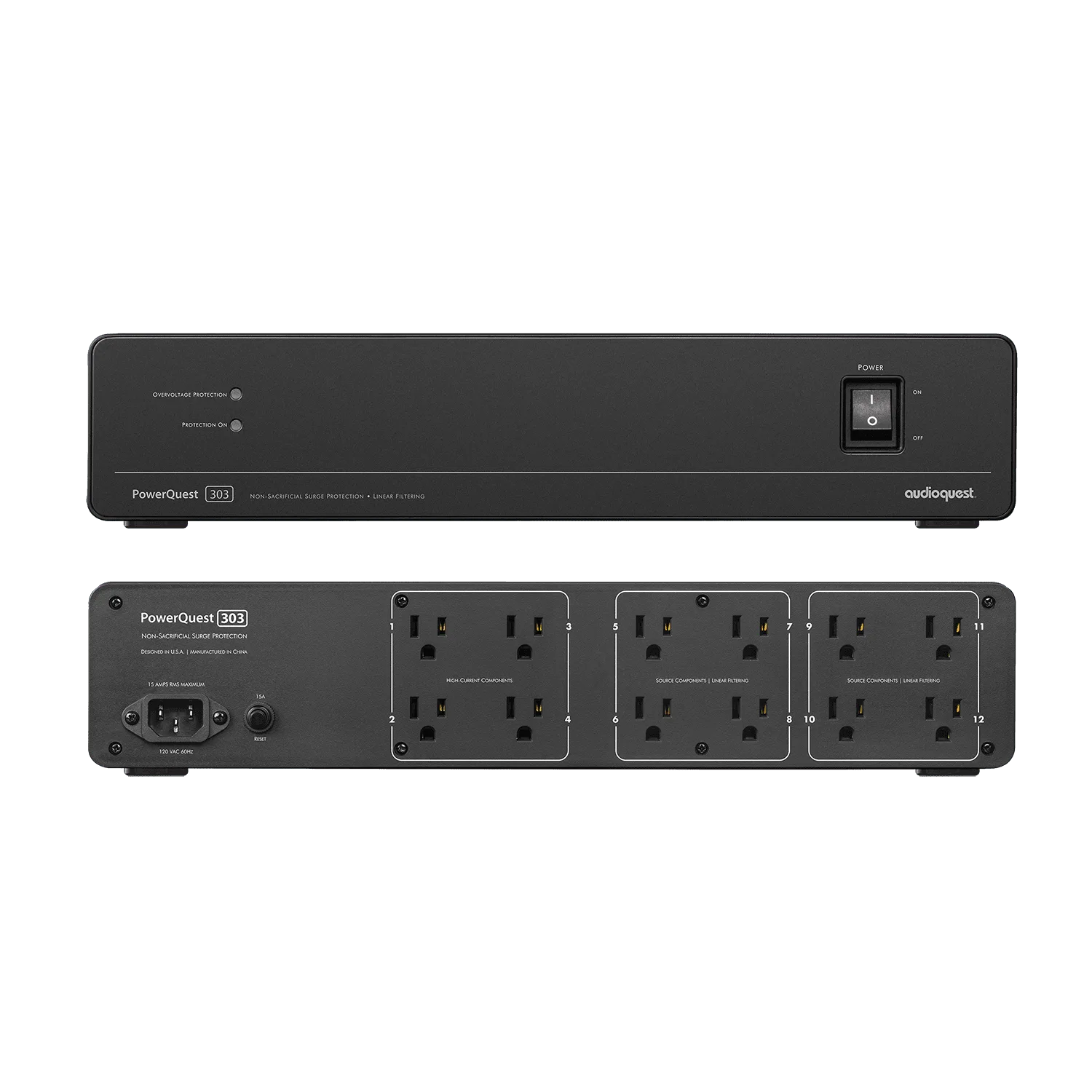
PowerQuest 303 Factory Certified Refurbished
- Conditioning helps most when noise is constant, not just during storms.
- A detachable power cable lets you upgrade the last link later.
Where the two overlap
Both devices can protect against surges, and many power conditioners include surge protection as a baseline feature. So the real question is not either/or; it is whether you need filtration on top of protection. If your answer is yes, a conditioner replaces the standalone protector rather than sitting behind it.
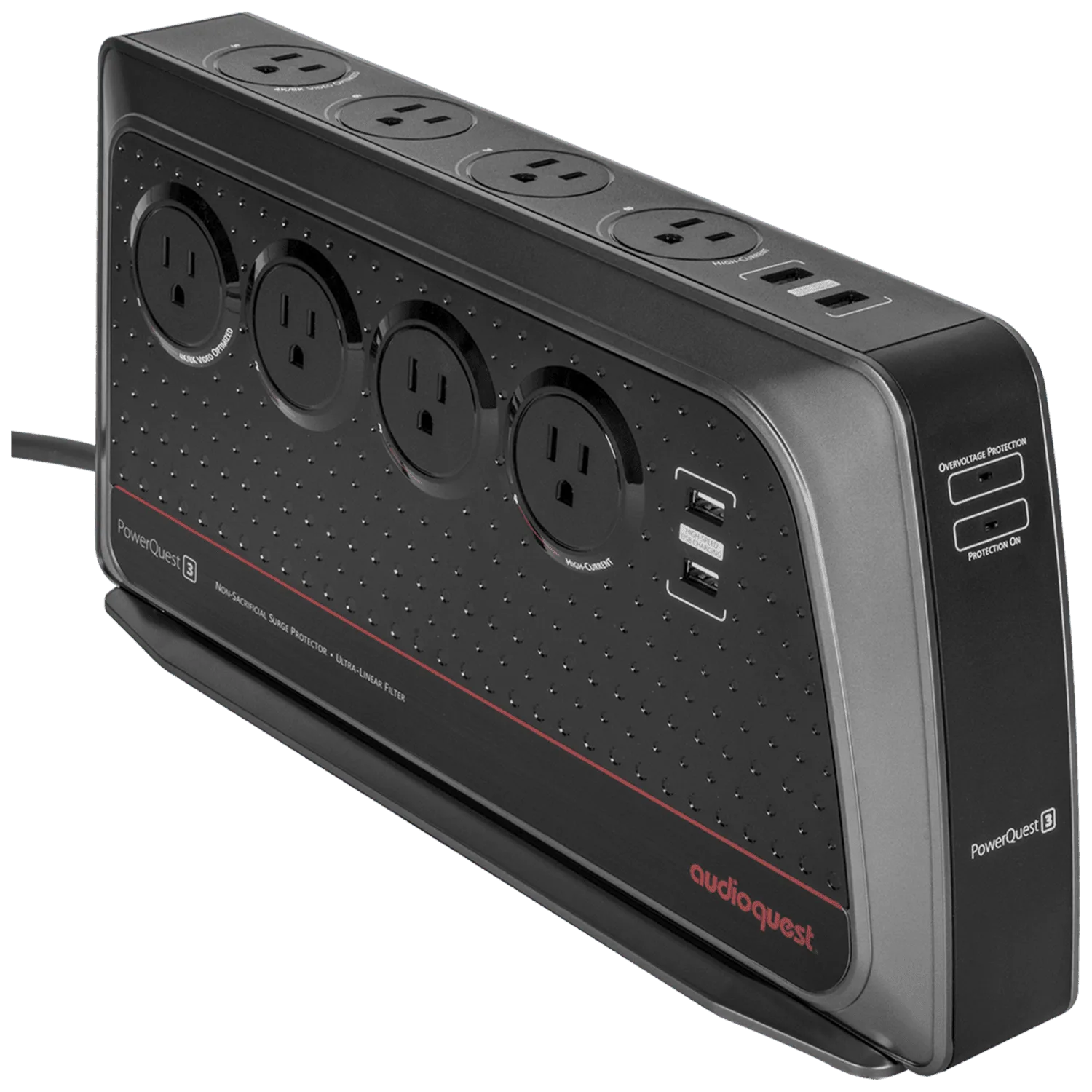
For tight installations, the PowerQuest 3 Factory Certified Refurbished shows how a conditioner can fit where a full-size unit will not. Its slim profile and optional detachable base let it mount behind a cabinet, with power cords plugging straight down into the top row of AC outlets. For shelf use, you remove the base and lay it horizontally. All six outlets stay accessible either way.
- Do not stack a conditioner behind a surge protector; let the conditioner do both jobs.
- Measure your space before choosing a form factor.
The cable question
The power cable is the final piece of the conditioning chain, and it is where a lot of noise can be picked up or passed along. The NRG-Z3 uses Perfect-Surface Copper+ conductors, which are processed to minimize distortion caused by grain boundaries and surface discontinuities that exist in any metal conductor. It also uses Semi-Solid Concentric conductors, where strands are packed more tightly and never change position within the bundle.
That design matters because a loose, shifting strand bundle can act as an antenna and a source of distortion. If you already own a conditioner, upgrading the cable to the component is a lower-cost step than replacing the conditioner. If you are starting from scratch, choose the conditioner first and treat the cable as the refinement.
- Match the cable's plug type to your component and wall outlet.
- Buy the length you need, not extra; excess cable can add clutter and pickup.
How to decide for your system
Start with the symptom. If your gear has survived years of storms and you hear no noise, a surge protector is the rational purchase. If you hear a faint hiss, hum, or a sense that quiet passages are not as black as they should be, power conditioning for hi-fi is addressing the actual problem. The more resolving your system, the more likely you are to notice the difference.
Budget also matters. A refurbished conditioner can cost less than a new flagship surge protector while doing more for sound. AudioQuest's Factory Certified Refurbished units, like the PowerQuest 3 and PowerQuest 303, carry the same design intent at a lower entry point. That makes trying conditioning less of a commitment.
- Write down what you hear before buying anything; it prevents chasing the wrong fix.
- If you rent or move often, prioritize a compact, versatile form factor.
Trade-offs at a glance
- Surge protector only: Lower cost and simple protection against catastrophic spikes, but it passes everyday line noise straight to your components. Choose this if your system is quiet and storms are your only concern.
- Power conditioner: Adds filtration that lowers noise and distortion, often with surge protection included, but costs more and takes up more space than a basic strip. Choose this if you hear a persistent haze, hum, or flat dynamics.
- Conditioner plus upgraded power cable: The NRG-Z3 addresses the final link with Perfect-Surface Copper+ and Semi-Solid Concentric conductors, but it is an extra purchase and only helps once the conditioner is in place. Do this last, after the conditioner, to refine rather than rescue.
Products that illustrate the difference
- PowerQuest 3 Factory Certified Refurbished: Slim profile with an optional detachable base; power cords plug straight down into the top row of AC outlets, and all six outlets remain accessible whether the unit stands or lies horizontally. Fits behind cabinets or on a shelf where a full-size conditioner will not, so you can add conditioning without rearranging your room.
- PowerQuest 303 Factory Certified Refurbished: Advanced power filtration removes significantly more noise and distortion than typical power conditioners; includes a detachable PQ-415 cable using AudioQuest's high-purity Semi-Solid Long-Grain Copper conductor metal, in which strands are packed more tightly. Targets the everyday noise that masks detail, and the detachable cable lets you refine the last link later.
- NRG-Z3: Perfect-Surface Copper+ conductors minimize distortion caused by grain boundaries and surface discontinuities that exist in any metal conductor; Semi-Solid Concentric conductors pack strands more tightly and never change position within the bundle. A practical upgrade for the cable between a conditioner and a component, reducing a common source of noise and distortion.
Which one fits your system
Best for
- Owners of revealing systems who hear noise, hum, or a lack of low-level detail
- Anyone with a compact or cabinet-mounted setup who needs a slim conditioner like the PowerQuest 3
- Listeners who want to upgrade the last link with a cable like the NRG-Z3
Not for
- Systems that are already quiet and only need storm protection
- Buyers who want the absolute lowest-cost solution and will not notice subtle noise changes
- Anyone unwilling to compare before and after; conditioning is a listening decision
A surge protector answers the question of what happens when something goes wrong. A power conditioner answers the question of what you hear every day. If your system is already quiet and safe, stay with protection. If you want the noise floor to drop and detail to come through, conditioning is the more useful purchase, and the PowerQuest line shows how that can fit real rooms and budgets.