Quick answer
If your baby throws plates, a power suction plate is the more practical choice because its suction pad is designed to stay firmly in place. Standard plates are lighter and simpler to stack, but they rely on your baby leaving them alone. For most families starting baby led weaning, the powerTM suction plate is the better first plate; keep a standard plate for older toddlers who have stopped throwing.
How suction and standard plates differ in daily use
The main difference is what keeps the plate on the highchair tray. A power suction plate uses a suction pad to grip the tray, while a standard plate simply sits on the surface. That matters most between roughly 6 and 18 months, when babies are learning to scoop food and often test whether objects stay put.
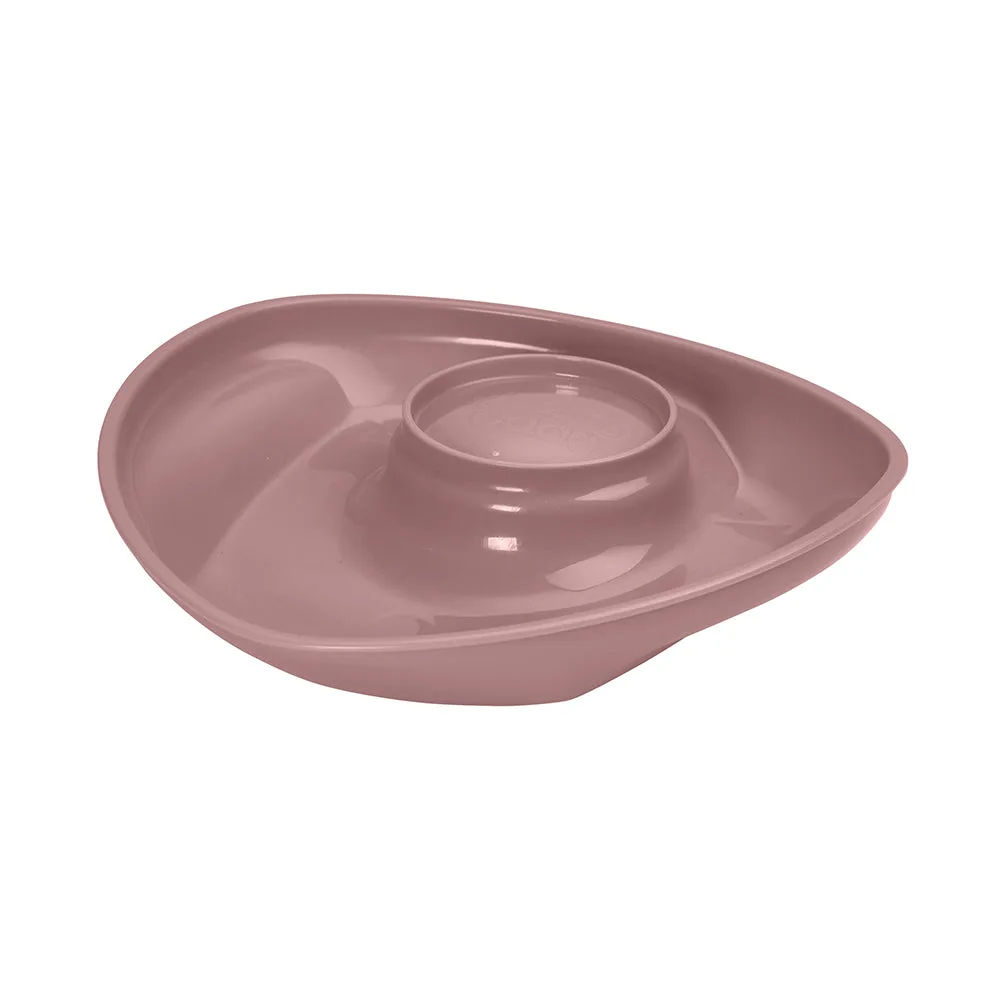
The powerTM suction plate adds scooped sides and smart food channels for easy scooping, plus an integrated pot for sauces or dip. A standard plate usually has a flat base and no suction, so it slides or lifts when pushed. If your baby is in the plate throwing stage, the suction version removes that daily battle; if your toddler eats calmly, a standard plate is lighter to stack and store.
What to check before buying either plate
Suction only works on smooth, non-porous surfaces. Highchair trays with textured mats, fabric covers, or deep grooves may not give the suction pad enough contact to hold. Before relying on any suction plate, press it down firmly and test whether it releases easily. If your tray is not smooth, a standard plate may be the only option that sits flat.
Also consider how you serve food. The powerTM suction plate has an integrated pot for sauces or dip, which keeps wet foods separate from dry ones. A standard plate with no compartments means everything mixes together. Neither design is wrong, but the suction plate does more of the work for you during messy meals.
Cleaning, storage, and travel trade-offs
Suction plates have more parts to clean because of the suction base, and food can collect around the pad if you do not rinse it promptly. Standard plates are usually quicker to wash and stack. If you are often short on time, that difference adds up over a week.
For travel, a standard plate packs flatter. A suction plate is bulkier, though it can be the better choice at a restaurant or relative's house where the table surface is smooth and your baby is likely to push the plate. The powerTM suction plate is also BPA, Latex and Phthalate free, which is a useful baseline for any plate your baby eats from.
When a standard plate is the smarter pick
Once your child stops throwing plates, suction becomes unnecessary. A standard plate is lighter, easier to stack, and often cheaper. If your toddler eats from a plate without lifting it, switching to a standard plate removes the extra cleaning step.
Some babies also dislike the resistance of a suction base and eat better when the plate moves slightly. If your baby gets frustrated by a plate that will not budge, a standard plate may encourage more self-feeding. Watch how your baby reacts for a week before deciding the suction plate is not working.
Trade-offs at a glance
- Suction strength vs surface compatibility: The powerTM suction plate grips smooth trays firmly, but suction is reduced on textured or fabric-covered surfaces. Check your highchair tray is smooth before relying on suction.
- Fewer spills vs more cleaning: A suction plate prevents spills and plate throwing, but the suction base adds an extra part to rinse. Rinse the base promptly to avoid food drying around the pad.
- Built-in features vs simplicity: The powerTM suction plate includes scooped sides, food channels, and an integrated pot; a standard plate is lighter and easier to stack. Choose suction for messy early weaning, standard for calm toddlers.
Product facts
- power™ suction plate: powerTM suction plate has the strongest suction pad that stays firmly in place to prevent spills, with scooped sides, smart food channels, and an integrated pot for sauces or dip. This is the plate to choose if your baby throws or pushes plates; the integrated pot also keeps sauces separate from dry foods.
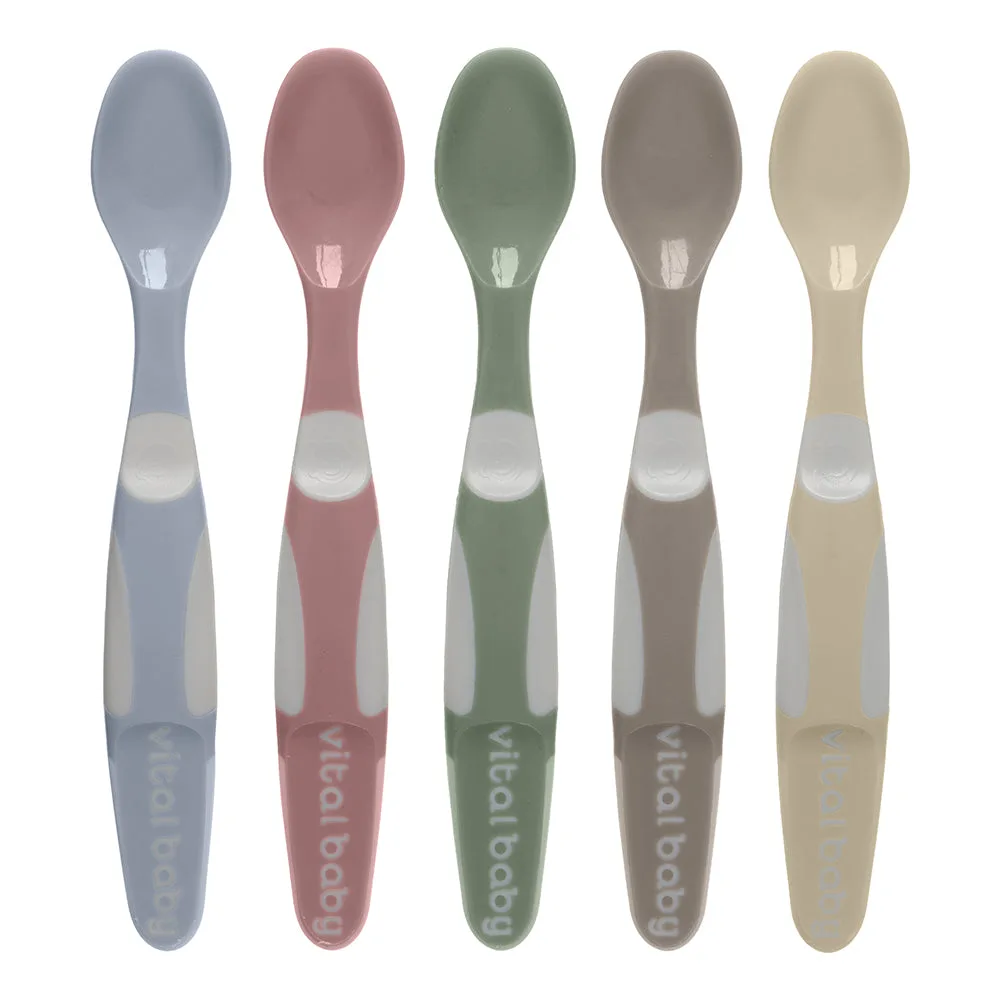
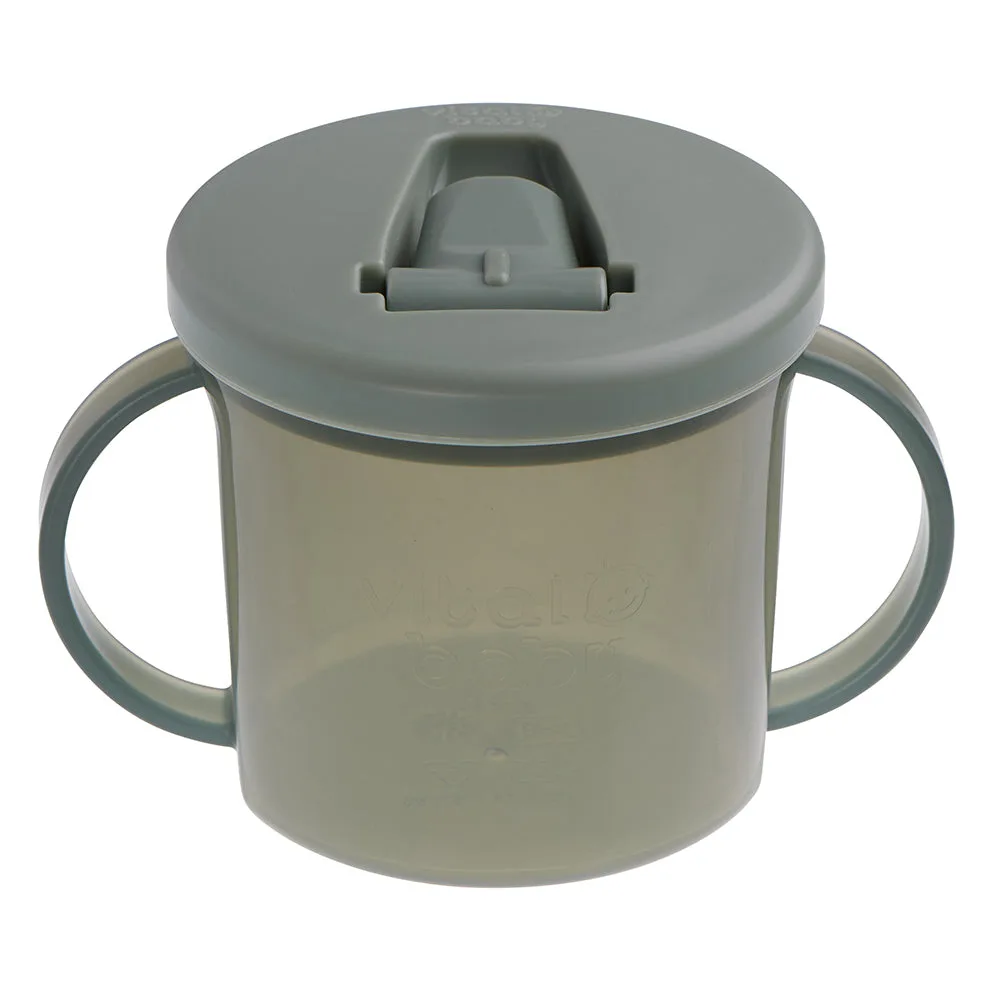
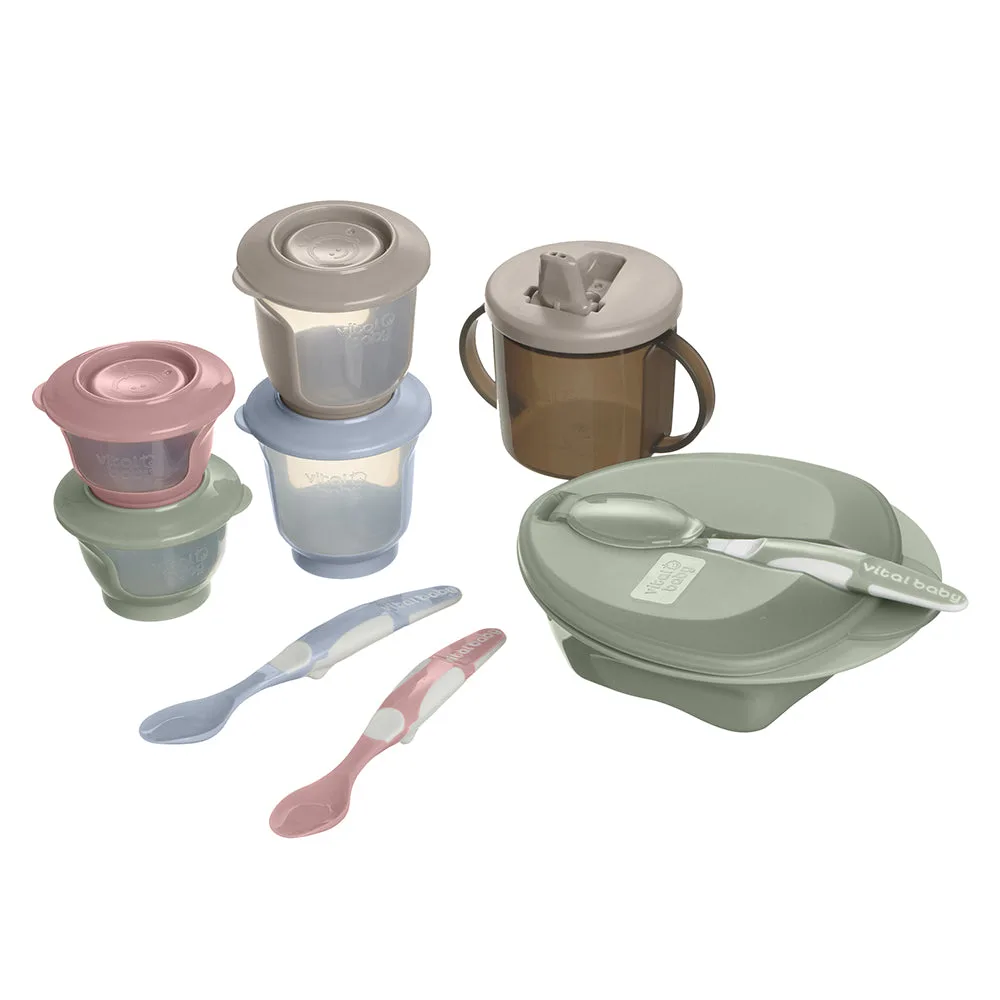
- start weaning kit: start weaning kit is a complete kit with multi-award-winning start weaning spoons, feeding set, store & wean pots, and free flow cup. If you are starting baby led weaning from scratch, this kit covers the spoon and storage basics so you only need to add a plate.
- scoop™ feeding set 1pk: scoopTM feeding set 1pk includes scooped sides, integrated mashing zones, a start weaning spoon, a leak-proof lid, and a hygienic spoon cover. A useful add-on if you want to mash food directly in the bowl and take it out; the lid and spoon cover make it practical for travel.
Which plate fits your baby?
Best for
- Babies in the plate throwing stage who push or lift plates off the highchair
- Families starting baby led weaning who want scooped sides and an integrated pot for sauces
- Parents who want a plate that stays put on a smooth highchair tray
Not for
- Toddlers who already eat without throwing plates and prefer a lighter, stackable plate
- Highchair trays with textured mats or fabric covers where suction cannot grip
- Families who want the absolute simplest plate to wash and pack