Quick answer
Not always, but many home theaters benefit from one. If your AV receiver already delivers clean power to all channels and your in-wall speakers are reasonably efficient, it can handle the job. If you run power-hungry in-wall LCR speakers, listen at high volumes, or want your receiver to focus on surround and height channels, adding a separate 3-channel amplifier for the front stage is the more reliable path.
Why in-wall speakers change the amplifier math
In-wall speakers save floor and shelf space, but they do not reduce the electrical demand on your system. A sealed wall cavity gives you less internal volume than a typical box speaker, and the crossover still needs power to produce clean dynamics. When an AV receiver is asked to drive seven or more channels at once, its shared power supply divides available wattage across every channel. The front left, center, and right speakers carry most of the soundtrack, so they are the first to reveal strain.
The practical question is not whether in-wall speakers work with a receiver. It is whether your receiver can deliver enough current to the front three channels without audible compression, distortion, or shutdown during demanding scenes. If you hear the system harden as the volume rises, the amplifier section is the bottleneck, not the speakers.
How to check your actual power requirements
Start with the speaker specification. Aperion publishes sensitivity and impedance for each model, and those two numbers tell you how hard the speaker is to drive. Lower impedance and lower sensitivity demand more current from the amplifier. If your in-wall speakers are rated at 4 ohms or have sensitivity below roughly 88 dB, a receiver alone is more likely to struggle.
Next, measure the room. A large open floor plan with high ceilings needs more power to reach a given listening level than a small dedicated room. Finally, count your channels. If you run a 5.1.4 or 7.1.4 system, the receiver is already powering nine or eleven channels. Offloading the front three to a separate amplifier reduces that load immediately.
What a 3-channel amplifier actually solves
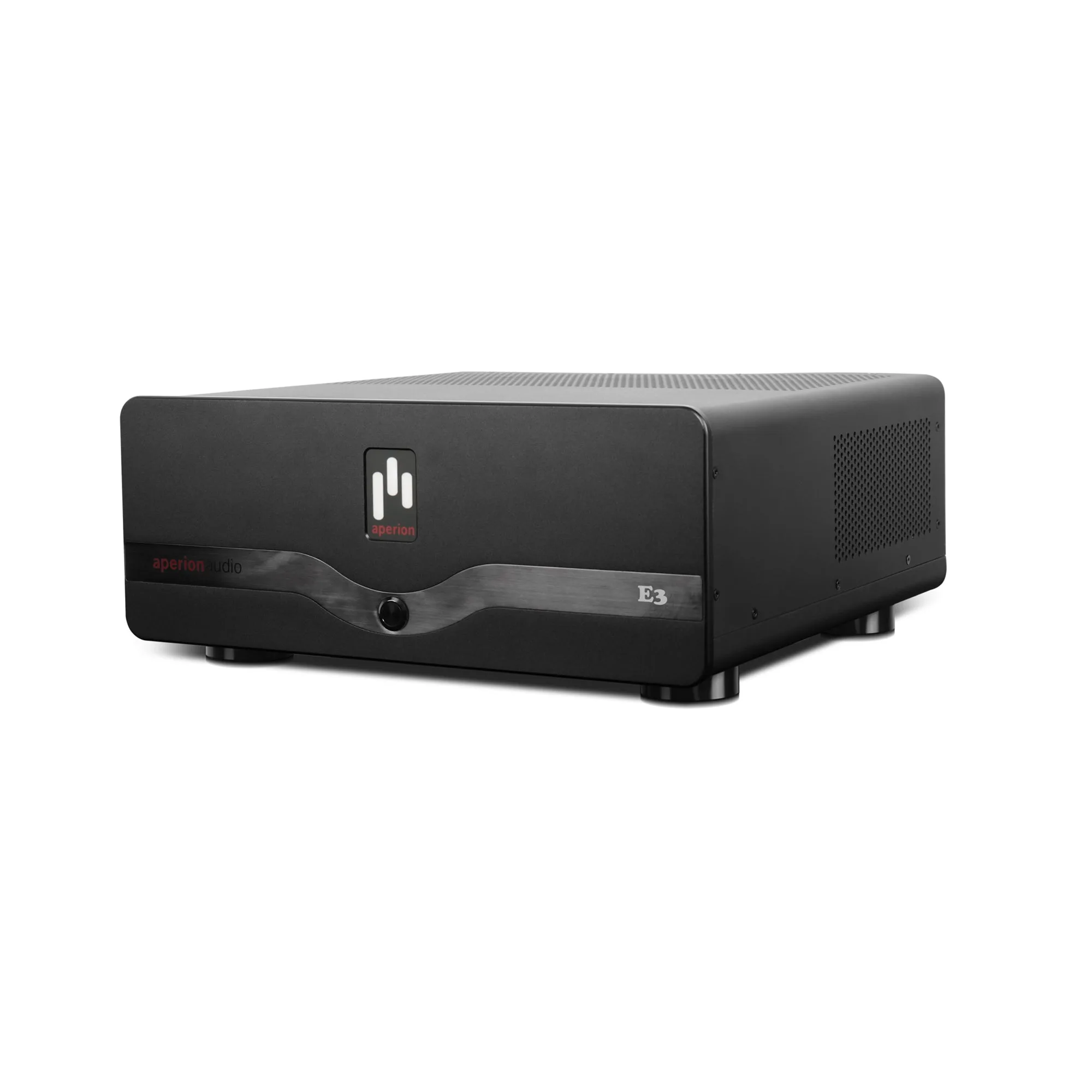
A 3-channel amplifier is not about making the system louder for its own sake. It is about giving the most important speakers their own power supply and heatsink. The Aperion Energy 3 Channel Home Theater Power Amplifier – E3 is built for exactly this role: it drives the front left, center, and right speakers so the AV receiver can concentrate on the surround and height channels that need less power. That division of labor often produces cleaner dialogue, better dynamic swings, and less strain on the receiver.
A separate amplifier also simplifies future upgrades. You can change receivers without losing quality amplification for the front stage, and you can add channels later if your system grows. The tradeoff is cost, extra rack space, and one more component to power and ventilate.
Receiver vs amplifier for in-wall speakers: a simple decision rule
Use the receiver alone if your in-wall speakers are 8-ohm nominal with average or better sensitivity, your room is moderate in size, and you listen at background to moderate levels. Add a separate 3-channel amplifier if any of these are true: your speakers are 4-ohm or low sensitivity, your room is large, you routinely listen at reference or near-reference levels, or your receiver is powering more than seven channels.
If you are unsure, borrow or buy from a dealer with a return policy and test the receiver alone first. The moment you hear compression or the receiver runs hot, stop and add the amplifier. Do not wait for a shutdown to confirm what your ears already noticed.
Installation and setup notes that prevent problems
Place the amplifier on a ventilated shelf with at least a few inches of clearance above and behind it. Use the receiver's preamp outputs for the front left, center, and right channels, and set those channels to 'pre-out' or 'external amplifier' in the receiver menu so the receiver no longer sends power to them. Keep line-level RCA cables away from AC power cords to avoid hum.
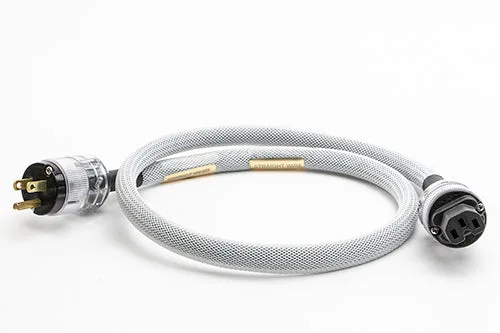
For power, use a dedicated outlet or a quality power conditioner. The StraightWire Pro Thunder Power Cable is designed for high-level power amps and components with IEC female receptacles, and it is a sensible upgrade for an Aperion Energy amplifier or a Bravus subwoofer. Match the length to your rack layout so you are not coiling excess cable behind the equipment.
Step-by-step: powering your in-wall speakers
- Check speaker impedance and sensitivity: Look up the specifications for your Aperion in-wall models. If they are 4-ohm or below 88 dB sensitivity, plan for a separate amplifier. If they are 8-ohm and 90 dB or higher, a receiver may be enough. Checkpoint: write down both numbers before you buy anything.
- Count your channels and estimate your listening level: A 5.1.4 system asks the receiver to power nine channels. A 7.1.4 system asks for eleven. The more channels and the louder you listen, the more likely the receiver will run out of clean power. Common mistake: assuming the receiver's box wattage applies to all channels at once.
- Test the receiver alone at your normal volume: Play a demanding action scene or a dynamic music track at the loudest level you realistically use. Listen for hardening, distortion, or the receiver shutting down. Check whether the receiver gets unusually hot. If any of these happen, stop and move to the next step.
- Add a 3-channel amplifier for the front stage: Connect the receiver's front left, center, and right preamp outputs to the amplifier. Set those channels to external amplification in the receiver menu. Leave the surround and height channels on the receiver. Checkpoint: confirm the receiver no longer sends power to the front three channels.
- Ventilate and power the amplifier properly: Give the amplifier several inches of clearance on all sides. Use a dedicated outlet or power conditioner, and consider a quality IEC power cable such as the StraightWire Pro Thunder for stable current delivery. Common mistake: stacking the amplifier directly on the receiver or in a closed cabinet.
- Re-run calibration and set levels: After adding the amplifier, run your receiver's room correction again. Verify that the front three channels are balanced with the rest of the system and that no channel is clipping. Next step: listen to a familiar scene and confirm dialogue is clearer and dynamics are less compressed.
Products that fit this setup
- Energy 3 Channel Home Theater Power Amplifier – E3: The Aperion Energy E3 is a 3-channel home theater power amplifier designed to drive the front and center speakers, allowing the AV receiver to concentrate on surround and height channels. This is the exact division of labor that solves receiver strain in a multichannel in-wall system.
- StraightWire Pro Thunder Power Cable: The StraightWire Pro Thunder Power Cable is a reference power cable intended for high-level power amps and select components with IEC female receptacles, and it is described as an upgrade for Aperion Energy power amplifiers and Bravus and Daedalus subwoofers. If you add a separate amplifier, a proper power cable is a low-effort way to ensure the amplifier gets stable current.
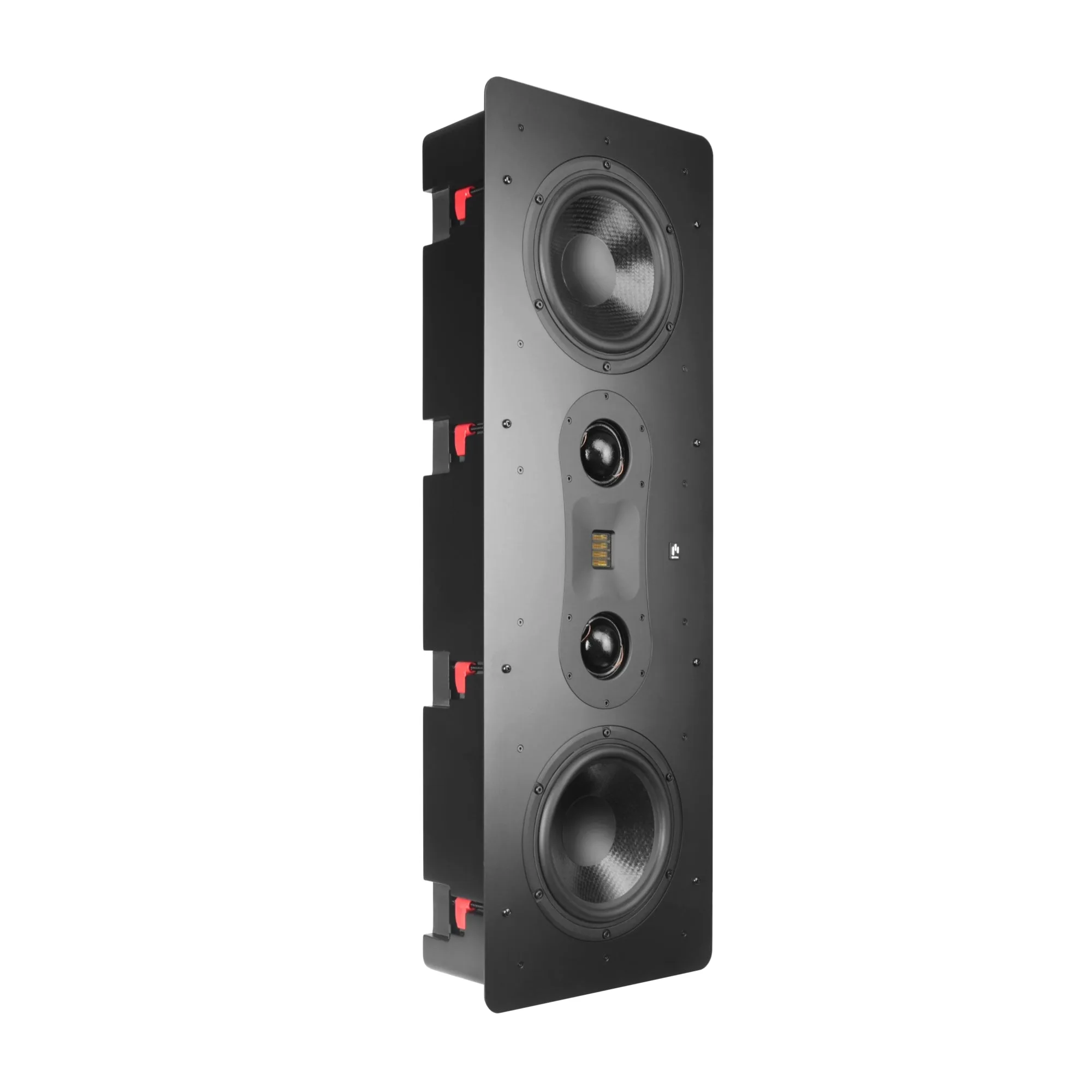
- Theatrus T80WL Dual 8" Slim Stack In-Wall LCR Speaker: The Theatrus T80WL is a dual 8-inch slim stack in-wall LCR speaker designed to deliver authentic cinema sound while fitting into thinner, more compact spaces. A full-range in-wall LCR like this benefits from dedicated amplification because it can demand more current than a small satellite speaker.