Quick Answer
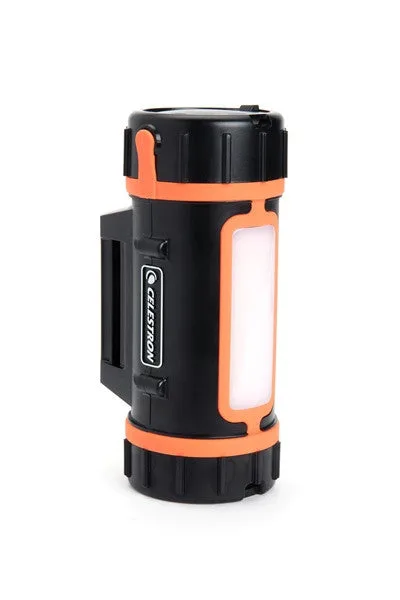
For most backyard and remote sessions, the PowerTank Lithium (18771) wins: its LiFePO4 chemistry delivers up to 2,000 charge cycles and a 10-year unrecharged shelf life, so it is lighter and easier to maintain than sealed lead-acid packs. Choose wall power only if you observe from a fixed location with a safe outdoor outlet and no cable-trip risk. If your mount lives on a Portable Rolling Pier, wall power plus the pier's roll-out design can work, but the PowerTank still removes cable runs and keeps your setup self-contained.
What Each Power Source Actually Delivers
Wall power is unlimited and free at the outlet, but it ties your mount to a cord. That cord becomes a trip hazard in the dark and a snag risk when the mount slews. It also disappears during a power cut, which can interrupt an imaging run or a GoTo alignment.
The PowerTank Lithium (18771) is a portable 12V/5V supply built around LiFePO4 chemistry. It is smaller and lighter than lithium-ion or sealed lead-acid equivalents, and it tolerates being left uncharged far longer. Its 5V USB output can run accessories like a dew heater controller or a small computer, while the 12V side feeds a computerized Celestron mount.
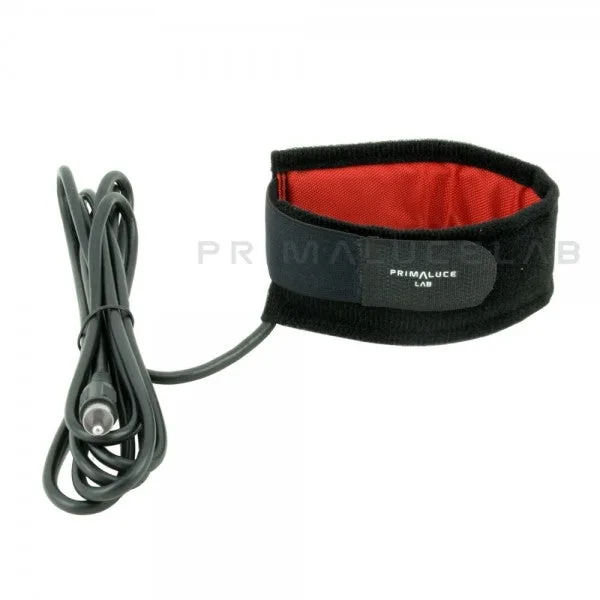
dew heater
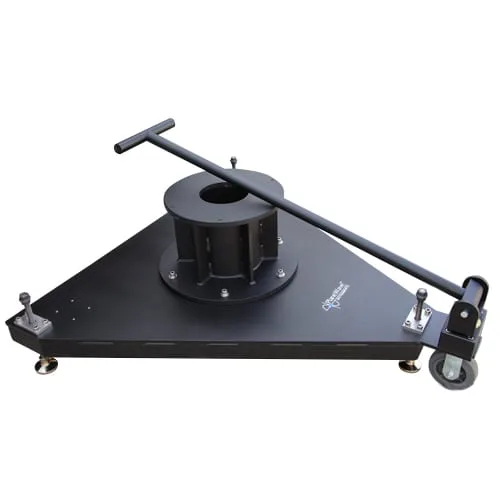
A Portable Rolling Pier changes the equation. It lets you roll an L-Series mount and telescope out under the stars using the attached steering T-handle, so you can keep the mount assembled and ready. With auto-mount modeling in PWI software, the mount can be ready to start imaging quickly. If the pier stays near a safe outlet, wall power becomes practical again because the roll-out distance is short.
Cables, Chemistry, and Cold Nights
Cable management is the hidden cost of wall power. You need an outdoor-rated extension cord, a drip loop, and a way to keep the plug secure. In dew-heavy conditions, connections corrode and GFCI outlets trip. A battery pack avoids all of that because there is no cord to trip over or unplug.
LiFePO4 chemistry is the reason the PowerTank Lithium lasts. Up to 2,000 charge cycles is roughly four times more than lithium-ion and seven times more than sealed lead-acid designs. The unrecharged shelf life of up to 10 years is about three times better than lithium-ion and ten times better than sealed lead-acid. That matters if you store your gear for months between star parties.
Cold weather reduces the usable capacity of any battery, including LiFePO4. If you image below freezing, keep the PowerTank in an insulated bag and charge it the day before. Wall power does not care about temperature, which is its one clear advantage in deep winter.
When a Rolling Pier Beats Both
The Portable Rolling Pier is not a power source, but it changes how you think about power. Because you can roll an L-Series mount and telescope out quickly and use auto-mount modeling in PWI software to be ready to image, the pier rewards a permanent or semi-permanent setup. In that case, a short outdoor-rated cord to a nearby outlet is simpler than carrying a battery out every night.
If the pier lives in a garage or shed and you roll it to a spot without an outlet, the PowerTank Lithium still wins. You can mount the battery on the pier and run short jumper cables to the mount, keeping the whole rig self-contained and free of long cords.
One limitation: the supplied catalog facts do not list the PowerTank's exact watt-hours or runtime for a specific mount. That means you should estimate your own draw. A typical computerized mount plus dew heater can pull 1–2 amps at 12V, so a 10Ah-class pack gives roughly five to ten hours. Check your mount's manual for its actual draw before committing to an all-night run.
Trade-Offs at a Glance
- PowerTank Lithium (18771): Portable, no cords, LiFePO4 chemistry with up to 2,000 cycles and 10-year shelf life. Limited runtime per charge; capacity drops in extreme cold. Best for remote sites, star parties, and anyone who wants a self-contained rig.
- Wall Power: Unlimited runtime and no battery to charge. Requires a safe outdoor outlet, introduces cable-trip and snag risks, and stops during a power cut. Best for permanent backyard setups with a protected outlet near the mount.
- Portable Rolling Pier + Wall Power: Roll an L-Series mount out quickly with the steering T-handle; auto-mount modeling in PWI software speeds setup. Still needs an outlet within cord reach. Best if the pier stays near a garage or shed outlet and you rarely travel.
Product Facts
- PowerTank Lithium, 12V/5V Power Supply (18771): Portable power pack for computerized Celestron telescopes using Lithium Iron Phosphate (LiFePO4) chemistry; up to 2,000 charge cycles and an unrecharged shelf life of up to 10 years. Fewer replacements and less maintenance than sealed lead-acid or lithium-ion packs, especially for seasonal observers who store gear for months.
- Portable Rolling Pier: Portable Rolling Pier lets you roll an L-Series mount and telescope out using the attached steering T-handle; with auto-mount modeling in PWI software, the mount can be ready to start imaging quickly. If your mount stays assembled on the pier, a short wall-power cord may be all you need, or you can mount a PowerTank on the pier for a cord-free roll-out.
Which Should You Choose?
Choose PowerTank Lithium if you:
- Observe from remote dark sites or star parties with no outlet
- Want a lighter, lower-maintenance pack than sealed lead-acid
- Need 5V USB power for accessories alongside 12V for the mount
Choose wall power or a rolling pier setup if you:
- Have a permanent backyard pier with a safe outdoor outlet
- Run a high-draw imaging rig that would drain a portable pack in a few hours
- Regularly image in deep cold where battery capacity drops sharply