Quick answer
Measure every nail individually in millimeters, using a soft tape or a strip of paper across the widest part of the nail bed, then compare those numbers to the set's size chart instead of guessing from photos. If a nail falls between two sizes, size up and gently file the sidewalls, and if the set only lists S, M, or L, check your thumb and pinky first because those two nails decide whether a set works.
Most press-on nails that lift, pop off, or look crooked were never the wrong design. They were the wrong size. Sizing is the one step you can control before checkout, and it takes about five minutes with a tape measure and a pen.
This checklist walks through measuring each nail bed, reading a press on nail size chart without rounding the wrong way, and knowing when to pick a set that lists full sizes versus one that only offers S, M, and L.
Measure each nail, not just your thumb
Nail beds are not symmetrical across a hand. Your thumb and pinky are usually the two extremes, which is why a set can feel perfect on three fingers and loose on the other two. Measure all ten nails in millimeters, writing the number next to each finger rather than trying to remember it.
Lay a soft measuring tape or a thin strip of paper flat across the widest part of the nail, from one sidewall to the other. Mark the paper, then measure the mark against a ruler. Measure the natural nail only, not the skin, and repeat on a day when your nails are bare and dry so nothing shifts the number.
- Measure in millimeters, not inches — press-on size charts almost always use millimeters.
- Note the widest point of the curve, which sits slightly below the cuticle for most people.
- Write down left and right hands separately; many people differ by half a millimeter.
Read the size chart like a fit tool, not a label
A press on nail size chart maps a millimeter range to a size number or letter. The trap is rounding to the nearest size when your measurement sits near the top of a range. If your nail measures 15.2 mm and a size covers 14.5–15.0 mm, that size will feel tight at the sidewalls and lift early.
When you land between two sizes, choose the larger one and file the sides down with a fine grit file. Removing a little material is easy; adding it is not. The same logic applies to length: a longer nail with a wider base will feel heavier, so keep an eye on how the base width matches your measurement before you commit.
- Size up when you are between sizes, then file the sidewalls in small passes.
- Check whether the chart measures the nail's widest point or the cuticle line — they are not the same.
- If a chart lists only S, M, and L, ask which millimeter range each covers before buying.
Wide nail beds: what to look for
A wide nail bed needs a base that covers the full width without pinching. If the press-on is narrower than your natural nail, the sidewalls will sit on skin, which is the most common cause of early lifting. Look for sets that offer more than three sizes or that let you choose a size per nail.
Wide nail beds also benefit from a slightly flatter curve. If a set's curve is much rounder than your nail, the middle will make contact while the edges hover. That gap lets water in and glue out.
- Prioritize coverage at the sidewalls over a perfect cuticle line.
- If the set offers only S, M, and L, a wide nail bed usually needs the largest option.
- A flatter-curved press-on will sit better than a strongly domed one.
Small nail beds: where sets usually fail
Small nail beds tend to fail at the pinky and ring finger, where the smallest size in a set is still too wide. An oversized nail on a small bed overlaps the skin, catches on hair and fabric, and lifts at the corners within a day or two.
If your pinky measures below the smallest size on the chart, that set is not a match, no matter how much you like the design. Look for brands that publish a full size range with millimeter values, or choose a set where you can pick sizes individually.
- Measure your pinky first — it is the fastest way to rule a set in or out.
- Never trim a press-on from the cuticle edge to make it narrower; file the sidewalls instead.
- If the smallest size is too wide, the set will not stay put.
A five-minute fit checklist before you buy
Run through the same checks every time you consider a new set. It takes a few minutes and saves a wasted order. Start with your measurements, then move to the product listing and confirm what the sizes actually mean.
Finally, think about how you will use the nails. A set worn for one evening tolerates a slightly looser fit better than a set you plan to wear for a week, because a week of hand washing and typing exposes every gap at the sidewalls.
- Ten measurements written down, in millimeters.
- The chart's millimeter range for each size, not just the letter.
- Your pinky and thumb numbers compared against the smallest and largest options.
- Whether the set lets you choose a size per nail or only one size for the whole hand.
Decision rules for choosing a size
- Your measurement sits between two sizes: Choose the larger size and file the sidewalls with a fine grit file in short passes, checking the fit against your natural nail after every few strokes. Size up, then file down. Never file the cuticle edge.
- The set only lists S, M, and L: Compare your pinky to the smallest option and your thumb to the largest. If either nail falls outside the range, that set will not fit the whole hand well. Two nails decide it: pinky and thumb.
- Your nail bed is wider than the press-on base: The sidewalls will sit on skin and lift early. Look for a set with more size options or a flatter curve rather than forcing the fit. Coverage at the sidewalls beats a neat cuticle line.
- Your nail bed is smaller than the smallest size: An oversized press-on overlaps skin and catches on everything. Skip the set unless you can select a smaller size per nail. If the smallest size is too wide, walk away.
- You plan to wear the set for a week or longer: Aim for a closer fit than you would for a single evening. Long wear exposes gaps at the sidewalls through hand washing and typing. Longer wear needs a tighter, more accurate fit.
How real sets handle sizing
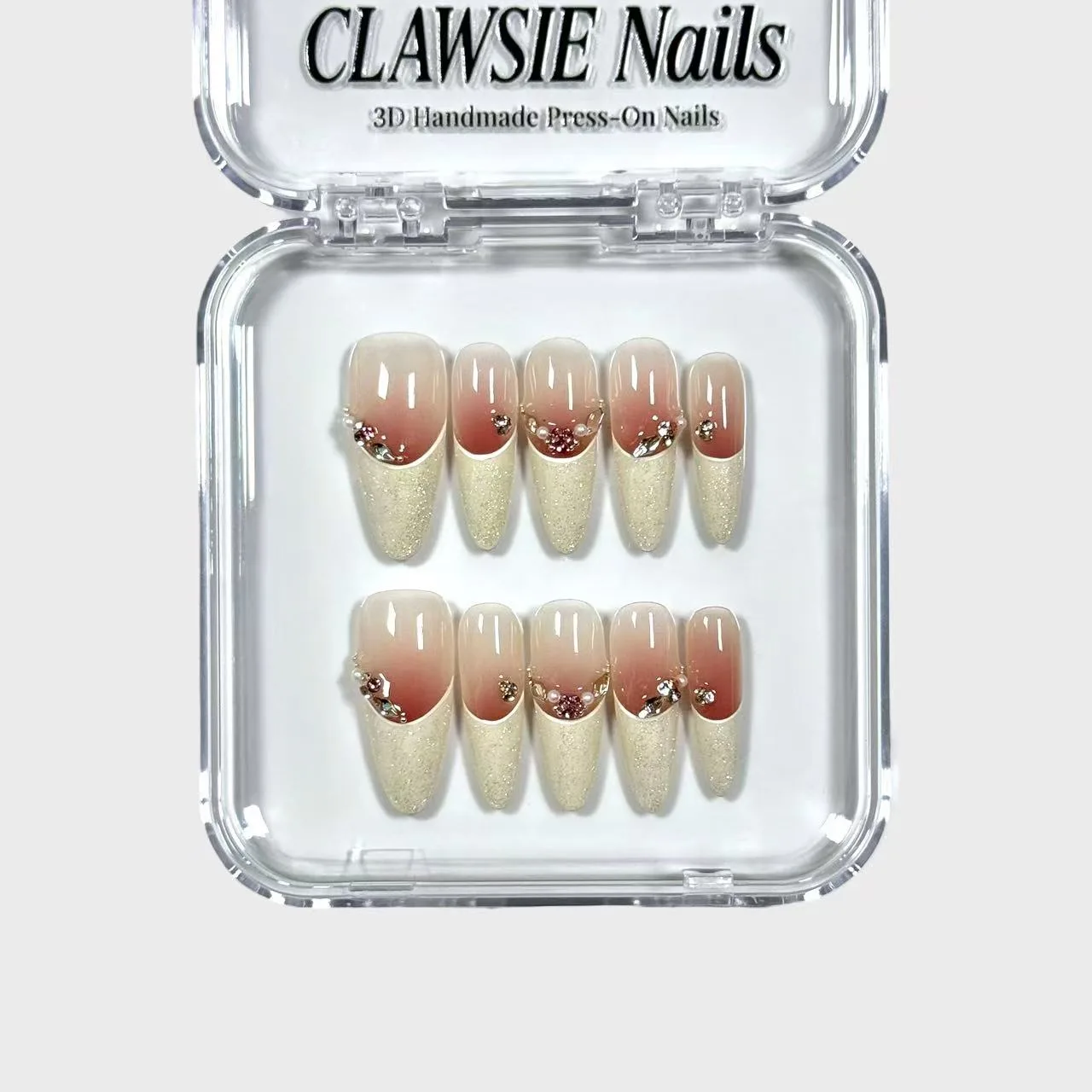
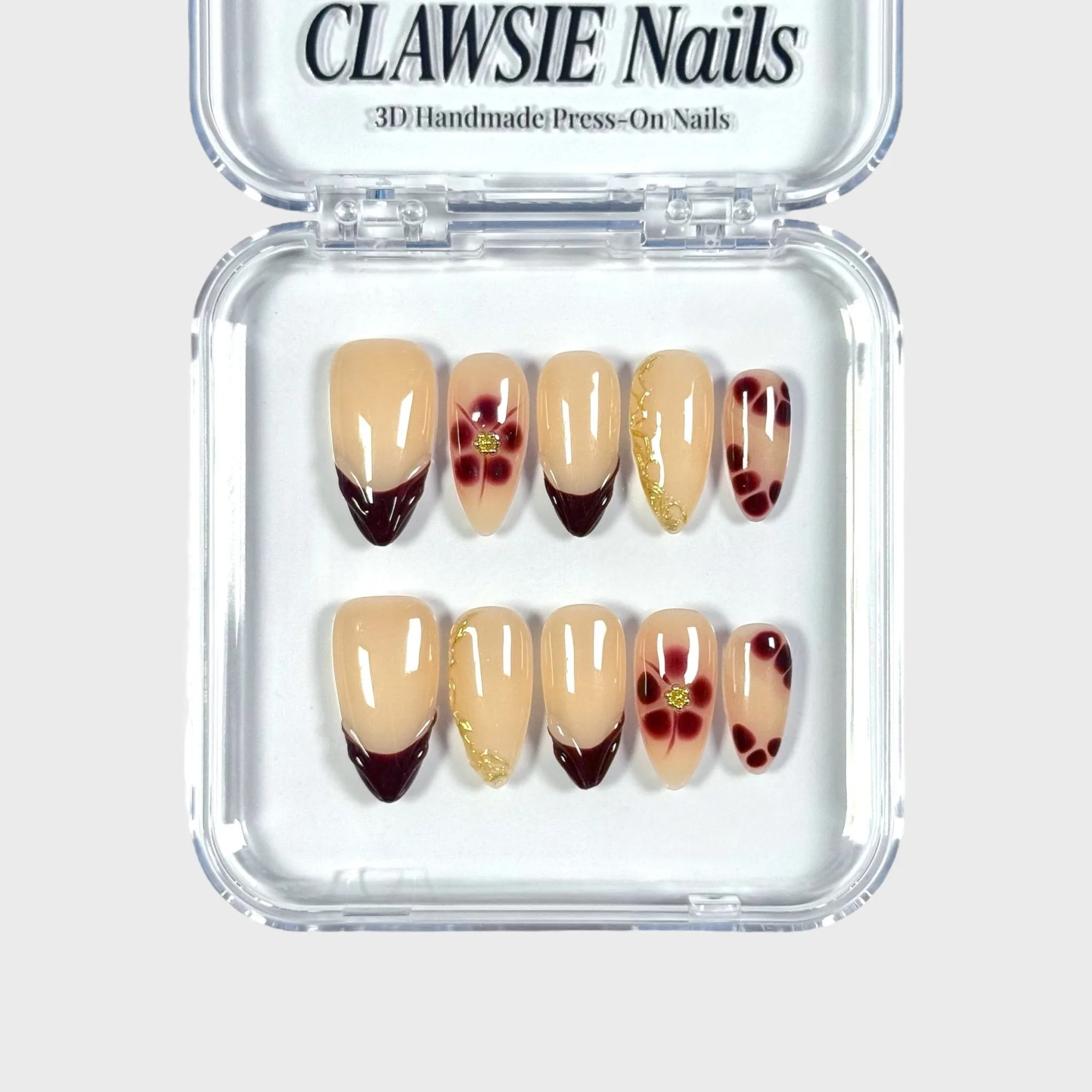
- Silk: Silk long almond press-on nails from CLAWSIE Nails are offered in a simple, size-based selection listed in sizes S and L. With only two sizes, Silk suits you if your measurements land comfortably inside S or L. If your pinky sits between them, expect to file the sidewalls or choose a set with more size options.
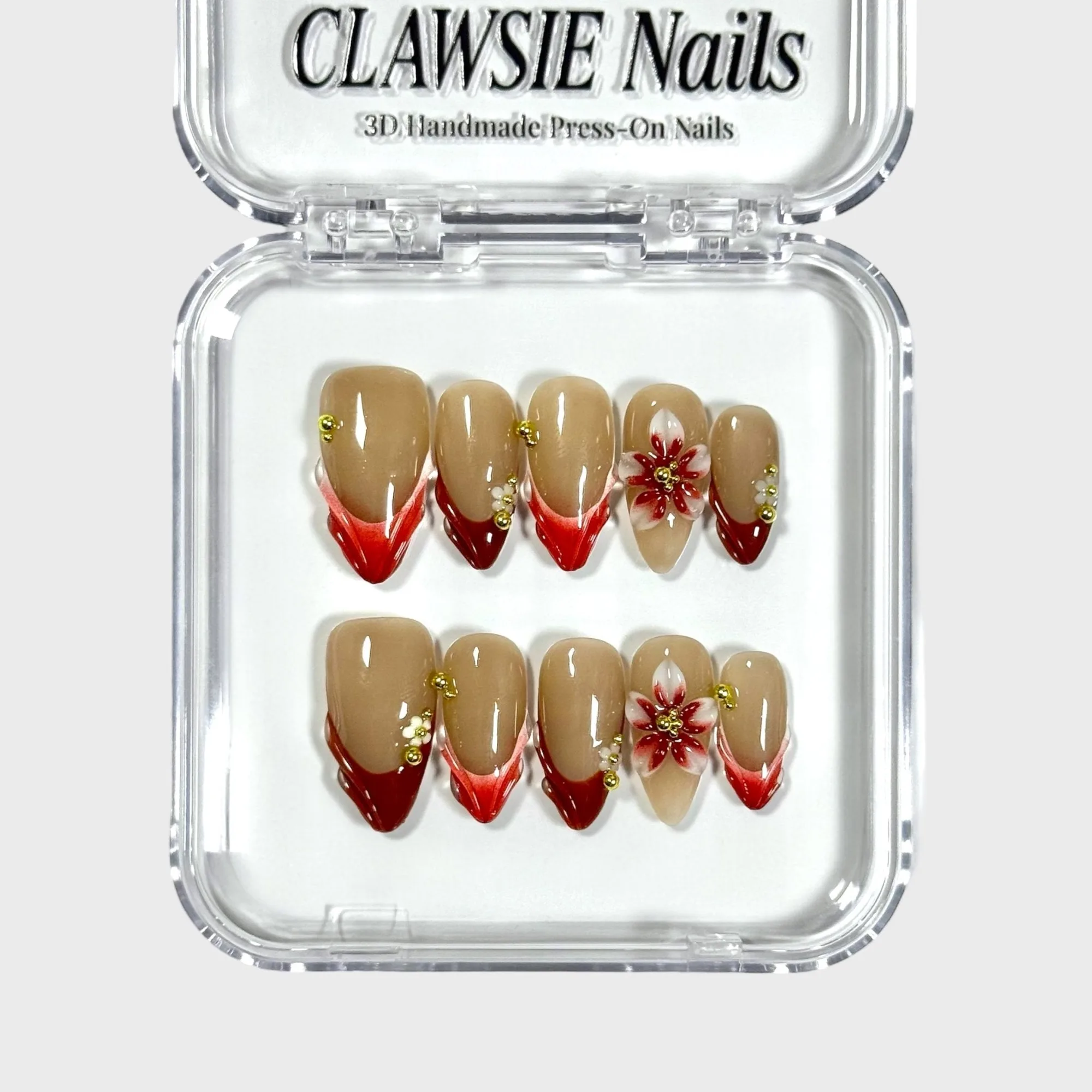
- Red Charm: Red Charm medium almond press-on nails from CLAWSIE Nails come in multiple sizes, with XS and L selectable as options. The XS-to-L range gives small and wide nail beds a real starting point. Measure your pinky against XS and your thumb against L before ordering, since those two nails decide whether the set works.
- Cocoa petal: Cocoa petal from CLAWSIE Nails is a press-on nail set in a warm cocoa-inspired shade, offered in size M. A single-size set is the easiest to buy and the hardest to fit. Cocoa petal works best if your measurements already sit in the middle of the range; otherwise look for a set with selectable sizes.
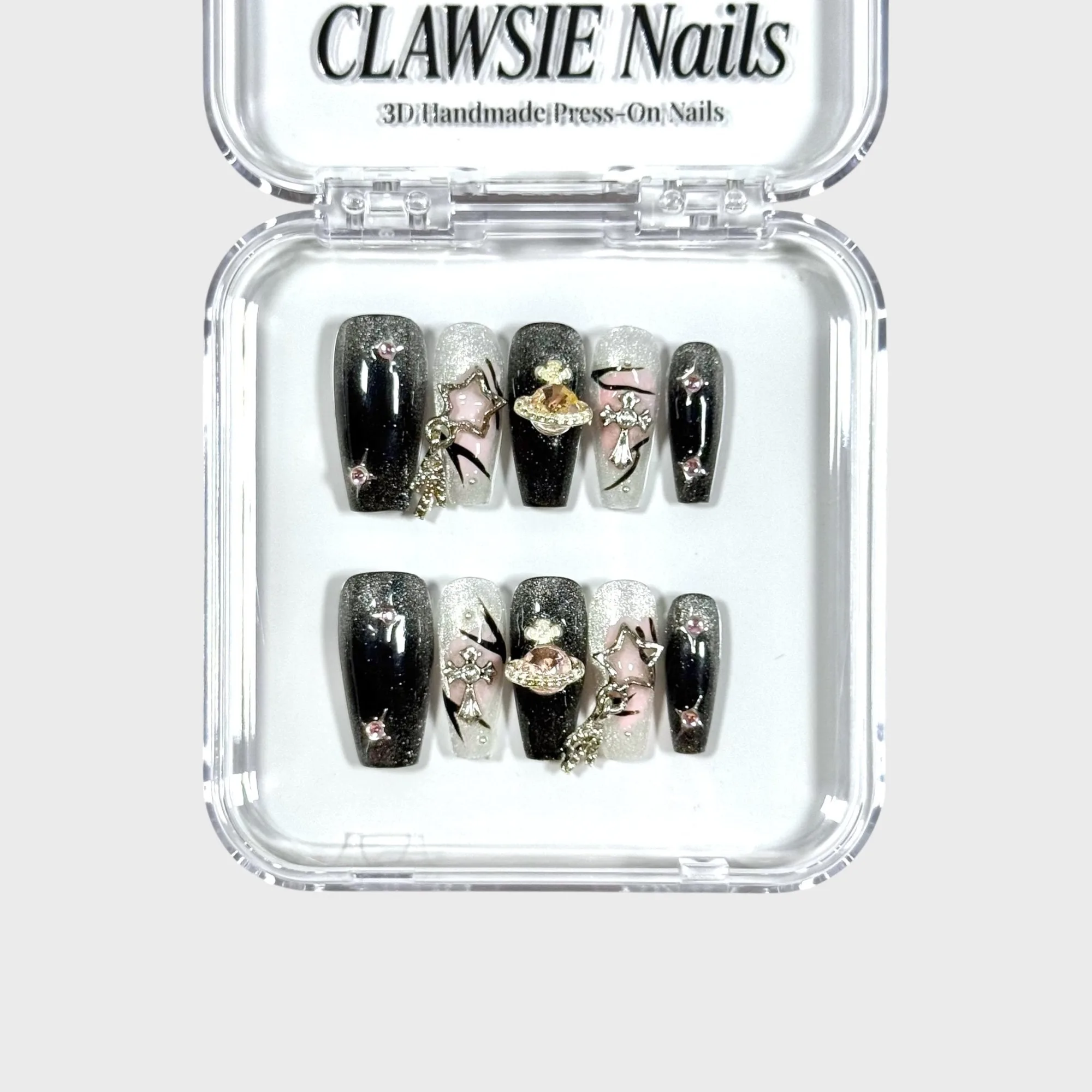
- Noira: Noira medium coffin press-on nails from CLAWSIE Nails are a bold set with dramatic black-to-silver gradients, pink accents, and 3D crystal charms, available with size as a selectable option. Coffin shapes taper toward the tip, so the base width matters more than the tip width. Check your base measurement against the chart first, then decide on the shape.
Who this sizing approach fits
Best for
- Shoppers who have had press-on nails lift or pop off and suspect the size is wrong
- People with wide or small nail beds who need millimeter ranges rather than generic S, M, L labels
- Anyone buying a set online without trying it on first
Not for
- Shoppers who only want a single-evening look and do not mind a looser fit
- People who already know their exact size across several brands and are restocking a favorite
Measure all ten nails in millimeters, compare those numbers to the chart's ranges rather than its letters, and size up when you are between options. Five minutes with a tape measure is the difference between a set that stays put for a week and one that lifts by dinner.