Quick answer
Pretend play kitchen toys support language development because they turn everyday routines into narrated, back-and-forth conversation. When a toddler cooks, serves, and shops with you, they practice naming objects, describing actions, and answering questions in a low-pressure setting. The play kitchen benefits show up fastest when an adult plays along and talks through the steps rather than leaving the child to play silently.
What parents ask most about play kitchens and speech
Kitchen pretend play works as a language loop: the child does something, you name it, and the child tries the word back. Because the props are familiar, toddlers do not need new background knowledge to join in, so more of their attention goes to words and turn-taking.
The answers below cover the questions parents raise most often, from what pretend play research actually shows to how many toys a small space really needs.
How to turn kitchen play into a conversation
Narrate your own actions in short sentences, then pause. A simple line like "I'm chopping the tomato" gives a toddler a word to grab and a gap to fill. If they answer with one word, expand it gently instead of correcting it.
Ask open questions that have more than one right answer, such as what should go in the pan next. This keeps the exchange going longer than yes-or-no questions and gives the child a reason to use a full phrase.
Repeat the same play routine across several days. Familiar scripts let toddlers predict what comes next, which is when new words become easy to slot in.
Choosing kitchen toys that invite talking
Open-ended pieces beat single-purpose gadgets for language. A plain pot, a spoon, and a few food items can become soup, a birthday cake, or a picnic, and each version brings its own vocabulary.
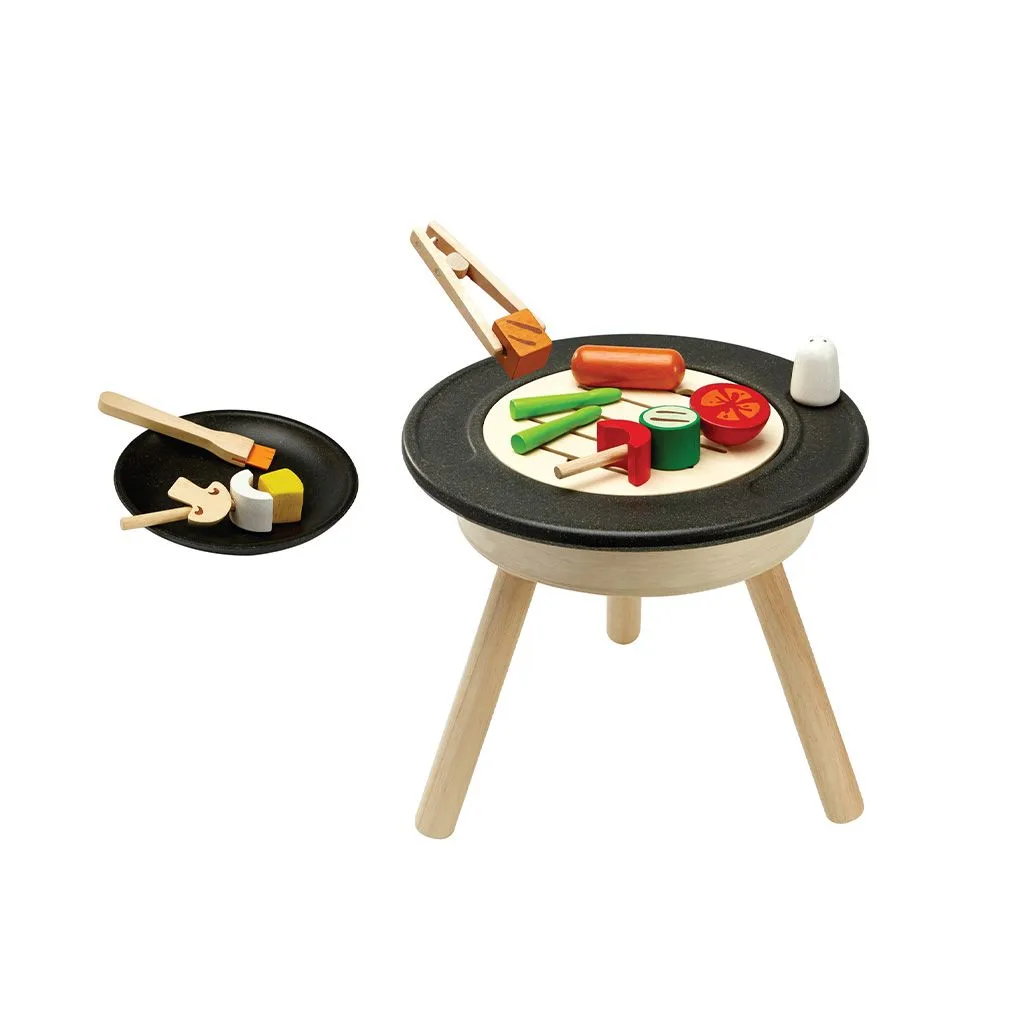
Look for sets with enough named parts to give you something to talk about. The BBQ Playset includes 1 tong, 1 sauce brush, 1 pepper bottle, 2 skewers, 1 sausage, 2 stalks of asparagus, 1 halved tomato, 1 grilled beef wedge, 1 pineapple wedge, and 1 onion, so there are plenty of specific words to practice without the set becoming overwhelming.
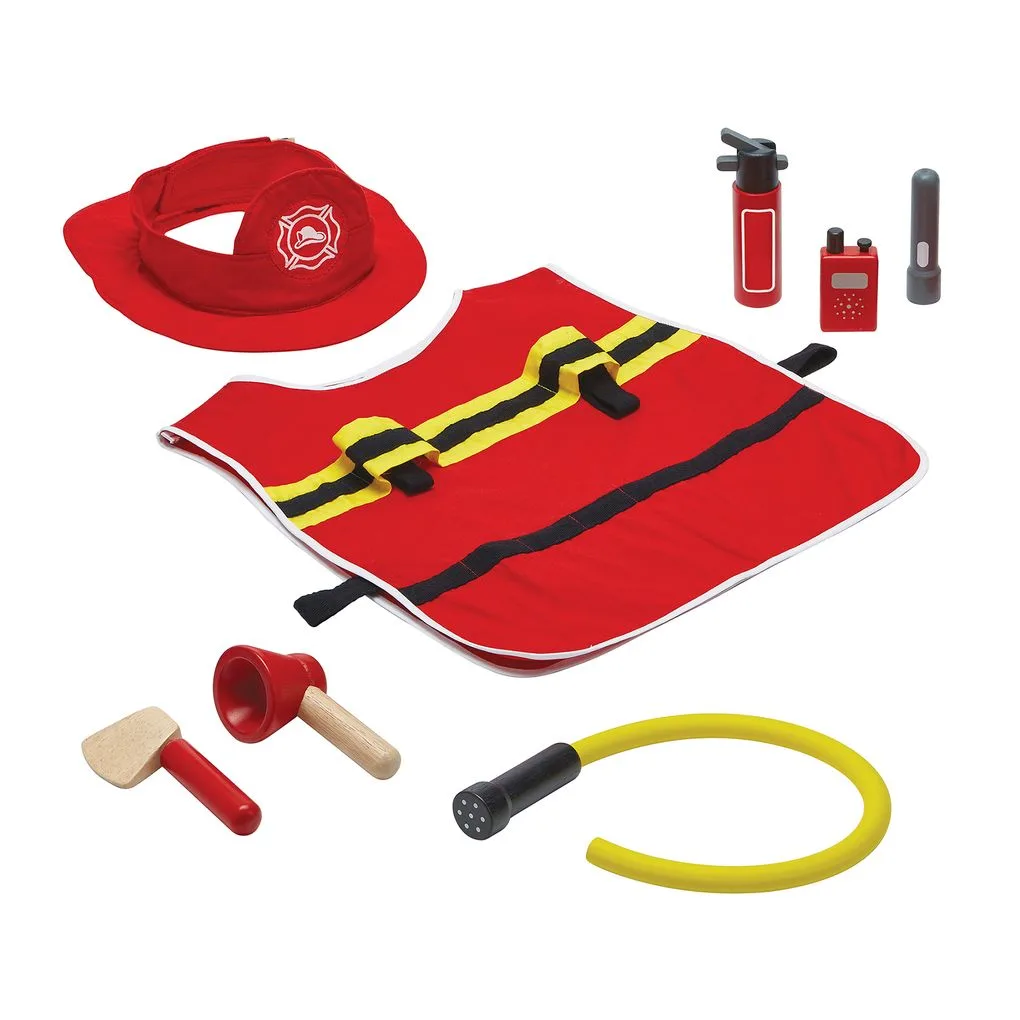
Dressing up adds another layer of language. The Fire Fighter Play Set includes an adjustable helmet and jacket, a megaphone, a fire extinguisher, a water hose, a flashlight, a hatchet, and a walkie talkie, which gives children roles to announce and instructions to give while they play.
Quick answers to common questions
What does pretend play research say about language?
Studies of early childhood play consistently link pretend play with language growth, but the strongest effect comes from play that includes an adult or older child talking with the child, not from the toys alone. Treat the toy as a conversation starter, not a substitute for one.
How many kitchen toys does a toddler need?
A small, rotating selection works better than a full cupboard. Keep a few open-ended pieces out and store the rest, then swap them every week or two so the vocabulary stays fresh. Fewer props, more repetition, more words.
What if my child plays quietly and does not talk?
Join the play and narrate what you are doing without demanding a response. Some children need several sessions of hearing the words before they use them. Model first, expect speech later.
Do kitchen toys replace speech therapy?
No. Play is a supportive everyday activity, not a clinical treatment. If you have concerns about your child's speech or hearing, talk to your pediatrician or a speech-language professional. Use play to support, not to diagnose.
Play kitchen toys that support early language skills
- BBQ Playset: Includes 1 tong, 1 sauce brush, 1 pepper bottle, 2 skewers, 1 sausage, 2 stalks of asparagus, 1 halved tomato, 1 grilled beef wedge, 1 pineapple wedge, and 1 onion, with fully functioning tools. Many named food and tool pieces give you concrete words to repeat during play, and working tools invite the kind of hands-on action that pairs naturally with verbs.
- Fire Fighter Play Set: Includes an adjustable helmet and jacket, megaphone, fire extinguisher, water hose, flashlight, hatchet, and walkie talkie. Role-play props like these let children practice giving instructions, asking for help, and describing a sequence of events, which stretches sentences beyond simple labels.
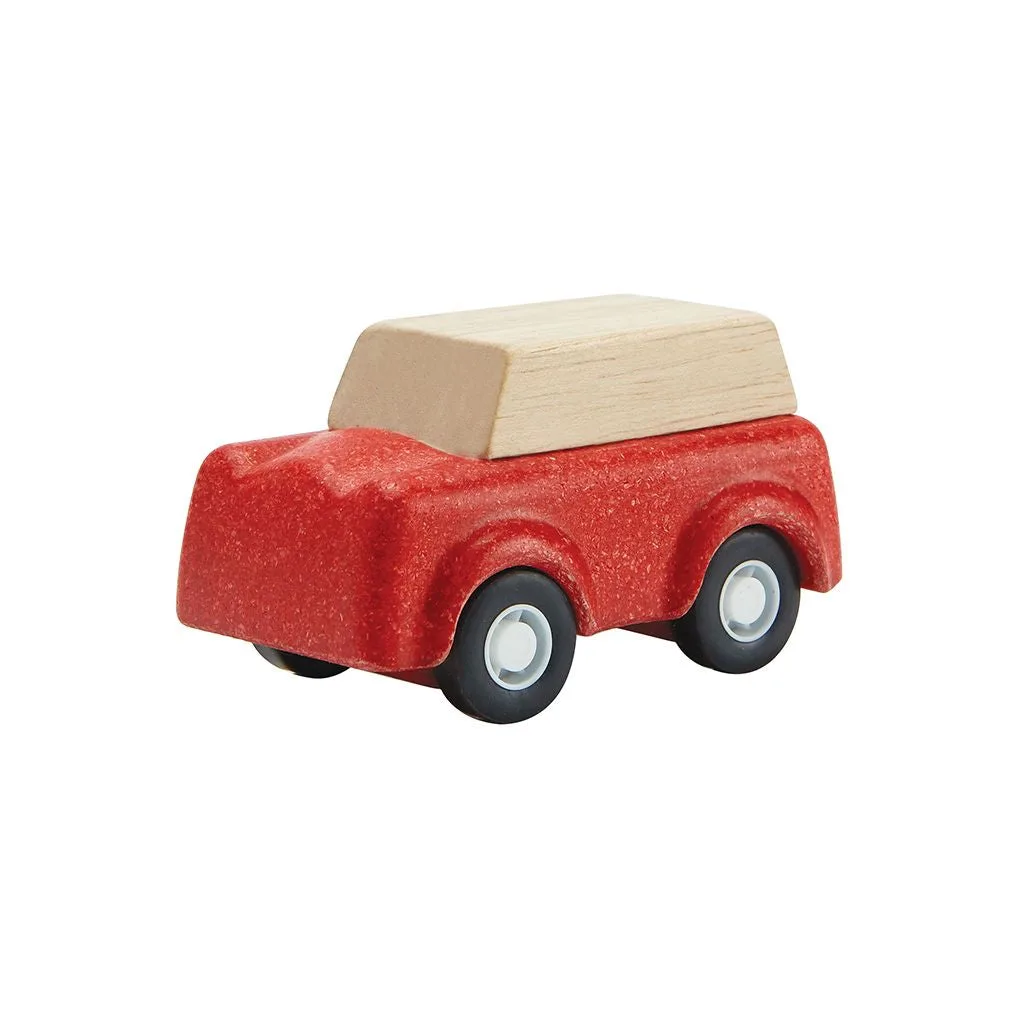
- Red SUV: Made with a combination of solid rubberwood and PlanWood, with fully functional wheels, and designed for open-ended and imaginative play. A simple vehicle can be added to kitchen play as a delivery car, which introduces destination and movement words without adding another large toy to store.