Quick answer
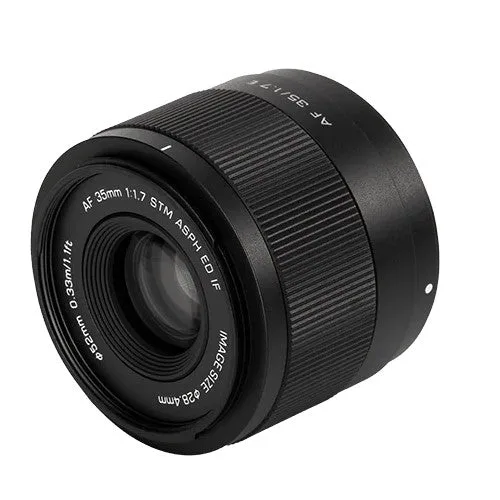
Choose the Viltrox AF 35mm F1.7 if you want a light, bright prime for everyday and low-light shooting on an APS-C camera. Choose the Canon RF 10-20mm f/4L IS STM if you shoot full-frame Canon RF and need an ultra-wide zoom with stabilisation. They are built for different mounts and priorities, so the decision comes down to your camera system and whether you value aperture or framing flexibility.
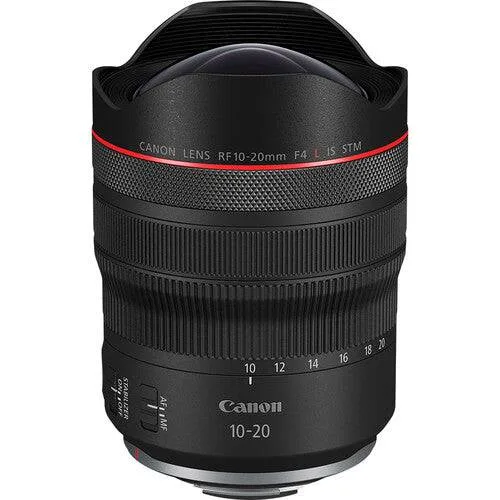
Canon RF 10-20mm f/4L IS STM
The Viltrox AF 35mm F1.7 and the Canon RF 10-20mm f/4L IS STM are both excellent lenses, but they solve different problems. One is a compact APS-C prime with a fast F1.7 aperture; the other is a full-frame ultra-wide zoom with image stabilisation. Comparing them directly is less about which is better and more about which one matches your camera and the way you shoot.
This comparison uses the supplied catalog facts to break down aperture, weight, stabilisation, mount compatibility and price. You will see where each lens shines and where it makes compromises, so you can decide with realistic expectations rather than marketing claims.
Aperture and low-light performance
The Viltrox AF 35mm F1.7 has a large F1.7 maximum aperture, which lets in more light and produces shallow depth of field for dreamy bokeh. On an APS-C body it gives a 53mm equivalent field of view, close to the classic 50mm look. That makes it a strong choice for indoor events, evening street photography and portraits where you want subject separation without adding light.
The Canon RF 10-20mm f/4L IS STM has a constant f/4 maximum aperture across its zoom range. That is two and a half stops slower than F1.7, so it gathers less light. However, it includes image stabilisation rated up to 5 shutter speed stops, or up to 6 stops with compatible cameras, which helps handheld low-light shots. The trade-off is clear: the Viltrox gives you aperture for blur and brightness, while the Canon gives you stabilisation and a wider view.
- If you often shoot moving subjects in low light, a faster aperture like F1.7 freezes motion better than stabilisation alone.
- If you shoot static scenes and can accept slower shutter speeds, the Canon's stabilisation can compensate for its f/4 aperture.
Size, weight and handling
The Viltrox AF 35mm F1.7 weighs just 170g, making it a genuinely portable lens for everyday carry. Its compact size suits small APS-C bodies and means you can keep it mounted without feeling weighed down. The silent STM motor with eye and face detection also makes it discreet for candid photography.
The Canon RF 10-20mm f/4L IS STM is described as lightweight and compact for an ultra-wide zoom, but no specific weight is supplied in the catalog facts. What is clear is that it covers a much wider focal range, which adds optical complexity. If saving every gram matters, the Viltrox has a measurable advantage; if you need the wide zoom range, the Canon's size is part of the trade-off.
- Weigh your camera bag before a trip: the Viltrox's 170g is easy to ignore, while an ultra-wide zoom will be more noticeable.
- Check the supplied weight for the Canon if you plan to carry it all day; the catalog does not list it, so test in store if possible.
Mount compatibility and system fit
The Viltrox AF 35mm F1.7 is optimized for APS-C cameras and is available in different mounts. It will not cover a full-frame sensor without cropping, and it is not available for Canon RF according to the supplied option types. If you shoot Sony E, Fujifilm X or Nikon Z APS-C, this lens is a natural fit. If you shoot full-frame Canon RF, it is not an option.
The Canon RF 10-20mm f/4L IS STM is a full-frame RF-mount lens and is Canon's widest lens among interchangeable lenses for 35mm full-frame compatible cameras. It is not designed for APS-C bodies in the same way, though it can be used on RF APS-C cameras with a narrower field of view. The mount decision is therefore binary: Viltrox for APS-C mirrorless systems, Canon for RF full-frame.
- Confirm your camera mount before buying either lens; the Viltrox is not offered in Canon RF.
- If you use an RF APS-C body, the Canon 10-20mm will behave like a 16-32mm equivalent, which may still be useful but is less extreme.
Price and value
At USD 156.00, the Viltrox AF 35mm F1.7 is an accessible entry into fast prime shooting. It delivers a bright aperture, silent autofocus and ED/nano-coated optics for sharpness, all in a 170g package. For APS-C shooters on a budget, it offers a lot of creative control per dollar.
The Canon RF 10-20mm f/4L IS STM is priced at USD 2699.25, reflecting its L-series build, ultra-wide zoom range and stabilisation. It is a specialist tool for full-frame RF users who need the widest possible view. The price gap is not a flaw; it simply reflects different categories. If you do not need ultra-wide or full-frame coverage, the Viltrox is the more sensible spend.
- Set a budget before comparing: the two lenses are in different price classes and serve different needs.
- Consider whether you will actually use 10mm; if not, a standard prime may deliver more value for your shooting.
Trade-offs at a glance
- Aperture vs stabilisation: The Viltrox F1.7 gives you a brighter aperture for freezing motion and blurring backgrounds. The Canon f/4 relies on up to 6 stops of stabilisation to steady slow handheld shots. Pick the Viltrox for moving subjects in low light; pick the Canon for static scenes where you can use slower shutter speeds.
- Prime simplicity vs zoom flexibility: The Viltrox offers one 53mm-equivalent field of view, which encourages you to move and compose deliberately. The Canon covers 10-20mm, letting you change framing instantly without swapping lenses. If you value a single, fast lens, go prime. If you need multiple wide angles in one lens, go zoom.
- Mount and sensor format: The Viltrox is optimized for APS-C cameras and is not available in Canon RF. The Canon is a full-frame RF lens and is not designed for APS-C-first use. Your camera mount decides this before any other factor. Check compatibility first.
Key product facts
- Viltrox AF 35mm F1.7: F1.7 large aperture delivers dreamy bokeh and excels in low-light conditions. You can shoot handheld in dim light and create stronger background blur without adding a flash.
- Viltrox AF 35mm F1.7: Lightweight design: compact and portable at just 170g. It is easy to carry all day, making it a good match for travel and street photography.
- Canon RF 10-20mm f/4L IS STM: Image stabilisation of up to 5 shutter speed stops and up to 6 stops when paired with compatible cameras. You can handhold slower shutter speeds for low-light shots without a tripod.
- Canon RF 10-20mm f/4L IS STM: Canon's widest lens, offering ultra-wide zoom capabilities from 10mm to 20mm. It captures expansive scenes that a 35mm prime cannot, which is useful for interiors and landscapes.
Which lens should you choose?
Best for
- APS-C mirrorless shooters who want a light, fast prime for everyday, street and low-light photography.
- Photographers who prioritize background blur and a classic 50mm-equivalent field of view over zoom range.
Not for
- Full-frame Canon RF users, because the Viltrox is not available in RF mount and is not designed for full-frame coverage.
- Photographers who need ultra-wide angles for interiors, architecture or expansive landscapes.
The Viltrox AF 35mm F1.7 and Canon RF 10-20mm f/4L IS STM are both capable lenses, but they serve different systems and shooting styles. Match the lens to your camera mount and your most common subjects, and you will get more out of your purchase than by chasing specifications alone.