Quick answer
Buy a prize figure if you want an affordable, recognizable character on your shelf without worrying about paint perfection or resale value. Buy a scale figure if you want sharper sculpting, finer paint work, a larger presence, and are willing to pay more and wait longer for pre-orders. Neither is a mistake—they serve different budgets and display goals.
What actually separates a prize figure from a scale figure
Prize figures are produced as arcade or crane-game rewards in Japan, which is why they usually cost less and are made in larger runs. Scale figures are made for retail sale, often in limited quantities, and are described by a ratio such as 1/6 or 1/7 that indicates their size relative to the character. That ratio is not just a number—it tells you roughly how tall the figure will be and how much shelf space to plan for. A 1/6 scale figure of an adult character commonly stands around 250–280mm, while many prize figures sit closer to 150–200mm. The difference in presence is immediate when you place them side by side.
Prize figure quality: what you get and what you trade
Prize figures have improved a lot, but they still cut costs in ways you can see up close. Expect simpler paint shading, fewer translucent or metallic parts, and seams that are more visible than on a scale figure. The upside is that a prize figure lets you own a character you love for a fraction of the price, and you can display it without anxiety about dust, sunlight, or an accidental bump. If you rotate your display often or collect many characters from one series, prize figures let you build a fuller shelf for the same money.
Scale figure buying guide: where the money goes
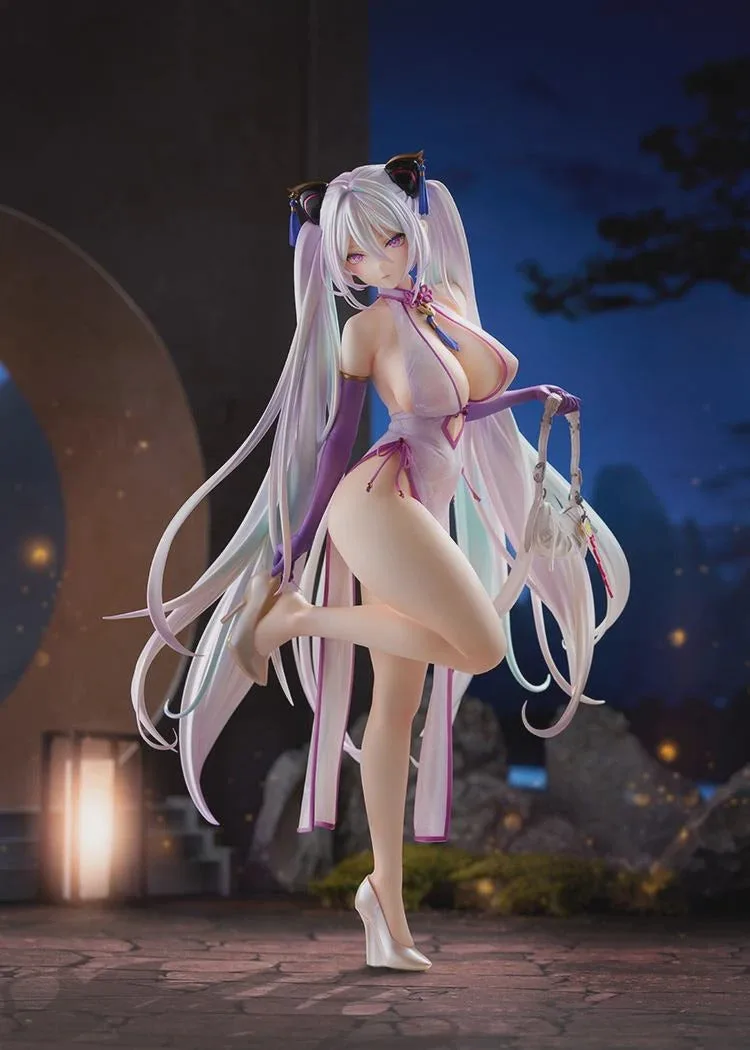
Scale figures cost more because of sculpting, painting, and small production runs. A 1/6 scale figure like the Azur Lane Kearsarge (Springtime Monitoring Ver.) by Phat Company shows what that budget buys: a specified 1/6 scale, a listed height of about 275mm, and PVC/ABS construction. At that size, the figure becomes a centerpiece rather than a filler piece. The trade-off is timing. Scale figures are often announced as pre-orders with a close date and a manufacturer release date many months later, so you are committing early and waiting. If you want the figure now, a prize figure or an in-stock plush is the faster route.
How to read a pre-order listing before you commit
Pre-order listings give you the facts you need to decide, but only if you read them in order. Check the product type first—1/6 scale figure, Nendoroid Doll, plush, or gift box—because that sets your expectations for size and material. Then check the dimensions and release dates. A manufacturer release date is not the same as the US arrival date; the gap can be several months. Finally, note the pre-order close date. Once it passes, the item may not be reordered at the same price. If a specification you care about is not listed, treat that as a limitation rather than assuming a feature. For example, if a listing does not state an option type, do not assume interchangeable parts or accessories are included.
Space, budget, and the long game
Before you buy, measure your shelf. A 275mm scale figure needs vertical clearance and a stable base, and it will dominate a small display. Prize figures are easier to group and rearrange. Budget matters too, but think in terms of cost per year of enjoyment. A scale figure you keep for a decade may cost less per month than a string of impulse prize buys you later resell at a loss. Prize figures generally do not hold value the way limited scale figures do, so buy them because you like looking at them, not as an investment.
Decision rules: pick your figure type in five checks
- Budget under $60 per character: Choose a prize figure or a plush. You can add several characters without stretching your budget, and you avoid the anxiety of handling an expensive piece. Prize figure wins on volume and affordability.
- You want a centerpiece for one character: Choose a scale figure. A 1/6 scale piece at roughly 275mm gives you detail and presence that a prize figure cannot match. Scale figure wins on display impact.
- You dislike waiting or changing release dates: Avoid pre-orders with manufacturer dates far ahead. Check the US arrival date and the pre-order close date before committing. If the wait is longer than your patience, buy in-stock instead.
- You have limited shelf height: Measure first. A 275mm scale figure needs clearance and a stable base; prize figures and small plush items fit tighter spaces. Space, not price, is often the real limit.
- You want to use the item, not just look at it: Consider a collab gift box or plush phone stand. These are official merchandise that serve a daily purpose alongside your display. Function can be a valid reason to buy merch.
Examples from the current catalog
- [Pre-order] Azur Lane - Kearsarge (Springtime Monitoring Ver.) 1/6 Scale Figure Phat Company: 1/6 scale figure of Kearsarge from Azur Lane by Phat Company, approx. H275mm, PVC/ABS, pre-order close 2026-09-30, manufacturer release Aug-2027, US arrival Dec-2027. A concrete example of scale-figure scale, material, and the long pre-order timeline you should expect.
- [Pre-order] Vsinger - Luo Tianyi Moondrop Collab Chinese Version Earphones Collab Gift Box MOONDROP: Vsinger Luo Tianyi Moondrop Collab Chinese Version Earphones Gift Box by MOONDROP, approx. H37mm x L65mm x W28mm, release Feb-2027, includes earphones, film card, ear tips, charging case, cable, and guide cards. Shows that not every anime collectible is a figure; a functional collab item can be a practical alternative when you want something to use, not just display.
Who should buy which
Best for
- New collectors building a broad shelf on a modest budget
- Fans who want a recognizable character without pre-order waiting
- Collectors with limited display space who rotate pieces often
Not for
- Collectors who prioritize fine paint detail and limited-run value
- Buyers who want a large centerpiece that dominates the shelf
- Anyone unwilling to wait months between pre-order and US arrival
![[Pre-order] Vsinger - Luo Tianyi Moondrop Collab Chinese Version Earphones Collab Gift Box MOONDROP](https://xilands.com/api/media/sync/b4/b4660329fc4685be49a8e55acfade63a961b04a9d9e28a77992a4fbfe4e21b54.webp)