Quick answer
Choose the SANDMARC Probe Lens if you shoot macro close-ups, product details, or immersive moving shots where the camera needs to get near a subject. Choose the Telephoto 10x Lens if you need to pull distant subjects closer with 10x optical magnification. They solve opposite problems, so the right pick depends on whether your subject is inches away or far across a valley.
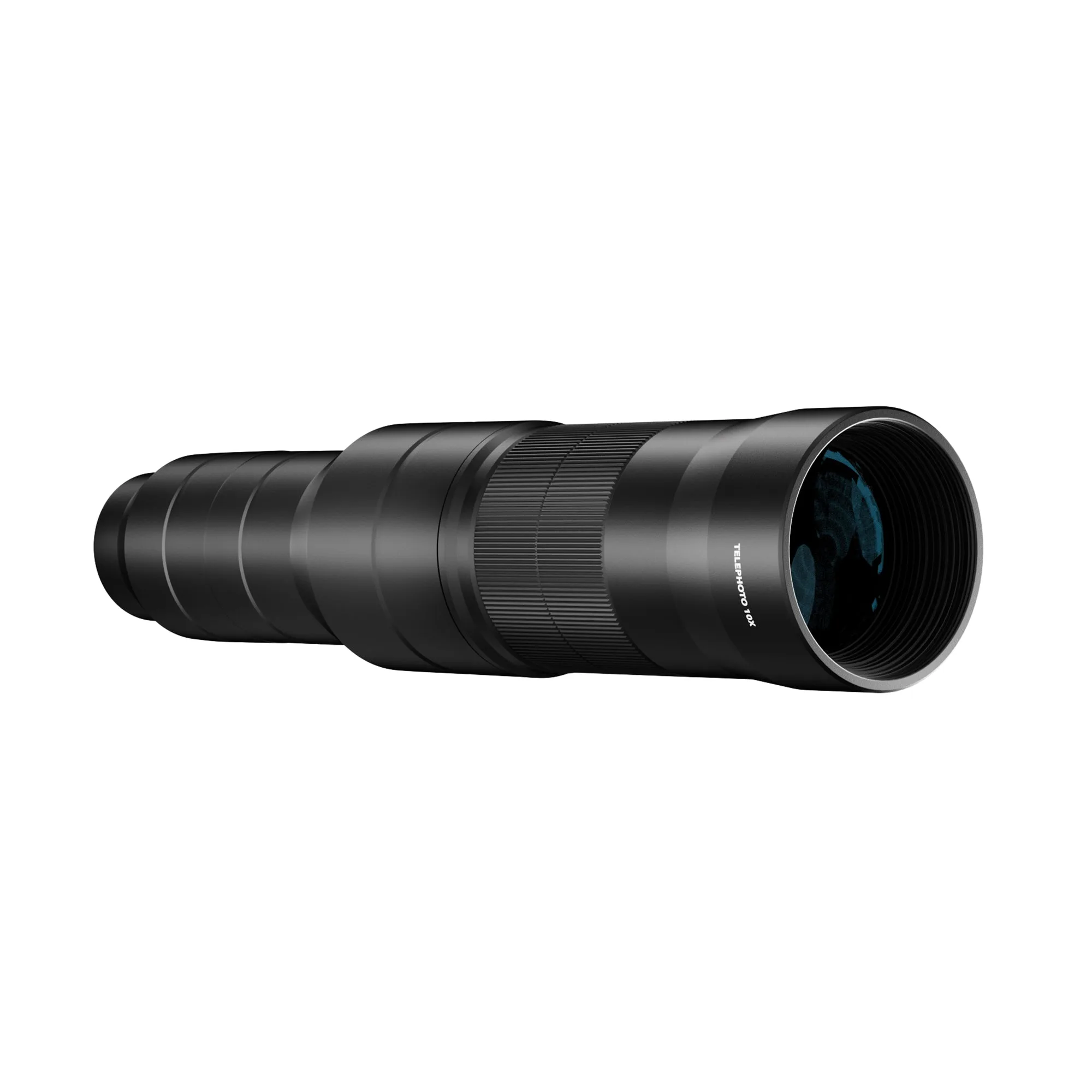
Telephoto 10x Lens
The SANDMARC Probe Lens and the Telephoto 10x Lens both attach to an iPhone, but they push your camera in opposite directions. One is built to get inches from a subject and reveal detail the naked eye skips. The other is built to reach across distance and compress a scene into a tighter frame.
That difference shapes everything: what you can shoot, how you move, and which lens earns a place in your bag. This comparison uses the supplied catalog facts to separate the two, so you can match the lens to the work you actually do rather than the one with the bigger number.
What each lens is designed to do
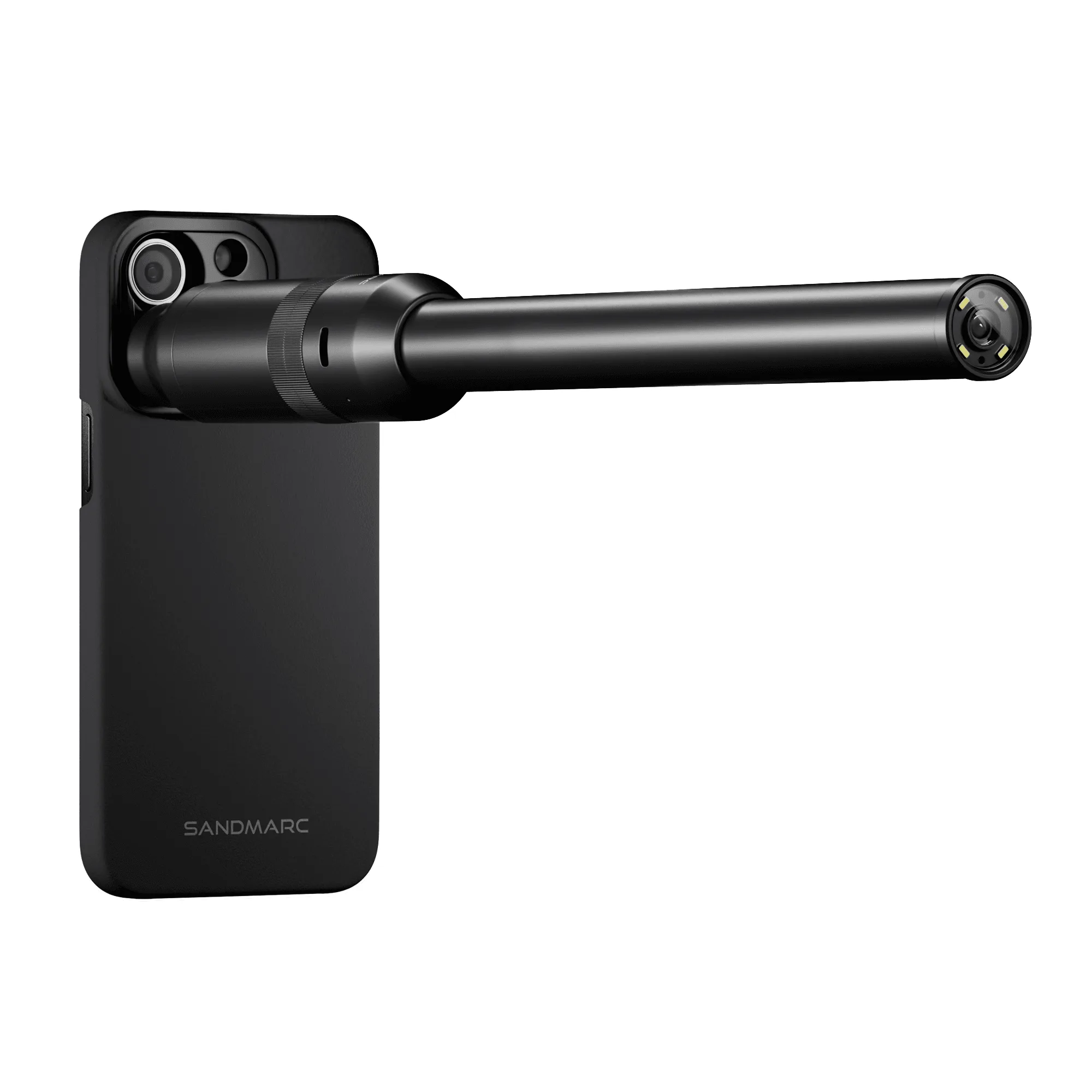
The SANDMARC Probe Lens is a pro-filmmaking tool for iPhone. Its job is close-up and unique perspectives, turning ordinary footage into something immersive. It has a wide focus, a focus wheel for manual precision, and an illuminated tip that stays ready in tight spaces. That combination points to macro-style work: food, products, insects, textures, and any shot where the camera needs to travel somewhere your head cannot.
The Telephoto 10x Lens is the opposite tool. It gives you 10x optical magnification with a 240mm full-frame equivalent, built from premium multi-coated glass. SANDMARC calls it the most powerful zoom lens yet, aimed at distant landscapes, wildlife, and intimate portraits with natural depth-of-field. It also includes the world's thinnest lens case mount. Where the Probe goes in, the Telephoto reaches out.
- Probe Lens: think inches from the subject, manual focus pull, built-in light.
- Telephoto 10x: think distance, compression, and a 240mm equivalent field of view.
Close-up work: where the Probe Lens wins
If your shot list includes macro detail, the Probe Lens is the clear pick. The wide focus and focus wheel let you set focus by hand instead of hoping autofocus finds the right plane. The illuminated tip matters more than it sounds: when the lens is inches from a subject, it can block the light you need, so a built-in light keeps the shot usable.
This is also the lens for perspective tricks. Sliding the camera along a surface, through a gap, or past an object creates motion that a normal iPhone lens cannot reproduce. The trade-off is that the Probe is not a distance tool. Point it at a mountain and you will not get a magnified view; you will get a wide, close-range perspective instead.
- Best subjects: products, food, textures, insects, tabletop scenes, creative transitions.
- Plan for manual focus: the focus wheel rewards a slow, deliberate pull.
Long-range work: where the Telephoto 10x wins
The Telephoto 10x Lens exists for reach. With 10x optical magnification and a 240mm full-frame equivalent, it brings distant subjects into a tighter frame while preserving natural depth-of-field. That makes it the practical choice for landscapes, wildlife, and portraits where you want background separation without standing in the subject's space.
The trade-off is working distance. A 240mm equivalent view is narrow, so framing takes more care and small movements are magnified. It is not a macro tool, and it will not give you the Probe's immersive close-up perspective. If your subject is small and far away, though, no amount of moving closer replaces optical magnification.
- Best subjects: distant landscapes, wildlife, candid portraits, architectural details.
- Expect a narrow field of view: brace the phone or use a support for sharp results.
How to decide between them
Start with the distance between your lens and your subject. If the answer is inches, the Probe Lens is the tool. If the answer is meters or more, the Telephoto 10x is the tool. Most shooters have one dominant distance in their work, and that single question settles the choice faster than any spec sheet.
If you shoot both, treat them as a pair rather than competitors. The Probe covers the intimate, detailed end of your footage; the Telephoto covers the distant, compressed end. Buying one first is reasonable, but be honest about which distance shows up in most of your shots. The catalog facts do not list every possible specification, so check the product pages for the mounting and compatibility details that apply to your exact iPhone model before ordering.
- Write down your last ten shots: how far was the subject?
- Match the lens to the majority, not the exception.
Trade-offs to weigh before you buy
- Subject distance: The Probe Lens is built for close-up and unique perspectives; the Telephoto 10x is built for distant landscapes, wildlife, and portraits. Pick the lens that matches the distance in most of your shots.
- Focus control: Both lenses use a focus wheel for manual precision, so neither relies on autofocus alone. Manual focus rewards deliberate shooting; practice before a paid job.
- Lighting on set: The Probe Lens includes an illuminated tip that stays ready, which helps when the lens sits inches from a subject and blocks light. For macro work, the built-in light reduces the gear you need to carry.
- Field of view: The Telephoto 10x gives a 240mm full-frame equivalent, a narrow view that compresses distance and magnifies small movements. Brace the phone or use support when shooting at 10x.
Product facts at a glance
- https://sandmarcefg.com/products/probe-lens-edition-iphone-13-pro-max-baadeebb9a977a5028f83a16-1359104https://sandmarcefg.com/products/probe-lens-edition-iphone-13-pro-c1cfd3f801f8f1c9833f53e0-1359094Probe Lens Edition - iPhone 13 Pro Max: A pro-filmmaking tool for iPhone with wide focus, a focus wheel for manual precision, and a built-in illuminated tip. The manual focus wheel and built-in light make close-range shots controllable and usable when the lens blocks ambient light.
- Telephoto 10x Lens Edition - iPhone 15: 10x optical magnification with a 240mm full-frame equivalent, made from premium multi-coated glass, and includes the world's thinnest lens case mount. True optical reach at 240mm lets you frame distant subjects without moving closer, while the slim case mount keeps the setup pocketable.
- Telephoto 6x Lens Edition - iPhone Duo: True 6x optical magnification with an adjustable focus wheel, designed for long-range photography while preserving the full resolution of the native sensor. A middle ground for shooters who want zoom reach with manual focus control but do not need the full 10x magnification.
- Fisheye Lens Edition - iPhone 13 Mini: A 10mm multi-coated lens with a 5x ultra-wide field of view, nearly 2x the iPhone Ultra-Wide, and includes the world's thinnest lens case plus a clip-on mount. A third option for shooters who want an ultra-wide, artful perspective rather than macro detail or telephoto reach.
Which lens fits your work
Best for
- Filmmakers and creators shooting macro close-ups, product details, or immersive moving shots
- Shooters who need manual focus control and a built-in light at close range
- Anyone whose subjects are inches from the lens rather than far away
Not for
- Shooters who mainly photograph distant landscapes, wildlife, or far-off subjects
- Anyone expecting optical magnification of far-away scenes from a close-up lens
- Buyers who want one lens to cover both macro and long-range zoom
The Probe Lens and the Telephoto 10x Lens are not rivals; they are answers to different distances. Match the lens to where your subject sits, check the product page for your iPhone model's compatibility, and the decision becomes simple.