Quick answer
Buy the ProMaster Dually Charger if you shoot with Canon LP-E17 batteries and want to charge two at once from a USB power source you already carry. It is compact, stores its own USB-A cable, and can charge one battery when you only need a single top-up. If you need the fastest possible turnaround at home, a wall-powered dual charger is usually the better fit.
What the Dually Charger actually solves
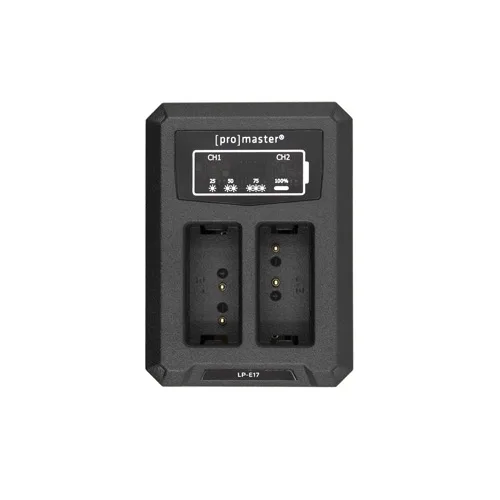
The ProMaster Dually Charger - USB for Canon LP-E17 is a two-bay charger that runs from USB power rather than a wall outlet. That single design choice changes how you pack and where you can recharge. Instead of hunting for a mains socket, you can draw power from a USB AC adapter, a laptop, or a power bank. The USB-A input cable stores in the bottom of the charger, so there is no loose cord to lose in a camera bag.
- Two batteries charge at the same time, or you can charge just one.
- USB-A input cable is built in and tucks into the charger base.
- Compact enough to live in a bag pocket next to spare LP-E17 batteries.
Charging time and what affects it
The supplied catalog information for this charger does not list a specific charge time, and that is a real limitation when you are comparing options. Charge time depends on the USB power source you connect, the remaining charge in each LP-E17 battery, and whether one or two batteries are charging at once. A higher-output USB AC adapter will generally charge faster than a low-power laptop port, but the exact minutes are not published in the product data. If a precise charge time is critical for your workflow, treat that missing number as a reason to compare against a charger that publishes full specifications.
Where a dual battery charger earns its place
A dual battery charger matters most when you rotate through several LP-E17 batteries in a day. Charging two at once means you can finish a shoot, put both depleted batteries on the charger, and have a pair ready for the next session instead of waiting through two separate cycles. The trade-off is size and power dependence: a dual charger is larger than a single-battery travel charger, and USB power means you need a suitable adapter or power bank on hand. If you rarely drain more than one battery per outing, a single charger is lighter and simpler.
USB-A versus USB-C: check your cables
This charger uses a USB-A input, not USB-C. That is worth checking before you buy, because a USB-C camera battery charger would plug directly into newer laptops and wall adapters with a C-to-C cable. With the Dually Charger you need a USB-A port or a USB-A-to-USB-C cable to connect to a C-only power source. The built-in cable removes one point of failure, but it also means you cannot swap in a longer cable if the charger needs to sit farther from the outlet. Match the charger to the ports you already own.
Pairing the charger with the rest of your kit
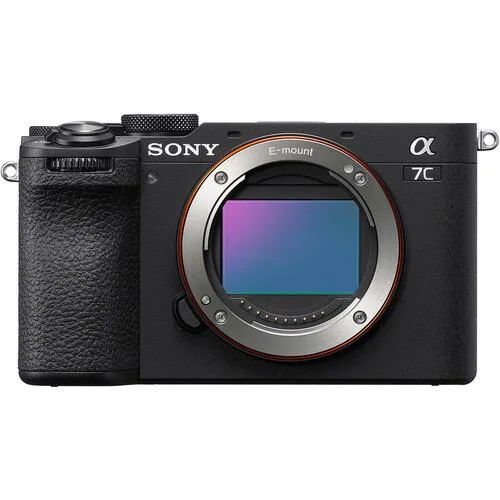
If you shoot with a Sony a7C II Mirrorless Camera, this charger is not the right match because it is built for Canon LP-E17 batteries. The a7C II uses a different battery type, and its 33.0 effective megapixel full-frame sensor and video features make it a camera you will likely run through several batteries in a session. Buy the charger that matches your camera's battery, not the one that matches your bag. For Canon LP-E17 shooters, the Dually Charger is a straightforward companion; for Sony shooters, look for a charger made for the battery in that body.
Decision rules for buying the Dually Charger
- Choose the Dually Charger if you shoot Canon LP-E17 batteries: The charger is built specifically for Canon LP-E17 batteries. Confirm your camera or spare batteries use LP-E17 before ordering. Wrong battery type means the charger will not fit your batteries.
- Choose it if you want to charge from USB power: It runs from a USB AC adapter, laptop, or power bank, and the USB-A input cable stores in the charger base. Carry a USB power source that matches the USB-A input.
- Choose a wall-powered charger if charge speed is your priority: The catalog does not list a charge time for this charger, and USB power output affects how fast it charges. A wall charger with published specs may be faster. If you need predictable fast charging, compare against a mains-powered option.
- Skip it if you only ever drain one battery per shoot: A dual charger is larger than a single-battery charger. If one battery covers your sessions, a smaller single charger is easier to pack. Match charger size to how many batteries you actually rotate.
Product facts
- Promaster Dually Charger - USB for Canon LP-E17: The ProMaster Dually Charger can charge two batteries simultaneously, or just one if required. Two-bay charging shortens turnaround when you rotate multiple LP-E17 batteries in a single day.
- Promaster Dually Charger - USB for Canon LP-E17: It has a USB-A input cable that stores itself in the bottom of the charger and draws power from USB sources such as a USB AC adapter, laptop, or power bank. You can recharge from a laptop or power bank instead of a wall outlet, and the built-in cable reduces clutter in your bag.
- Sony a7C II Mirrorless Camera (Black): The Sony a7C II Mirrorless Camera has a full-frame CMOS image sensor with 33.0 effective megapixels. It is a different camera system with a different battery type, so the LP-E17 Dually Charger is not the matching charger for it.
Who should buy it
Best for
- Canon LP-E17 shooters who rotate two or more batteries in a day
- Photographers who want to recharge from a laptop or power bank instead of a wall outlet
- Travelers who want a compact dual charger with a built-in cable
Not for
- Sony a7C II shooters or anyone using a battery other than Canon LP-E17
- Buyers who need a published, guaranteed charge time before purchasing
- Users who only drain one battery per outing and want the smallest possible charger