Quick answer
For most home gardens, a pruning starter kit should include three core tools: secateurs for small cuts, loppers for medium branches, and a pruning saw for larger limbs—plus a wound dressing to protect cuts. Skip specialty tools until you actually need them.
Why start with just three tools?
It's tempting to buy a big garden tool set with everything from hedge shears to pole pruners. But most of those extras gather dust. A focused kit covers 90% of routine pruning tasks: shaping shrubs, deadheading, removing dead wood, and cutting back perennials.
Starting small also lets you invest in better quality. A good pair of secateurs will last decades if sharpened and oiled, while a cheap all-in-one set often fails within a season.
The trade-off: bypass secateurs vs. anvil
Secateurs come in two main types: bypass and anvil. Bypass blades slide past each other like scissors, giving a clean cut that's ideal for live wood. Anvil blades crush against a flat plate, which can damage stems but is better for dead wood and tough, dry branches.
For general pruning, bypass is the safer default. If you mostly cut dry, brittle wood, anvil may suit you better—but accept the higher risk of crushing live growth.
Decision rules: choose your pruning tools
- Branch diameter under ½ inch (1.25 cm): Use secateurs (bypass for live growth, anvil for dead wood). This is your everyday tool for deadheading, shaping, and cutting soft stems. Invest in the best secateurs you can afford—they're the most-used tool.
- Branch diameter ½ to 2 inches (1.25–5 cm): Use loppers. Their long handles give extra leverage, making cuts easier on your wrists. Choose bypass loppers for live branches, anvil for dead ones. Test the weight and grip before buying—comfort matters for repetitive cuts.
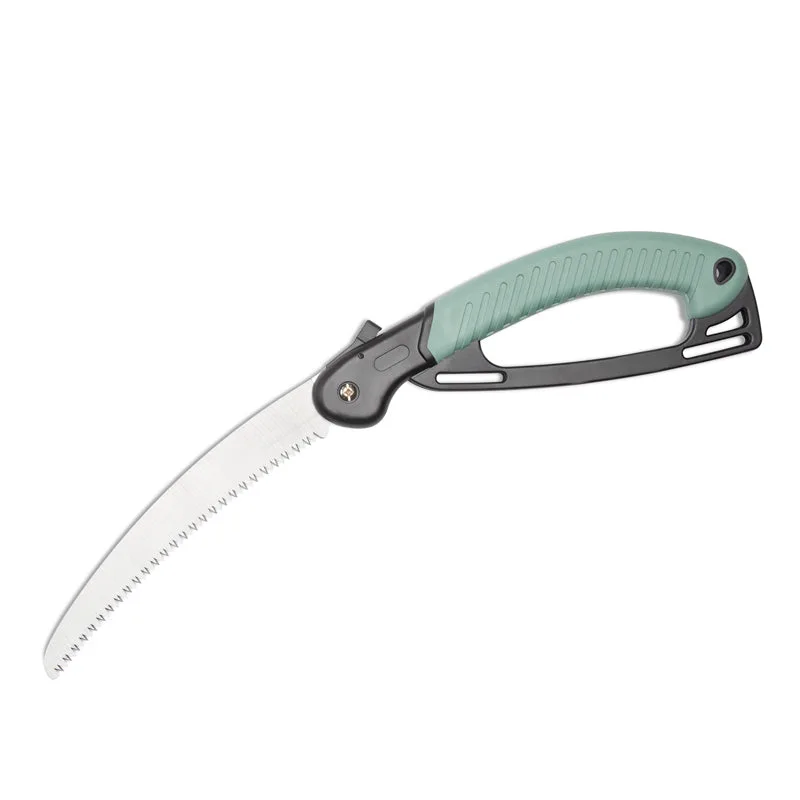
- Branch diameter over 2 inches (5 cm): Use a pruning saw. A saw makes clean cuts without crushing the wood. For very large limbs, consider a professional arborist instead of DIY. Always cut just outside the branch collar to promote healing.
- After making a cut: Apply tree wound dressing to large cuts (over 2 inches) to protect against pests and disease. Small cuts usually heal naturally without dressing. Use dressing sparingly—only on cuts that need extra protection.
What's in the Pruning Starter Kit
-
Pruning Starter Kit: The kit includes a pruning saw for larger branches too thick for loppers, loppers for medium branches up to about 2 inches in diameter, and tree wound dressing to protect and seal cuts. This combination covers the full range of home pruning jobs, so you won't need to buy separate tools later.
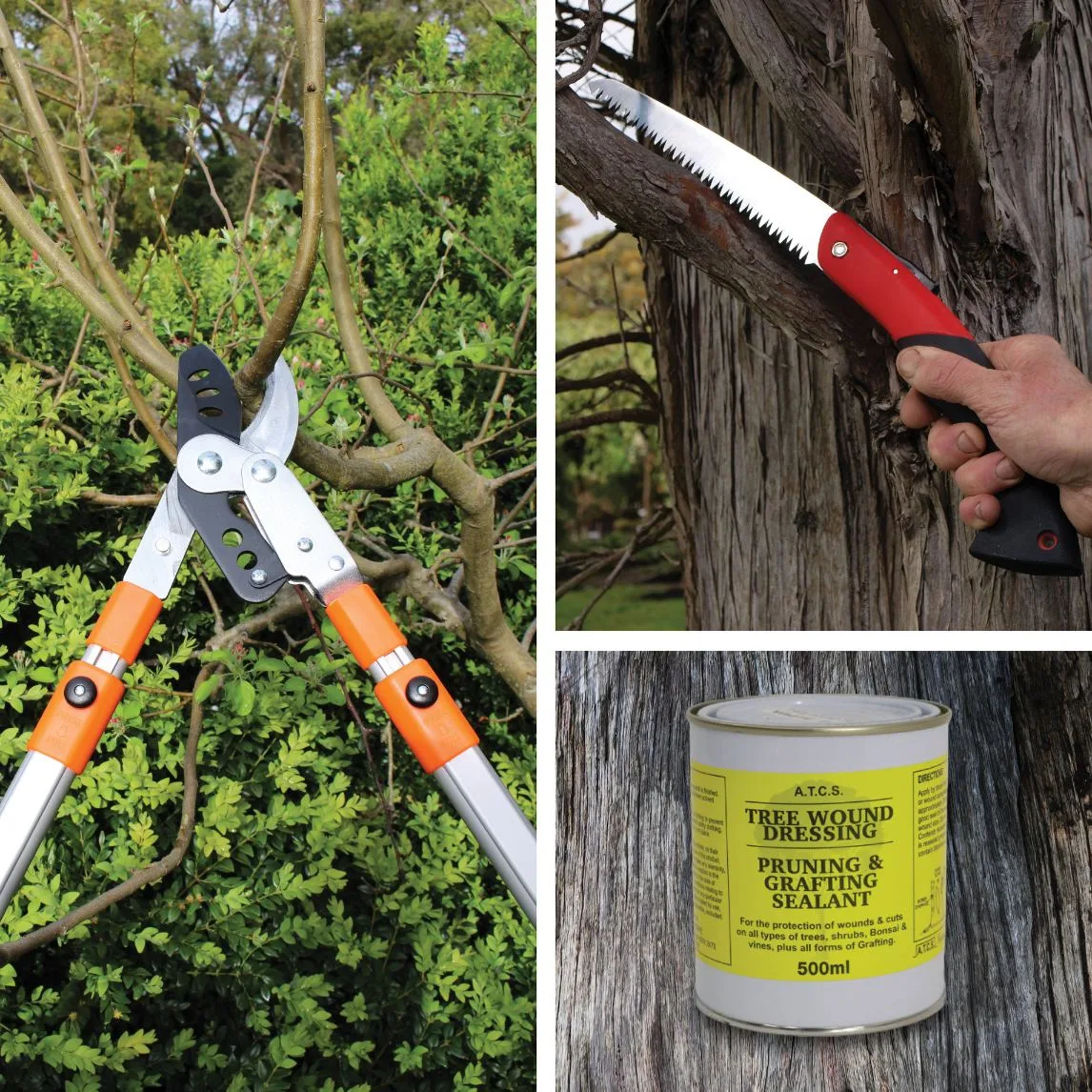
Pruning Starter Kit
Who is this kit for?
Best for
- Home gardeners who prune shrubs, small trees, and perennials a few times a year
- Beginners who want a practical, no-fuss set without overspending
Not for
- Professional landscapers or arborists who need heavy-duty, specialized tools
- Gardeners with only very small plants (under ½ inch) who may only need secateurs