Quick answer
Choose a PTZ camera when one device must cover a wide or changing area, such as a large yard or an open driveway, because a 360-degree pan-tilt-zoom design can follow activity instead of staring at one spot. Choose fixed cameras when you need dependable, low-maintenance coverage of specific zones like a front door, gate, or side path. Many properties work best with both: PTZ for the open ground and fixed cameras for predictable choke points.
How coverage really differs between PTZ and fixed cameras
A fixed camera sees one framing all the time. That is a strength when the important activity always happens in the same place, like a walkway or a back gate. It is a weakness when someone can walk around the edge of the frame or when a vehicle parks just outside the view.
A PTZ camera pans, tilts, and zooms, so a single unit can cover a wider area and change its view on demand. A 360-degree security camera can sweep a yard without you mounting four separate units. The trade-off is that the camera is only looking one direction at a time, so a PTZ that is zoomed in on the driveway may miss movement at the side fence unless it is set to return to a home position or patrol between presets.
Wiring, power, and installation trade-offs
Fixed cameras are usually the simpler install because you aim them once and leave them. PTZ cameras add setup decisions: where is the home position, how far should it patrol, and how much zoom is useful before the image gets too tight to identify anyone.
Power and cabling also shape the choice. A plug-in PTZ needs an outlet near the mount, while a PoE system runs data and power over a single cable to a recorder. Solar PTZ cameras avoid an outlet run but depend on sunlight and battery reserves. None of these approaches is universally better; each shifts the work from installation day to maintenance day.
Cost and expansion math
A single PTZ often costs more than a single fixed camera, but it can replace several fixed units if the goal is broad awareness rather than simultaneous coverage. The real comparison is cost per covered zone, not cost per camera.
If you need to watch four separate areas at the same time, fixed cameras are usually the honest answer, because four fixed views are always recording four views. If you need to watch one large area that changes through the day, one PTZ plus a couple of fixed cameras at entry points is often the more practical spend.
PTZ vs fixed: the trade-offs that decide it
- Coverage vs simultaneity: A PTZ covers more ground with fewer cameras but sees one direction at a time. Fixed cameras see every zone at once but only the zones you aim them at. If two things must be recorded at the same moment, use fixed cameras for at least those two zones.
- Install simplicity vs ongoing tuning: Fixed cameras are aimed once. PTZ cameras need home positions, patrol paths, and zoom limits that you may adjust seasonally. Budget an evening for PTZ setup, not just the mount.
- Upfront cost vs cost per zone: One PTZ can cost more than one fixed camera but less than several fixed cameras covering the same open area. Compare total system cost for the zones you actually need, not the price of a single camera.
- Power and cable reality: Plug-in and PoE cameras need a power source or cable run. Solar PTZ cameras avoid that but depend on sunlight and battery reserves. Map your outlets, cable paths, and sun exposure before choosing the camera type.
Defender options that show the trade-off
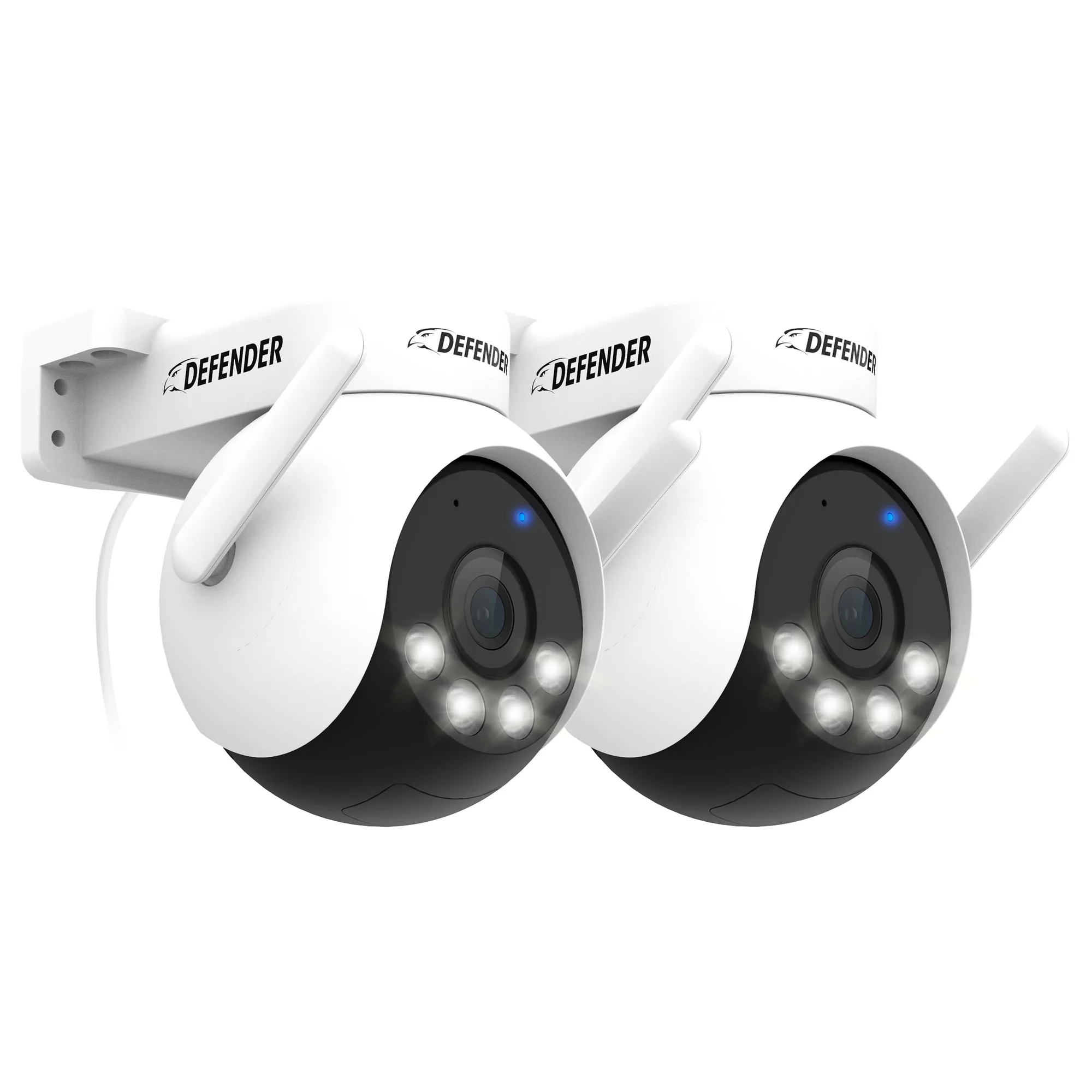
- AI POWERED 4K Everwatch PTZ 360° Wi-Fi Plug-in Power Security Camera, 2 Pack: The Defender AI POWERED 4K Everwatch PTZ 360° Wi-Fi Plug-in Power Security Camera arrives as a two-camera pack with 4K resolution, AI-enhanced video processing, a 360° pan-tilt-zoom design, and built-in Wi-Fi. This is the flexible-coverage path: two PTZ cameras can sweep wide areas, and Wi-Fi plus plug-in power keeps the install simple as long as you have outlets near the mounts.
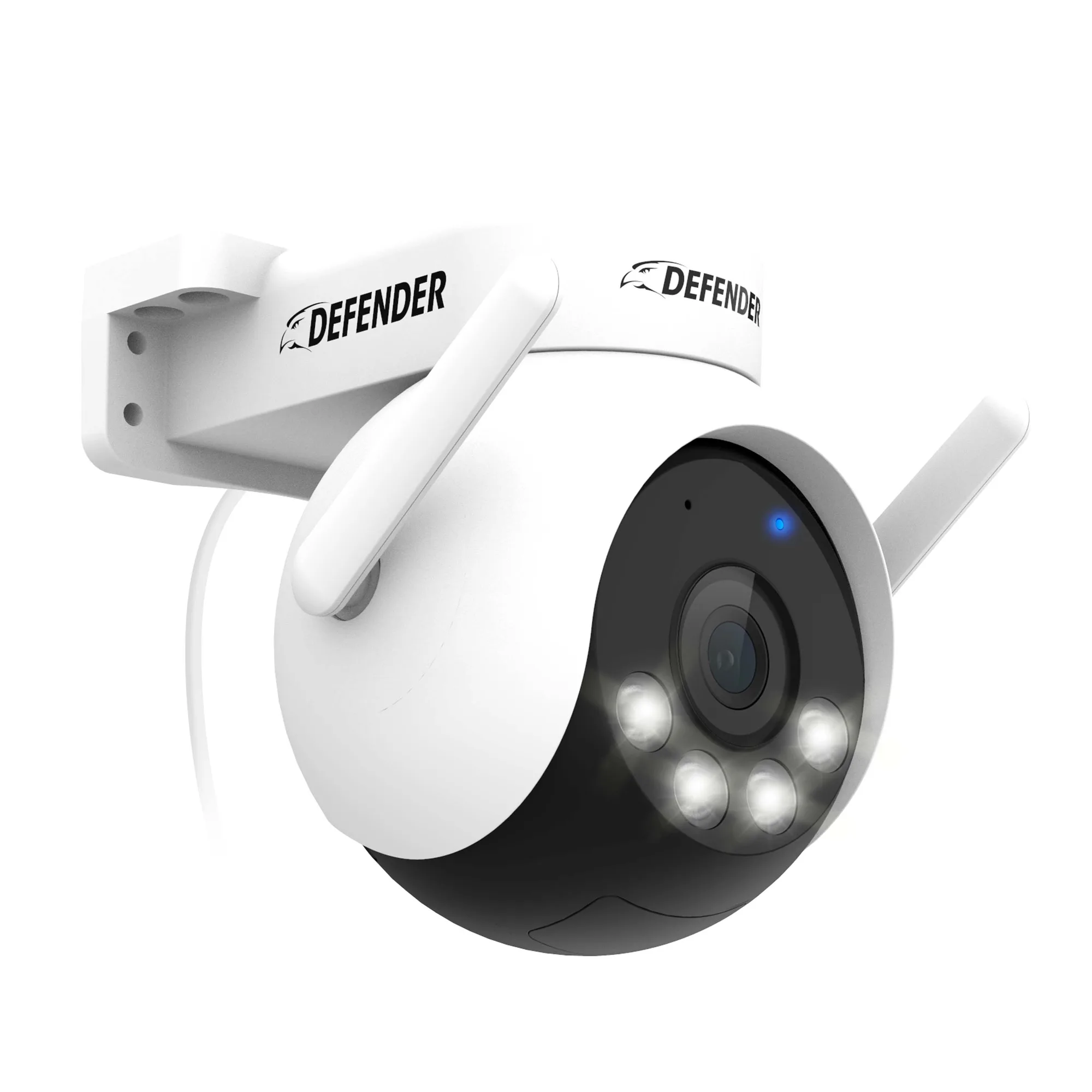
AI POWERED 4K Everwatch PTZ 360° Wi-Fi Plug-in Power Security Camera
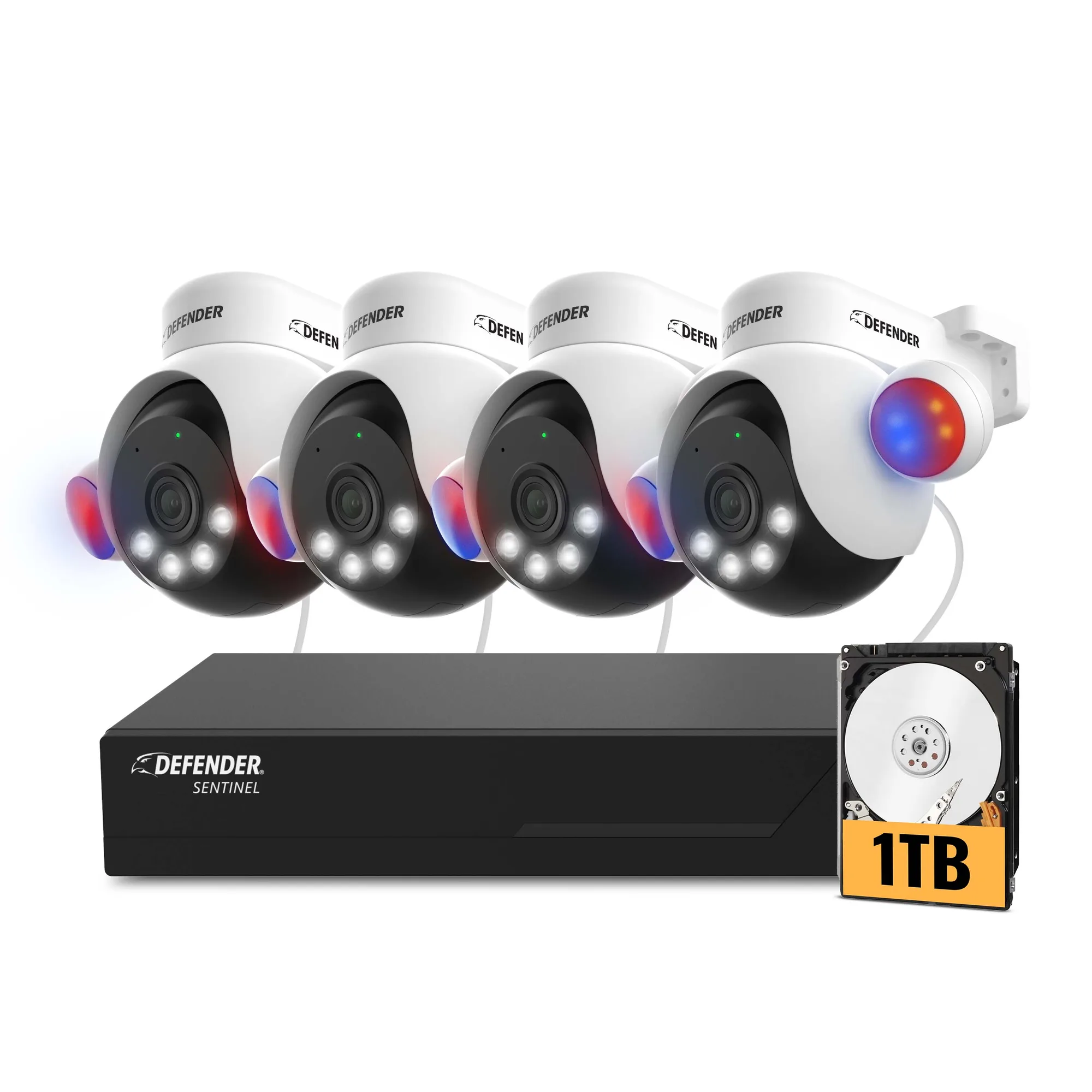
- AI Powered Sentinel 4K PTZ Wired 8 Channel PoE NVR Security System, 4 Cameras, 1TB HDD: The Defender AI Powered Sentinel 4K PTZ Wired 8 Channel PoE NVR Security System includes four cameras, 1TB HDD, 4K resolution with PTZ lenses, AI-enabled motion detection, and PoE cabling for straightforward installation. This is the hybrid path: PTZ lenses plus a wired NVR give you adjustable views and local recording, which suits a property that wants both wide coverage and a stable, always-on recorder.
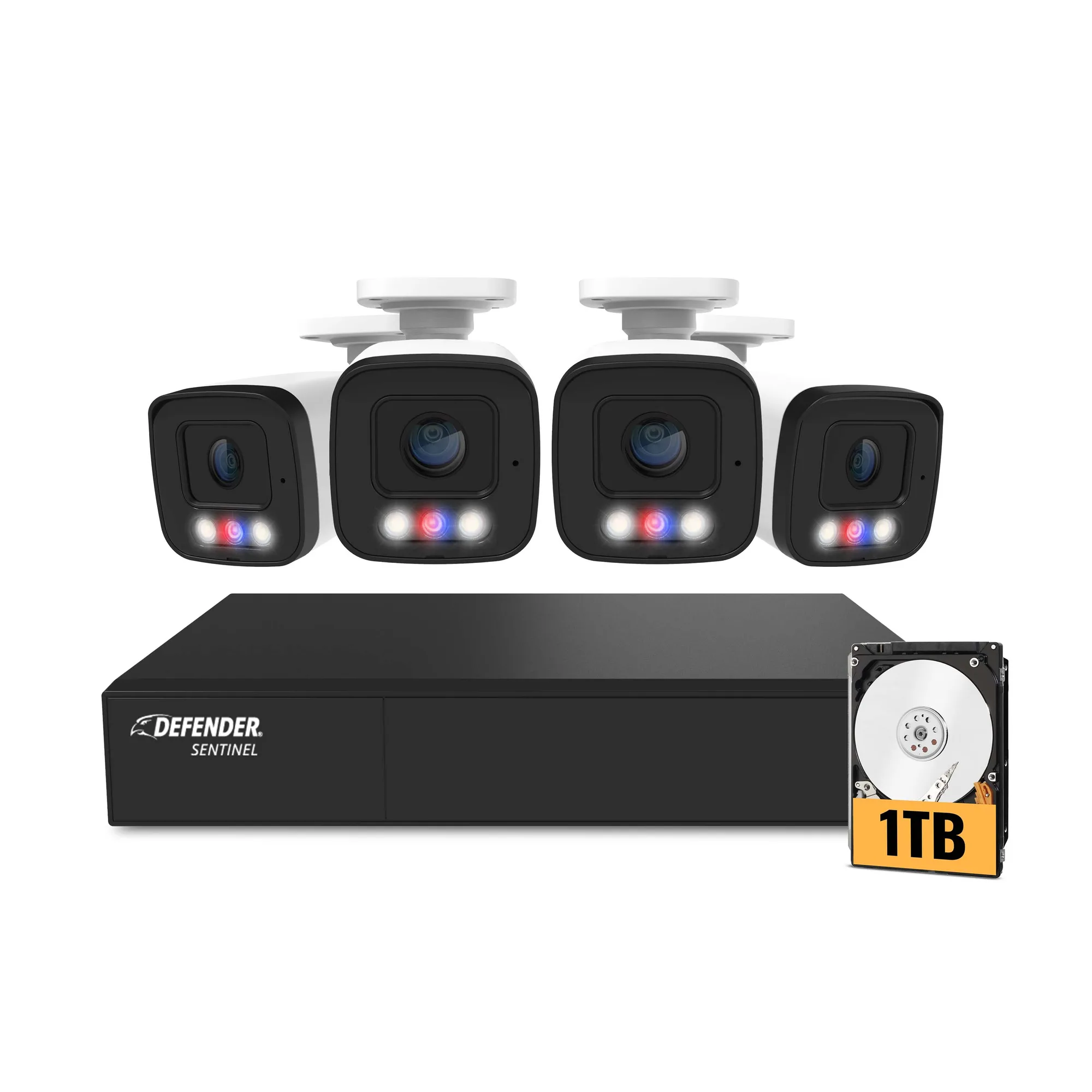
- AI POWERED Sentinel 4K Ultra HD Wired 8 Channel PoE NVR Security System, 4 Metal Cameras & 1TB HDD: The Defender AI POWERED Sentinel 4K Ultra HD Wired 8 Channel PoE NVR Security System comes with four metal cameras, a 1TB hard drive, AI-powered processing, and 4K Ultra HD resolution. This is the fixed-camera path: four metal cameras on an 8-channel PoE NVR give you simultaneous coverage of four zones, which is what you want for doors, gates, and paths rather than one roaming view.
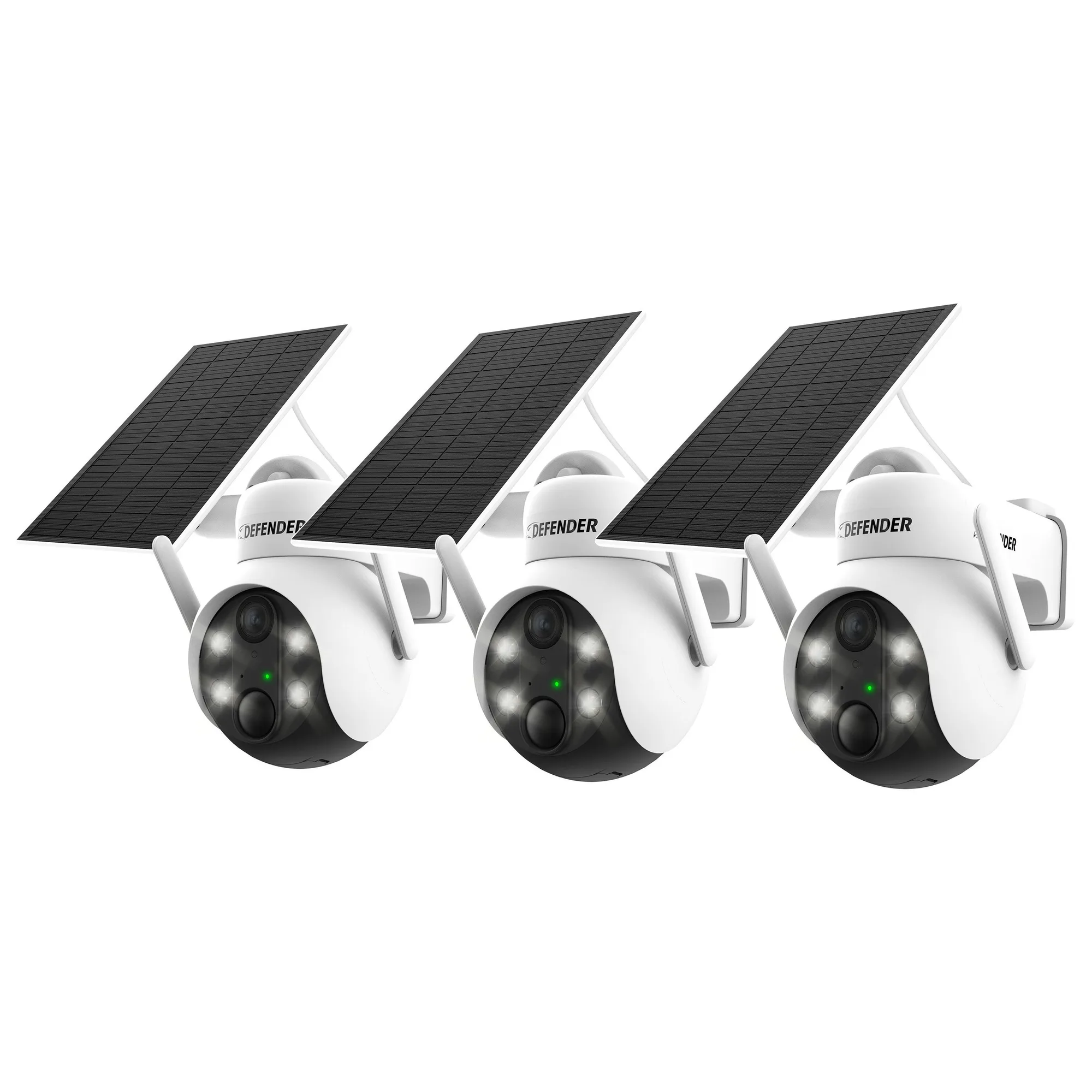
- Solar Powered 4K AI EverWatch PTZ Wireless Camera with 3W Solar Panel, 3 pc: The Defender Solar Powered 4K AI EverWatch PTZ Wireless Camera set includes three cameras, each with a 3W solar panel, PTZ control, 4K resolution, and built-in AI for smart detection. This is the no-outlet path: solar and wireless PTZ cameras can cover outbuildings, fences, or far corners where running power is impractical, with the trade-off that performance depends on sunlight and battery health.
Which setup fits your property
Best for
- Large yards or open lots where one roaming view is more useful than four narrow ones
- Driveways and parking areas where you want to zoom in on a plate or a face
- Rentals or temporary setups where Wi-Fi and plug-in power are easier than running cable
- Properties that already have a few fixed cameras and want to add wide-area awareness
Not for
- Covering four separate entry points that must all be recorded at the same time
- Locations with no outlet, no PoE run, and too little sun for a solar panel
- Anyone who wants a set-and-forget camera with no patrol or preset tuning
- Tight budgets where a single fixed camera already covers the only important zone