Quick answer
Choose a pushlock if you want one-handed, quick-access elegance for evenings or light daily carry; choose a Batchel or buckle-fastened bag if you want secure, hands-free practicality for commuting or travel. The Mini Poppy - Oxblood is the clearest pushlock example, while The 11 Inch Batchel - Sapphire and The Portrait Backpack - Oxblood show how buckle fastenings trade speed for security.
Closure type changes how a bag feels more than almost any other detail. A pushlock opens in a second; a buckle asks for two hands and a moment of patience. Neither is better in the abstract, but one will suit your routine better than the other.
This comparison uses real Cambridge Satchel bags to show what each closure actually asks of you, from The Mini Poppy - Oxblood with its distinctive pushlock to The 11 Inch Batchel - Sapphire and The Portrait Backpack - Oxblood with their secure fastenings.
How a pushlock closure works in practice
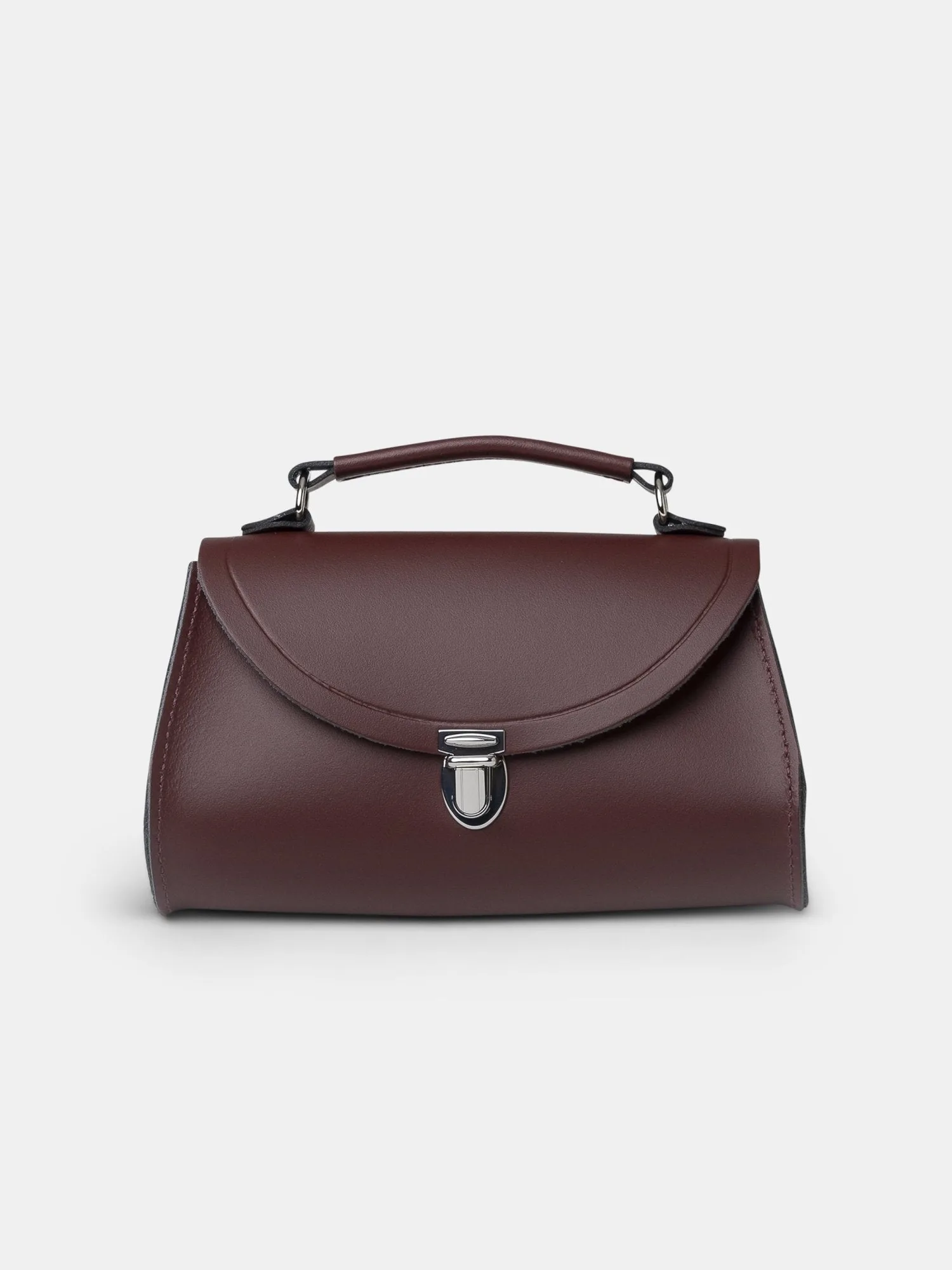
A pushlock is a metal clasp you press to release. On The Mini Poppy - Oxblood, the distinctive pushlock closure sits on a compact, refined shape with elegant proportions, so the hardware reads as part of the design rather than a functional afterthought. The payoff is speed: you can open and close it one-handed, which matters at a till, on a train, or when you are holding a drink.
The trade-off is that a pushlock is not a load-bearing security system. It keeps the flap tidy and closes cleanly, but it is not designed to resist a determined pull the way a buckled strap is. For a compact occasion bag, that is usually the right balance. If you carry a laptop, a water bottle, and a packed diary, you may want more fastening than a single clasp.
- Test a pushlock in-store or at home with one hand only: if it needs two, it will annoy you daily.
How Batchel and buckle fastenings work in practice
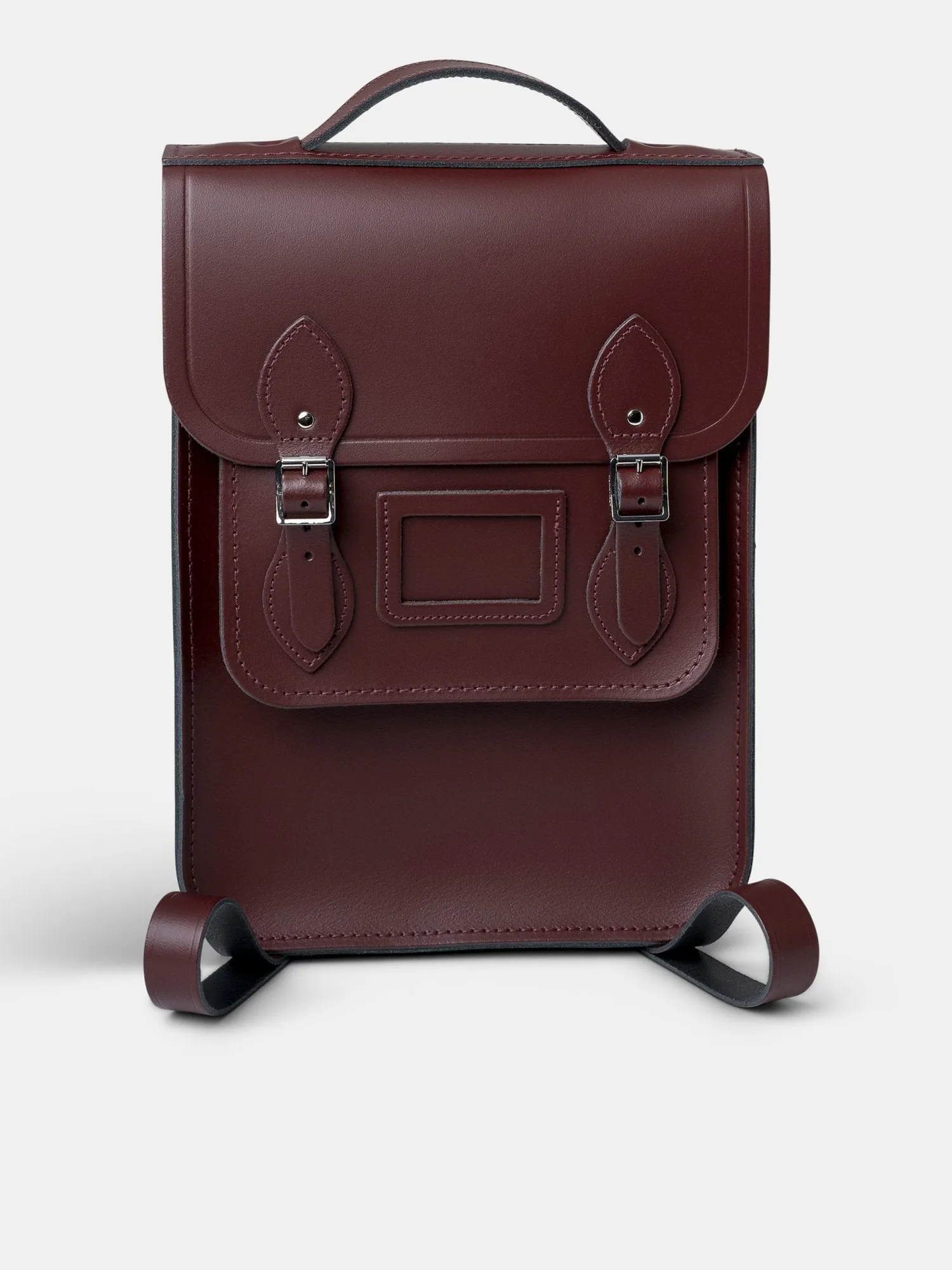
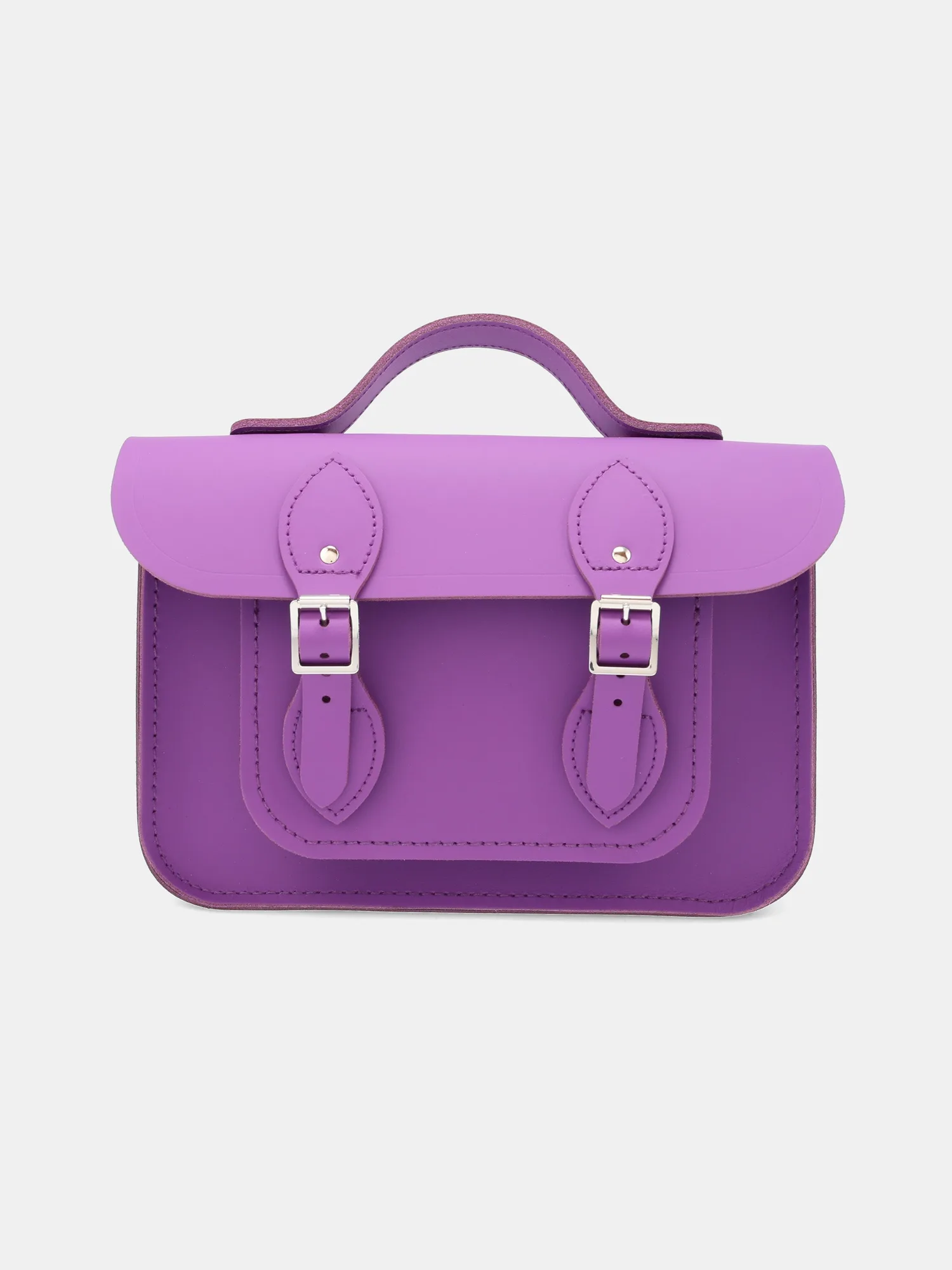
The Batchel combines classic satchel style with briefcase practicality. The 11 Inch Batchel - Sapphire uses magnetic closures with a top handle and detachable shoulder strap, plus an interior front pocket for quick access, so you get the look of a traditional satchel with faster opening than a full buckle. The Portrait Backpack - Oxblood goes further, closing securely with double buckle fastenings in a vertical, portrait-oriented design built for commutes.
Buckled and double-buckle fastenings ask for two hands and a few extra seconds. In return you get a bag that stays shut when it is swung onto a shoulder, wedged under a seat, or carried through a crowd. That security is the real reason to choose a buckle bag over a pushlock, not aesthetics alone.
- If you commute by bike or train, prioritise a fastening that stays closed when the bag is jostled.
Size, capacity, and what each closure implies
Closure type usually signals intended use. Pushlock bags tend to be compact: The Mini Poppy - Oxblood is sized for occasions or days when less is more. Buckle and Batchel designs tend to be more structured and organised, like The Portrait Backpack - Oxblood with its organised compartments, or The 11 Inch Batchel - Sapphire, a compact 11-inch version aimed at daily essentials.
That pattern is a useful shortcut when you are deciding. If your daily carry is phone, cardholder, keys, and lipstick, a pushlock mini will feel effortless. If you need compartments, a secure main opening, and hands-free carrying, a buckle-fastened backpack or Batchel will serve you better, even if it takes a few seconds longer to open.
- List your five most-carried items before choosing; the list usually points to one closure type immediately.
Materials, care, and long-term wear
Both closure types sit on leather bags handcrafted in England, and each includes a protective dust bag. The practical difference over time is where stress lands. A pushlock concentrates wear at the clasp and the flap edge it presses against. A buckle spreads load across straps and holes, which can stretch or soften with heavy use.
Whichever you choose, avoid overfilling. A pushlock that is forced shut will loosen faster, and a buckle strap that is always pulled to the tightest hole will crease early. Rotate your bag, store it in its dust bag, and wipe hardware with a dry cloth. These small habits matter more than the closure itself for how the bag ages.
- Never force a closure shut; if it resists, remove an item rather than stretching the fastening.
Trade-offs at a glance
- Access speed: A pushlock like the one on The Mini Poppy - Oxblood opens one-handed in a second; double buckle fastenings on The Portrait Backpack - Oxblood need two hands and a few extra seconds. Choose speed for evenings and quick errands; choose buckles when you open the bag rarely but carry it constantly.
- Security while moving: Buckle and magnetic fastenings hold a flap closed under movement, which suits commuting and crowded spaces; a single pushlock is tidier than it is fortress-like. If your bag gets bumped, swung, or set down in public, favour a buckle or magnetic closure.
- Capacity and structure: Pushlock designs are typically compact, while The 11 Inch Batchel - Sapphire and The Portrait Backpack - Oxblood offer organised compartments and a top handle or straps for hands-free carrying. Match the closure to your load: small and light points to pushlock, organised and heavier points to Batchel or backpack.
Closure examples from the current range
- The Mini Poppy - Oxblood: Distinctive pushlock closure with elegant, refined proportions in a compact size perfect for occasions; includes a protective dust bag and is handcrafted in England. The clearest pushlock option here: fast one-handed access in a small bag built for evenings and light days.
- The 11 Inch Batchel - Sapphire: Combines classic satchel style with briefcase practicality; compact 11-inch version with top handle, detachable shoulder strap, magnetic closures, and an interior front pocket for quick access. A middle ground: satchel looks and organised carry with magnetic closures that are quicker than full buckles.
- The Portrait Backpack - Oxblood: Portrait-oriented backpack with adjustable shoulder straps, organised compartments, and double buckle fastenings; includes a protective dust bag and is handcrafted in England. The most secure fastening in this comparison, suited to commutes where the bag is jostled and hands-free carrying matters.
Which one should you choose?
Best for
- Evening events and light daily carry where one-handed access matters, such as The Mini Poppy - Oxblood
- Commuters who want satchel style with quicker magnetic access and a top handle, such as The 11 Inch Batchel - Sapphire
- Hands-free travel and busy urban days where a secure double buckle fastening is worth the extra seconds, such as The Portrait Backpack - Oxblood
Not for
- Anyone carrying a laptop, bottle, and packed diary who needs one large secure compartment rather than a compact pushlock bag
- Shoppers who want a single closure type for every occasion; most people end up owning one of each for different days
Pick the closure that matches your slowest, most repeated moment: opening the bag with full hands. If that moment is a checkout queue or a party, a pushlock wins. If it is a train platform or a crowded street, a Batchel or buckle-fastened backpack earns its extra seconds every day.