Quick answer
Puzzle strategy games give you a fixed system to solve, often solo or cooperative, where the challenge comes from the design itself. Traditional strategy games put you against other players, so the challenge comes from reading and outmaneuvering them. If you want a repeatable mental workout, choose puzzle strategy games; if you want social conflict and negotiation, choose traditional strategy games.
Strategy games split into two broad families, and knowing which one you're buying saves a lot of table disappointment. Puzzle strategy games hand you a tight, self-contained problem: place tiles, chain cards, or optimize a sequence against the game's own rules. Traditional strategy games hand you opponents instead, and the game becomes a conversation of bluffs, alliances, and counter-moves.
The difference matters most when you're choosing a game for a specific group, a specific night, or a specific player count. A brilliant solo puzzle can fall flat with four competitive friends, and a negotiation-heavy strategy game can be miserable when you only have one player. This comparison breaks down the trade-offs using real examples from our catalog so you can match the format to your table.
The core difference: solving a system vs. solving people
In a puzzle strategy game, the rules are the opponent. You're optimizing against a fixed set of constraints, and the satisfaction comes from finding a clever line or a better sequence. HIFI: The Meeples Are BACK in this Strategic, Tactical Puzzle Game is a clear example: you're a producer placing audio cards on song tracks to record the B-side of a lost album. The game gives you a system to solve, and your skill is in reading that system.

HIFI: The Meeples Are BACK in this Strategic, Tactical Puzzle Game
Traditional strategy games flip the script. Your opponents are the puzzle, and their choices change every turn. That means more social interaction, more table talk, and more variance. It also means a game can feel unfair if you're outmatched, because the challenge scales with the people at the table rather than the design.
- Puzzle strategy games tend to be more consistent from play to play.
- Traditional strategy games tend to be more memorable because of the people, not just the mechanics.
Player count and solo support
Most puzzle strategy games work well solo or at low player counts because the system doesn't need other people to function. The Night Cage is a fully cooperative, horror-themed tile-placement game for 1 to 4 lost souls, and it works because the darkness itself is the threat. You can play it alone and still get the full experience.
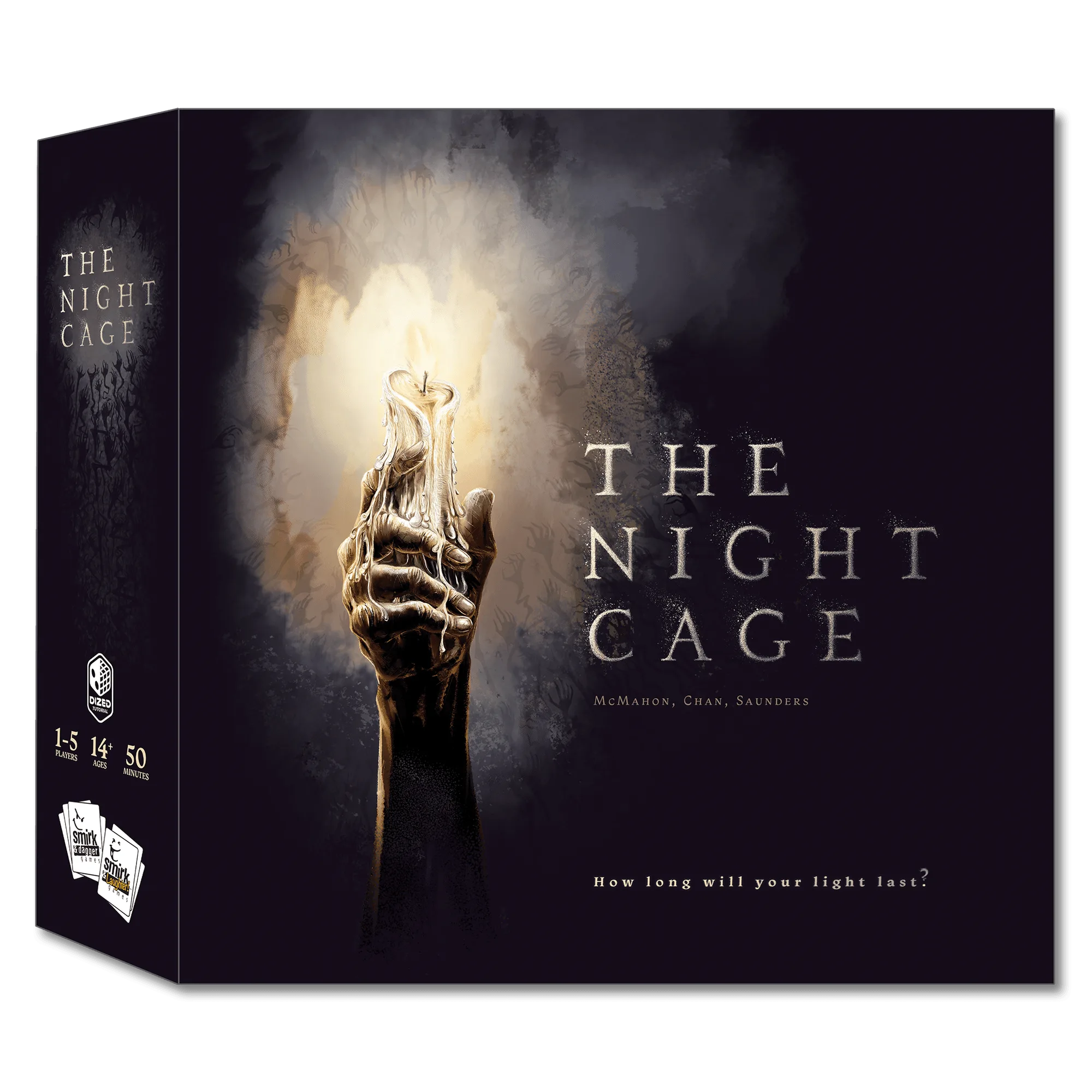
The Night Cage
Traditional strategy games often need at least two engaged players, and many need three or four to really sing. If your group is unreliable or you often play solo, puzzle-style games are the safer purchase. If you have a regular crew, traditional strategy games reward that consistency with deeper social play.
- Check the player count on the box, but also check whether the game is cooperative, competitive, or solo-only.
- A cooperative puzzle game can feel very different from a competitive puzzle game, even if both are 'puzzle' games.
Replayability and variability
Puzzle strategy games live or die on whether the puzzle stays interesting. A well-designed one gives you different setups, objectives, or card draws so you're solving a new problem each time. HIFI: The Meeples Are BACK in this Strategic, Tactical Puzzle Game uses audio cards and song tracks to create that variability, so the puzzle isn't identical every session.
Traditional strategy games get their replayability from the players. The board might be the same, but the people aren't. That's a strength if you have a regular group and a weakness if you don't. If you're buying for a solo or two-player household, puzzle strategy games usually give you more repeat plays per dollar.
- Ask yourself whether the game's variety comes from the components or from the players.
- If you play mostly with the same two people, a traditional strategy game can still work, but check that it's designed for two.
Theme, tension, and table feel
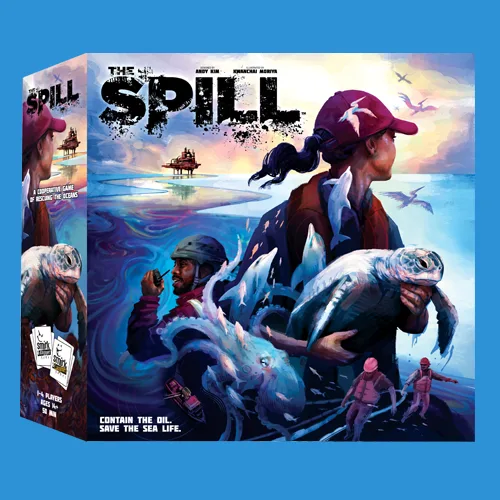
Puzzle strategy games often lean into atmosphere and tension because the game itself is the antagonist. The Night Cage traps you in an otherworldly labyrinth with only a flickering candle, and the tension comes from the system closing in. The SPILL: a dynamic co-op game of saving our oceans from a disaster uses a 4-way dice tower pouring oil into the ocean, so the physical components create pressure without needing a rival player.
Traditional strategy games create tension through other people: the betrayal, the blocked move, the last-second swing. That's a different kind of fun, and it's not interchangeable. If your group loves table talk and rivalry, a pure puzzle game can feel quiet. If your group hates conflict, a traditional strategy game can feel stressful.
- Cooperative puzzle games can still be tense, but the tension is shared rather than directed at each other.
- Competitive puzzle games exist too, where you're racing to solve the same system faster.
Complexity, teach time, and accessibility
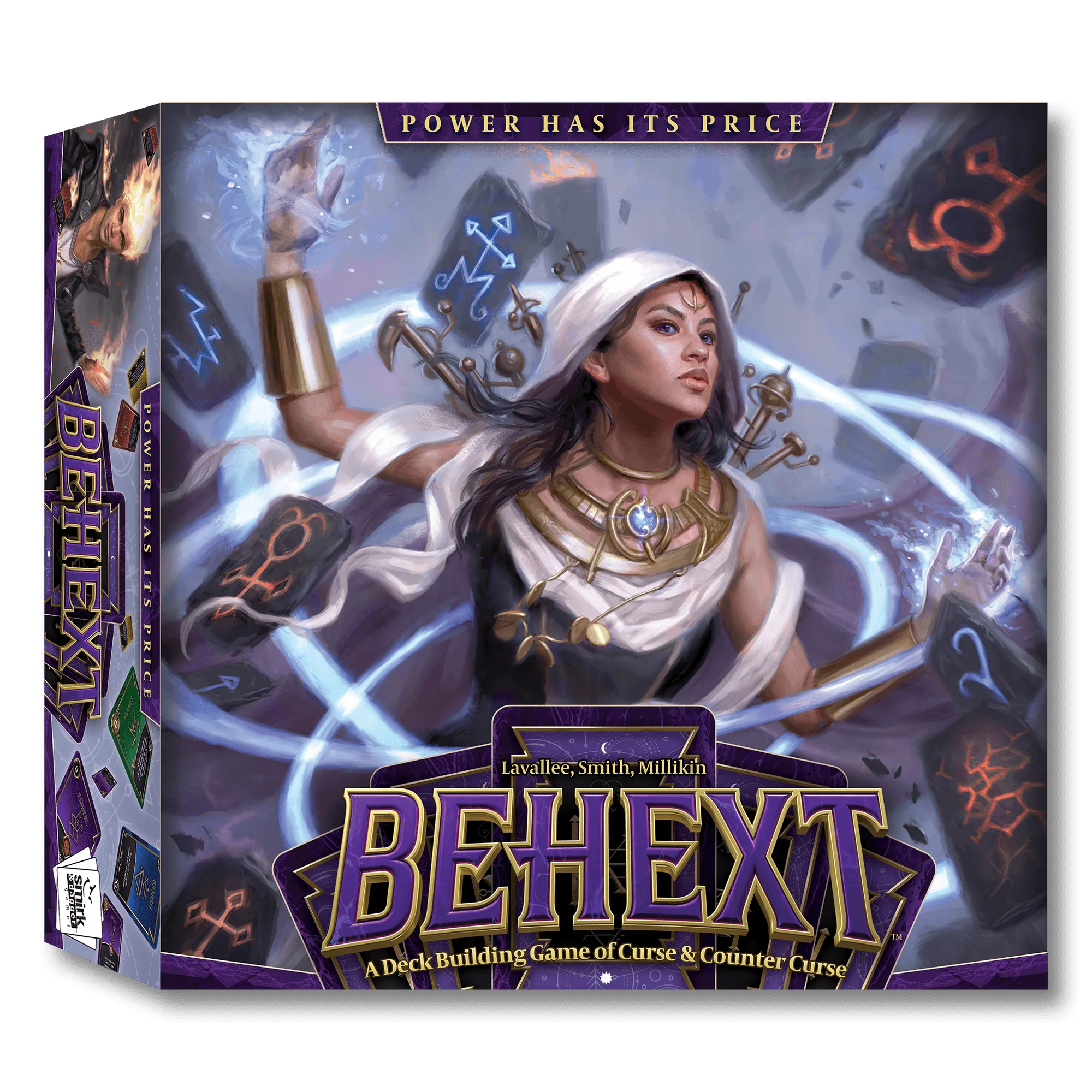
Puzzle strategy games often have a tighter ruleset because the system needs to be learnable. That doesn't mean easy, but it does mean the complexity is usually in the puzzle rather than the exceptions. BEHEXT: An unconventional spell book building game is a deck-building game of magical combat where your hand is both defense and currency, so the rules are unusual but the decision space is clear.
Traditional strategy games can carry more rules overhead because they need to support negotiation, hidden information, and player interaction. That can be a barrier for new players. If you're teaching a mixed group, a puzzle strategy game is often the smoother on-ramp, while a traditional strategy game may need a dedicated learning session.
- Teach the goal first, then the actions, then the exceptions.
- If a game has a solo mode, try it before teaching it to a group.
Trade-offs at a glance
- Solo and low player count: Puzzle strategy games usually support solo or cooperative play out of the box, like The Night Cage for 1 to 4 players. Traditional strategy games often need at least two engaged players and can feel flat with fewer. If you play alone more than half the time, start with a puzzle strategy game.
- Social interaction: Traditional strategy games generate table talk, negotiation, and rivalry. Puzzle strategy games generate focus and shared problem-solving, which can feel quieter. Match the game to your group's energy, not just the theme.
- Replayability source: Puzzle strategy games need built-in variability, like the audio cards in HIFI, to stay fresh. Traditional strategy games get variety from the players themselves, so they can last longer with the same group. If your group is small and consistent, either can work; if it's large and rotating, lean traditional.
- Rules overhead: Puzzle strategy games often have a tighter, more learnable ruleset because the system needs to be clear. Traditional strategy games can carry more exceptions and hidden information, which slows teaching. For a mixed-experience group, teach a puzzle game first.
Catalog examples that show the split
- HIFI: The Meeples Are BACK in this Strategic, Tactical Puzzle Game: In 1973, the internationally renowned band, The Meeples, stunned the world by breaking up during the recording of their highly anticipated album, HIFI. Only the “A” side of the album was ever released - but now The Meeples have reunited and YOU are the producers charged with recording the “B” side of this long-awaited masterpiece. So get into the studio and strategically place audio cards on the song tracks to... This is a puzzle strategy game where you're solving a recording system, not fighting a rival. It's a good fit if you want a repeatable solo or low-player-count challenge with a strong theme.
- The Night Cage: You awake in the dark, your skin cold, your mind blank. You have nothing but your fear, a flickering candle, and a question: How long will your light last? The Night Cage is a fully cooperative, horror-themed, tile-placement game that traps 1 to 4 lost souls within an otherworldly labyrinth of eternal darkness. Each prisoner has only a candle to aid them in their escape. But its weak... A cooperative puzzle game for 1 to 4 players, so it works solo or with a group that prefers working together against the system rather than against each other.
- The SPILL: a dynamic co-op game of saving our oceans from a disaster: A fully co-op game featuring a 4-way dice tower pouring oil into the ocean. Offshore rig, DeepWell•4, has blown out and is spilling crude oil into the ocean at an alarming rate! Your response team must work together to avert an ecological disaster, one which threatens to contaminate marine life and devastate the ecosystem. The situation is dire and escalating by the minute, so there is no time to waste. Contain the... Another cooperative puzzle-style game where the challenge is the escalating system, not the other players. The physical dice tower makes the pressure tangible.
- BEHEXT: An unconventional spell book building game: Curse and counter curse your opponents into submission, where your hand is your only defense - and your only currency. BEHEXT is a deck-building game of magical combat, where your hand of spells is both your only defense and your only currency. To that end, you must sacrifice cards from your hand, and even your own willpower, to custom - build your arcane arsenal. Begin as a unique Battlemage specialized in your... A card game that sits between the two camps: it's a puzzle-like deck-building system, but you're directly cursing opponents, so it carries the social conflict of a traditional strategy game.
Which should you buy?
Best for
- Solo players and couples who want a repeatable mental challenge without needing a group.
- Cooperative groups who prefer working together against the game rather than against each other.
- Players who enjoy optimizing a system and seeing their score improve over time.
Not for
- Groups that thrive on negotiation, bluffing, and direct conflict.
- Players who need heavy player interaction to stay engaged.
- Tables that want a different experience every time based on who is playing.
Puzzle strategy games and traditional strategy games solve different problems: one is a system to master, the other is a table of people to read. Pick the puzzle side for solo and cooperative play, and the traditional side for rivalry and negotiation. If you're unsure, start with a cooperative puzzle game like The Night Cage or The SPILL, then add a competitive traditional strategy game once your group has a regular night.