Quick answer
For Western layering, start with a button-down shirt as your base, add a quarter zip when you need light warmth without bulk, and reach for a waxed field jacket when wind, brush, or rain is the real problem. If you only buy one piece for unpredictable fall and winter days, a water-resistant field jacket over a cotton shirt covers the widest range of conditions.
Most cold-weather layering advice assumes you are standing still in a city. Western layering is different: you are often moving through brush, swinging a gate, or working outside where wind and abrasion matter as much as temperature. That changes which layer earns its place in your truck.
This comparison looks at three common Western layers using real product details: a quarter zip, a button-down shirt, and a waxed field jacket. Each does one job well. The trick is knowing which job you actually need before you spend money on the wrong piece.
How the three layers differ
A quarter zip is a pullover with a short zipper at the neck. It is easy to vent, easy to layer under a jacket, and it does not gap open in wind the way a button front can. The trade-off is that you cannot open it fully when you warm up, so it is less flexible than a button-down for all-day temperature swings.
A button-down shirt, like the Men's Creek Barn Denim Shirt, is your base layer. It breathes, it opens completely for ventilation, and it works alone in mild weather. The trade-off is that cotton alone offers little wind resistance, so it needs a shell when conditions turn.
A field jacket is your outer layer. The Heritage Field Jacket uses British Millerain dry waxed canvas with a windproof front closure and brush guard sleeves. That construction is the point: it blocks wind, resists water, and takes abrasion that would wear through a shirt. The trade-off is weight and warmth, so it is overkill on a mild day.
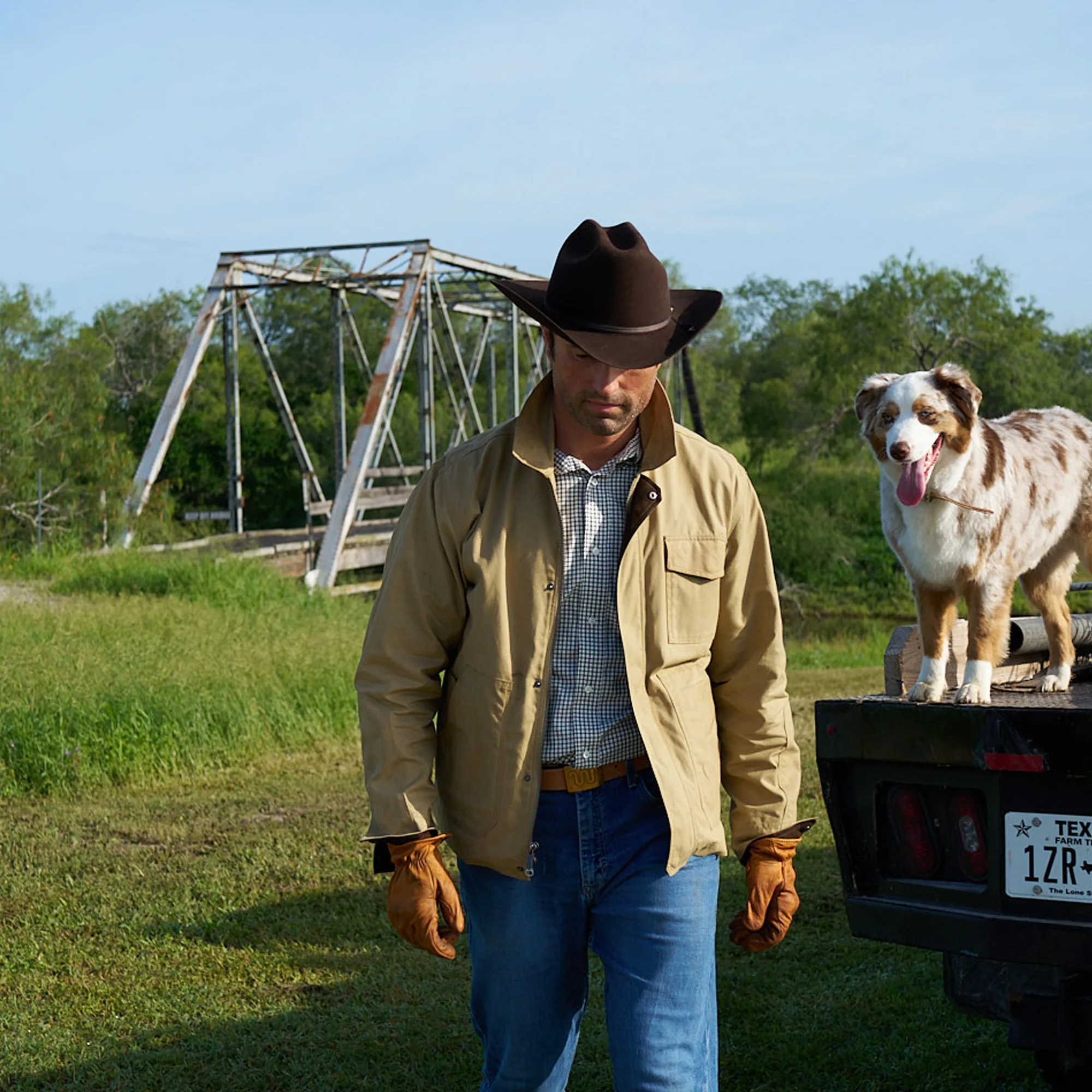
Heritage Field Jacket
- Base layer: button-down shirt for breathability and full ventilation
- Mid layer: quarter zip for light warmth without bulk
- Outer layer: waxed field jacket for wind, water, and brush protection
Warmth and wind: quarter zip vs jacket
On warmth alone, a quarter zip and a field jacket are not really competitors. A quarter zip traps a little body heat and adds almost no wind protection on its own. A waxed field jacket adds a windproof front closure and a water-resistant, breathable shell, so it holds warmth in moving air far better than a knit or fleece pullover.
That is why quarter zip vs jacket warmth is the wrong question in isolation. The jacket wins on cold, windy days. The quarter zip wins when you are active and would overheat in a shell, or when you need a thin layer that fits under a jacket without restricting your arms.
- Choose the quarter zip for active days and mild cold
- Choose the waxed jacket for wind, light rain, and brush
- Wear them together when you need both warmth and wind protection
Movement and fit in the field
Field work punishes stiff clothing. The Heritage Field Jacket addresses this with a back gusset for a full range of motion and J-shaped front pockets for quick access. Those details matter when you are reaching over a fence or shouldering a bag. A button-down shirt moves easily because it has no shell structure, but it also offers no protection from thorny brush.
For women working the same terrain, the Women's Brush Pant uses a stretch cotton base with color-matched canvas facing for durable coverage without bulk. The tonal guard panels keep the look clean rather than utility-first. Pairing that pant with a button-down and a field jacket gives you protection where you need it and breathability where you do not.
- Check for a back gusset or stretch panel if you reach and bend often
- Look for brush guard or canvas facing on pants if you walk heavy cover
- Size the outer layer to fit over your shirt and mid layer, not just over a t-shirt
When a cotton field shirt beats a quarter zip
A cotton field shirt vs quarter zip decision usually comes down to ventilation and versatility. A button-down opens all the way, so you can dump heat fast after a climb or a long walk. It also reads dressier when you tuck it in, which means one shirt can cover work and town. The quarter zip cannot open fully, so it is harder to cool down once you warm up.
The Women's Cowgirl Print Shirt shows the other advantage of a woven shirt: crisp cotton poplin with a touch of stretch, pearl snaps, and a custom print drawn from King Ranch scenes. It is a base layer that looks intentional on its own. A quarter zip is more of a functional layer, so it is easier to justify when performance matters more than styling.
- Pick the button-down if you run warm or move between indoors and outdoors
- Pick the quarter zip if you want quick neck venting and fewer layers
- Wear the shirt as the base and treat the quarter zip as optional
Trade-offs at a glance
- Quarter zip: convenience vs. ventilation: You get a quick neck zipper and a clean layer under a jacket, but you cannot open it fully when you overheat. Best as a mid layer on cold, active days, not as your only warm layer.
- Button-down: breathability vs. protection: A cotton shirt like the Men's Creek Barn Denim Shirt breathes and vents completely, but it offers little wind or brush resistance by itself. Make it your base layer and add a shell when conditions get rough.
- Waxed field jacket: protection vs. weight: The Heritage Field Jacket blocks wind, resists water, and guards against brush, but it is heavier and warmer than a shirt or pullover. Choose it for wind, light rain, and heavy cover, not for mild days.
Products that fit this layering system
- Heritage Field Jacket: Crafted from British Millerain dry waxed canvas, this field jacket is water-resistant and breathable, with a windproof front closure, protective brush guard sleeves, a back gusset for a full range of motion, and J-shaped front pockets for quick access. This is your outer layer when wind, light rain, or brush is the problem. The gusset keeps you mobile, and the waxed canvas takes abrasion that would damage a shirt.
- Men's Creek Barn Denim Shirt: Features custom pearl snaps, subtle distressing for a lived-in feel, and signature Running W embroidery. A breathable base layer that works alone in mild weather and under a jacket when it turns cold. The pearl snaps let you vent quickly without unbuttoning a full placket.
- Women's Brush Pant: Designed for South Texas brush country with a stretch cotton base for comfort and mobility, plus color-matched canvas facing for durable coverage without bulk. Guard panels are tonal for a clean, minimal look. If you are layering for field work, protected legs matter as much as a jacket. The stretch base keeps you moving while the canvas facing handles heavy cover.
- Women's Cowgirl Print Shirt: Crafted from crisp cotton poplin with a touch of stretch, classic pearl snaps, and a custom print inspired by vintage Western illustrations of King Ranch life. A base layer that looks good on its own, so you can shed the jacket indoors or in the truck without looking like you are down to long underwear.
Which layer should you buy first?
Best for
- Anyone building a cold-weather Western kit who needs one outer layer that handles wind, light rain, and brush
- Field work and upland hunting where mobility and abrasion resistance matter
- Layering over a button-down and a light mid layer without restricting your arms
Not for
- Mild-weather wear where a waxed jacket would be too warm and heavy
- Anyone who wants a single piece that works as both a base layer and a rain shell
- Buyers who need a fully open front for maximum ventilation on warm active days
Build your Western layering system from the outside in: choose the outer layer for the worst conditions you expect, then add a breathable button-down and a quarter zip only as needed. That way every piece earns its place instead of sitting in the truck.