Quick Answer
A backing that is too short almost always comes from measuring the quilt top instead of adding overage, or from a cut that shrank after washing. The fix depends on how short you are: if you are within a few inches, piece a strip onto one edge; if you are short by more than a few inches, add a full panel or border. Always measure your quilt top after it is complete and add at least 4 inches to each side before you cut backing.
Measure the Quilt Top, Not the Pattern
The most common reason a backing ends up short is that the quilter measured the pattern's finished size or an early block layout instead of the actual quilt top. Quilt tops grow and shrink as you add borders, press seams, and square up. Lay the finished top flat on a large floor or table and measure the width and length at the widest and longest points, including any wavy borders. Write those numbers down. Then add your overage.
- Measure after the top is fully assembled and pressed.
- Measure at the widest point, not at the corners.
- Write the numbers down and keep them with the project.
How Much Overage You Actually Need
For longarm quilting, most quilters add 4 to 6 inches of backing on each side beyond the quilt top. That means 8 to 12 inches total added to both the width and the length. For domestic machine quilting, 3 to 4 inches per side is often enough because you are managing the quilt in sections. If your backing is a wide fabric like a 108-inch wide backing, you may only need to add length, not piece the width. Check the fabric's cut width before you assume it covers your top.
- Longarm: add 4 to 6 inches per side.
- Domestic machine: add 3 to 4 inches per side.
- Wide backing may eliminate the need for a horizontal seam.
Fixes When Your Backing Is Already Cut Short
If your backing is already cut and comes up short, you have three realistic options. First, if you are short by only 2 to 4 inches on one side, piece a strip of matching or coordinating fabric onto that edge using a 1/2-inch seam, then press the seam open. Second, if you are short by more than 4 inches, add a full border panel of a different but related fabric to make the backing intentionally pieced. Third, if the shortfall is severe, set the cut backing aside for a smaller project and buy a new piece. Piecing a backing is normal in quilting, but a seam that runs through the middle of the quilt can create a visible ridge if it is not pressed flat.
- Short by 2 to 4 inches: piece a strip onto one edge.
- Short by more than 4 inches: add a full border panel.
- Severely short: repurpose the fabric and recut.
Prevent the Next Short Backing
Before you cut any backing, make a simple checklist. Measure the finished top. Add your overage. Check the fabric's width and length after washing if you prewash. If you use a 3-yard cut of wide backing, confirm that the cut dimensions match your needs. For example, a 3-yard cut of a 108-inch wide fabric gives you a piece that is 108 inches by 108 inches, which fits many large quilts without piecing. But if your quilt top is wider than 100 inches, you may still need to add length. Keep a note of your quilt's measurements in a project notebook so you can buy the right amount next time.
- Measure, add overage, then cut.
- Check prewashing shrinkage before cutting.
- Record finished quilt sizes for future projects.
Diagnosis: Why Your Backing Is Short
- You measured the pattern, not the quilt top: Pattern sizes are finished dimensions and do not account for border growth, pressing, or squaring up. Your actual top is likely larger. Re-measure the finished top at its widest and longest points.
- You forgot to add overage: Backing needs extra fabric on all sides for the longarm frame or domestic machine. Without overage, the backing will not reach the edges. Add 4 to 6 inches per side for longarm, 3 to 4 inches per side for domestic.
- Your fabric shrank after washing: If you prewashed the backing but not the quilt top, or vice versa, the backing may have shrunk more than expected. Prewash all fabrics for a project together, or none at all, and measure after washing.
- You cut the backing before the top was finished: Cutting early is risky because the top's final size is unknown until it is fully assembled and pressed. Always cut backing after the quilt top is complete.
Products That Help With Backing Decisions
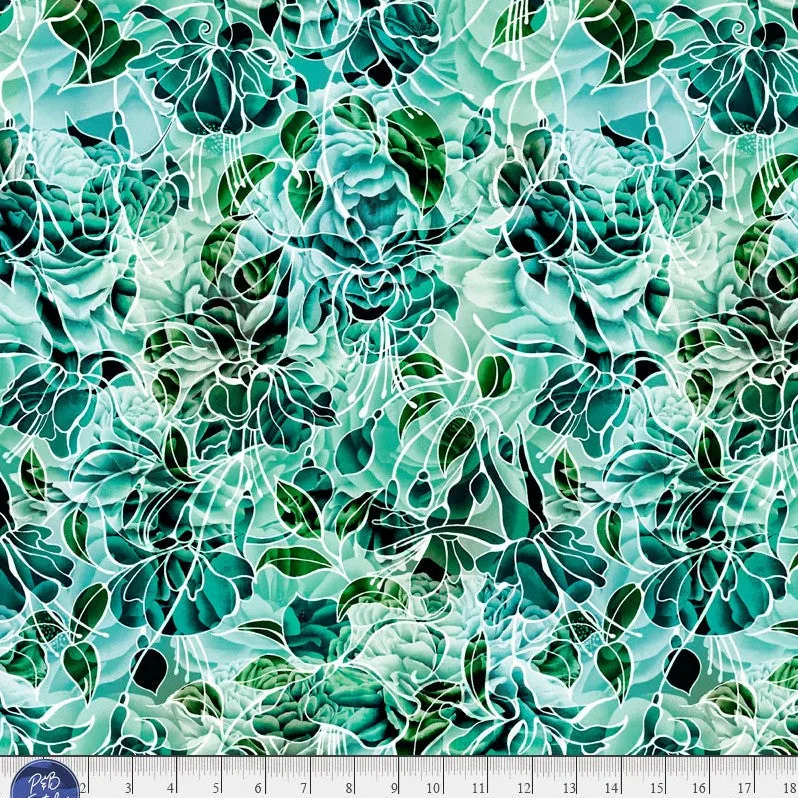
- Petal Play Teal - 108" Wide Backing Fabric - PPLW6016 TG - 3 YARD CUT - P&B Textiles: A three yard cut of 108" wide Petal Play Teal for P&B Textiles. Fabric measures 108" x 108". Fabric is cut in 3 yard increments. 100% cotton. A 108-inch square piece can back a large quilt without a horizontal seam, but if your quilt top is wider than 100 inches, you may still need to add length or piece a strip.
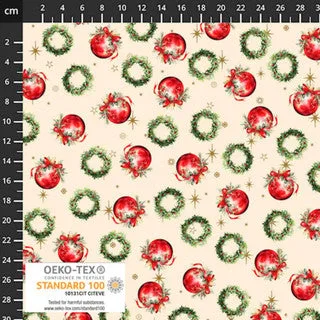
- Vintage Christmas Balls Cream 4504-173: Vintage Christmas Balls Cream 4504-173 is a 45" wide fabric with a tossed ornament and holly print on a cream ground. At 45 inches wide, this fabric will need to be pieced horizontally for most quilts, so plan your seam placement and add extra length for the seam allowance.