Quick answer
To sort a quilting drawer, start by measuring the drawer, then empty it completely and group tools by how often you use them. Use adjustable dividers or a compartment organizer to create zones, and keep only daily tools in the drawer. A quilting organizer for a drawer works best when you sort first and buy second.
Why sorting before buying saves money
Most quilters buy a drawer organizer before they know what is actually in the drawer. That leads to compartments that are too small for a rotary cutter or too large for a handful of bobbins. Sorting first tells you the real footprint of your tools, so you can choose a divider layout that fits instead of forcing tools into the wrong slots.
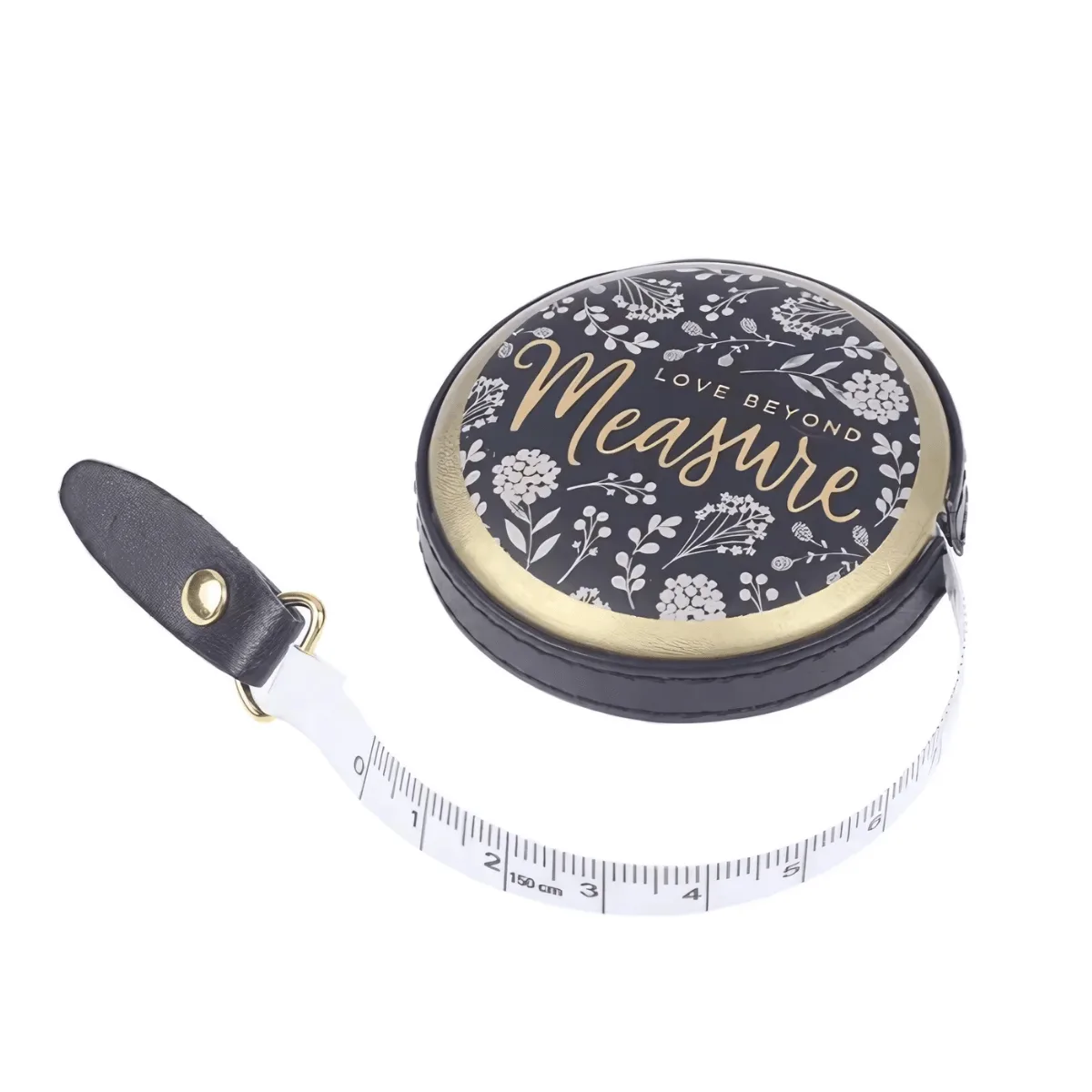
It also exposes duplicates. Two seam rippers, three tape measures, and a dozen stray bobbins are common in a working sewing room. Once you see the duplicates, you can move the extras to a backup bin and give your everyday tools more room.
How to group tools by use, not by type
Grouping by tool type sounds logical, but it breaks down in daily use. You do not reach for 'all measuring tools' at once. You reach for the tools that belong to one task: cutting, marking, piecing, or finishing.
A cutting group might include a rotary cutter, a spare blade, and a small ruler. A marking group might include a fabric pen, chalk, and a seam ripper. When each group lives in its own zone, you stop digging through the whole drawer to find one item.
Choosing dividers that match your tools
Adjustable dividers beat fixed compartments because quilting tool collections change. If you add a new ruler or a second rotary cutter, you can widen one zone instead of replacing the whole organizer.
Check the depth of the drawer against the height of your tallest tool. A rotary cutter standing upright needs more clearance than a flat ruler. If the drawer is shallow, lay long tools flat and reserve upright space for short items like bobbins and needles.
Keeping the drawer tidy over time
A sorted drawer drifts back into chaos within weeks if nothing has a home. Label each zone with a simple word: cut, mark, piece, finish. Labels take five minutes and remove the guesswork when you are tired or in the middle of a project.
Once a month, pull out anything that does not belong in the drawer. Thread spools, fabric scraps, and paperwork tend to migrate in. Returning them to their proper spot keeps the drawer working as a tool station rather than a catch-all.
Drawer sorting steps
- Measure the drawer: Measure the inside width, depth, and height of the drawer before you move anything. Write the numbers down. Checkpoint: if your tallest tool does not fit upright, plan to lay it flat.
- Empty the drawer completely: Take everything out and wipe the drawer clean. Do not sort while the drawer is still full. Common mistake: sorting in place hides duplicates and stray items at the back.
- Group tools by task: Make piles for cutting, marking, piecing, and finishing. Keep only the tools you use weekly in the drawer piles. Checkpoint: if a pile has more than about eight items, split it into two zones.
- Place dividers and compartments: Set adjustable dividers or a compartment organizer into the drawer, then assign one zone per task group. Common mistake: filling every compartment to the top makes it hard to lift tools out.
- Label each zone: Write one word per zone on a small label and stick it to the divider or drawer edge. Checkpoint: anyone in your sewing room should be able to put a tool back without asking.
- Schedule a monthly reset: Once a month, remove anything that does not belong and return stray tools to their zones. This five-minute habit is what keeps the drawer organized long term.
Drawer storage options worth considering
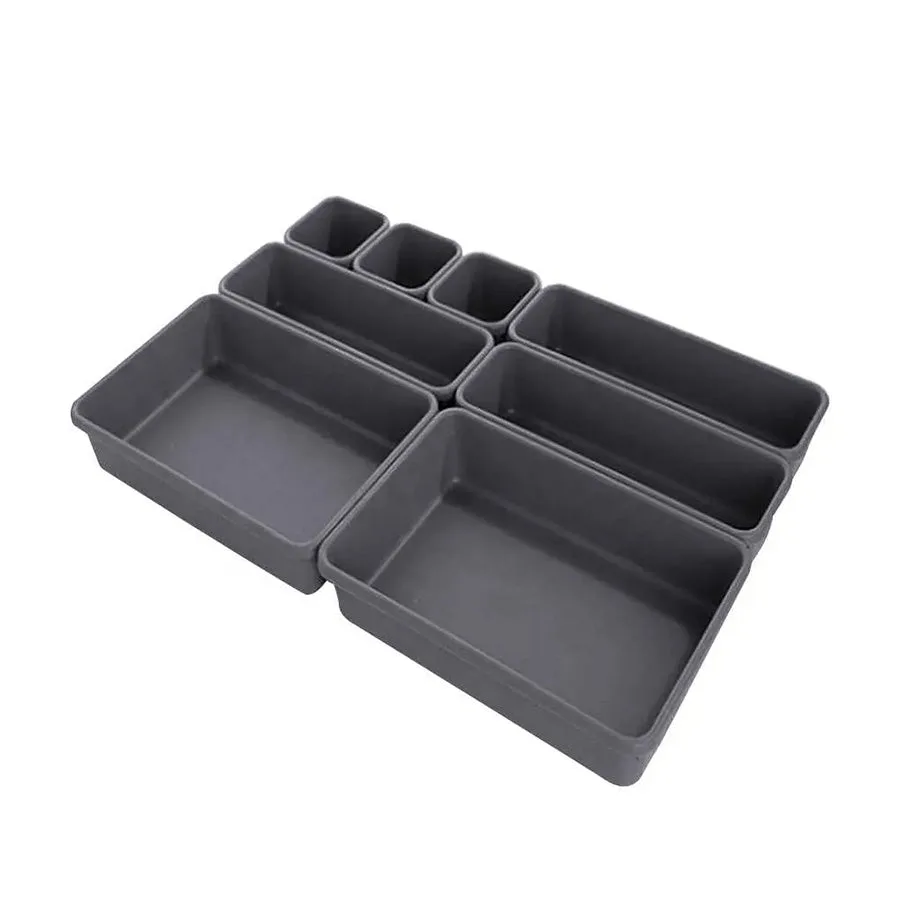
- Quilting Organizer For a Drawer: Quilting Organizer For a Drawer comes with three different size compartments across eight pieces and is designed to fit into your drawer. The mix of sizes lets you separate small items like bobbins from longer tools, and the eight pieces can be arranged to match your own grouping instead of a fixed layout.
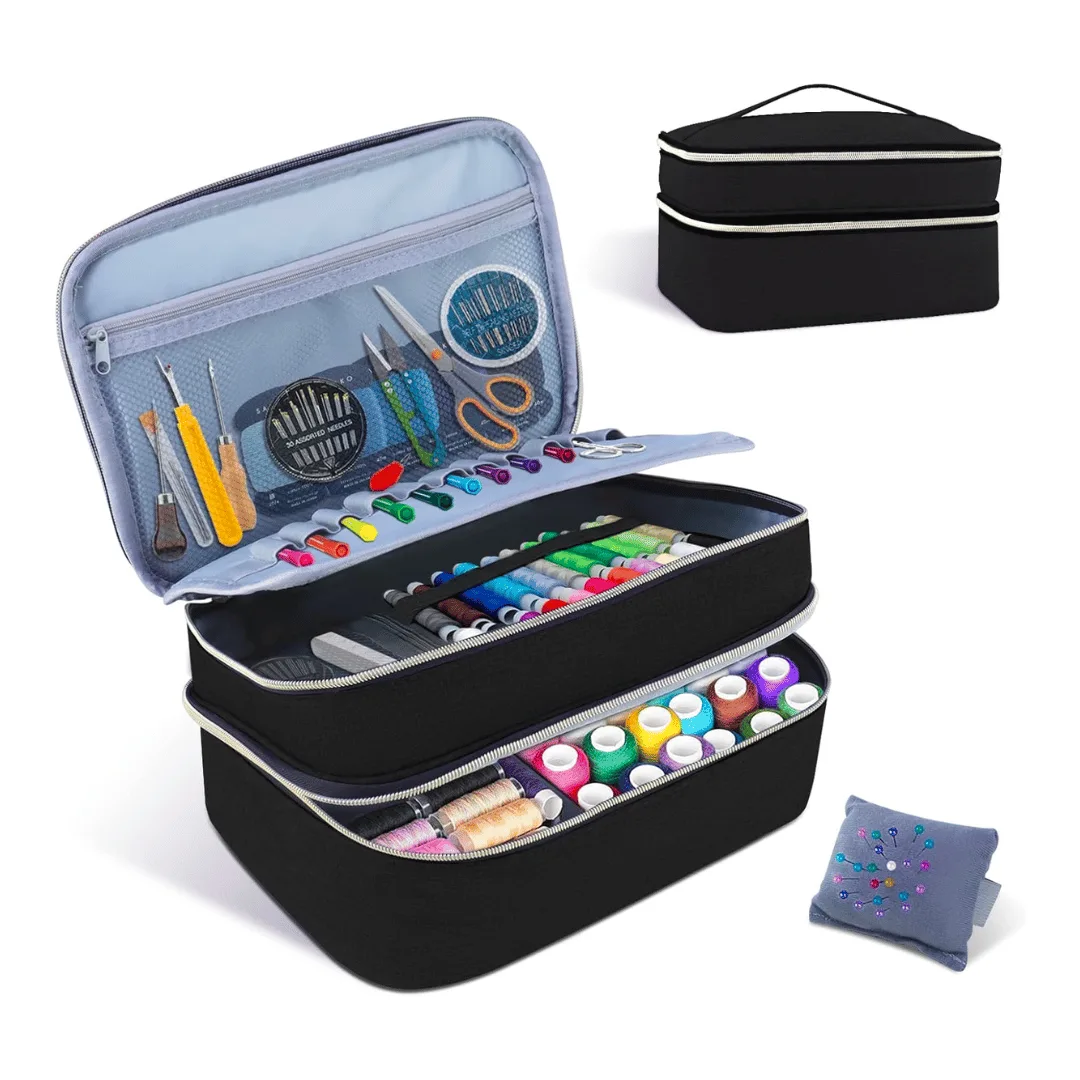
- Sewing Accessories Storage Bag: Sewing Accessories Storage Bag is a double-layered bag with multiple pockets and compartments and a top compartment with storage panel. It gives overflow tools a home outside the drawer, so the drawer itself can stay reserved for the tools you use on every project.