Quick answer
For most machine quilting, including longarm work, a smooth 50 wt polyester thread like So Fine! is the most reliable all-round choice because it is lint-free, strong, and blends well. Cotton thread is a good match for cotton quilts when you want a matte, traditional look and can manage a little more lint. Blends try to balance both but are less common. Your decision should come down to the look you want, the strength you need, and how much lint you are willing to clean.
Thread choice affects how your quilt looks, how it holds up, and how often you clean your machine. Cotton, polyester, and blends each behave differently, so the right pick depends on whether you are piecing, quilting on a domestic machine, or running a longarm.
This comparison uses the facts we have on hand to explain the trade-offs. We will look at cotton vs polyester quilting thread, then bring in blended options, and finish with guidance on the best thread fiber for longarm quilting and everyday projects.
Cotton quilting thread: pros and cons
Cotton thread is a traditional choice for quilts made from cotton fabric. It has a matte finish that blends into pieced tops, and it does not stretch, which helps keep seams stable. Many quilters like that cotton ages naturally with the quilt and feels consistent with the rest of the materials. The main trade-off is lint: cotton fibers shed more than polyester, so you will clean your machine more often. Cotton is also less abrasion-resistant than polyester, which matters on a longarm where thread runs fast and repeatedly over the same area.
For piecing, a 50 wt cotton is a common pick. For quilting, you may choose a slightly heavier weight for visible texture. If you are quilting for a living or working on a longarm, test cotton on a sample first to see how it handles the speed and tension of your machine.
- Best for: traditional cotton quilts, piecing, and projects where a matte finish is preferred.
- Watch for: more frequent cleaning and a higher chance of thread breakage on high-speed machines.
Polyester quilting thread: pros and cons
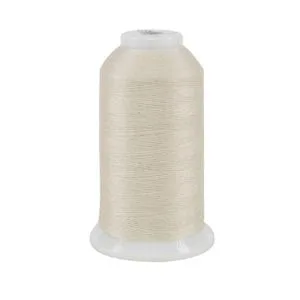
Polyester thread is strong, smooth, and lint-free. A 50 wt polyester like So Fine! is designed for quilting and sewing, and it can also be used as bobbin thread. Because it is 3-ply and lint-free, it runs cleanly through the machine and blends well with many fabrics. That makes it a practical choice for longarm quilting, where consistent tension and minimal downtime matter. The trade-off is sheen: polyester can look slightly shinier than cotton, so it may stand out on a matte cotton quilt if you choose a contrasting color.
Polyester also has some stretch, which can be an advantage for quilts that will be washed often, but it means you should adjust tension carefully. If you want a thread that handles speed and reduces lint, polyester is often the easier choice.
- Best for: longarm quilting, high-speed machine quilting, and projects that need strength and low lint.
- Watch for: sheen and stretch; test tension on a sample before quilting the whole quilt.
Blended quilting thread: what it offers
Blended threads combine fibers to balance characteristics. A cotton-poly blend may aim for the matte look of cotton with some of the strength of polyester. The exact behavior depends on the blend ratio and how the thread is constructed, so you cannot assume a blend will act like either pure fiber. If a blend is not specified with weight, ply, or fiber content, treat that as a limitation and test it before committing to a large project.
Blends can be a good middle ground for everyday sewing and quilting when you want moderate lint and moderate strength. However, they are less predictable than pure cotton or pure polyester, and they may not be the best choice for longarm quilting where consistency is critical.
- Best for: everyday sewing and quilting where you want a balance between cotton and polyester.
- Watch for: unclear fiber content; always check the label and test on a sample.
Trade-offs at a glance
- Cotton: look vs. lint: Cotton gives a matte, traditional finish that blends into cotton quilts, but it sheds more lint and is less abrasion-resistant than polyester. Choose cotton if the look matters most and you do not mind extra cleaning.
- Polyester: strength vs. sheen: Polyester like So Fine! is strong, lint-free, and smooth, which reduces downtime and handles high-speed quilting, but it can appear slightly shinier than cotton. Choose polyester for longarm or high-speed quilting when reliability and low lint are priorities.
- Blends: balance vs. predictability: Blends aim to combine the best of both fibers, but their behavior varies with fiber content and construction, and they may not be as consistent as pure cotton or polyester. Choose a blend only if you can test it and the label gives clear fiber and weight information.
Thread options from our catalog
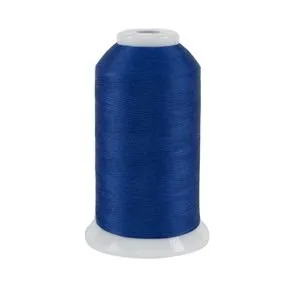
- So Fine! Thread #474 Billings Blue: So Fine! #50 is a #50/3 lint-free and extra smooth all purpose polyester thread. Each cone has 3,280 yards and is excellent for sewing, serger, bobbin thread and quilting. The 50 wt 3-ply construction and lint-free finish make it a strong candidate for longarm quilting and everyday piecing, with less machine cleaning between projects.
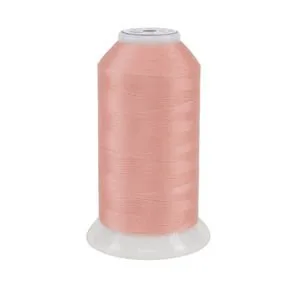
- So Fine! Thread #430 Peach Tart: So Fine! #50 is a #50/3 lint-free and extra smooth all purpose polyester thread. Each cone has 3,280 yards and is excellent for sewing, serger, bobbin thread and quilting. A warm neutral like Peach Tart blends well with many quilt palettes, so you can use the same reliable polyester thread for both quilting and bobbin work without changing thread types.
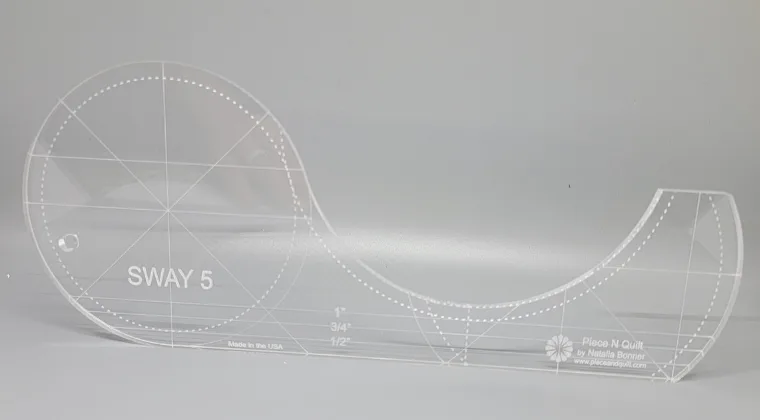
- Sway 5 Machine Quilting Ruler: The Sway 5 machine quilting ruler is perfect for machine quilting and marking 5" circles, sashing designs, and coordinating quilting motifs. Designed by professional machine quilter Natalia Bonner, this ruler is part of the Sway Machine Quilting Ruler family. When you quilt with polyester thread, a ruler like the Sway 5 helps you create smooth, consistent curves and motifs, so your thread choice and quilting design work together.
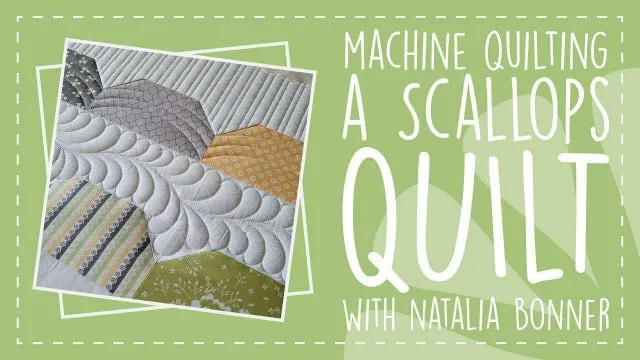
- Machine Quilting a Scallops Quilt with Natalia Bonner: In this exclusive PNQ Academy video Natalia will walk you through the process of machine quilting an adorable scallops quilt. She shows how a seemingly simple quilt design can come to life with the right quilting stitches and techniques. Seeing how a specific thread behaves in a real project can help you decide whether cotton or polyester suits your next quilt; this course gives you that visual reference.
Which fiber fits your quilting?
Best for
- Longarm quilters and machine quilters who want low lint, strong thread, and consistent tension: polyester like So Fine!
- Quilters making traditional cotton quilts who prefer a matte finish and do not mind more frequent machine cleaning: cotton
- Everyday sewing and quilting where you want a middle ground and are willing to test: blends
Not for
- Quilters who want zero sheen on a cotton quilt: skip polyester and choose cotton or a matte blend.
- High-speed longarm quilting where lint and breakage are a concern: skip low-quality cotton and choose a smooth polyester.
- Anyone who needs guaranteed performance without testing: skip blends with unclear fiber content.
There is no single best thread fiber for every quilt. Match the fiber to your priorities: cotton for a traditional matte look, polyester for strength and low lint on longarm or high-speed machines, and blends only when you can verify the content and test them. Whichever you choose, sew a sample first to dial in tension and confirm the look.